










































Table of Contents
Categories
Most Popular


Most apps bleed users fast, and the numbers prove it, as Day 1 retention averages just 26%. By Day 7, that drops to 13%. By Day 30, you’re left with 7%*.
For most mobile teams, acquiring users is not the hardest part. Keeping them is. A user who downloads your app but never comes back generates no long-term value, no matter how much it cost to acquire them. That’s why mobile app retention strategies have become a critical part of sustainable growth. The apps that win are not always the ones that acquire the most users. They are often the ones that keep more of them.
The challenge is that retention is influenced by dozens of factors across the user lifecycle. Onboarding friction, weak engagement, poor feature adoption, and missed churn signals can all contribute to user drop-off. Improving customer retention requires understanding where users leave, why they leave, and which strategies are most effective at keeping them engaged.
This guide breaks down the mobile app retention metrics that matter most and 12 proven mobile app retention strategies to help you reduce churn, improve engagement, and build lasting user habits.
What Is Mobile App Retention and Why It Matters
Mobile app retention measures the percentage of users who return to your app over a set period after their first download. Unlike install counts, it reflects if your app actually delivers ongoing value and whether it solves a real problem or earns a regular place in someone’s routine.
From a business standpoint, retention is a direct financial lever. When acquisition dominates your growth strategy without any plans for retention, every churned user becomes wasted CAC. Increasing customer retention by just 5% can grow profits by up to 95%. That’s the compounding effect of loyalty at scale.
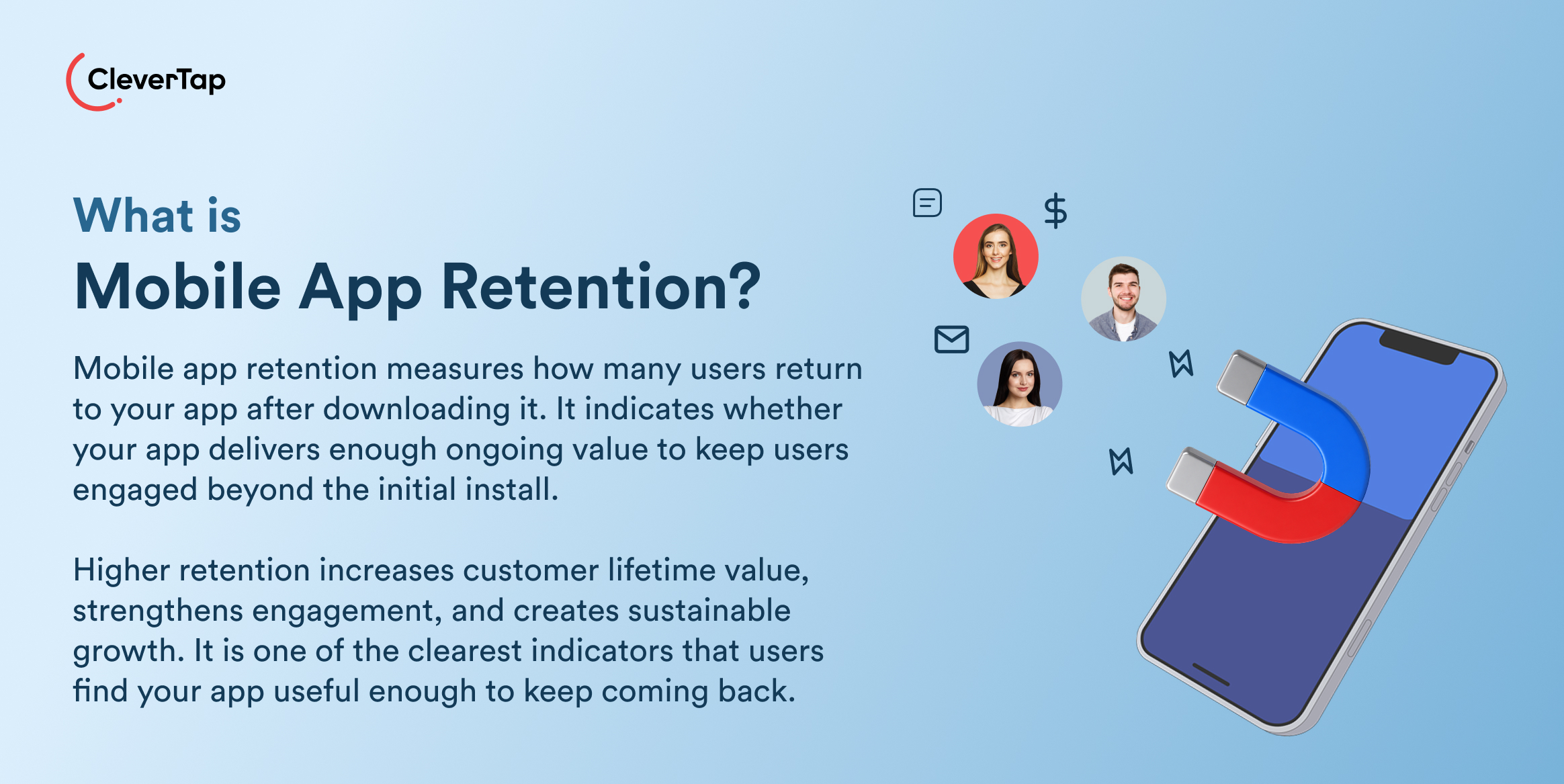
Retained users build a stable DAU base, engage more deeply with your product, adopt more features, and generate higher LTV over time. They’re also more likely to refer others, respond to upsells, and forgive the occasional bug. For mobile apps specifically, where competition for screen time is relentless, retention is a growth metric and the clearest signal that your product is genuinely worth coming back to.
Key Mobile App Retention Metrics to Track
Retention starts with measurement. Without the right signals, you’re optimizing blind. These are the metrics that actually tell you whether users are staying, engaging, and finding value in your app.
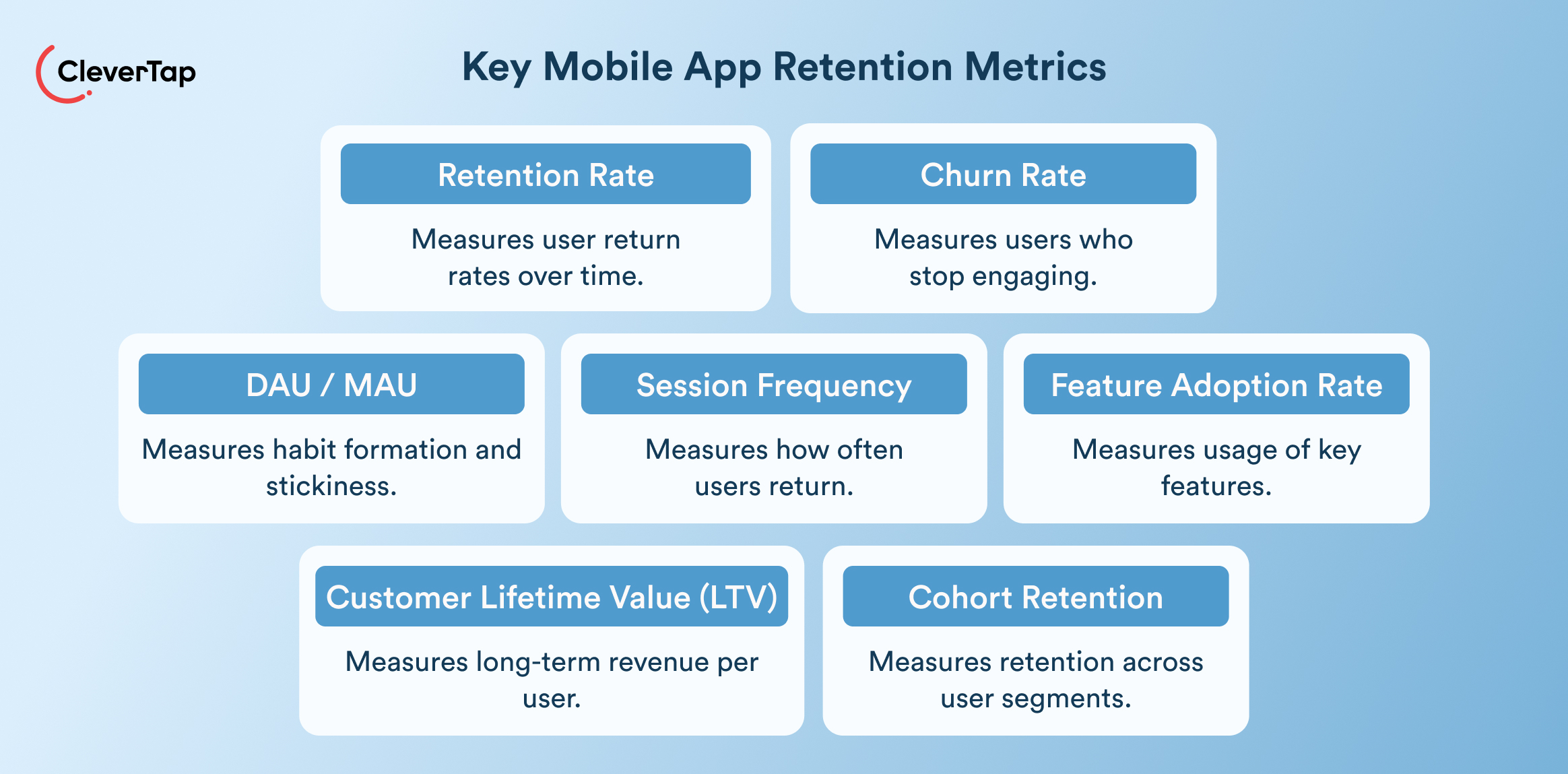
Retention Rate (D1, D7, D30)
What It Measures: The percentage of users who return to your app on day 1, day 7, and day 30 after installation
This is the foundational benchmark for user return behavior. Tracking these three milestones helps you pinpoint exactly when users drop off. A steep decline between D1 and D7, for example, typically signals a problem with onboarding or the first-time user experience.
Churn Rate
What It Measures: the percentage of users who stop engaging with your app over a given timeframe
Churn rate is the inverse of retention, and when one goes up, the other comes down. A sudden spike in mobile app churn rate is usually a signal worth investigating, as it often points to product friction, a buggy update, or a broken user journey. Tracking when users drop off gives growth teams enough lead time to intervene with re-engagement campaigns before those users fully disengage.
DAU / MAU (Stickiness)
What It Measures: the ratio of daily active users to monthly active users, expressed as a percentage
This metric shows how frequently your monthly user base actually returns day-to-day. A reliable indicator of habit formation. If your app has 100,000 MAU and 20,000 DAU, your stickiness ratio is 20%. The higher the ratio, the more embedded your app is in users’ daily routines. Top-performing gaming and fintech apps typically target a DAU/MAU ratio above 20%, with category leaders pushing well beyond that.
Session Frequency
What It Measures: the average number of times a unique user opens your app within a specific period
Session frequency shows how often users return, independent of how long they stay. Unlike total session volume, it reveals the natural cadence of engagement, whether users are coming back daily, a few times a week, or barely at all. If your mobile app retention strategies like push notifications or personalized reminders are working, you’ll see it here first.
Feature Adoption Rate
What It Measures: the percentage of users who actively engage with a specific feature within a set timeframe
Downloads mean nothing if users never engage with the features that make your app worth keeping. Feature adoption rate helps product owners identify what’s being ignored, fix discoverability gaps, and understand which features actually drive retention. As a rule of thumb, users who adopt multiple core features are far less likely to churn, making this mobile app retention metric a leading indicator of long-term engagement and a product health check.
Customer Lifetime Value (LTV)
What It Measures: the total net revenue a single user generates across their entire lifecycle with your app
LTV connects retention directly to revenue and sets the ceiling for how much you can reasonably invest in acquisition. Let’s say your LTV is $30; spending $40 to acquire a user is a losing bet. As app retention metrics improve and users stay active longer, LTV grows with them. That’s why retention-focused teams consistently outperform acquisition-focused ones on long-term profitability.
Cohort Retention
What It Measures: the percentage of users from a specific segment who continue returning to your app over time
Cohort retention breaks your user base into groups by shared characteristics, such as acquisition date, sign-up channel, or behavioral milestones, and tracks how each group performs over time. This matters because a single retention average can mask serious performance gaps. For example, if users acquired through a paid Q1 campaign churn twice as fast as organic users, that’s a CAC problem, and cohort analysis is how you find it.
12 Mobile App Retention Strategies and Tactics
Improving app retention metrics is all about building a system that addresses user needs at every stage of their journey. From the first open to the first sign of disengagement, each stage is an opportunity to reduce friction, build habit, and earn loyalty.
Onboarding and Activation
The first few minutes after download are where most apps lose users. If someone opens your app and you don’t immediately show them what it does or why it matters to them, they’re gone and your D1 retention drops.
1. Optimize First-Time User Experience
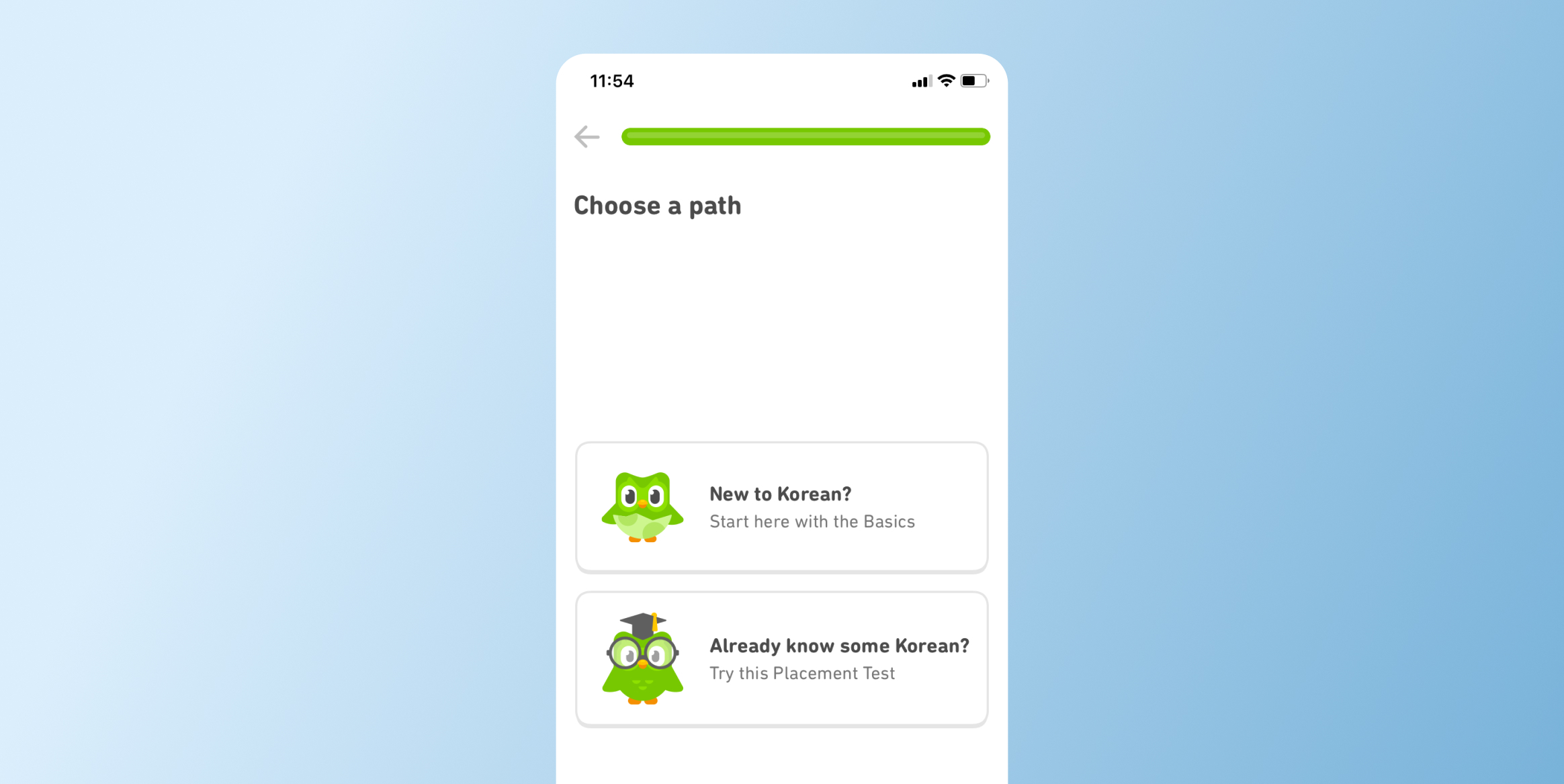
Your first-time user experience (FTUE) should focus entirely on reducing cognitive load. Long registration forms, premature permission requests, and confusing layouts drive up churn before users ever reach your core product. Strong onboarding flows use progressive profiling, single sign-on (SSO), and contextual tooltips to guide users step by step rather than front-loading everything into a single tutorial.
A good real-world example is Duolingo, which makes people take a gamified quiz before asking them to create an account, removing the single biggest barrier to first engagement. The result is one of the highest D1 retention rates in the education app category.
2. Reduce Time to First Value
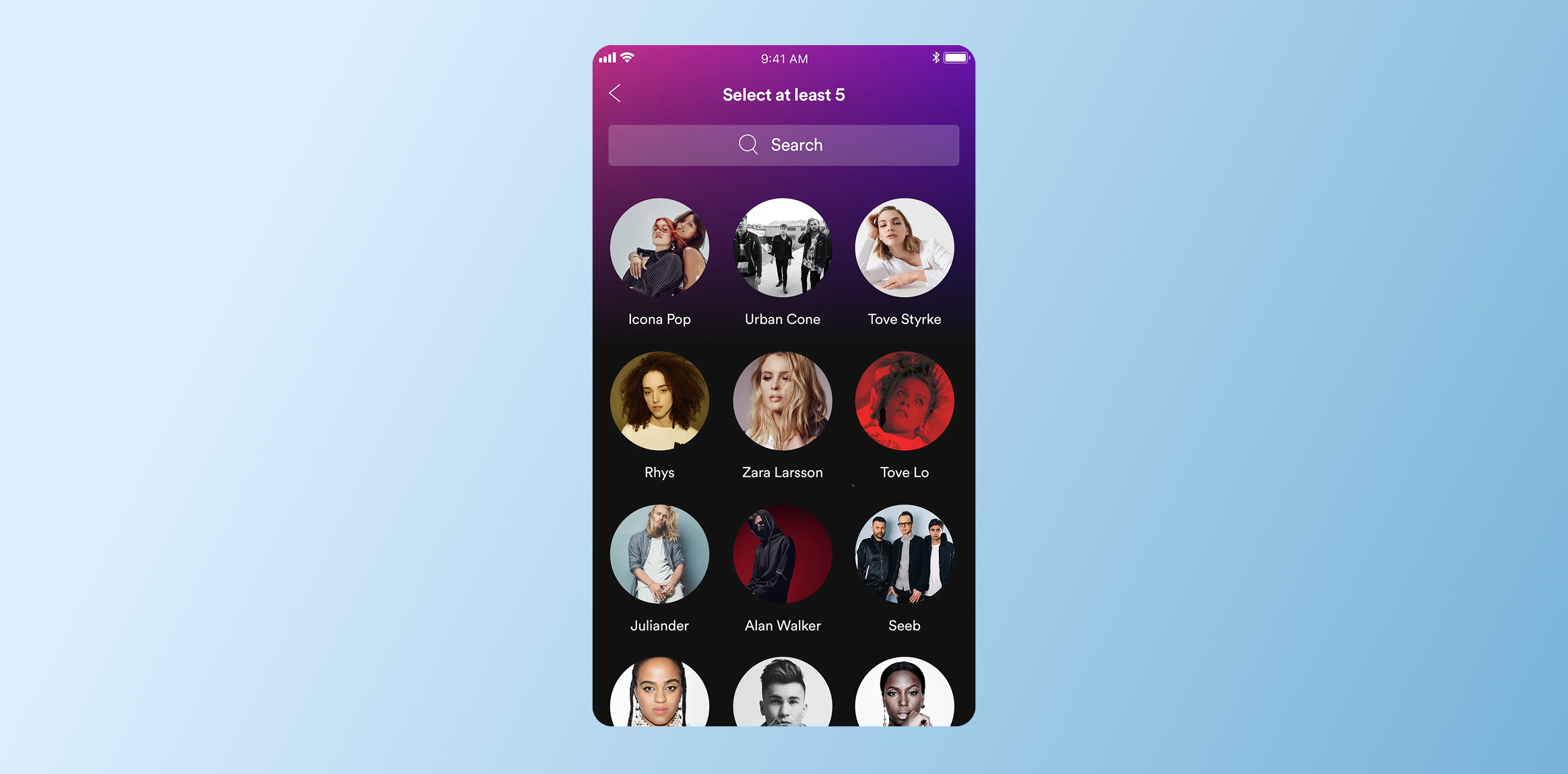
Time to First Value (TTFV) measures how quickly a new user experiences the core benefit of your app. The faster they hit that “Aha” moment, the higher your D1 retention will be. Every unnecessary step between download and core action is a drop-off waiting to happen.
Spotify handles this well by letting new users select their favorite artists during setup, and the app immediately generates a personalized playlist rather than presenting a blank slate. Users are streaming relevant content within seconds of downloading, which establishes product value before they’ve had a chance to second-guess the install.
Engagement and Habit Formation
3. Drive Habit Formation Through Core Actions
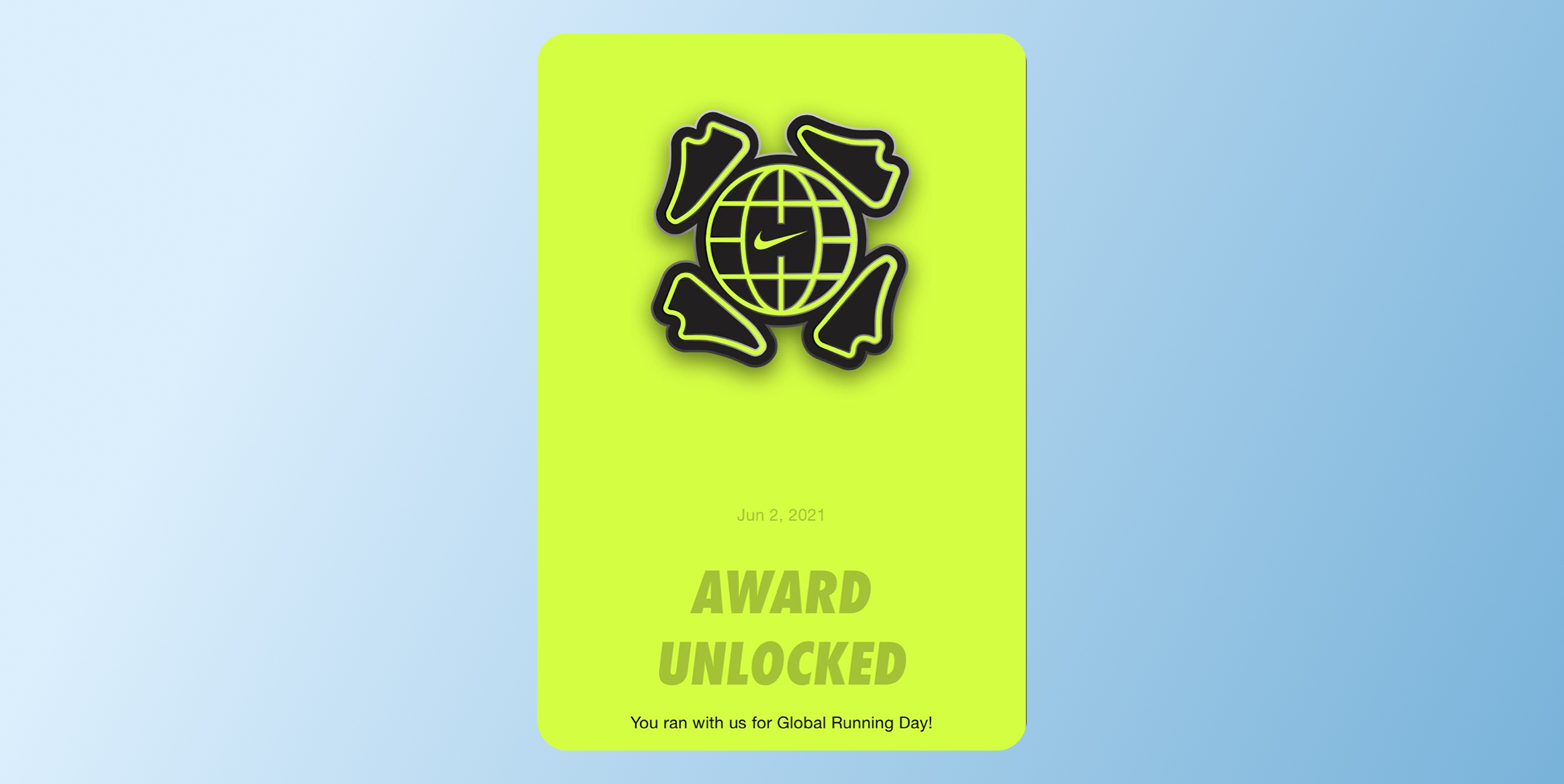
To build retention, you need to identify your app’s core sticky action, like completing a transaction, logging a metric, or saving content, and engineer repeat behavior around it. The faster an initial download becomes a routine, the stronger your long-term retention. Gamified milestones, progress tracking, and reward systems give users a tangible reason to return, which compounds into daily active usage over time.
Nike Run Club builds routine through goal-setting, milestone tracking, and audio feedback that rewards users immediately after a workout. That instant positive reinforcement of getting a badge, a stat update, or a personal record turns occasional use into a habit that’s hard to break.
4. Personalize User Experience Using Behavioral Data
Users notice when an app treats them like everyone else. Behavioral data, such as past purchases, browsed content, session patterns, and feature usage, tells you exactly what each user cares about and where they are in their journey. When you use that data to serve relevant content, surface the right features at the right time, and adapt the experience as their behavior evolves.
The more an app reflects a user’s habits and preferences back to them, the harder it becomes to leave. Personalization is one of the best mobile app retention strategies you have for reducing churn at scale.
5. Use Behavioral Trigger-Based Messaging
Scheduled blanket campaigns often miss the mark, and users who receive irrelevant messages are more likely to unsubscribe or uninstall than engage. Behavioral trigger-based messaging works differently. It fires automatically in response to specific user actions or inactions: an abandoned cart, a half-completed registration, a sudden drop in usage after a period of regular activity.
Netflix does this best by triggering personalized follow-up recommendations based on that exact viewing behavior when a user stops watching mid-series or finishes a show. This reaches the user at the moment they’re most likely to re-engage.
6. Use Push Notifications Strategically
Push notifications are one of the most direct channels for driving app returns, but volume without relevance backfires fast. Users who receive too many generic alerts will uninstall the app if they get tired. Timing, personalization, and context are what separate an engaging notification from the one that drives churn.
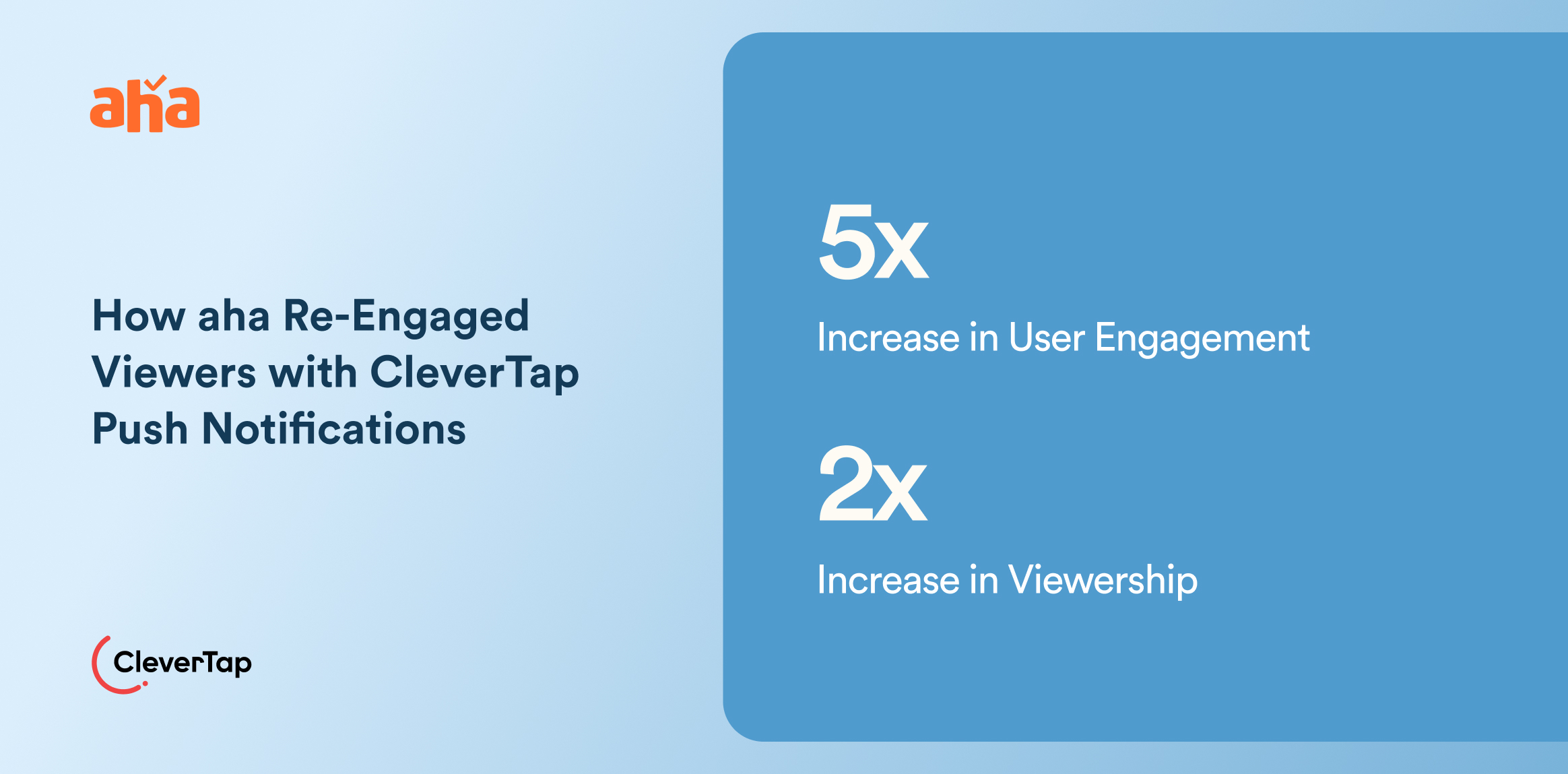
Aha, a regional OTT platform, used CleverTap to segment users by content preferences and trigger drop-off notifications 24 hours after a user stopped watching mid-series. The result was a 5x increase in user engagement and 1,000+ new subscribers on major launch days.
7. Use In-App Messaging for Contextual Engagement
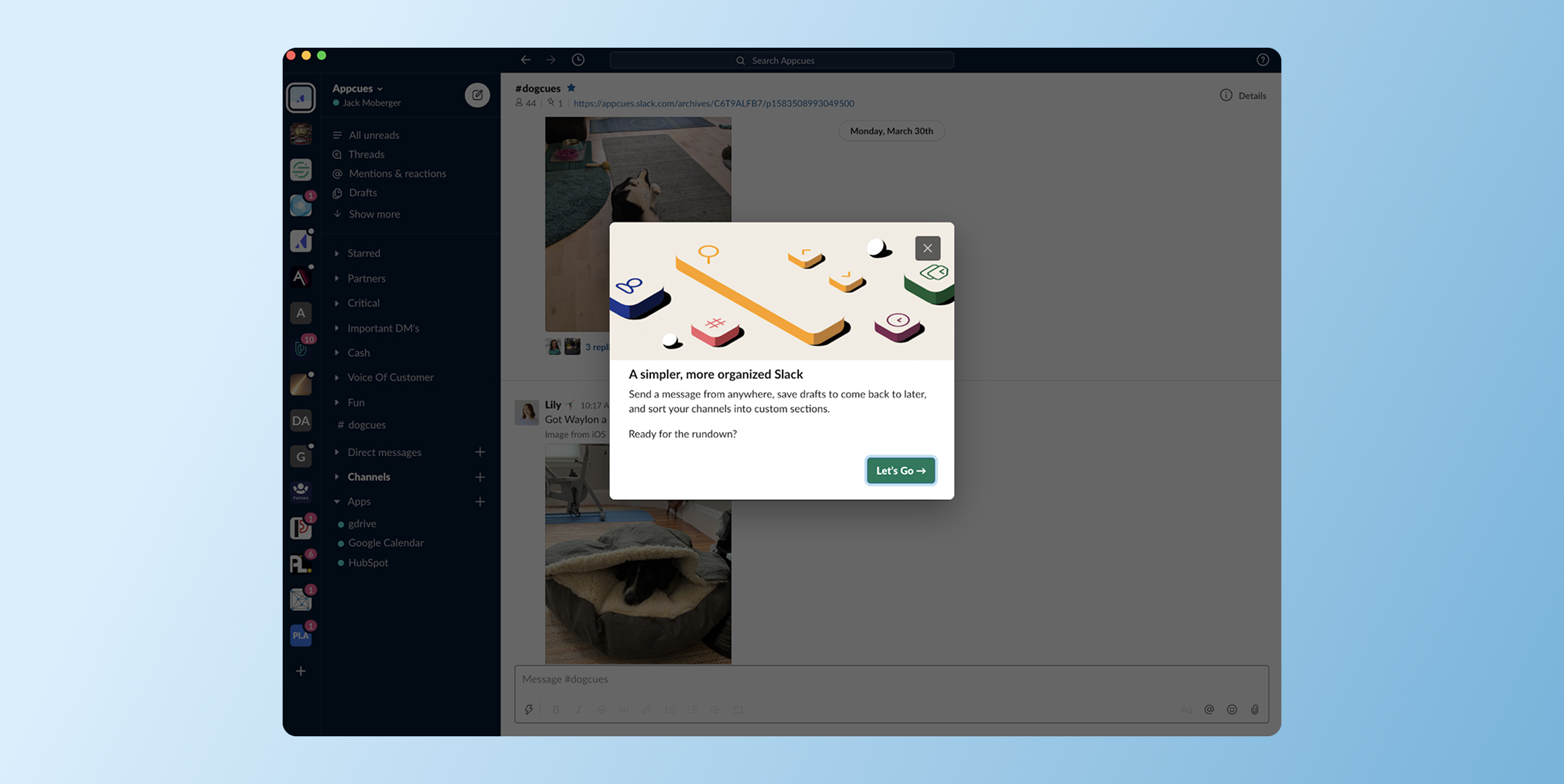
Unlike push notifications that pull users back to your app, in-app messages engage users who are already active. That makes them ideal for driving feature adoption, highlighting milestones, or guiding users through multi-step flows without competing for attention outside the app. Since they don’t require OS-level permissions, they reach your entire active user base.
Slack does something different; it doesn’t disrupt workflows with full-screen takeovers. The app uses subtle banners and tooltips placed contextually next to updated interface elements while users are actively messaging. New features get visibility exactly when users are most likely to engage with them with no friction and no interruptions.
Experience Optimization
8. Remove Friction from Key User Journeys

Every extra tap, slow loading screen, or confusing navigation menu is a potential exit point. Regularly auditing your user flows to identify where people drop off gives you a clear idea of where experience is costing you retention.
Fixing these drop-offs doesn’t always require a major redesign. Eliminating unnecessary form fields, improving load speeds, and making navigation more intuitive are often enough to meaningfully improve completion rates. Amazon, for example, famously reduced checkout steps with its one-click purchasing feature. It is a small UX change that had an outsized impact on conversion and repeat purchases.
9. Drive Feature Discovery and Adoption
Feature adoption is one of the clearest early signals of coming churn. If users never move beyond the basics, they’re not getting enough value from your app to justify keeping it. The goal is to surface secondary features at the right moment and not through overwhelming pop-ups or buried release notes, but through contextual tooltips, subtle badges, and behavioral triggers that introduce functionality when it’s actually relevant to what the user is already doing.
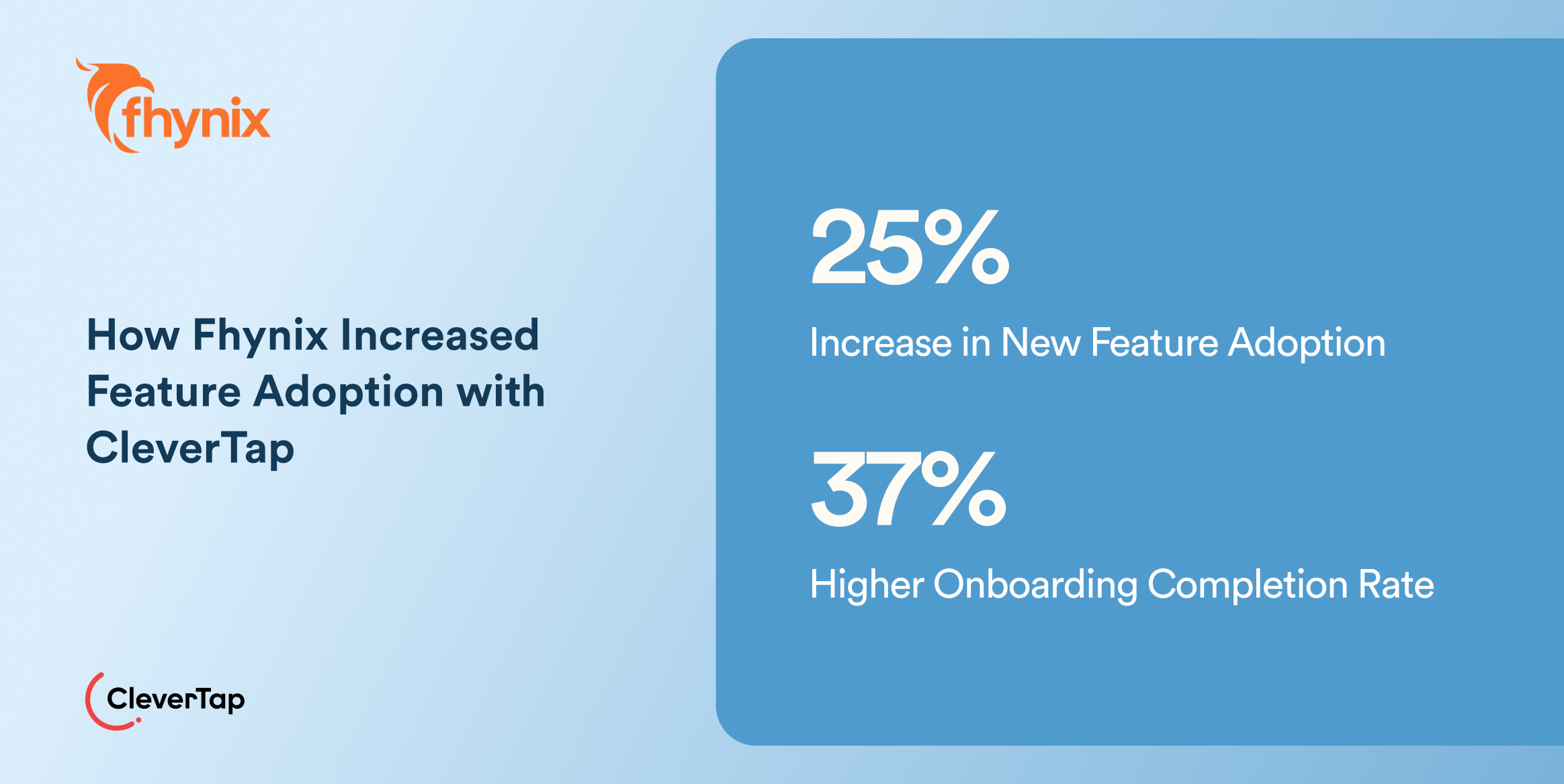
Fhynix used CleverTap’s targeted messaging and real-time analytics to do exactly this and saw a 25% rise in new feature adoption alongside a 37% improvement in onboarding completion.
Loyalty and Relationship Building
10. Create Moments of Delight and Recognition
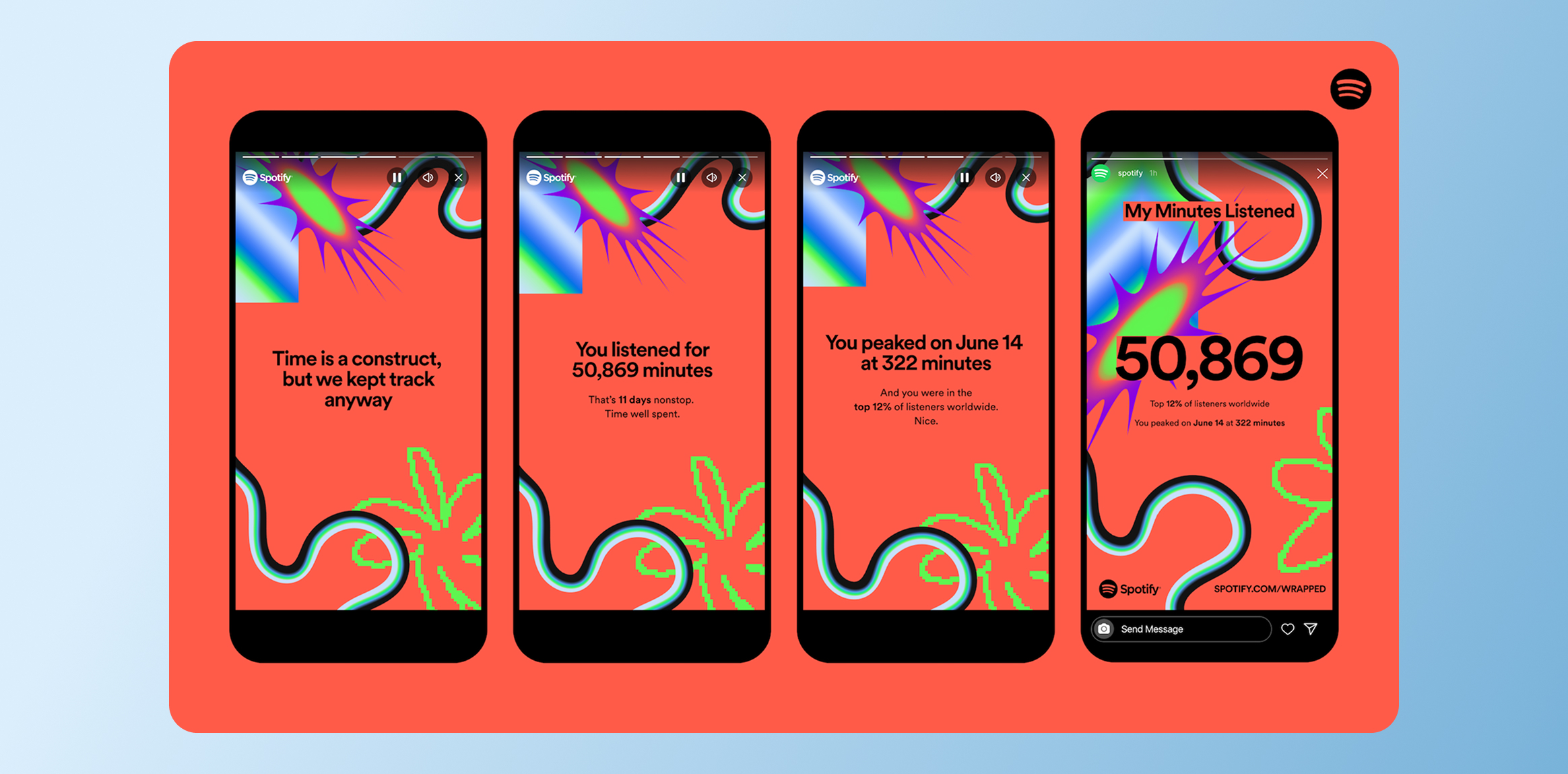
Retention isn’t purely functional. Users who feel recognized and valued by an app are far more likely to stick around than those who don’t. Users remember how an app made them feel. Acknowledging a streak, surprising someone with a loyalty perk, or sharing a personalized progress recap creates moments that go beyond utility, and those moments are what keep users coming back.
Spotify Wrapped is the clearest example of this done well. Once a year, the app turns each user’s listening data into a personalized year-in-review that feels genuinely individual. It drives massive re-engagement, social sharing, and brand affinity—all from a single moment of recognition.
Churn Prevention and Recovery
11. Identify and Act on Churn Risk Early
Users rarely churn without warning. Long before they uninstall, the signals are already there, like declining session frequency, shorter sessions, and a sudden stop in completing core actions. Establishing baseline engagement metrics lets you build automated risk profiles that flag users the moment their activity dips below a critical threshold, giving your team enough lead time to intervene before disengagement becomes permanent.
Once high-risk users are identified, retention teams can respond with personalized offers, feature education, customer support outreach, or re-engagement campaigns tailored to the user’s behavior and value. The earlier the intervention, the higher the likelihood of reversing the decline.
12. Run Re-Engagement Campaigns Before Users Churn
Once an at-risk user is identified, the window to act is short, and generic win-back messages won’t be enough. Users need a compelling, contextual reason to return, whether that’s a personalized offer, a highlight of new features since their last session, or content tailored to their past behavior. Cross-channel campaigns across push, email, and SMS work best when they reach users while the app is still familiar.
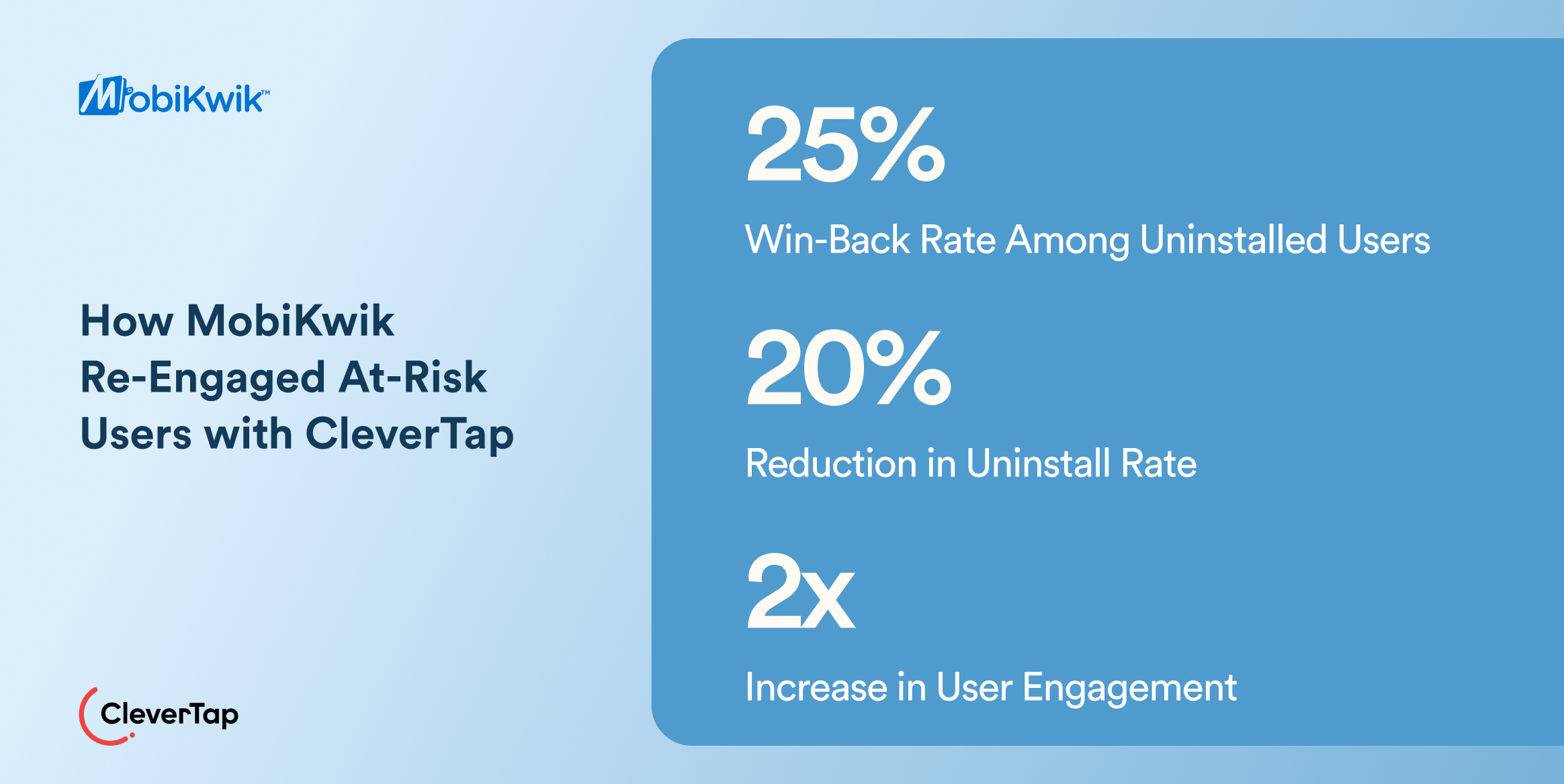
Mobikwik used to send Day 3 and Day 4 promotions to new users showing early drop-off signals, then followed up with SMS and email campaigns for those who had already uninstalled. The result was 23–25% of their uninstalled user base was won back, uninstall rates dropped by 20%, and overall engagement doubled.
How CleverTap Helps Improve Mobile App Retention
CleverTap is a customer engagement and retention platform used by mobile-first brands to understand user behavior, improve engagement, and reduce churn. By bringing analytics, segmentation, lifecycle automation, and messaging into a single system, it helps teams turn retention insights into action.
Improving mobile app retention is rarely about fixing a single metric. A drop in D1 retention might point to onboarding friction. Low feature adoption could mean users are not discovering enough value. Rising churn often begins with small engagement changes long before a user uninstalls the app. Solving these problems requires visibility into user behavior and the ability to act on those insights quickly.
Here’s what that looks like in practice:
- Reduce onboarding drop-offs: Early churn often happens before users experience the core value of an app. CleverTap’s Funnels help teams identify where users abandon onboarding, while Journeys and contextual engagement campaigns help guide them toward activation through channels such as push notifications, in-app messages, App Inbox, email, SMS, and WhatsApp.
- Increase feature adoption: Users are less likely to retain if they never discover the features that make an app valuable. CleverTap helps teams track feature adoption through Events, Funnels, and Trends reports, then use targeted campaigns and in-app messaging to introduce relevant capabilities at the right moment.
- Build more relevant audience segments: Retention strategies work best when they reflect how users actually behave. CleverTap’s real-time Segments can be built around lifecycle stage, engagement frequency, inactivity, feature usage, and custom user attributes, while RFM Analysis helps identify loyal users, champions, and churn-risk audiences.
- Personalize engagement using real-time behavior: Generic campaigns often get ignored. CleverTap allows teams to personalize messaging, recommendations, and offers based on real-time behavioral signals such as purchases, content consumption, browsing activity, and engagement history. Features such as Send Time Optimization help improve relevance without increasing message volume.
- Identify churn risks before users leave: Most users show signs of disengagement long before they uninstall an app. Cohorts, retention reports, and behavioral analytics help teams identify declining engagement patterns early and trigger interventions before inactivity becomes permanent.
- Re-engage users across channels: Different users respond to different channels. CleverTap’s Journeys make it possible to coordinate re-engagement campaigns across push notifications, in-app messages, App Inbox, email, SMS, and WhatsApp from a single workflow rather than relying on disconnected campaigns.
- Measure what improves retention: Retention is an ongoing optimization process. CleverTap helps teams track D1, D7, and D30 retention, DAU/MAU, churn trends, cohort performance, funnel conversions, and campaign results to understand which retention strategies are delivering results.
- Continuously optimize retention strategies: Assumptions rarely outperform experimentation. Teams can use A/B testing and IntelliNODE to test different messages, channels, timings, and journey paths, then optimize campaigns based on measurable performance data.
Mobile app retention is rarely improved by a single campaign or feature. The strongest retention programs combine onboarding, personalization, feature adoption, engagement, and churn prevention into a connected system that continuously adapts to user behavior.
See how CleverTap helps mobile teams improve retention, reduce churn, and build lasting user habits across the entire app lifecycle.
Conclusion
Retention is a cumulative result of getting multiple things right across the user journey. It is a frictionless onboarding experience, consistent engagement, communication that feels personal, and the ability to spot and act on churn signals before they become uninstalls.
Apps that treat retention as a lifecycle system, where every stage connects to the next, consistently outperform those that rely on isolated, reactive tactics. The metrics tell you where the gaps are. The strategies close them. Put both together, and you have a foundation for sustainable long-term growth.
CleverTap helps bring those metrics and strategies into a single system. If you’re looking to improve retention without relying on disconnected tools and guesswork, it’s worth exploring how the platform can support your retention goals. Schedule a demo with CleverTap now.
Deliver Live 1:1 Personalization That Drives Higher Lifetime Value
Customer loyalty is built when engagement keeps pace with changing needs and behavior. With CleverTap’s AI-native Customer Retention Management Platform, powered by CleverAI™, you set the goals and guardrails while past context, live intent, and AI decisioning deliver Live 1:1 Personalization. Each outcome informs the next decision, helping curb churn, and maximize customer lifetime value.

April Tayson 
Regional Vice President for INSEAU at Adjust
Free Customer Engagement Guides
Join our newsletter for actionable tips and proven strategies to grow your business and engage your customers.