



































Table of Contents
Categories
Most Popular


Customer loyalty programs help attract, engage, and satisfy your customers. Here is an in-depth exploration of successful customer loyalty program examples across various industries and best practices to improve your customer retention.
Loyal customers are arguably one of the most valuable assets any brand can have. Not only are current customers more affordable than acquiring new ones, but loyal customers typically spend more and generate larger transactions.
In fact, 57% of consumers spend more on brands to which they are loyal.* 70% of Macy’s transactions in 2021 were tied to its loyalty program.* The company said more than 3.5 million new members signed up for the lowest tier of its Star Rewards program in the last quarter of 2021 alone.
What Are Customer Loyalty Programs?
A customer loyalty program is a strategy designed to encourage repeat business, where a brand offers its customers rewards, discounts, and other incentives in order to attract and retain their business. These programs are designed to build loyalty, and it pays off when done well.
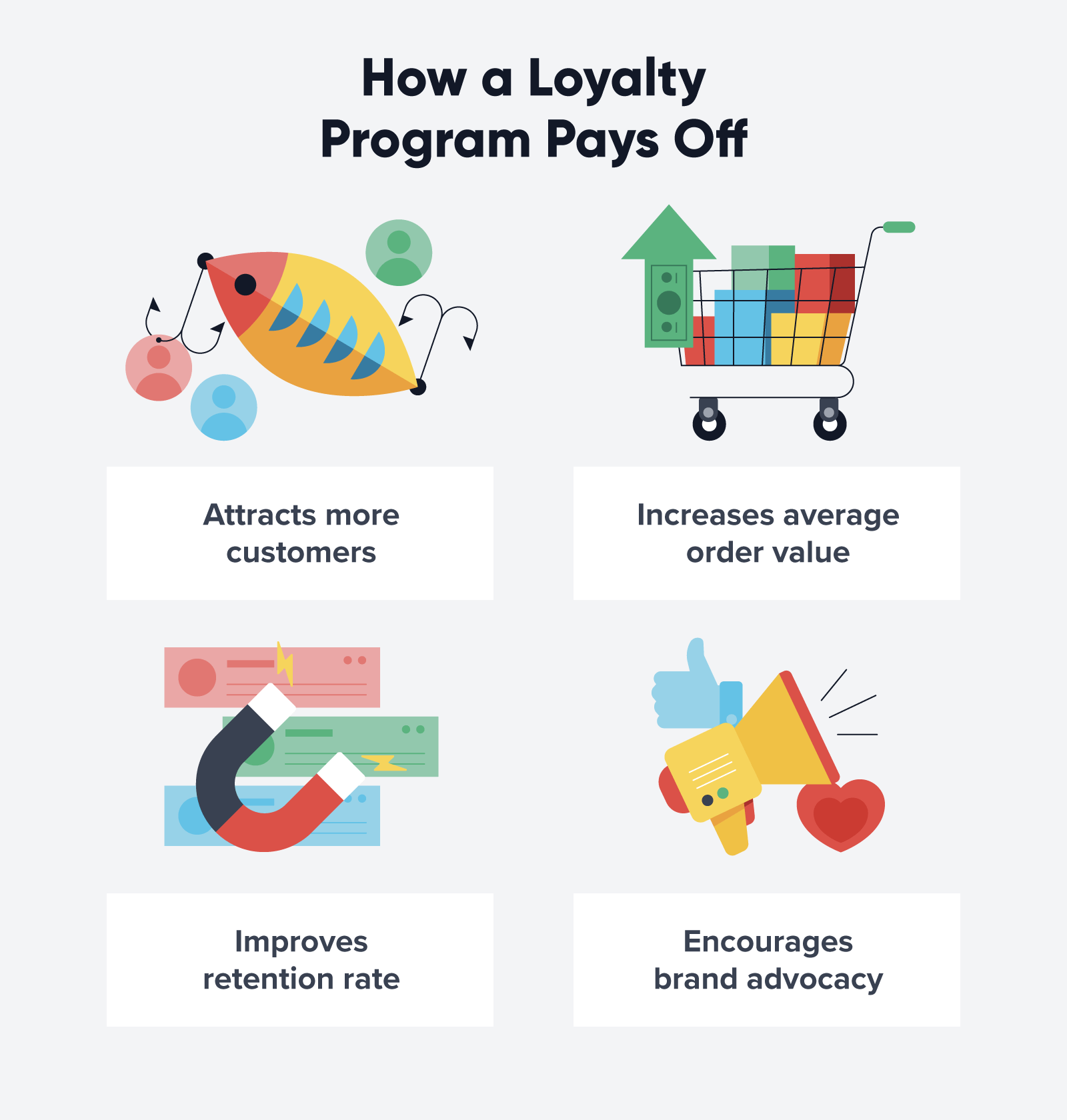
In fact, studies on customer loyalty program examples have found that 75% of consumers favor brands that offer rewards programs.* Since consumers are getting something beneficial from their continuous business, it gives them an additional incentive to stay loyal to the brand.
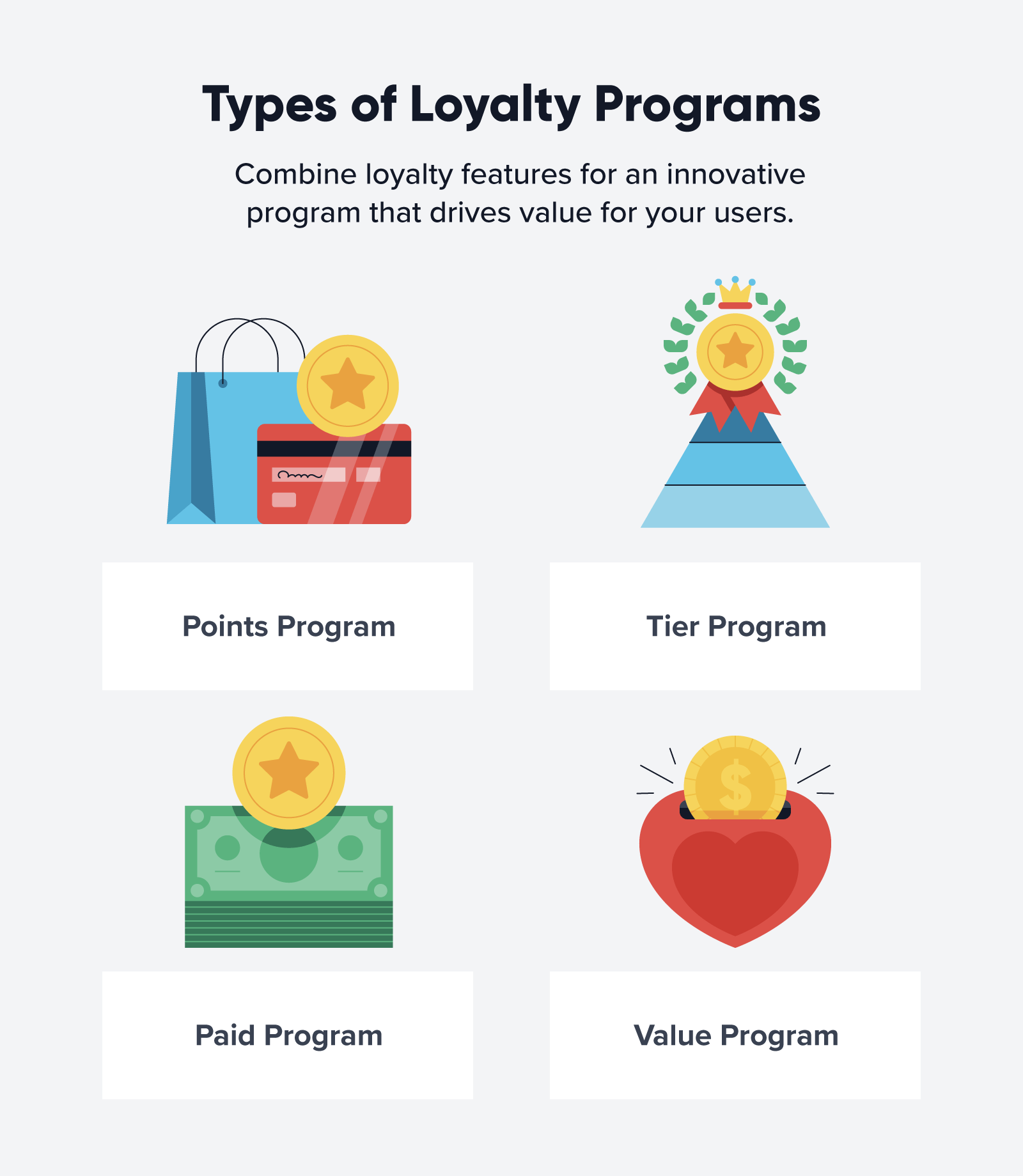
There are various types of customer loyalty programs, each with their own strategy.
Points Programs
A points-based program is the most common type of loyalty program. They let customers accumulate points with their purchases which they can redeem for free products and other perks.
Some points programs even allow customers to earn points through other ways like leaving reviews, sharing posts on social media, having a birthday, and so on.
Tier Programs
A tier-based loyalty program is where a customer will get different benefits depending on their rank. The higher a customer is ranked, the better their rewards will be.
To get to a higher tier and earn exclusive rewards, customers need to buy and engage more with a brand. Businesses will then rank their customers based on sales metrics and engagement.
Paid Programs
A paid loyalty program is when a customer receives immediate and continuous benefits once they pay a recurring or one-time fee. If a company can convince consumers of the value of their program, it can build higher customer value.
McKinsey research found that members of paid loyalty programs were 60% more likely to spend more on a brand after subscribing.* If a customer is paying for a loyalty membership, they’ll want to get as much out of the program as possible.
Values-Based Loyalty Programs
Values-based loyalty programs strengthen customer relationships by connecting rewards or membership experiences with causes, communities, or principles that matter to the brand and its customers.
Rather than relying only on discounts or points, these programs can incorporate charitable contributions, community participation, sustainability initiatives, or opportunities for customers to support causes through their engagement with the brand.
What Do Customers Want From a Loyalty Program?
While loyalty programs are a great way to retain loyal customers, they are also a great way to acquire new ones. In fact, 75% of consumers say they would switch brands for a better loyalty program.*
With that being said, it begs the question: What do customers really want from a loyalty program?
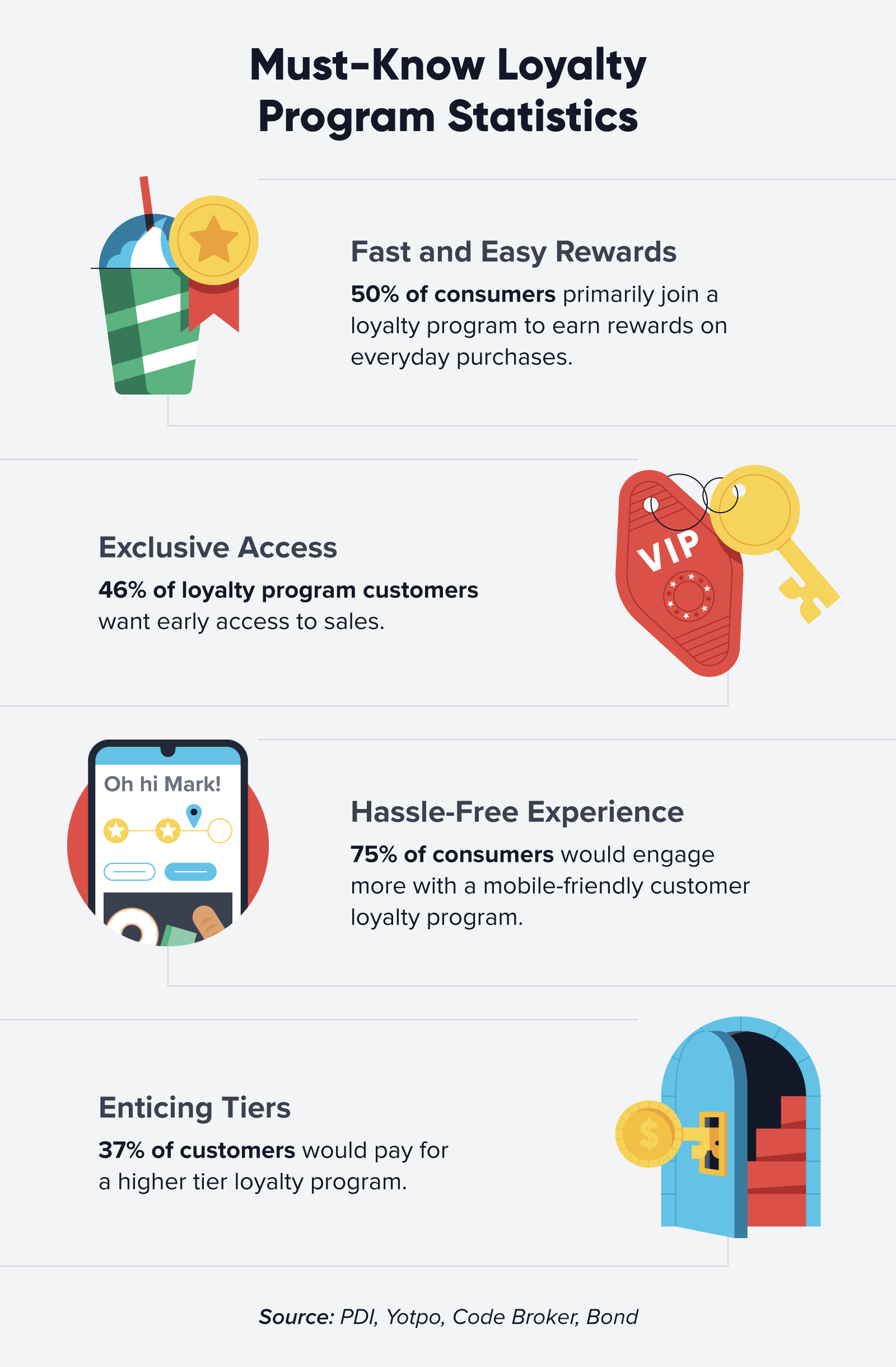
- Enticing rewards: Customers want offerings like free products and discounts as rewards for their loyalty.
- Exclusive deals: Consumers want offerings like free shipping or exclusive access to sales, making them an honored customer.
- Hassle-free usage: Customers want hassle-free programs with limited maintenance to make it easy to sign up and use.
You might like to read: How to Measure Customer Loyalty using proven metrics and formulas.
Customer Loyalty Program Examples
The following customer loyalty program examples highlight how brands are using points, tiers, paid memberships, experiences, and other incentives to engage and retain customers. The strongest programs do more than reward purchases. They give customers a clear reason to return, progress, participate, or consolidate more of their spending with the brand.
1. Starbucks: Starbucks Rewards
Starbucks Rewards combines points with tier progression, giving customers both an immediate reason to return and a longer-term incentive to engage more frequently.
In 2026, Starbucks redesigned the program around three membership levels: Green, Gold, and Reserve. Green members earn 1 Star per dollar spent. Customers move to Gold after earning 500 Stars within 12 months, where earning increases to 1.2 Stars per dollar. Reserve status begins at 2,500 Stars and increases the earning rate to 1.7 Stars per dollar. Higher tiers also provide additional benefits such as longer birthday reward windows, more Double Star Days, and premium experiences.
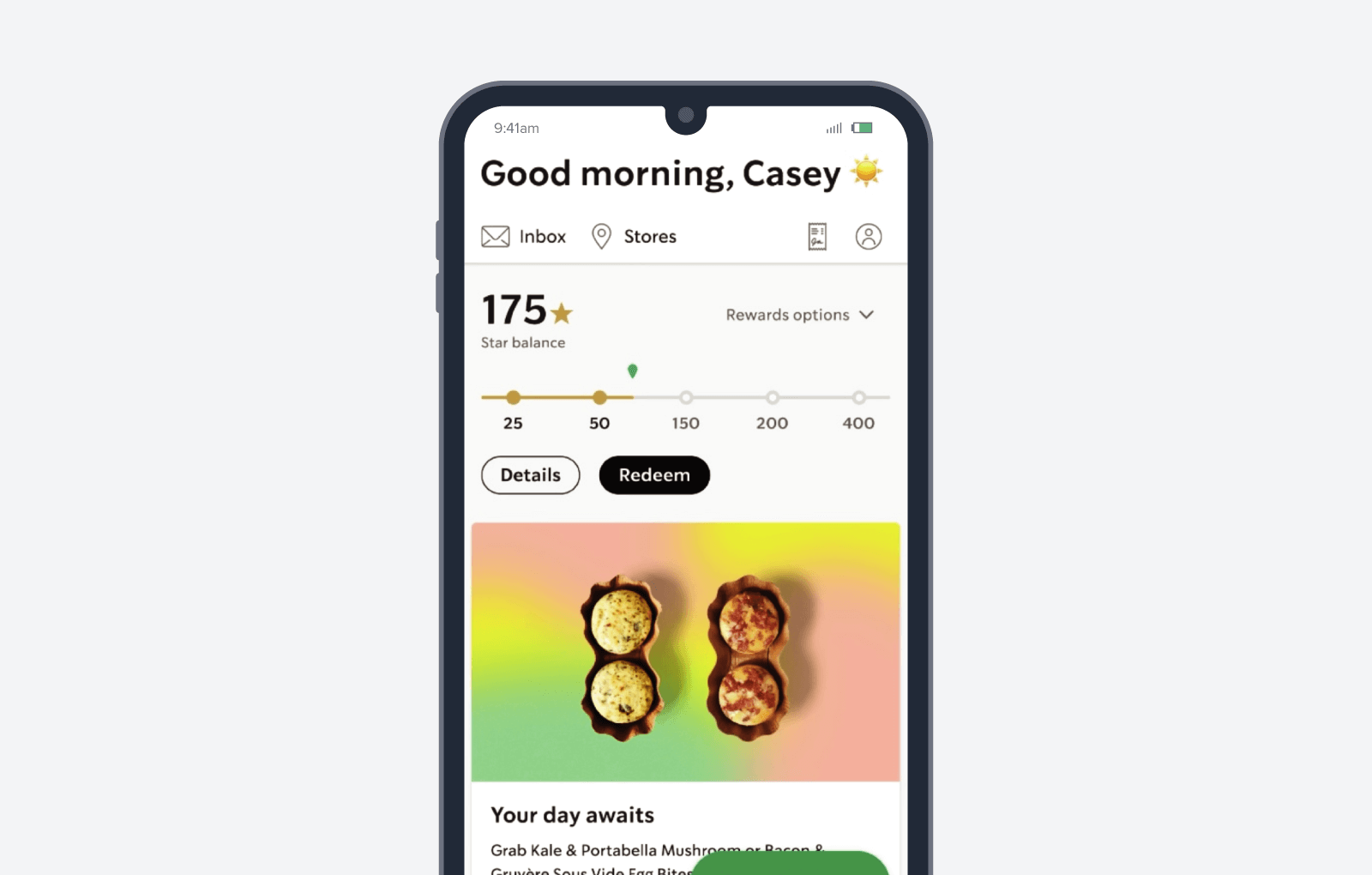
The program also offers multiple redemption thresholds rather than making members wait for one large reward. For example, members can use 60 Stars for $2 off a purchase, while higher balances can be redeemed for drinks, food, and merchandise. Starbucks reported 35.5 million 90-day active Rewards members in the U.S. in early 2026, showing the scale at which the program operates. investor.starbucks.com
What makes Starbucks Rewards particularly effective is how closely it is integrated into the purchasing experience. Customers can order, pay, track Stars, monitor tier progress, and receive personalized offers through the Starbucks app. Instead of functioning as a separate rewards layer, loyalty becomes part of the regular purchase journey.
2. The North Face: XPLR Pass
The North Face’s XPLR Pass combines transactional rewards with benefits and activities that reflect the outdoor lifestyle associated with the brand.
Members earn 1 point for every $1 spent, and every 100 points can currently generate a $10 reward. The program also provides free shipping, early or exclusive access to selected products, member events, birthday benefits, and opportunities to test products.
Where XPLR Pass becomes more interesting is in the ways customers can earn points without making another purchase. Members can earn points for referring a friend, downloading The North Face app, bringing a reusable bag into a store, completing selected surveys, or checking in through the app at participating stores, national parks, and national monuments.
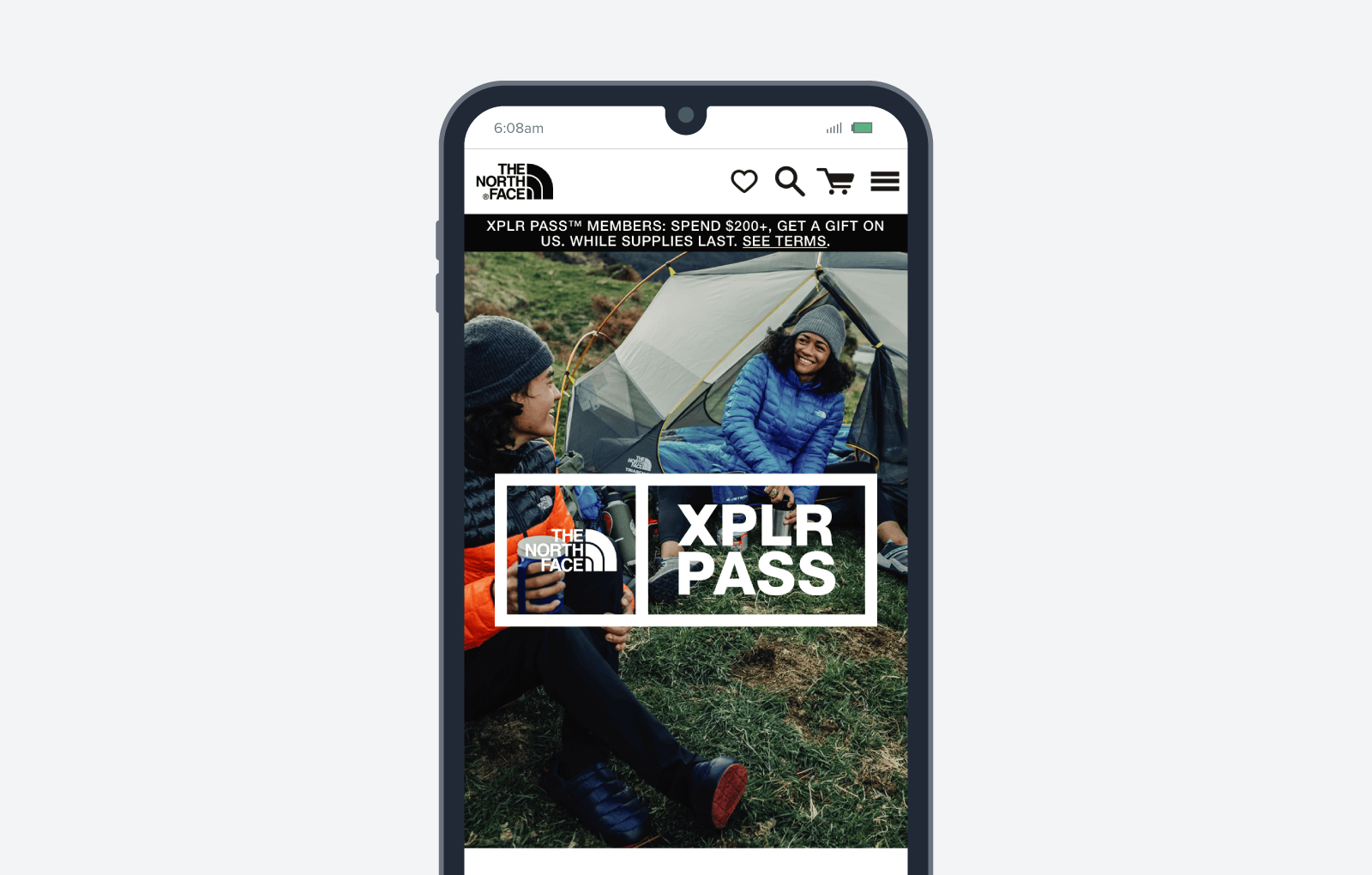
The North Face is also making redemption more flexible. From October 7, 2026, members will be able to choose when to redeem eligible points instead of having points automatically converted into seasonal rewards. Under the new structure, 100 available points will continue to equal $10 off a qualifying purchase.
This makes XPLR Pass a useful example of designing loyalty around the brand itself. The program does not only reward customers for buying outdoor products. It also rewards behaviors connected to exploration, sustainability, participation, and the wider outdoor community.
Customer Loyalty Tier Program Examples
3. Designer Shoe Warehouse: DSW VIP
DSW VIP uses clear spending thresholds and accelerated earning to make progress through the loyalty program easy for customers to understand.
The free program has three levels: Club, Gold, and Elite. Club members earn 5 points per dollar spent. Gold status unlocks after $250 in annual spend and doubles the earning rate to 10 points per dollar. Elite begins at $500 and increases earning to 15 points per dollar. Members can redeem every 200 points for a $1 reward.
Higher tiers also introduce additional benefits. Gold and Elite members receive earlier access to selected offers, while Elite members receive perks such as a free shoe treatment. All members can receive free shipping, birthday rewards, special offers, and points for donating shoes
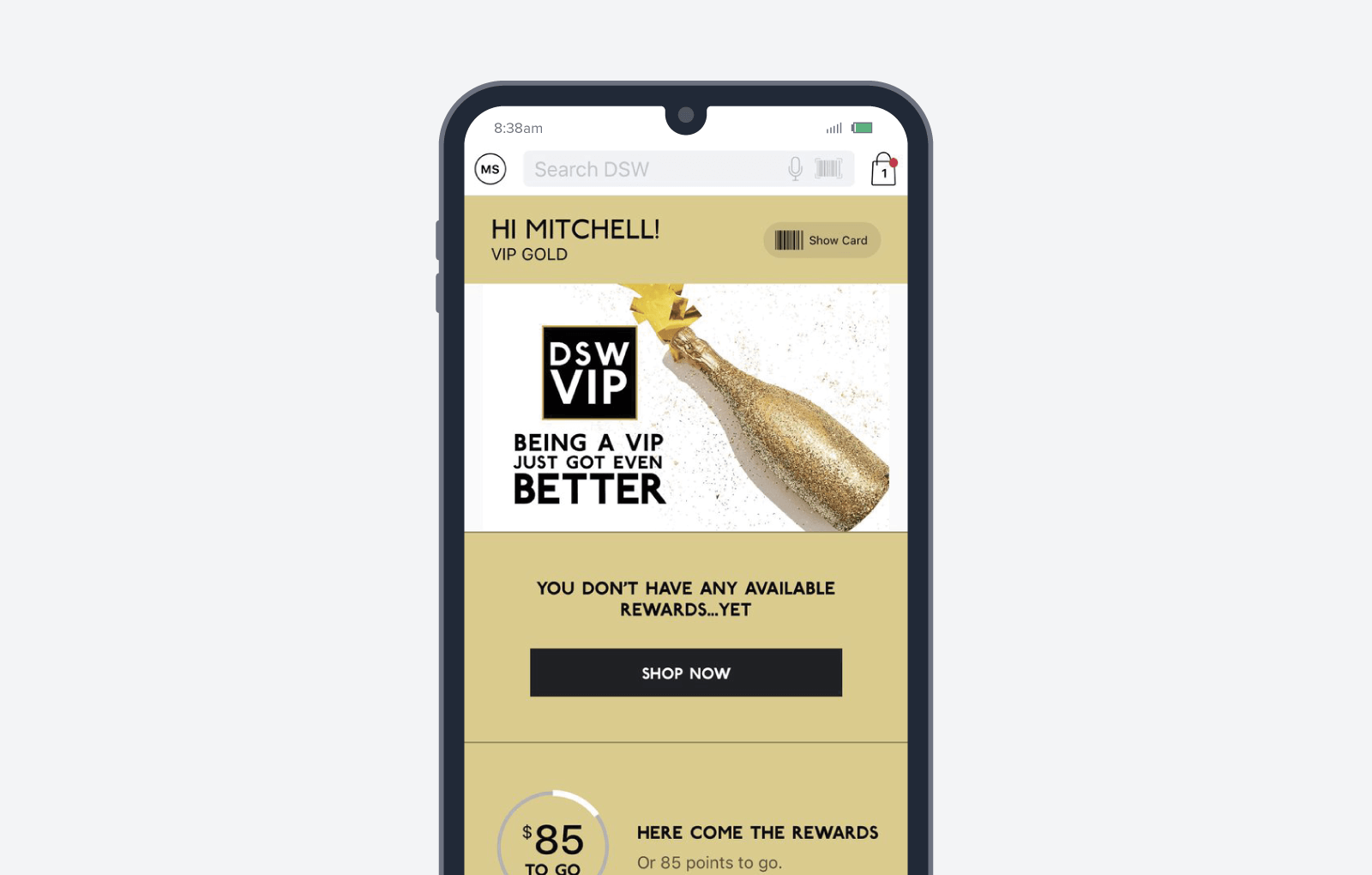
The strength of the program is the visibility of its progression. A customer at Club level can see exactly what spending threshold unlocks Gold and how much faster rewards will accumulate once they get there. The same dynamic repeats between Gold and Elite.
DSW has also used personalized loyalty communications to show members their status, savings, and progress toward future rewards. That is important because tier mechanics work best when customers know how close they are to the next benefit. The program therefore combines the reward itself with regular reminders of the value already earned and the value still available.
4. Sephora: Beauty Insider
Sephora’s Beauty Insider combines points, status, reward choice, exclusivity, and community within one loyalty program.
Members earn points on qualifying purchases that can be redeemed through Sephora’s Rewards Bazaar. Instead of converting points into one fixed reward, customers can choose among different products, samples, experiences, and other benefits at different redemption levels.
Beauty Insider also has three membership tiers: Insider, VIB, and Rouge. Insider is free to join, while VIB and Rouge are reached through higher annual spending. These tiers provide additional benefits, including greater discounts during selected sales events and access to tier-specific experiences or rewards.
The choice built into the redemption system is one of the program’s strongest features. A customer can use points relatively quickly or continue saving for something they value more. That gives the loyalty currency greater flexibility than a system that automatically issues the same coupon whenever a threshold is reached.
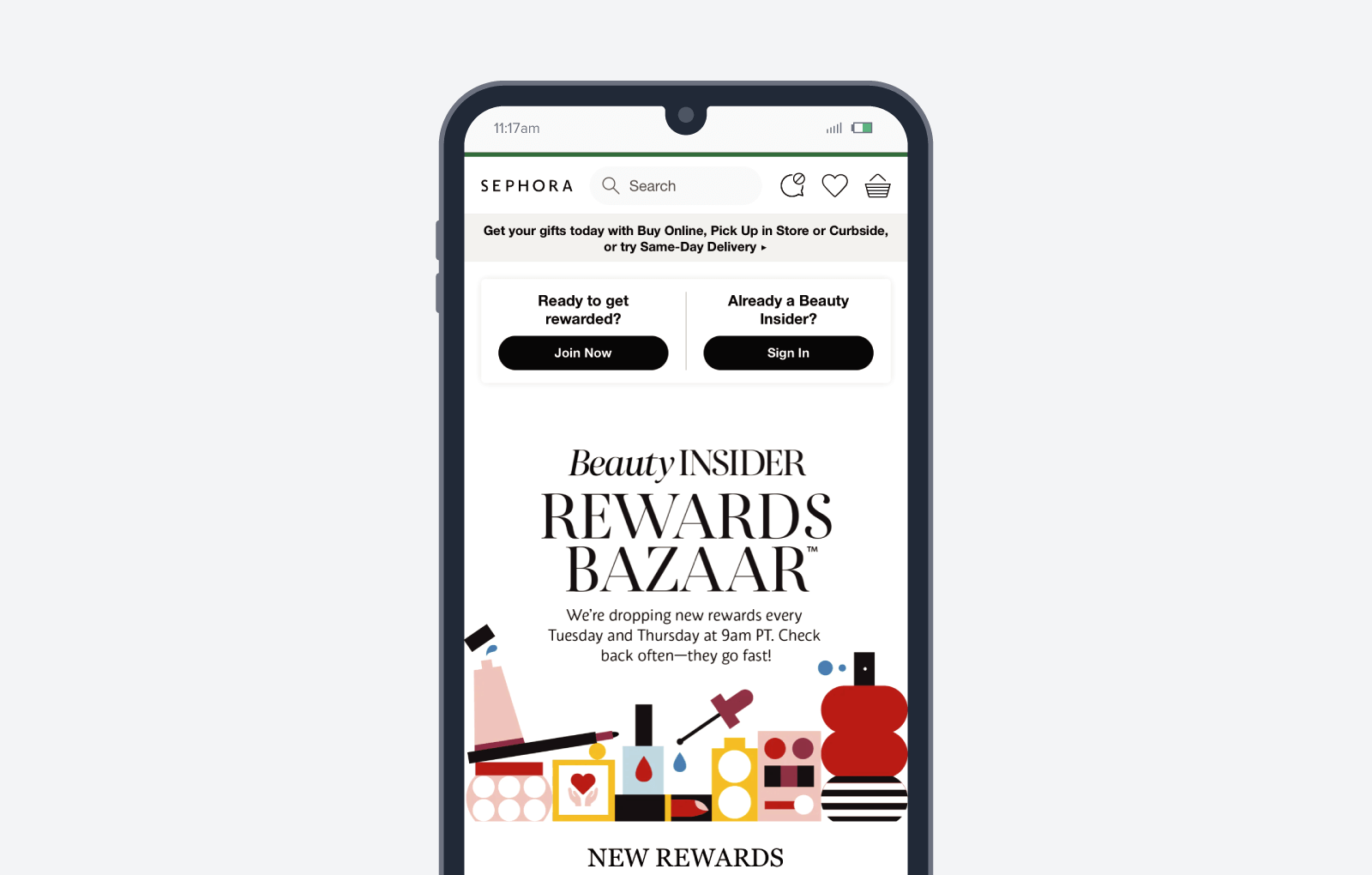
Sephora also extends loyalty beyond spending through its wider beauty ecosystem. Rewards, birthday benefits, beauty discovery, member events, and community participation give customers reasons to engage with Sephora outside an immediate transaction.
That combination helps Beauty Insider appeal to both transactional and emotional loyalty. Customers can save money and earn tangible rewards, but they can also gain access, status, discovery, and participation in a community built around their interest in beauty.
Understand the key factors that impact the cost of building a loyalty program and how to optimize your investment.
5. Alaska Airlines and Hawaiian Airlines: Atmos Rewards
Airline loyalty programs are designed to make repeat travel more rewarding, and Atmos Rewards provides a useful example of how loyalty programs can evolve as brands expand their ecosystems.
Launched following the combination of Alaska Airlines and Hawaiian Airlines, Atmos Rewards brings the airlines’ loyalty programs together under a single program. Members can earn and redeem points across eligible travel while progressing toward elite status and additional travel benefits.
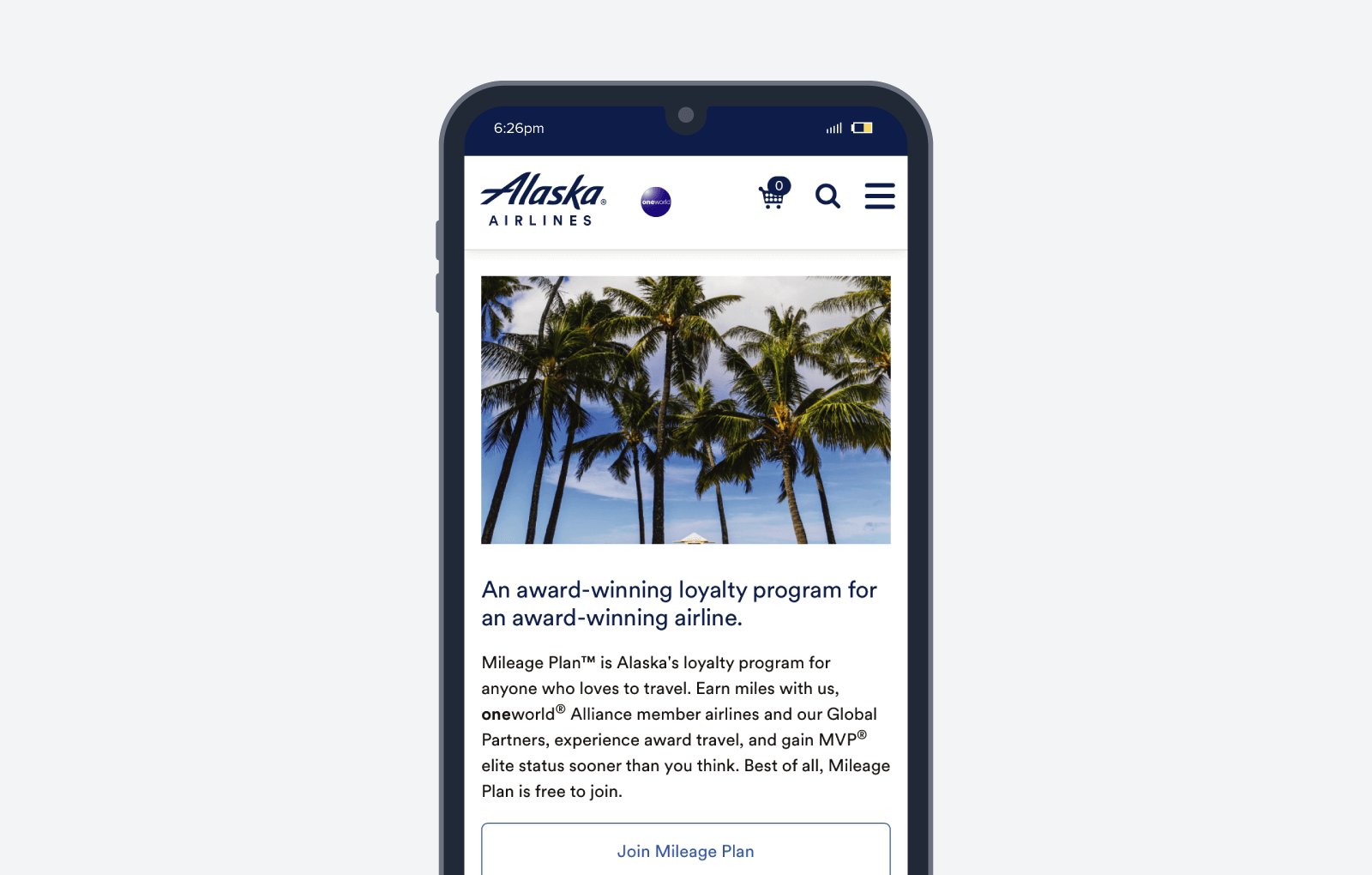
The program demonstrates how brands can use loyalty to connect experiences across a broader network rather than rewarding customers for interacting with only one part of the business.
6. Expedia: One Key
Travel loyalty becomes more valuable when customers can earn and use rewards across different parts of their journey. Expedia’s One Key program is designed around that idea.
Members can earn OneKeyCash on eligible travel booked through participating Expedia Group brands and use those rewards toward eligible bookings. The program also includes membership tiers that unlock additional benefits as customers travel more.
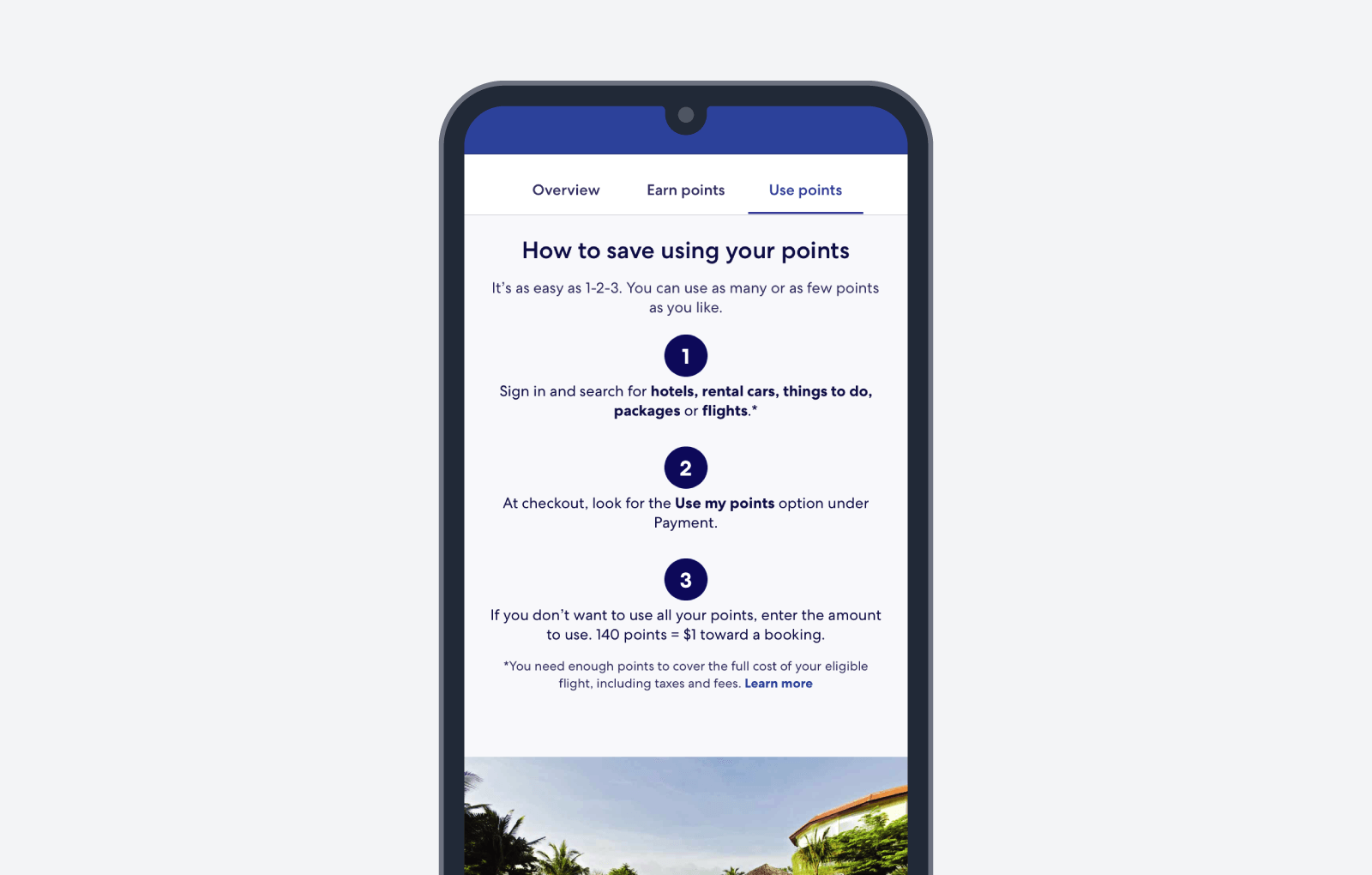
By extending loyalty across multiple travel products and brands, One Key gives customers another reason to keep their bookings within the Expedia Group ecosystem rather than switching between providers.
7. Chick-fil-A: Chick-fil-A One
Chick-fil-A One combines points-based rewards with a tiered membership structure. Members progress through Chick-fil-A One, Silver, Red, and Signature status as they engage with the program, unlocking additional benefits as they move through the tiers.
With its enticing loyalty program benefits like free treats, convenient drive-thru experiences, and opportunities to gain exclusive rewards, customers keep coming back for more. Members can earn points on eligible purchases and redeem them for rewards, while higher tiers provide access to additional benefits and experiences.

Chick-fil-A also uses their app to gain insights on customer data and feedback so they can offer an experience that is worthwhile to their customers.
Customer Loyalty Paid Program Examples
8. Amazon: Amazon Prime
A well-known paid membership program that completely changed the game is Amazon Prime. By paying an annual fee, Prime members get access to free two-day shipping on millions of products as well as access to their video streaming service.
While big retailers like Walmart and Target are main competitors, Prime memberships are how Amazon differentiates themselves from other similar brands.
Online shopping offers the convenience of shopping directly from your device in the comfort of your home. Free shipping makes it just as affordable as traditional in-store shopping.
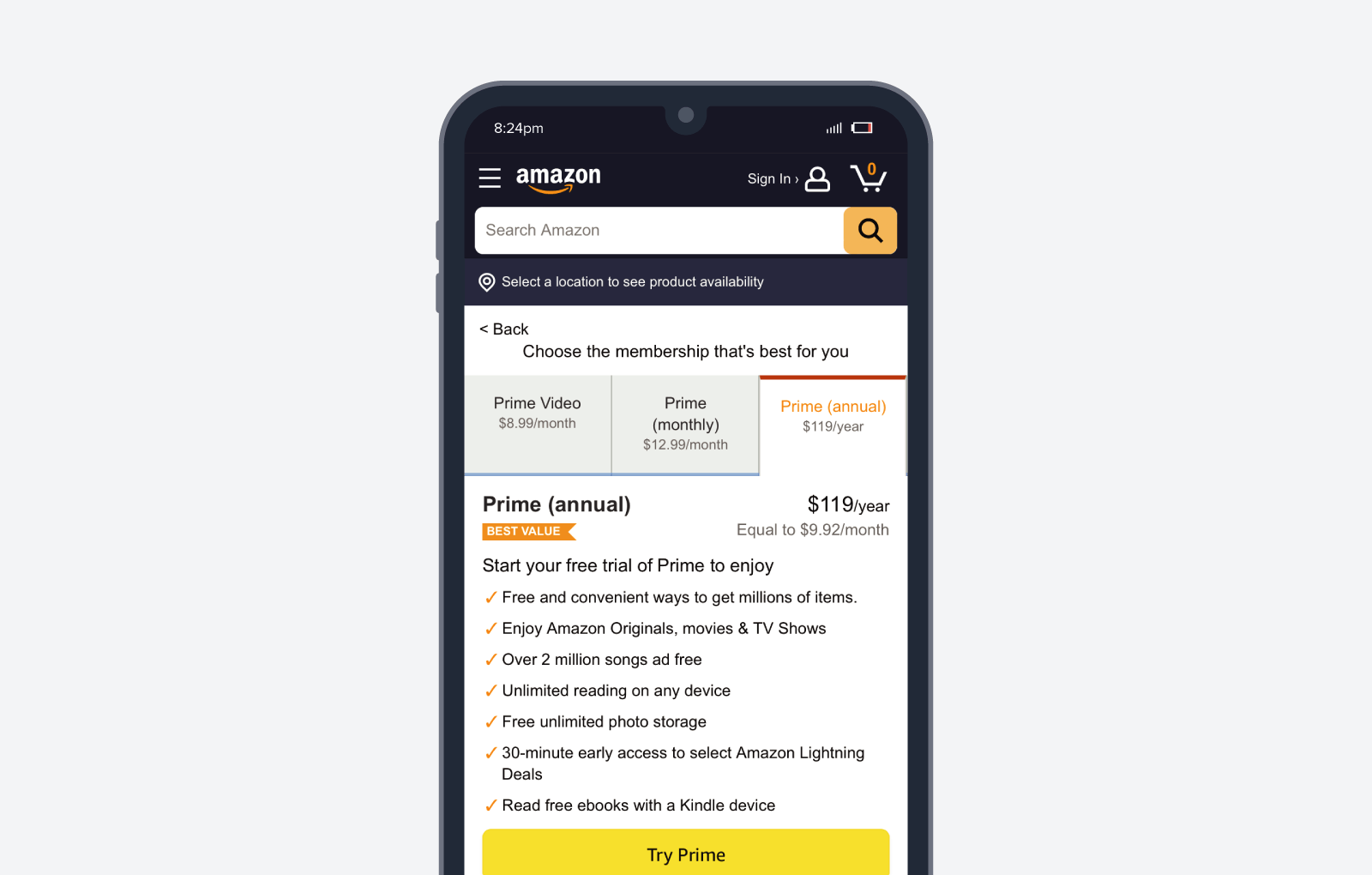
This makes Amazon Prime a customer’s primary shopping choice, since the value of Prime outweighs the annual fee. An upfront investment also encourages customers to validate their purchase by spending more on the brand.
You might like to read: Retail and store loyalty programs and how they help drive long-term customer retention.
9. Uber: Uber One
Uber One shows how a paid loyalty program can bring multiple services under a single membership. Members pay a recurring fee for benefits across eligible Uber rides and Uber Eats orders, with perks varying by market.
Unlike the former Uber Rewards points program, Uber One is structured as a paid membership that provides ongoing benefits rather than requiring customers to accumulate points. This gives frequent users an incentive to keep both their transportation and food delivery activity within the Uber ecosystem.
10. REI Co-op: Co-op Membership
Although the main point of a customer loyalty program is to convince customers to spend more money on a brand, the best customer loyalty programs drive real value to their customers.
REI’s Co-op Membership gives members an estimated 10% annual reward on eligible purchases, along with member offers, special pricing, used-gear benefits, and discounts on select services, for a one-time $30 lifetime membership.
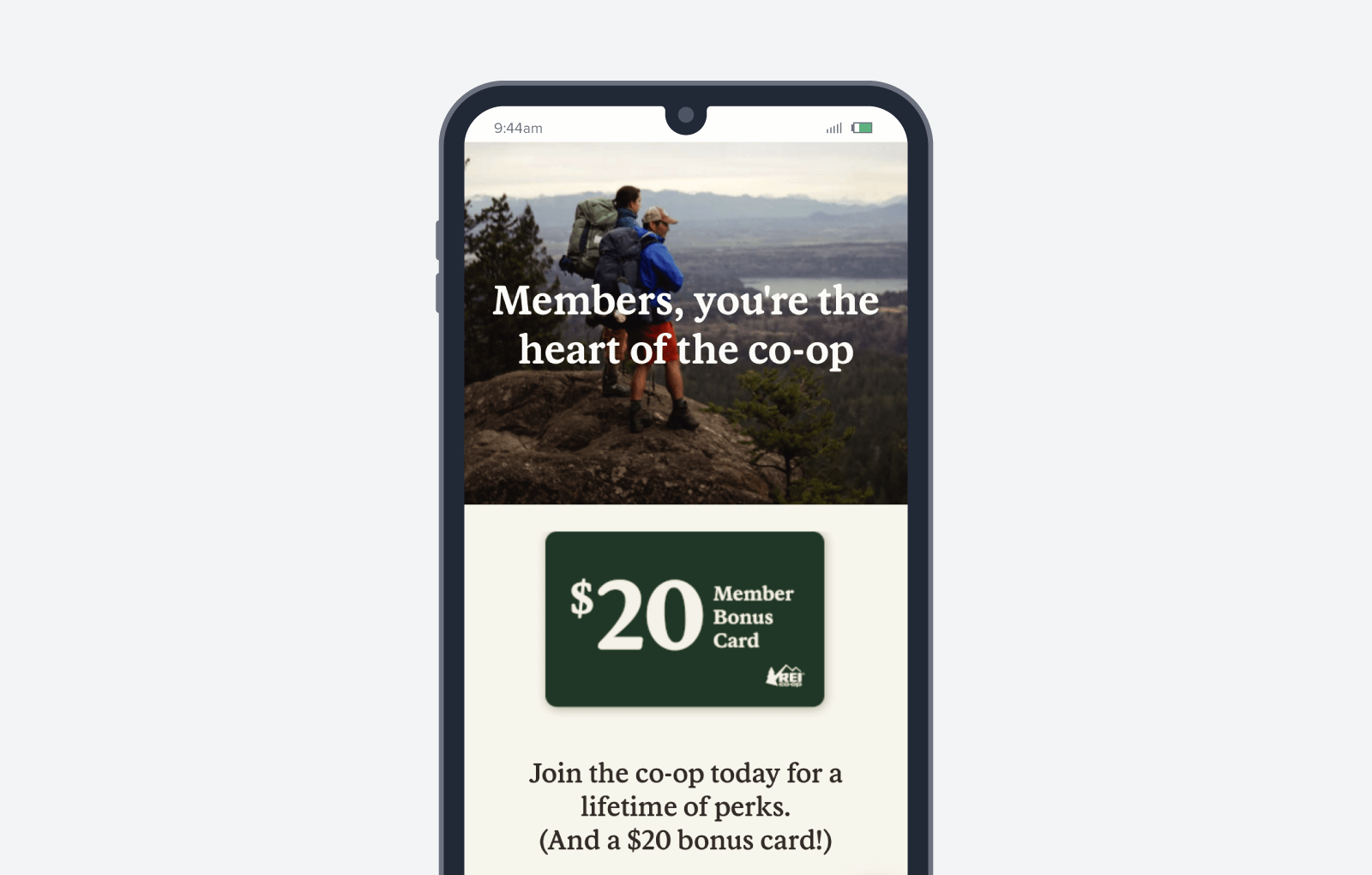
This is a great customer loyalty program example that demonstrates a financially viable way to be generous to their valued customers.
11. GrubHub: GrubHub+
The convenience of getting food delivered straight to your door is unmatched, but the delivery fees tend to add up pretty quickly if done too often.
GrubHub recognized that and now offers their monthly subscription called GrubHub+, where users get unlimited free delivery on eligible orders and exclusive rewards. They even offer a donation match program where customers can opt to donate their change to charity and GrubHub will match every cent.
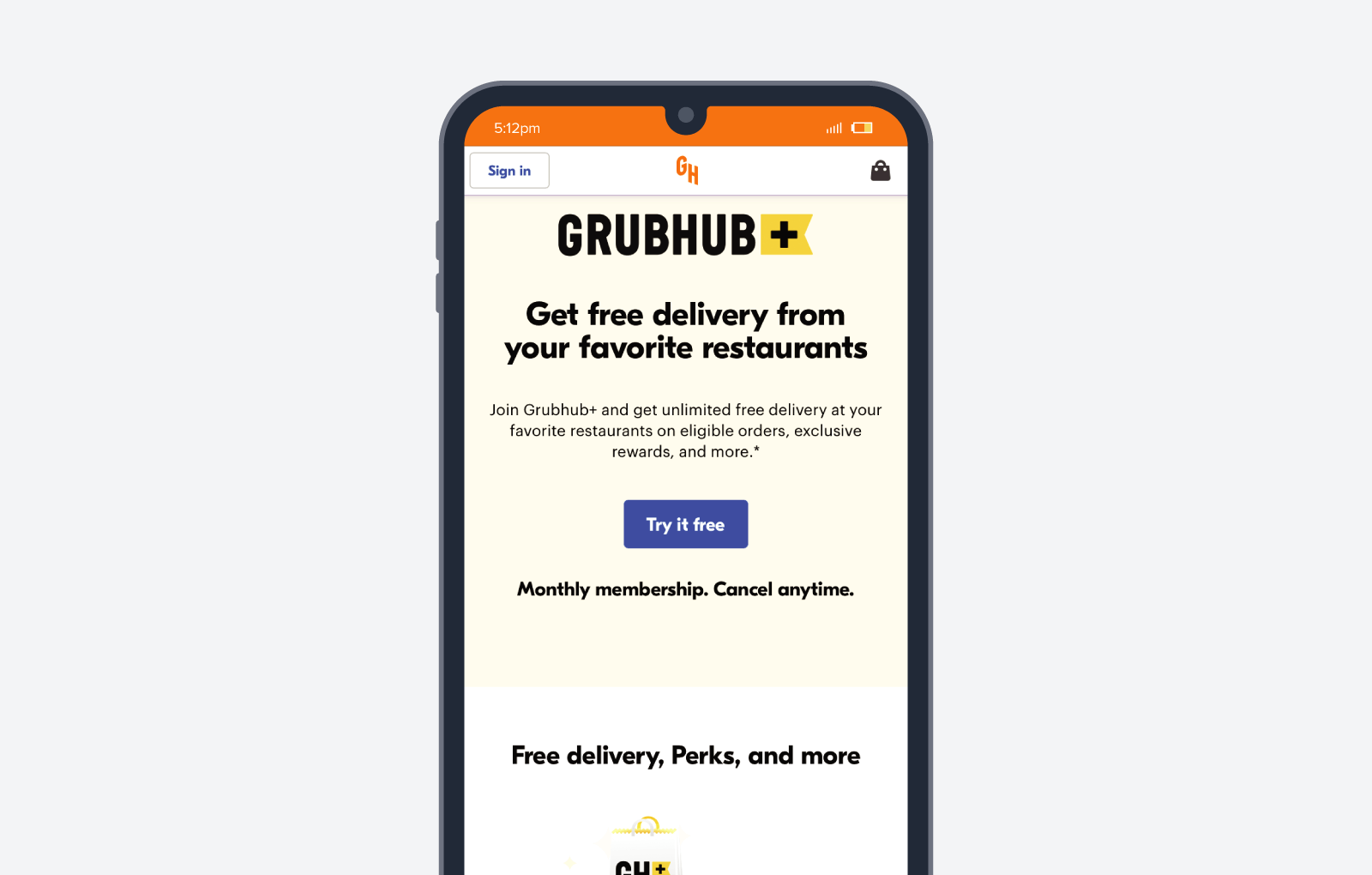
For customers who love the convenience of takeout, the value of the program outweighs the cost of the monthly subscription.
Grow your customer loyalty program during the holiday season. Learn how CleverTap can help you run:
Customer Loyalty Value Program Examples
12. Ben & Jerry’s: Flavor Fanatics
There’s nothing sweeter than an ice cream loyalty program, but Ben & Jerry’s adds the cherry on top with a strong social mission. By signing up for their Flavor Fanatics rewards program, customers can get 10% off every purchase along with extra perks like free cones and insider scoop.
Along with rewards like discounts and free birthday cones, Ben & Jerry’s also advocates for social justice with special flavors like Save Our Swirled! for the global climate movement and I Dough, I Dough for marriage equality.
Not only do they have social justice-themed flavors, but they also donate sales to charities that support the environment, social programs, animal welfare, and other causes.
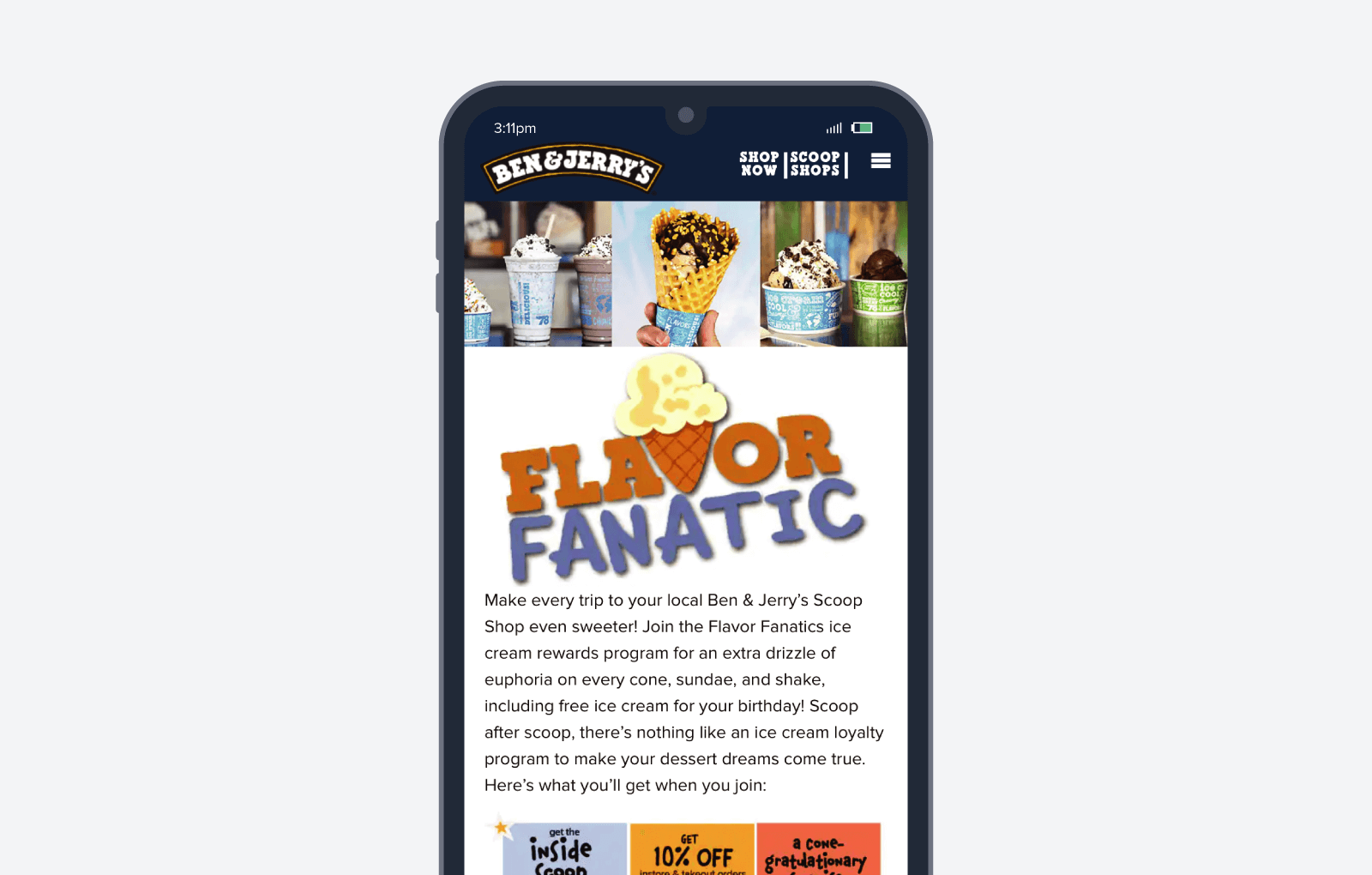
Aligning with a mission allows them to build customer engagement and drive repeat purchases through the shared values of their customers.
13. The Body Shop: Love Your Body Club
The ethical beauty brand The Body Shop believes that business can be a force for good. So when they developed their loyalty program, they made it easy for customers to gain rewards while also having the option to donate.
As a member of their Love Your Body Club, customers earn a point for every dollar spent. Once they’ve reached 100 points, they’ll get a $10 reward to spend. However, customers have the option to donate their $10 reward to one of their charity partners.
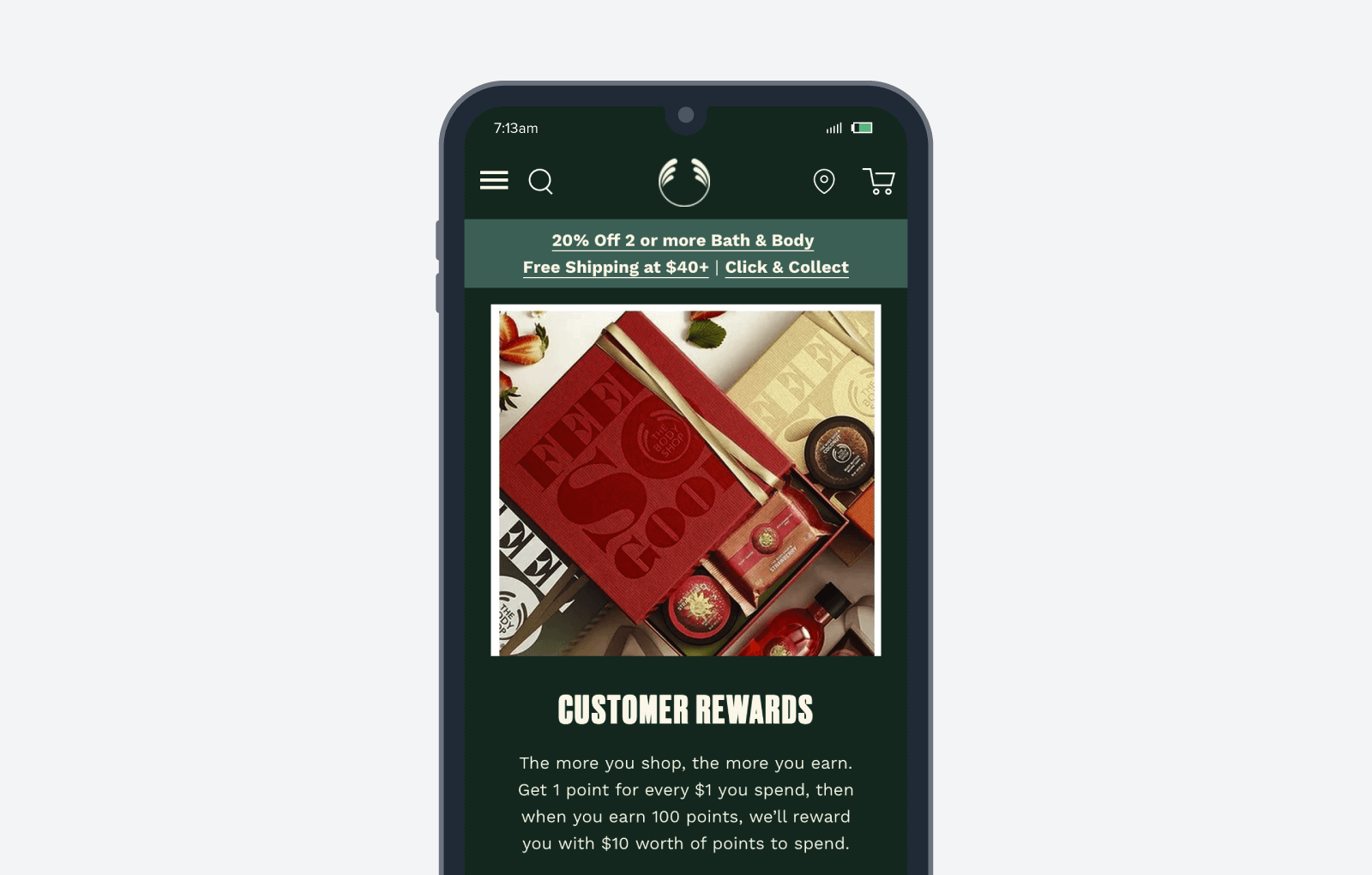
Not only does this solidify the brand’s image, but it can also increase customer engagement and brand loyalty since consumers’ values are reflected in the program.
14. Ulta Beauty: Ulta Beauty Rewards
Ulta Beauty Rewards combines a points-based program with tiered benefits. Members earn points on qualifying purchases and beauty services, while Platinum and Diamond members earn points at faster rates and receive additional perks.
The program gives customers an incentive not only to make repeat purchases but also to consolidate more of their beauty spending with Ulta. Members earn one point per dollar, while Platinum and Diamond members earn points at higher rates.
By increasing earning power as customers move through the tiers, Ulta creates a direct connection between continued spending and greater loyalty benefits.
15. LEGO: LEGO Insiders
LEGO Insiders shows how a loyalty program can reward engagement beyond purchases. Members can earn points when buying eligible LEGO sets and through activities such as registering eligible sets they already own.
Those points can be redeemed for benefits such as discounts, member-only rewards, and other exclusive offers. Members can also receive early access to selected products and other experiences.
By rewarding both purchases and participation, LEGO extends the loyalty relationship beyond individual transactions and gives fans more reasons to remain engaged with the brand.
16. Nike: Nike Membership
Not every loyalty program needs a traditional points system. Nike Membership is free and gives members access to benefits such as member-only products and experiences, Nike apps and communities, receiptless returns, and eligible shipping benefits.
Instead of making points the center of the program, Nike builds loyalty by improving the overall customer experience and giving members deeper access to the brand’s products, services, and communities.
This makes Nike Membership a useful example of how loyalty can be built through access and experience rather than transactional rewards alone.
Takeaway From These Customer Loyalty Program Examples
A customer loyalty program is a great way to attract and retain repeat customers as it encourages engagement, increases customer retention rates, and helps brands gain valuable insights on their customers. The above customer loyalty program examples go to show how making each interaction personal and valuable, starting with individualized emails and product recommendations, helps customers get exactly what they are looking for.
Infographic


Shivkumar M 
Head Product Launches, Adoption, & Evangelism.Expert in cross channel marketing strategies & platforms.
Free Customer Engagement Guides
Join our newsletter for actionable tips and proven strategies to grow your business and engage your customers.