












































Table of Contents
Categories
Most Popular


I. 208 Seconds
On January 15, 2009, an ordinary flight from New York’s LaGuardia Airport to Charlotte, North Carolina, became something commercial aviation had barely prepared anyone to face.
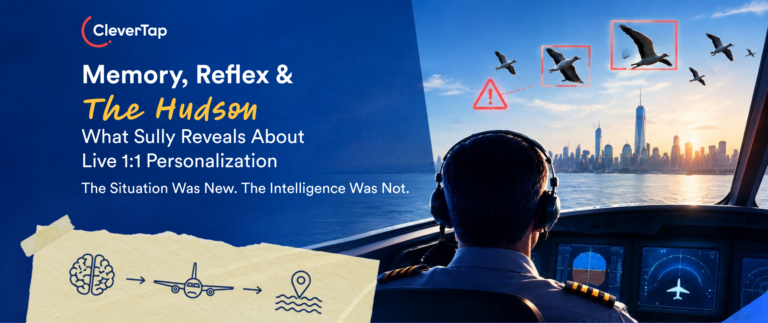
US Airways Flight 1549 had been in the air for less than two minutes when Captain Chesley “Sully” Sullenberger saw the birds. Soon after, the flock of Canada geese struck both the engines of the Airbus A320. The engine noise fell away. Thrust almost disappeared.
Air traffic control offered runways at LaGuardia, and then Teterboro. In a simulator, with the outcome already known and the clock politely reset for every attempt, returning to an airport could look possible.
In the cockpit, the aircraft was descending and losing every second while that question was still being asked.
The crew turned on the auxiliary power unit, attempted to restart the engines, worked through the dual-engine-failure checklist, assessed the available runways, monitored the aircraft’s rapidly changing speed and altitude, and prepared the cabin for impact. There was not enough time to complete the checklist. There was barely enough time to decide which parts of it still mattered.
Sullenberger concluded that no runway was reachable and decided to land Flight 1549 on the Hudson River. Roughly three and a half minutes after the bird strike, the aircraft touched down on the water. All 150 passengers and five crew members were rescued.
The landing is often regarded as an act of instinct. But instinct is only half the story.
Sullenberger did not land on the Hudson because he forgot everything he knew about flying and improvised from nothing. Nor did he succeed by following years of training as if the situation unfolding outside the windshield were a familiar exercise with a prescribed answer.
Rather, he used everything years of experience had taught him to make sense of a situation experience had never shown him before.
The situation was new. The intelligence responding to it was not.
II. The Checklist and the Hudson
A checklist is a playbook for the memory. It carries lessons accumulated across aircraft, crews, incidents, engineering studies, and thousands of hours of flight. It exists so that a pilot under pressure does not have to rediscover everything aviation already knows. But no checklist can fully describe a moment that has never happened in exactly that form.
Flight 1549 had a dual-engine failure at low altitude and was descending rapidly over New York, one of the most densely populated cities in the world. The crew had limited time, several possible landing sites, changing aircraft performance, and only seconds in which to decide which option remained physically reachable.
The checklist contained accumulated knowledge. It could not make the Hudson visible through the cockpit window or determine, in that specific instant, that turning toward a runway carried more risk than continuing toward the river.
Memory could provide the boundaries of a sound decision. The decision itself, however, needs to be based on the moment as it happens.
This is what expertise often looks like from the outside: an inexplicably fast judgment made by someone who appears calmer than the situation permits. But the speed is misleading. The decision is not being made from three seconds of information. It is being made from three seconds of information interpreted through decades of accumulated patterns.
Experience tells the pilot what an aircraft can tolerate, which readings matter, how quickly altitude is disappearing, and when a theoretically available option is no longer a real one. Reflexes keep that knowledge from becoming rigid. They allow the pilot to recognize that what usually works is no longer what this moment requires.
Memory without reflexes would keep trying to return to an airport because returning is the established answer. And reflexes without memory would be reaction without discipline: movement mistaken for judgment.
Flight 1549 needed both. One intelligence carried everything the crew had learned before takeoff. Another kept updating the decision against what was happening after the birds struck.
The first prevented panic. The second prevented experience from becoming a trap.
III. The Best Reflexes Have a Memory Behind Them
Marketers have their own version of a checklist when it comes to customer engagement.
They need information spanning years of purchase history, campaign responses, channel preferences, product usage, lifecycle patterns, predictive scores, and journey rules. All of that memory matters. It tells a platform what customers have valued before, which actions have worked, which messages have been ignored, and which patterns tend to precede an outcome.
But customers do not live inside historical averages. Something happens – a payment is completed, a flight is cancelled, an application stalls, a subscriber returns after months away, or a shopper who has spent weeks comparing premium products suddenly opens the support section instead. The customer who existed in the historical record is still present, but the situation around them has changed.
At that point, a platform has the same problem as a cockpit confronting a condition the flight plan did not anticipate: which parts of what we know still matter now?
Consider a frequent traveller whose history is unusually consistent. They fly for business, choose aisle seats, pay for flexibility, respond to upgrade offers, and regularly book an airport transfer after landing. Years of behavior make the next-best recommendations seem obvious.
Then their flight is cancelled while they are standing in the terminal.
A system relying mainly on historical memory may continue doing what has worked before. It promotes an upgrade, recommends a transfer, or reminds the passenger about a lounge benefit. Every message, although personalized, is wrong for the moment.
A system reacting only to the latest event has the opposite problem. It sees “flight cancelled” and responds immediately, but without enough knowledge to understand what useful recovery looks like for this particular traveller. It does not know which alternative routes fit their habits, whether they usually accept overnight travel, which communication channel they respond to under pressure, or whether they have already rejected an option the system is about to recommend again.
One system remembers but does not adjust. The other adjusts without understanding.
The useful decision sits between them. Rebook the passenger on the most viable alternative or offer a hotel only if an overnight delay is unavoidable. Use the channel most likely to reach them now. Importantly, the platform should suppress the upgrade promotion and start solving the unexpected situation the passenger is facing. And if they have already rebooked independently, do nothing.
That last choice matters. Reflex is not the same as speed, just as Sullenberger’s decision was not simply the fastest available maneuver. The purpose is not to react to every customer signal but to determine whether the new signal changes the best action.
The latest event is not automatically the most important one. A single unusual browse should not erase years of preference, and one ignored message should not redefine a relationship. A temporary change should not always become a permanent assumption.
But when the evidence does change the situation, the system has to recognize that before the old decision reaches the customer.
IV. Two Brains for Live 1:1 Personalization
This is why live customer decisions need two forms of intelligence – memory and reflex. And CleverAI™ leverages both to deliver Live 1:1 Personalization.
We call it the Two-Brain Model. The Offline Learner provides memory. It draws on granular, long-range customer history to develop a deep understanding of customers, interactions, campaigns, and what has historically worked. So a new decision does not begin with a blank slate but with years of accumulated evidence.
The Online Learner provides reflexes. It interprets what is happening now, observes the outcome of the latest interaction, and uses that feedback to inform the next decision. The click three seconds ago, the application step just completed, or the purchase that made a scheduled reminder obsolete can influence what happens while the customer moment is still active.
TesseractDB™ fuels both. It serves as the Offline Learner’s memory while providing the live signals that act as the Online Learner’s nervous system. Historical context and live events do not sit in separate systems waiting to be synchronized. They are available on the same platform for decisioning, activation, and learning.
Together, the two brains help the Tesseract Decisioning EngineTM rank the best available choice for this customer, in this moment, against the marketer’s goal and guardrails. That choice could be a message, an offer, a recommendation, a channel, a moment, a product experience, or no action at all.
This is what makes the decision live. Not merely that it happens quickly, but that memory, the latest signal, the decision, and the resulting outcome remain part of one continuous learning loop.
Flight 1549 did not end safely because experience supplied a ready-made answer. It ended safely because experience supplied the intelligence from which a new answer could be formed.
The crew remembered enough not to improvise blindly. They adapted enough not to follow memory somewhere the aircraft could no longer go.
Customer engagement operates at far lower stakes. But the underlying requirement is remarkably similar. A platform must know what history has taught it without assuming that history has already decided the present. It must read the latest signal without allowing every passing event to overrule everything it knows.
The best live decision is neither memory nor reflex. It is memory kept alive by reflex.
That is the two-brain foundation of Live 1:1 Personalization: every decision made with the depth to understand the customer and the responsiveness to change course while the moment still matters.
Master Your Seasonal & Holiday Campaign Strategy
Looking for inspiration to boost engagement and retention during key commercial moments? Check out our strategy guides:
- Creative Campaign Inspiration: Best Christmas Marketing Campaigns | Christmas Advertisement Examples
- Seasonal Planning: Holiday Marketing Ideas | December Marketing Ideas
- High-Impact Promotions: Halloween Marketing & Promotion Ideas | Thanksgiving Promotions | New Year Campaign Ideas
Deliver Live 1:1 Personalization That Drives Higher Lifetime Value
Customer loyalty is built when engagement keeps pace with changing needs and behavior. With CleverTap’s AI-native Customer Retention Management Platform, powered by CleverAI™, you set the goals and guardrails while past context, live intent, and AI decisioning deliver Live 1:1 Personalization. Each outcome informs the next decision, helping curb churn, and maximize customer lifetime value.

Mrinal Parekh 
Leads Product Marketing & Analyst Relations.Expert in cross-channel marketing strategies & platforms.
Free Customer Engagement Guides
Join our newsletter for actionable tips and proven strategies to grow your business and engage your customers.