









































Table of Contents
Categories
Most Popular


I. The Take That Doesn’t Cut Away
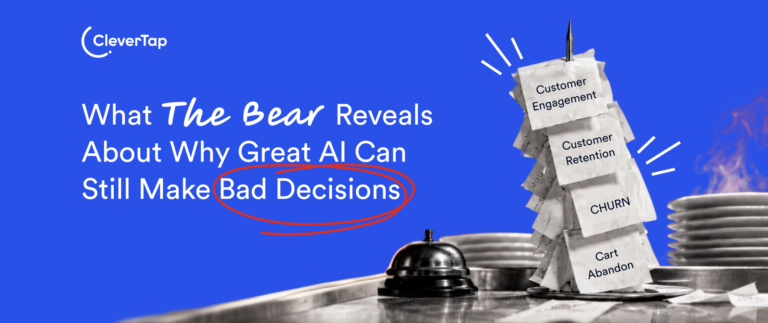
The Bear is a show about a decorated fine-dining chef named Carmy “The Bear” Berzatto who comes home to Chicago to run his family’s Italian beef sandwich shop after his brother’s death, and spends most of the first season trying to drag a kitchen that has never had any real system at all toward something closer to the discipline he trained in. For viewers who’ve never watched it, the detail that matters here is a single 20-minute episode from that first season, called “Review,” which has become one of the most talked-about pieces of television made in the last decade, for a very specific reason: it’s shot in what looks like one unbroken take, and it depicts, almost in real time, a kitchen coming apart.
Here’s what actually breaks it. Earlier in the season, the sous chef, Sydney, sets up a new system to take orders online, meant to modernize a shop that had been running on handwritten tickets and shouted numbers. It works exactly as designed. Orders start coming in. The problem is that nobody capped how many orders the system could accept relative to how many the kitchen could actually cook, and a good review from a local critic has just gone up. So the tickets don’t trickle in – they flood in, faster than anyone at the stations can read them, and the episode becomes twenty unbroken minutes of a kitchen full of talented cooks losing a fight they were never told they were in.
Nobody in that kitchen got worse at cooking that day. The grill cook can still grill. The reason it becomes, by wide critical consensus, the most stressful thing on television that year is that a new system was switched on without anyone connecting it to what the kitchen could actually absorb in real time – and the gap between “orders exist” and “the kitchen knows about them at a rate it can handle” is exactly where the whole day goes off the rails.
Every kitchen, in fiction and out of it, has a version of the calmer state this scene is missing: a counter near the exit, called the pass, where a person stands reading every station at once and timing a table’s dishes to arrive together instead of as an unrelated trickle. When it works, nobody in the dining room ever thinks about it. The Bear is largely a show about how much has to go right, invisibly, for that to be true – and “Review” is the one episode that shows you, unambiguously, what it looks like when the system feeding the pass has no relationship to what’s actually happening at the stations.
II. Fastest Line in the City
Imagine a restaurant that hires the best grill cook in the city, the best sauté station in the city, the best pastry chef in the city. Each one, tested alone, cooks faster and better than anyone else in town. On paper, this kitchen cannot lose. And it’s entirely possible to watch this exact kitchen send out cold food, mismatched courses, or – as an entire episode of a prestige TV show demonstrated to millions of people – a printer spitting out more tickets in ten minutes than a full brigade could physically cook in that time, while every single station is still doing its job as well as it’s ever done it.
The specific ways it breaks are almost always mundane. A ticket called too early, and a plate sits under the heat lamp losing its temperature while it waits for the rest of the table to catch up – technically fired, actually going cold. A ticket called too late, and half the table has already finished eating by the time the other half’s food arrives. An allergy flagged at one station and never relayed to the one plating the garnish sends a correct-looking dish out with the one ingredient it was never supposed to have. A new intake system switched on with no sense of what the kitchen behind it could handle, the way Sydney’s did – a perfectly good idea that became the reason for the worst day of the season, because it created signal faster than anyone downstream could act on it.
And when a table sends a plate back, or walks out, the kitchen usually finds out from a manager’s note at the end of the night – long after the moment it could have changed anything about that table’s meal.
None of this is a cooking problem. Every station does exactly what it does best. The failure lives in the distance between knowing, deciding, and acting. It’s a passing problem – the same six inches of counter failing in a handful of distinct, unglamorous ways: the pass not yet knowing what’s ready, knowing but calling it a beat off, calling it correctly but losing the one detail that mattered on the way to the table, or being handed more signal than it was ever built to read at once. Each gap may be small, but together they determine whether the meal arrives as intended.
III. The Turn
AI systems have started to recreate the same passing problem in customer engagement. A best-in-class customer data platform, a best-in-class decisioning model, a best-in-class generative content engine, and a best-in-class delivery system are four excellent stations. Each will keep cooking at exactly the speed it always has. Yet intelligence inside each component cannot recover customer context that gets lost or delayed in the handoffs between them.
What decides whether a customer gets served a coherent moment instead of four unrelated plates isn’t any one of those four systems. It’s whatever is standing at the pass between them, and whether it’s actually watching the same ticket rail as the kitchen, or waiting for trays to be walked in from four separate kitchens down the block – or, worse, taking orders from a system that has no idea what the kitchen can absorb, the way “Review” did for one unbearable, unbroken take.
Picture a bank running this exact stack, watching a customer abandon a personal loan application at the income-verification step. The moment is live and short: this person is eligible, was moving forward seconds ago, and is sitting on a decision that matters for the next few minutes, not the next few hours. In a kitchen where the pass and every station share one ticket rail, that abandonment is just a new ticket, read instantly by whoever’s calling the pass, answered with whatever’s most likely to bring the guest back – a callback offered while the form is still open, not a note left for the next shift.
Now let the story turn, the way it always does on a real night of service. Five minutes later, the customer comes back and finishes verification without any help at all. The callback that was the right dish a moment ago is now the wrong one entirely – nobody wants a server hovering the second they’ve solved their own problem. In a kitchen with one shared rail, that ticket gets voided the instant the new information lands, because voiding a ticket is just as native an action as firing one. In a kitchen built from separate stations waiting on trays passed hand to hand from outside doors, the callback ticket is already in someone’s hand on the way to the table. It goes out anyway. Not because any station failed. Because the six inches between “customer changed their mind” and “someone at the pass notices” is exactly as wide as every other seam in that kitchen, and a live customer doesn’t hover at the edge of it out of courtesy.
This is what “native” is actually solving, and it’s worth being precise about what it isn’t: it isn’t a claim about having smarter stations. It’s a claim about where the pass is standing, and whether it was ever wired into the same rail as the stations feeding it or the systems creating tickets in the first place. In a genuinely native platform, understanding the customer, deciding what they need, acting on it, and learning from what happened aren’t four kitchens shipping trays to a counter that has to guess what’s coming. They’re one kitchen, one rail, one pass – which is the ground CleverAI™ is built on: not a faster expediter standing where the gap used to be, but a kitchen designed so there’s no gap between the stations, the intake, and the counter for an expediter to stand in, in the first place.
IV. Order Up
Much of the rest of The Bear, across the seasons that follow “Review,” is really about a kitchen trying to build the version of itself where that day couldn’t happen again – proper systems, a real pass, a rail everyone can actually see. It’s presented as a story about ambition and grief and a Michelin star. It’s also, underneath that, a story about latency: about how much invisible, unglamorous plumbing has to be right for talent to actually reach a table on time.
A dining room never sees the pass. What it sees is whether the meal, when it arrives, feels like it was cooked for the table sitting there at that exact moment, or assembled for a table that used to be sitting there ten minutes ago. Nobody at table twelve can tell you which station was too slow, or whether any of them were, or whether the problem started three systems upstream from the kitchen entirely. They can only tell you the food came out right, or it didn’t.
The best kitchen in the city can still lose a table over six inches of counter it never thought to watch, or a printer it never taught to listen. The smartest AI stack can lose a customer in much the same way: it may understand their situation and choose a useful action, yet deliver it too late or without the detail that made it relevant. The next test for AI is whether intelligence survives the handoff from knowing to deciding to acting.

Mrinal Parekh 
Leads Product Marketing & Analyst Relations.Expert in cross-channel marketing strategies & platforms.
Free Customer Engagement Guides
Join our newsletter for actionable tips and proven strategies to grow your business and engage your customers.