















Table of Contents
Categories
Most Popular


Salesforce Marketing Cloud (SFMC) has long been considered a giant in the marketing space, used by many global enterprises. But in late January 2026, SFMC faced unprecedented email issues, leaving marketers scrambling. A routine security patch cascaded into a full-blown deliverability meltdown: links in emails stopped working, legitimate messages bounced en masse, and compliance risks spiked overnight.
It was a wake-up call for many businesses: if your marketing platform can break campaigns with one update, maybe it’s time to consider a safer alternative. Many are now seeking Salesforce Marketing Cloud competitors that offer a more durable path forward.
In this article, we’ll break down what happened with Salesforce, why it occurred, and then explore the Top 12 Salesforce Marketing Cloud competitors and alternatives to consider and see why CleverTap stands out as the #1 alternative to SFMC.
January 2026 Salesforce Email Issues: What Happened?
Around Jan 20-21, 2026, SFMC rolled out a critical security patch that updated all tracked email links to use the new AES-GCM encryption format. This made every tracking and cloudpage URL much longer (jumping from ~180–255 characters to ~580 characters).
Unfortunately, this well-intentioned update had immediate side effects: the long URLs exceeded legacy limits on Microsoft’s email servers, causing unwanted line breaks that broke DKIM authentication and leading to message rejections. Many Outlook/Hotmail recipients suddenly saw perfectly legitimate SFMC emails bounce or land in spam due to signature failures.
With security concerns mounting, Salesforce forcibly expired every email link generated before the Jan 21 encryption change. From that point on, any tracked link, CloudPage URL, or unsubscribe link in emails sent prior to Jan 21 no longer worked.
The fallout grew over the next two days. Gmail’s filters began flagging the new, extra-long encrypted links as suspicious, even slapping phishing warnings on some messages. Meanwhile, SFMC engineers scrambled to mitigate the Microsoft issue. By January 25, Salesforce deployed a patch to reformat email headers and meet Microsoft’s 999-character line limit, gradually restoring normal delivery. The immediate crisis was over, but the damage to marketers’ email programs had already been done.
Impact: Broken Links, Bounces, and Compliance Nightmares
The week-long SFMC email crisis had a far-reaching impact on deliverability, compliance, and operations.
- Inbox Collapse: Microsoft inboxes shut out SFMC emails during the meltdown. Inbox placement on Outlook/Hotmail domains dropped to near zero, dragging overall deliverability down by ~25% and pushing bounce rates to ~99%.
- Links Went Dark: Salesforce’s decision to expire all links generated before January 21 rendered billions of older emails useless overnight. CTAs, view-in-browser buttons, and unsubscribe links in past campaigns led to error pages instead of landing pages, crippling welcome series, account alerts, and evergreen emails sitting in customers’ inboxes.
- Compliance Risks: Broken unsubscribe and preference links raised major compliance concerns. GDPR and CAN-SPAM require functional opt-out options. Suddenly, subscribers couldn’t unsubscribe from older emails, leaving brands exposed to potential spam complaints and regulatory backlash.
- Operations Fire Drill: Marketing ops teams were forced into crisis mode. Journeys had to be rebuilt, old campaigns regenerated, and CRM/database fields updated to store longer encrypted URLs. Teams widened field lengths from 255-character limits to long text areas, republished “evergreen” content, and chased down link failures across their assets. Time meant for strategy was diverted to firefighting, a costly, chaotic detour for many SFMC users.
Why Did This Happen? Underlying Causes Exposed in Salesforce Marketing Cloud (SFMC)
Salesforce Marketing Cloud email issues revealed deeper architectural and operational weaknesses.
- A Fix with Unintended Consequences: The encryption patch introduced to resolve a vulnerability wasn’t backward-compatible, breaking links in past emails. This revealed a lack of modular design and inadequate contingency planning.
- Complex, Stitched-Together Architecture: SFMC’s ecosystem is built from multiple acquired products and disconnected systems, which results in hidden dependencies and fragile workflows. A single change disrupted tracking, landing pages, and customer preferences simultaneously.
- Support and Communication Gaps: Marketers weren’t informed early enough about changes or mitigation plans, leaving teams scrambling without timely guidance.
- Insufficient Edge Case Testing: Long-known provider limits and 255-character fields triggered DKIM failures and URL truncation, leading to broken links, storage problems, and silent integration failures. SFMC didn’t catch this in testing, leading to a patch that caused a platform-wide outage.
These issues highlighted why many marketing leaders are now seeking simpler, more robust Salesforce Marketing Cloud competitors. Security by design and architectural simplicity have become top priorities. Organizations want platforms that offer rich marketing capabilities without the same risk of meltdown or the burden of excessive complexity.
Top Salesforce Marketing Cloud Competitors and Alternatives
Below are the most trusted Salesforce Marketing Cloud competitors and alternatives, and platforms marketers choose when looking for a more reliable engagement stack.
1. CleverTap: The #1 Salesforce Marketing Cloud Alternative for Safer, More Resilient Marketing
CleverTap’s customer engagement platform was architected with a very different philosophy, one that inherently avoids many of the failure modes we just saw with SFMC. In fact, CleverTap can be seen as an “antidote” to those issues:
Unified Platform (No Brittle Handoffs): CleverTap is an all-in-one platform that natively combines customer data, segmentation, messaging, and analytics, rather than a patchwork of acquired tools. Because of this unified design, there are fewer moving parts and handoffs, unlike SFMC, where things can break. For example, user segments and campaign orchestration live in a single system, so a small change in one module doesn’t unpredictably cascade into others.
Transparent Security & Compliance Posture: CleverTap eliminates guesswork with a rigorous, fully transparent security approach. Customers can review certifications and compliance upfront through the CleverTap Trust Portal, including SOC 2 Type II, ISO 27001, and GDPR documentation. Security enhancements are proactively communicated, strengthening trust without disrupting campaigns. Importantly, CleverTap supports backward compatibility and graceful deprecation, ensuring upgrades don’t break historical data or existing workflows.
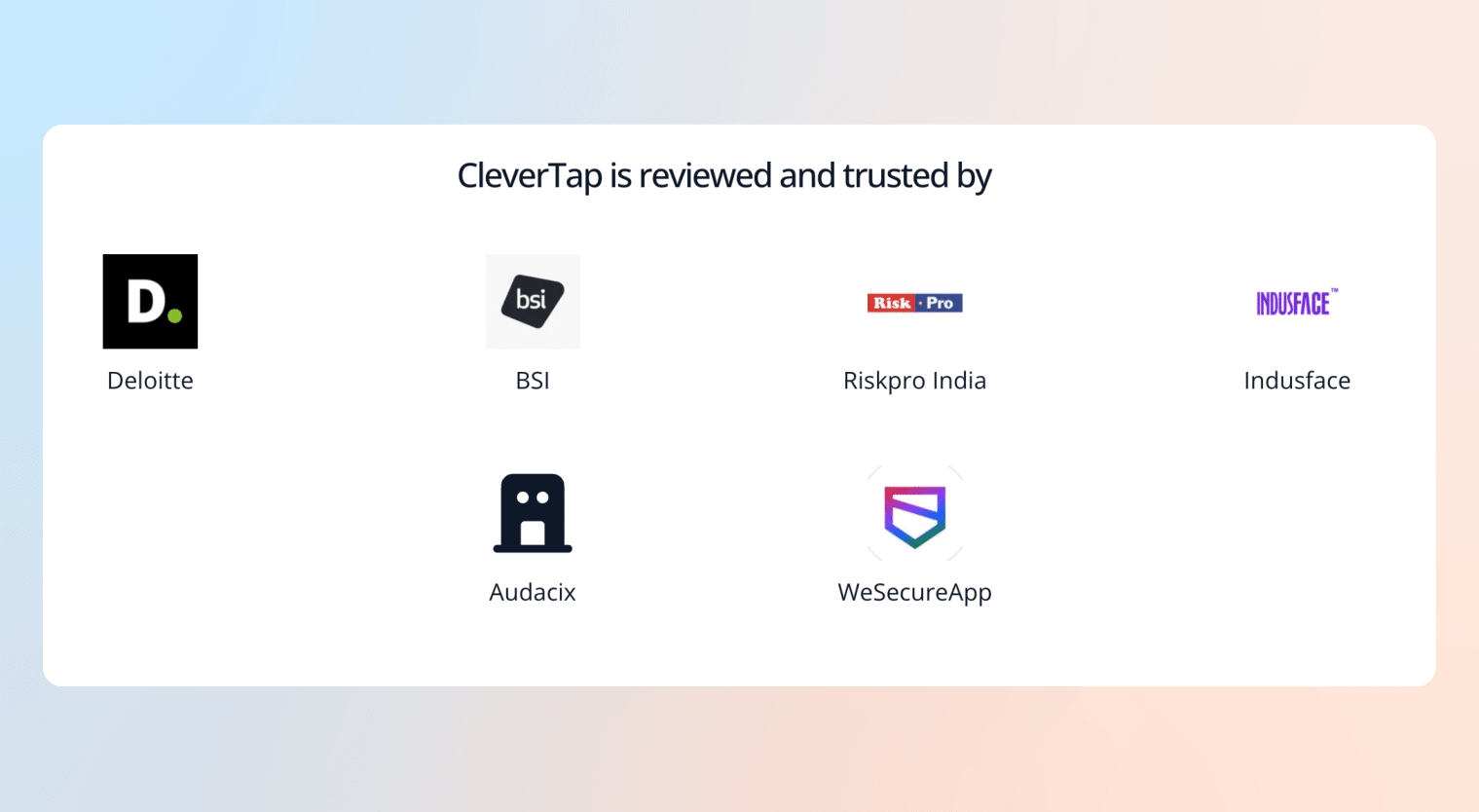
Built-In Email Deliverability Discipline: CleverTap treats email deliverability as a core priority. The platform guides teams through IP/domain warm-up, authentication (SPF, DKIM, DMARC), and list hygiene from day one, backed by deliverability consultations. Integrated monitoring, suppression management, and early-warning tools help prevent bounce or spam-rate spikes. The goal is to prevent the kind of deliverability meltdown SFMC saw, and if a specific ISP has quirks (like Microsoft’s line lengths), CleverTap’s team is on top of it, so you don’t have to be.
Smaller Incident Blast Radius by Design: In the event that something does go wrong, CleverTap’s all-in-one architecture makes it easier to isolate and fix issues. Unlike SFMC’s global link service that became a single point of failure, CleverTap avoids shared choke points—each channel operates with stable, independent mechanisms. This means updates in one area won’t break email, analytics, or other workflows. When incidents occur, they stay localized, allowing faster fixes without platform-wide disruption.
Real-Time Segmentation and Integrated Journeys (Less Fragile Integrations): CleverTap was built to enable real-time, continuous customer engagement, which reduces reliance on batch exports or external tools that can introduce fragility. This stands in contrast to SFMC, where many marketers rely on external data syncs and complex queries that run on schedules. You can define live user segments that automatically include users as soon as they meet criteria, and trigger journeys immediately based on actions, without writing custom integration code.
A current CleverTap user on G2 says:
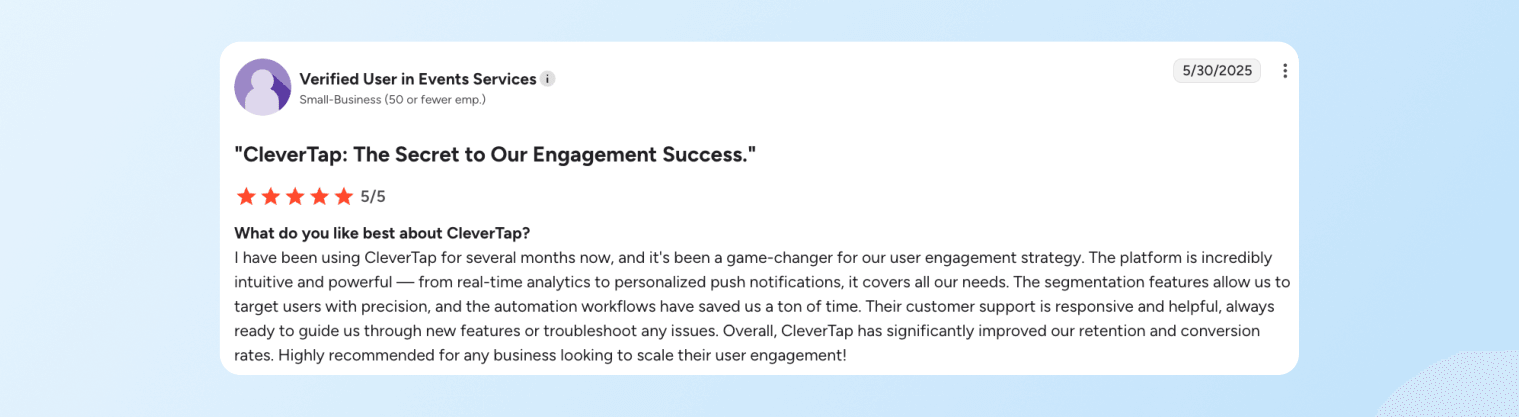
By orchestrating campaigns on a single canvas across channels, CleverTap ensures you don’t have to duct-tape multiple systems together, which introduces new points of failure.
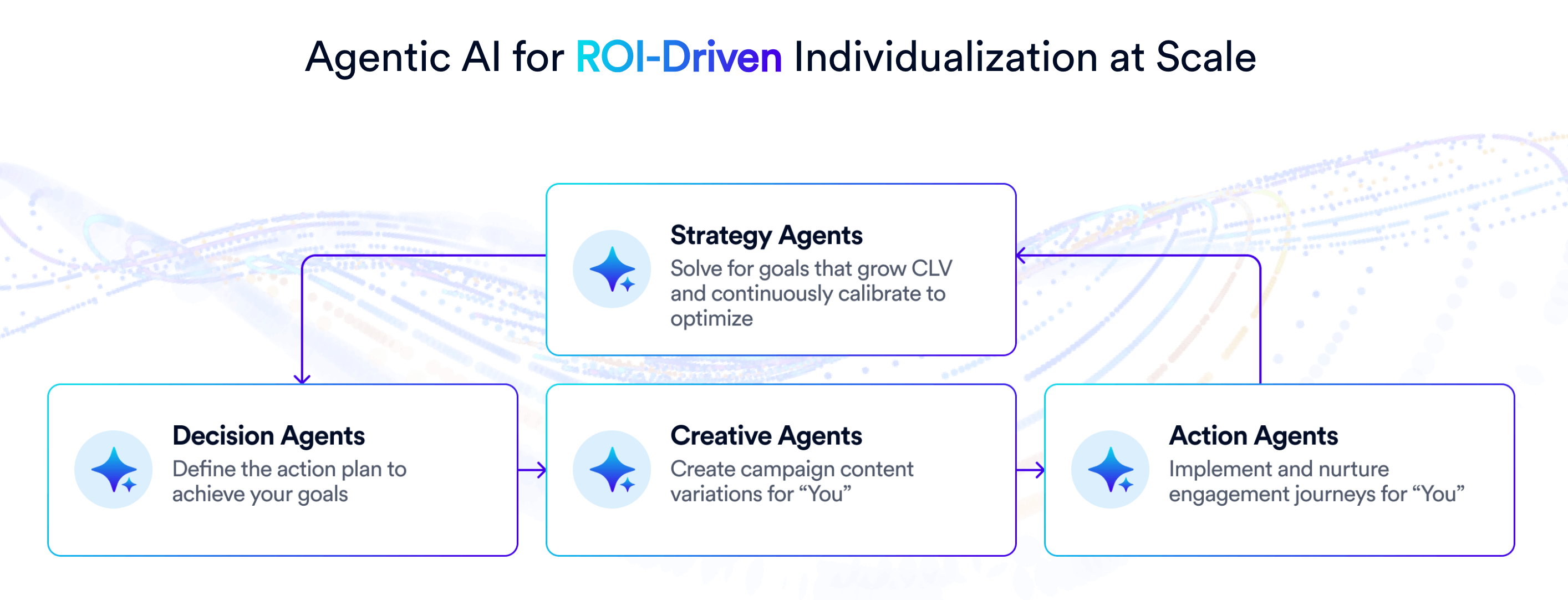
CleverAI™: Powering Intelligent, Real-Time Customer Engagement: CleverAI™ Agents are intelligent AI-powered assistants within CleverTap that help brands deliver true 1:1 personalization at scale. They transform simple prompts into actionable segments, campaigns, and optimized customer journeys across channels, reducing manual effort and operational complexity. With built-in transparency, governance, and privacy safeguards, CleverAI™ Agents enable faster execution while keeping marketers firmly in control.
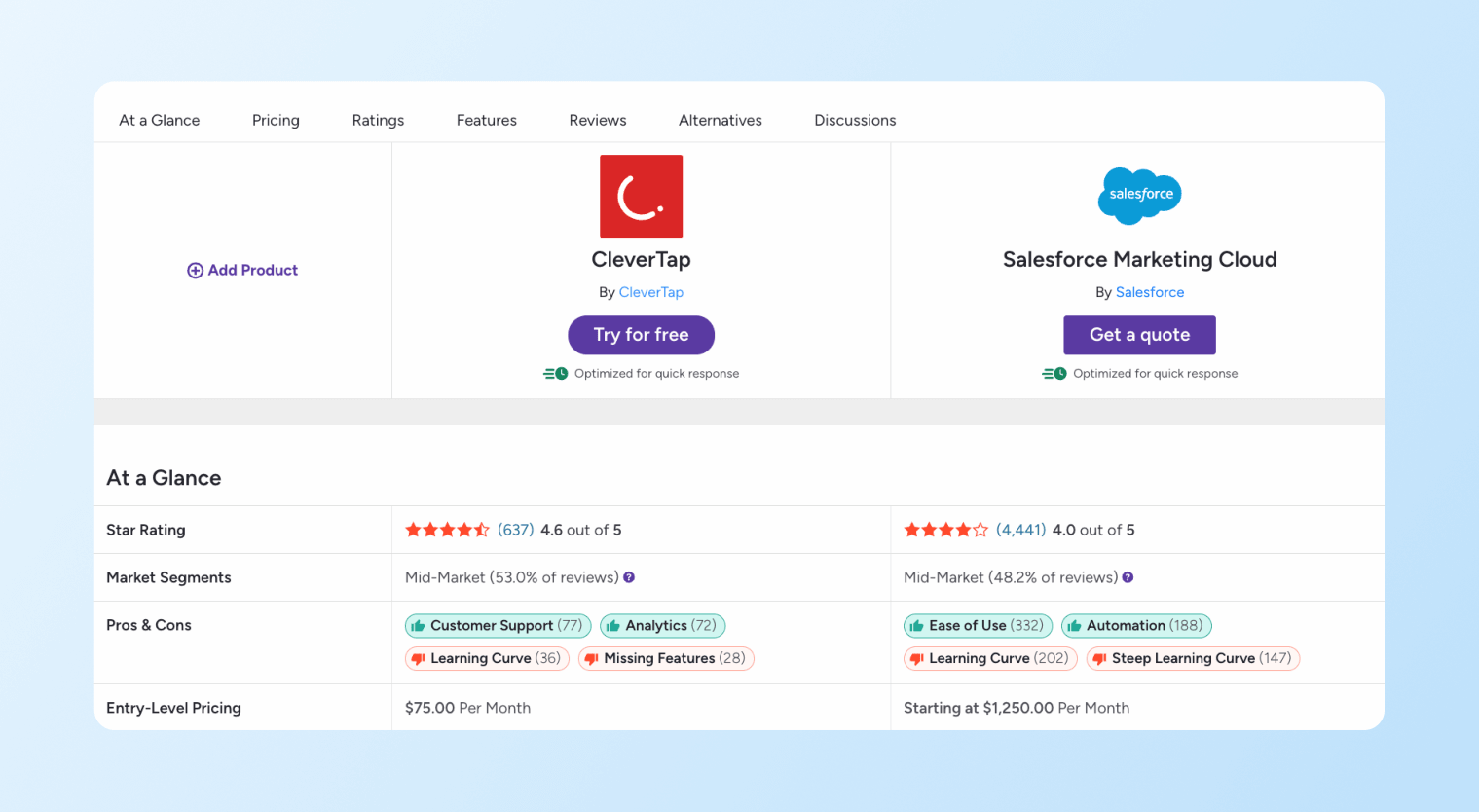
On G2, CleverTap has an overall user rating of 4.6 out of 5, compared to 4.0 for Salesforce Marketing Cloud, based on verified reviews.
- Reviewers highlight CleverTap’s superior ease of use, intuitive interface, and strong support, making campaign setup and management more accessible for marketers.
- Salesforce Marketing Cloud is recognized for robust multi-channel automation and deep email capabilities, but many users report a steeper learning curve and more complex setup.
- Pricing entry points also differ significantly, with CleverTap offering a lower starting price and free trial, while Salesforce’s plans begin much higher.
Migrating to CleverTap: A Low-Risk, High-Reward Shift
If the SFMC meltdown shook your trust, migrating to CleverTap doesn’t have to be risky or disruptive. Most teams follow a phased, low-stress transition.
Step 1: Reconnect and Set Up Essentials: Begin by integrating user data, events, and catalogs into CleverTap. Set up your email domain with SPF/DKIM, plan IP warm-up if needed, and validate inbox placement—all with CleverTap’s support.
Step 2: Rebuild Key Journeys in Parallel: Migrate all running and draft campaigns simultaneously while active engagement continues.
Step 3: Engage with CleverTap: Access the full potential of an all-in-one engagement platform, and improve conversions as you scale.
The goal is a zero-downtime migration for your marketing; your customers shouldn’t even notice the switch, except for better, more timely messages over time.
Switch to CleverTap to achieve better marketing ROI.
CleverTap vs. Salesforce Marketing Cloud (SFMC) Feature Comparison
For a quick overview, here’s how CleverTap stacks up as an alternative to Salesforce Marketing Cloud on key capabilities that marketers and decision-makers care about:
| Features | CleverTap | SFMC | CleverTap Advantage |
| All-in-One Platform | ✓ | ✗ | One platform (CDP + engagement + analytics + personalisation) vs. stitched modules |
| Live User Engagement | ✓ | ✗ | Real-time segmentation & triggers for “in-the-moment” messaging |
| Deep User History | ✓ | ✗ | 10 year lookback period captures rich user history → better personalization + targeting |
| Omnichannel Orchestration | ✓ | ✓ | 15+ engagement channels for both mobile & web, like RCS, Web Push, App/Web Inbo,x etc. |
| Enhanced Push Rendering | ✓ | ✗ | Maximize your push delivery with RenderMax™, a retry mechanism & Chinese OEM partnerships |
| Actionable Analytics | ✓ | ✗ | Create campaigns targeting drop-offs & churn using CleverTap’s actionable analytics |
| Native Dashboards | ✓ | ✗ | View real-time charts for showing current activity trends, uninstall tracking & NPS insights |
| Advanced Segmentation | ✓ | ✗ | Hyper-personalise with psychographic behaviours, lifecycle-based, and RFM segmentation |
| Intelligent Path Optimizer | ✓ | ✓ | Maximize your Journey goal by automatically sending users to the best path using AI/ML |
| Personalised Mobile Experiences | ✓ | ✗ | Personalize in-app/mobile experiences without heavy engineering dependency |
As the table shows, SFMC and CleverTap are both robust in some areas, but CleverTap’s strength is being comprehensive without complexity. And notably for email marketers, CleverTap provides strong deliverability guardrails out of the box, whereas SFMC relies more on customers to manage that risk, often with third-party tools or services.
2. HubSpot Marketing Hub
HubSpot Marketing Hub is an all-in-one marketing platform that centralizes key marketing activities in one system. It helps build and automate campaigns, manage forms and emails, track leads and performance, and consolidate previously fragmented tools into a single workflow, making it easier to launch marketing campaigns, automate repetitive tasks, and get performance insights without jumping between multiple tools.
On G2, HubSpot Marketing Hub scores 4.4/5 as opposed to SFMC’s 4, as it consistently outperforms SFMC for ease of use, intuitive interface, and overall satisfaction.
Key Features:
- Email Marketing & Automation: Create, personalize, schedule, and send marketing emails with automation triggers to nurture leads and engage contacts.
- Landing Pages & Forms Builder: Build customized landing pages and lead-capture forms for campaigns without needing developers.
- Lead Management & Segmentation: Centralized database with dynamic contact segmentation, lead scoring, behavior tracking, and CRM integration.
- Campaign Tracking & Performance Reporting: Track engagement, campaign performance, and analytics to optimize marketing efforts across channels.
3. Braze
Braze helps companies create, automate, and manage personalized messaging and campaigns across channels. It enables advanced segmentation, journey automation, and real-time customer engagement, bringing customer data together and making it actionable for targeted campaigns.
Braze scores higher than Salesforce Marketing Cloud on G2 (about 4.5 vs. 4.0 stars), with users citing stronger ease of use, real-time engagement, and support, while SFMC is praised for deep enterprise capabilities but has a steeper learning curve and more complexity.
Key Features:
- Cross-Channel Messaging: Send personalized messages across multiple channels such as email, push notifications, SMS, and in-app messages.
- Segmentation & Targeting: Create dynamic audience segments based on user behavior, attributes, and custom events.
- Campaign Automation & Orchestration: Build automated customer journeys and triggered campaigns that respond to real-time user actions.
- A/B Testing & Optimization: Test different messaging variants to learn what resonates best and optimize campaign performance.
- Analytics & Reporting: Access real-time performance insights and reporting on campaign results and customer engagement metrics.
Get a comprehensive list of the top Braze competitors. Deep dive into CleverTap vs. Braze, MoEngage vs. Braze, Salesforce Marketing Cloud (SFMC) vs. Braze, Braze vs. Iterable, Braze vs. Klaviyo and Braze vs. Insider One.
4. Iterable
Iterable is a cross-channel customer engagement and marketing automation platform that helps teams create, automate, and manage personalized communications across email, SMS, push notifications, and in-app messages. Iterable lets marketers segment audiences, build automated customer journeys, launch campaigns, and unify messaging in one place without constantly relying on engineering support, making it valuable for lifecycle marketing and consistent customer interactions.
Iterable is rated higher than Salesforce Marketing Cloud on G2 with 4.4 vs. 4.0 stars, with users citing better ease of use, a well-structured interface, vast channel coverage, and support.
Key Features:
- Multi-Channel Messaging & Campaigns: Send personalized messages across email, SMS, push notifications, and in-app messages, to engage customers in the channels they prefer.
- Audience Segmentation: Build detailed groups based on behavior and attributes to deliver more targeted experiences.
- Journey / Workflow Builder: Design complex automated customer paths with branches and timing logic.
- Centralized Messaging Management: Access all customer messaging from a single platform, eliminating the need to juggle multiple tools and helping maintain consistency and save time.
- Reporting & Campaign Tracking: Track campaign performance and experiment results to monitor engagement and refine strategies.
Here’s a comprehensive list of the top Iterable competitors.
5. Insider One
Insider One is an AI-powered omnichannel marketing and customer engagement platform that brings essential tools for marketing and growth into a single platform. It unifies customer data, personalization, and automated journey orchestration across many channels, enabling teams to launch targeted campaigns, deliver personalized experiences, and improve engagement without juggling separate tools.
On G2, Insider One holds a significantly higher rating at 4.8 out of 5 compared with Salesforce Marketing Cloud’s 4.0 out of 5, with users citing stronger ease of use, AI capabilities, quicker setup, and better support.
Key Features:
- Cross-Channel Messaging & Engagement: Run coordinated engagement across channels such as email, WhatsApp, SMS, web, app, and web push, helping reach customers where they interact most.
- Customer Data Platform (CDP): Bring customer data together in one place to segment audiences, unify profiles, and personalize experiences effectively.
- Personalized Campaign Automation: Create automated, behavior-driven journeys and campaigns, including triggers and actions that respond in real time to user activity.
- AI-Driven Personalization: Deliver tailored experiences at scale, optimizing conversions and engagement through dynamically tailored messaging and content.
- Reporting & Analytics: Access analytics and performance insights to measure campaign engagement and optimize results based on real usage data.
Get the list of the top Insider One alternatives and compare Klaviyo to Insider One to choose the best platform in customer engagement.
6. SAP Emarsys
SAP Emarsys helps businesses run personalized, automated, and omnichannel marketing campaigns, especially across email, SMS, push, and other digital touchpoints. It centralizes customer data, automates journeys with AI triggers and templates, and manages segmented campaigns more efficiently, turning manual campaign execution into data-driven, automated engagement.
SAP Emarsys is rated higher than SFMC on G2 (4.3 vs. 4.0 stars), with users citing stronger ease of use, personalization, and support, while Salesforce is praised for its multi-channel campaign depth, broader segmentation, and larger user base.
Key Features:
- Cross-Channel Automation: Automate messages based on behavior and events, reducing manual campaign work.
- Email and SMS Marketing: Access strong email and SMS marketing tools with builders, templates, deliverability controls, and the ability to schedule and segment outbound messages.
- Segmentation: Create targeted audiences based on demographics, behavior, and engagement.
- Personalization: Use dynamic content and AI-driven recommendations to deliver more relevant messaging to each customer.
- Analytics and Testing: Perform A/B testing and performance tracking to optimize campaigns and improve conversions.
7. Klaviyo
Klaviyo is an all-in-one marketing automation and customer engagement platform used mainly by B2C and e-commerce brands to orchestrate email marketing, SMS, push, WhatsApp, reviews, pop-ups, and ad campaigns from a unified system. It centralizes customer behavior and profile data so marketers can build personalized, trigger-based automated journeys and grow revenue with more relevant, data-driven messaging.
Klaviyo is rated higher on G2 with 4.6 vs. 4.0 stars, with reviewers praising its intuitive interface, ease of use, and strong marketing analytics, especially for small to mid-sized teams. SFMC is recognized for enterprise-grade campaign capabilities, but is described as more complex to set up and manage.
Key Features:
- Email & SMS Automation: Create automated and scheduled email and SMS campaigns (flows) with drag-and-drop and trigger-based workflows for lifecycle engagement.
- Segmentation & Targeting: Segment lists based on customer behavior, engagement history, and attributes to send highly targeted messages that improve relevance and performance.
- Personalization & Dynamic Content: Use dynamic customization in emails, forms, and messaging to tailor content for individual customers and boost engagement.
- Unified Customer Data Profiles: Understand customer journeys and send data-driven campaigns tied to real behavior with data on every click, purchase, and interaction stored in a unified profile.
- Reporting & Analytics: Access built-in analytics and reporting to measure campaign results, track ROI, and refine strategies based on performance insights.
8. Bloomreach
Bloomreach is a comprehensive digital experience and customer engagement platform that helps businesses deliver personalized, data-driven marketing and commerce experiences. It helps automate marketing campaigns, unify customer data for real-time personalization, manage omnichannel messaging, and drive stronger engagement and conversion across touchpoints such as email, the web, mobile, and commerce experiences.
Bloomreach is rated higher on G2 with 4.6 vs. 4.0 stars, with reviewers highlighting Bloomreach’s strong personalization features, intuitive interface, responsive support, and robust data integration, while SFMC, in contrast, is more complex to configure.
Key Features:
- Personalization & AI-Driven Experiences: Get 1:1 personalized experiences by leveraging unified customer data and AI-driven insights to tailor engagement across channels.
- Marketing Automation & Scenarios: Run automated customer journeys and scenario-based triggers that respond to real-time behaviour to launch highly automated and targeted campaigns.
- Cross-Channel Engagement & Orchestration: Coordinate outreach with unified engagement across email, web, mobile, and other digital touchpoints.
- Unified Customer Data & Real-Time Profiles: Get online & offline customer data into unified profiles to better understand behaviour and tailor communications based on real customer journeys.
- Email & Campaign Tools: Access email campaign creation, dynamic content, A/B testing, and segmentation features to optimize performance and engagement.
9. DotDigital
Dotdigital is used by marketing teams to create, automate, and manage campaigns across channels such as email, SMS, web, WhatsApp, and more. It centralizes customer data, supports segmentation and automated journeys, and helps brands deliver timely, personalized messaging and insights at scale, making campaign execution and audience targeting more efficient.
Dotdigital scores higher on G2 (around 4.4 vs. 4.0 stars) with users praising its easier setup, and seamless integration of diverse services, including social media and email marketing.
Key Features:
- Cross-Channel Campaign Automation: Build and automate email and SMS campaigns, triggered journeys, and multi-step workflows, reducing manual work and increasing engagement.
- Segmentation & Targeted Messaging: Divide audiences based on behavior and attributes to deliver more relevant communications.
- Unified Customer Data & Integrations: Bring together customer data from CRMs and other systems to get a single view of contacts and tailor experiences based on unified insights.
- Reporting & Analytics: Access analytics, dashboards, and A/B testing to measure campaign performance, engagement metrics, and ROI.
10. ActiveCampaign
ActiveCampaign is an all-in-one marketing automation and customer experience platform that helps businesses design, automate, and manage personalized campaigns across email, SMS, and CRM. I centralize marketing automation, behavioral segmentation, CRM tracking, and campaign execution into a single system, enabling teams to build sophisticated workflows and communication journeys that respond to real user behavior and nurture leads more effectively.
ActiveCampaign has higher satisfaction and ease of use scores on G2, with an overall score of 4.5 vs. SFMC’s 4.0. It is easy to use for small-to-mid-size teams, whereas SFMC is more robust for complex, enterprise-level marketing but has a steeper learning curve and a higher price.
Key Features:
- Email & SMS Automation: Build and automate email and SMS campaigns with trigger-based sequences that respond to customer behavior such as clicks, purchases, or site visits.
- Visual Workflow Builder: Create complex customer journeys and logic flows for segmented engagement with a drag-and-drop builder.
- Segmentation & Personalization: Get advanced segmentation based on behavior and attributes to tailor messages and campaigns to specific audiences.
- Integrations & App Ecosystem: Connect with hundreds of apps so data and campaign triggers can be coordinated across your stack.
11. MoEngage
MoEngage helps teams understand customer behavior and run personalized, automated campaigns across multiple channels, like email, push, in-app, SMS, and web. It centralizes customer data, segmenting audiences in real time, building behavior-driven journeys, and optimizing engagement through analytics and AI-assisted decision-making, enabling marketers and product teams to launch targeted engagement flows without a heavy reliance on engineering.
MoEngage holds a higher user satisfaction rating on G2 ( 4.5 vs. 4.0 stars), with reviewers highlighting its ease of use, strong push notifications, dynamic content, and superior support.
Key Features:
- Omnichannel Engagement & Campaign Automation: Build automated campaigns and journeys across channels (e.g., push notifications, email, in-app messaging) using a visual builder and behavior triggers.
- Segmentation & Real-Time Customer Targeting: Segment audiences dynamically based on behavior, device type, attributes, and events, and reuse segments across campaigns for consistent targeting.
- Analytics & Funnels: Access analytics tools such as behavioral funnels and cohort tracking to uncover drop-offs, conversion rates, and patterns in user journeys.
- AI-Powered Optimization: Use AI to recommend best-time sending, preferred channels, next best action, and other optimization insights to improve campaign performance.
Get a comprehensive list of the top MoEngage competitors. Deep dive into CleverTap vs. MoEngage and MoEngage vs. WebEngage.
12. WebEngage
WebEngage helps businesses unify customer data, automate multi-channel campaigns, and deliver personalized journeys to users across email, SMS, push notifications, in-app messages, and more. It enables teams to understand customer behavior, build automated journey workflows, and run targeted campaigns that improve engagement and retention, all from a single dashboard rather than multiple disconnected tools.
WebEngage is rated higher on G2 at 4.5 vs. SFMC’s 4.0; it is especially strongly rated in ease of use and support, with reviewers highlighting its intuitive engagement features and faster setup.
Key Features:
- Cross-Channel Journey Automation: Design and automate customer journeys with a drag-and-drop workflow builder that supports various channels like email, SMS, push, and web.
- Segmentation & Behavioral Targeting: Access strong segmentation based on real-time behavior, demographics, and custom attributes to deliver tailored messaging to the right audiences.
- Unified Customer Data & Analytics: Unify customer data from multiple sources into real-time profiles and use built-in analytics, dashboards, and cohort insights to optimize campaigns.
- Personalization & Dynamic Messaging: Deliver 1:1 personalized communications by incorporating user intent, preferences, and engagement history into campaign logic.
- Campaign Reporting & Optimization: Track performance with reporting tools and dashboards that help measure campaign effectiveness and ROI.
Discover the top WebEngage competitors. Compare WebEngage vs. CleverTap to find your best fit.
Rethink Your Marketing Platform With Salesforce Marketing Cloud Competitors
The SFMC meltdown of January 2026 reminded marketers that reliability matters as much as features. A single misstep shouldn’t jeopardize customer communication. While Salesforce remains powerful, its recent crisis exposed real architectural risks. Fortunately, better Salesforce Marketing Cloud competitors and alternatives exist for brands that want reliability without complexity. Whether you need simplicity, mobile-first focus, or enterprise depth, there’s a fit.
CleverTap stands out as the best customer engagement platform with its unified, secure-by-design platform, engineered to avoid wide-scale failures and keep campaigns running smoothly. As you reassess your stack, prioritize platforms that minimize risk and maximize agility. The right choice will let you focus on growth, not damage control.
See how CleverTap can power secure, real-time engagement for your business. Book a demo.

Agnishwar Banerjee 
Leads content and digital marketing.Expert in SaaS sales, marketing and GTM strategies.
Free Customer Engagement Guides
Join our newsletter for actionable tips and proven strategies to grow your business and engage your customers.