






















Table of Contents
Categories
Most Popular


The Indian Premier League (IPL) has evolved into India’s biggest marketing stage, with ~620 million viewers expected in 2026 and dual-screen engagement at an all-time high. But as brands flood the ecosystem, the real challenge becomes cutting through the noise and building a solid IPL marketing strategy.
In this guide, we break down 10 proven IPL marketing strategies designed to help you connect with fans in real time, optimize spend, and drive measurable business outcomes. We’ll discuss practical frameworks, real-world examples, and key metrics to build a winning campaign for 2026.
Why IPL Marketing Is a Goldmine for Brands in 2026
Let’s explore some key reasons why brands need an IPL marketing strategy in 2026.
- Unmatched reach: Total viewership has surged from ~400 million in 2020 to an expected ~620 million by 2026, making it the world’s most-watched annual sporting event. For the first time, IPL 2026 will have more digital viewers than TV. JioCinema’s free streaming model on mobile alone brought 80 million new fans online who previously couldn’t access the tournament.
- Diverse demographics: The IPL audience spans ages and geographies. The largest single age segment is 25–34 (31% of total viewers), with 18–24 year-olds making up 28% of digital viewers. Female viewership has grown from 24% in 2020 to 32% in 2026.
- Massive spend and investment: Brands pour thousands of crores into IPL advertising. Media rights for 2023–27 were sold at more than triple the previous cycle. Ad revenue is estimated at ₹6,500+ crore in 2025, with forecasts of ₹7,500–8,000 crore in 2026. Digital ad spend is projected to grow 340% by 2026. The payoff is real, but only for brands that plan strategically and tie spend to clear business outcomes.
- Changing consumer behaviour: Today’s IPL viewer is digital-first, mobile-first, and multi-screen. Interactive streaming features, real-time stats, and second-screen commerce have fundamentally changed how fans engage. Mobile payments and app traffic spike during matches, meaning well-timed in-app prompts can directly drive transactions.
The digital-first shift is accelerating; IPL 2026 will be the first season where digital viewers may outnumber TV viewers. AI and automation are reshaping how campaigns are planned and executed in real time, which makes building an IPL marketing strategy the need of the hour.
Types of IPL Marketing Strategy Approaches
An IPL marketing strategy can typically fall into a few key buckets, each designed to achieve a different objective or target a specific stage of the customer journey:
- Brand awareness strategies focus on maximizing visibility and reach. These include high-impact tactics like TV commercials during live matches, jersey or stadium sponsorships, and large-scale social media campaigns. The goal here is to stay top-of-mind, with success measured by metrics such as impressions, GRPs, and brand recall.
- Performance-driven campaigns are more targeted and conversion-focused. Brands use digital ads, search campaigns, in-app promotions, retargeting, and lead generation tactics to drive measurable outcomes. Common KPIs include click-through rates, app downloads, new user acquisition, and revenue.
- Engagement and retention strategies aim to keep users interested and coming back. This includes contests, gamified experiences, loyalty programs, and ongoing CRM or email communication. These efforts are typically measured through user sessions, time spent, repeat purchases, and overall customer lifetime value.
- Real-time (moment) marketing taps into the excitement of live matches. Brands respond instantly to key moments—like a six, a wicket, or a trending meme—with witty posts or timely offers. This “newsjacking” approach helps brands stay relevant and visible in the conversation, with success tracked through engagement rates and share of voice.
- Sponsorship-led vs. using digital marketing in IPL presents a strategic choice. Larger brands often invest heavily in IPL sponsorships, such as team or title sponsorships, for maximum visibility. Meanwhile, others may skip traditional media altogether and focus on digital-native campaigns to drive more targeted, measurable results.
10 Best IPL Marketing Strategy Ideas That Actually Work
Below are 10 proven IPL marketing strategy approaches, with examples, tips, and tactics to help you implement them effectively:
1. Moment Marketing (Real-Time Campaigns)
IPL is ideal for moment marketing, creating real-time content around live match events like sixes, wickets, or close finishes. These moments spark instant online buzz, giving brands a chance to stay relevant and join the conversation.
How it works: Brands run “war room” setups with teams tracking matches live and posting within minutes using pre-built templates. The key is balancing speed with creativity, quickly reacting, linking the moment to the brand, and delivering something engaging or rewarding.
Tools & tips: Use social listening tools, pre-designed creatives, and fast approval workflows. Plan for expected triggers, but stay flexible. The best campaigns combine preparation with sharp, timely execution.
Swiggy’s “Swiggy Sixes” is a great example. For IPL 2025, Swiggy offered an instant 66% discount each time a six was hit. They placed a live-updating banner on the app’s cart page, so users watching the match saw the offer lock/unlock in real time. This clever play made cricket-viewing directly trigger e-commerce engagement, spiking app usage every time excitement peaked.
2. Second-Screen IPL Marketing Strategy
IPL fans are often watching matches while scrolling on their phones, creating a powerful second-screen opportunity for brands. The idea is to align marketing with live match moments to capture attention when engagement is highest.
Key tactics:
- Match-synced notifications: Send timely push notifications or emails during key moments or innings breaks.
- In-app messaging: Display banners, offers, or interactive content within your app during live matches.
- Real-time ad targeting: Run high-intent ads around IPL-related searches or target cricket audiences during match hours.
Tips: Plan campaigns around match schedules, use geo-targeting where relevant, and optimize for peak engagement windows like innings breaks for better conversions.
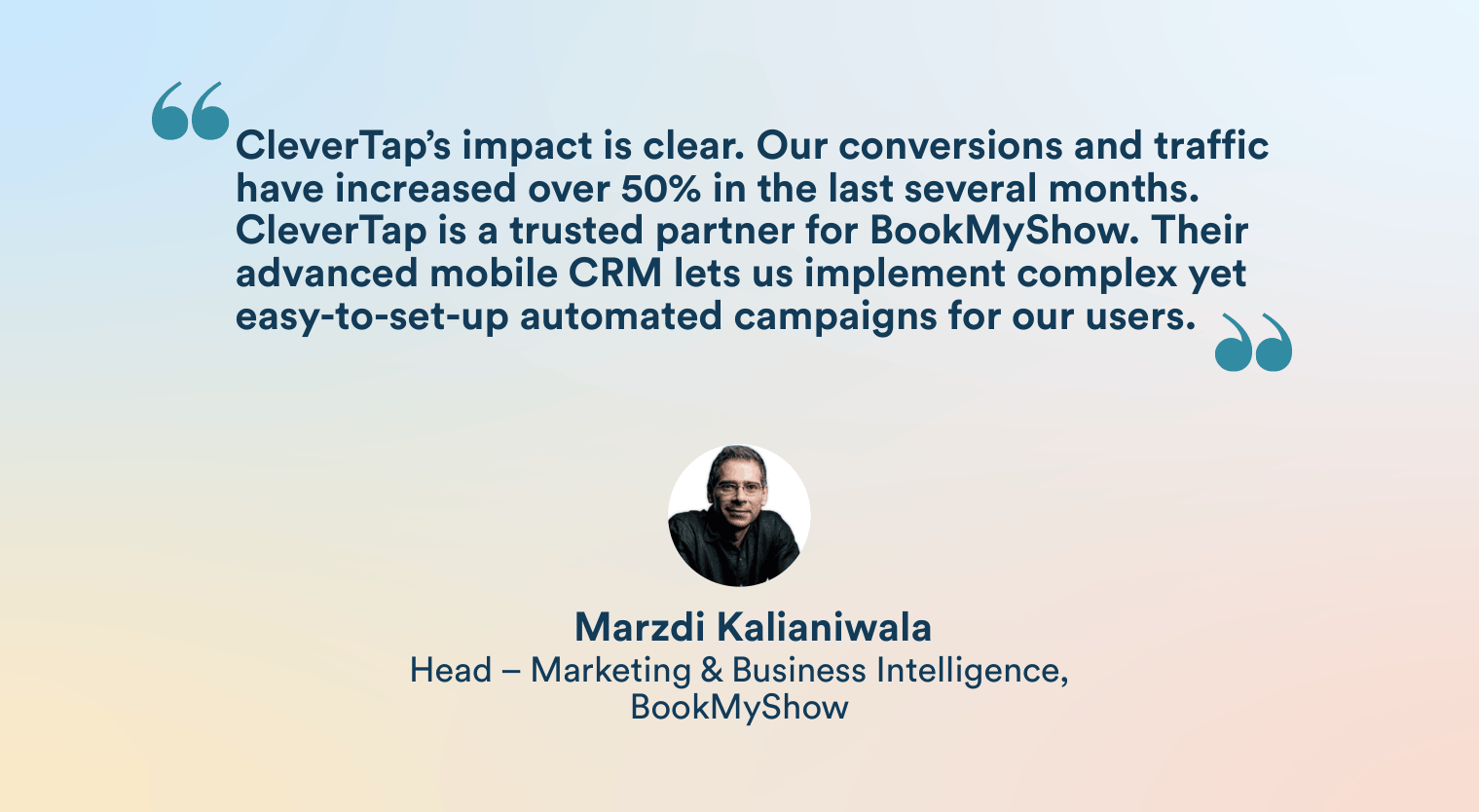
For example, BookMyShow leveraged CleverTap’s real-time analytics to identify when users were most active and shifted campaign timing to match these peak engagement windows. They triggered personalized push notifications based on user behavior and activity patterns, ensuring communication landed when attention was highest.
This approach led to significantly higher responsiveness, with personalized campaigns delivering up to a 5x increase in CTR and a 2x lift in overall engagement.
3. Influencer & Meme Marketing
Influencer marketing peaks during IPL, with brands projected to spend ₹550 crore on creator campaigns in 2025. Instead of relying only on traditional ads, brands collaborate with Instagram creators, YouTubers, and meme pages to build authentic connections.
How it works: Creators, especially niche and regional influencers, have highly engaged communities. IPL influencer campaigns can drive up to 65% brand recall and 59% engagement, with short-form content like reels and memes amplifying reach.
Strategies:
- Creator collaborations: Partner with both top-tier and niche influencers aligned with your category (e.g., sports, food, lifestyle).
- Meme marketing: Leverage trending IPL memes or formats with quick turnaround to stay relevant.
- Regional & nano influencers: Local-language creators and smaller influencers (1K–10K followers) often deliver higher engagement rates.
Tips: Allocate part of your IPL budget to influencer contracts. Encourage user-generated content and monitor sentiment and engagement metrics when running influencer-based IPL promotions.
For example, in the 2023 IPL season, JioCinema engaged 77 influencers to reach 75 million views, while Dream11’s 15 influencers hit 41 million reach.
4. Hyper-Personalized IPL Marketing Strategy
Cricket fandom is deeply personal. Fans have strong preferences for teams, players, and viewing habits. Hyper-personalization taps into this by delivering tailored content and offers, leading to higher engagement and loyalty compared to generic campaigns.
Approaches:
- Segmentation by team/region: Use first-party data to group users by favorite teams or cities and customize messaging accordingly.
- CRM personalization: Leverage push, email, or WhatsApp to send 1:1, context-aware messages tied to live moments or user behavior.
- Dynamic creative optimization (DCO): Personalize ads using names, locations, or past activity to make content feel bespoke.
Tools: CRM platforms, CDPs, and AI-driven automation can generate thousands of creative variations at scale, turning one campaign into millions of personalized experiences.
5. Gamification-Based IPL Marketing Strategy
Gamification taps into fans’ love for competition and rewards, turning passive IPL viewing into active participation. Adding these campaigns to the IPL advertising strategy help drive engagement, app usage, and valuable data collection.
Formats:
- Predict & win: Let users guess match outcomes (winner, top scorer) and build streak-based rewards.
- Quizzes & trivia: Run quick, in-match quizzes with instant rewards or leaderboard prizes.
- Instant win games: Use scratch cards, spin-the-wheel, or similar formats to offer rewards, like cashback or discounts.
- Leaderboards & rewards: Rank users based on participation or referrals and offer tiered incentives.
- Phygital experiences: Combine offline and online via QR codes, in-store games, or interactive packaging.
Tips: Keep mechanics simple, reward frequently, and promote across channels. Capture user data at every step for future retargeting.
6. Regional & Vernacular Marketing
IPL fandom is deeply regional, making localization a key growth lever. With matches broadcast in 10+ languages, vernacular campaigns can drive up to 180% higher share rates compared to English-only content.
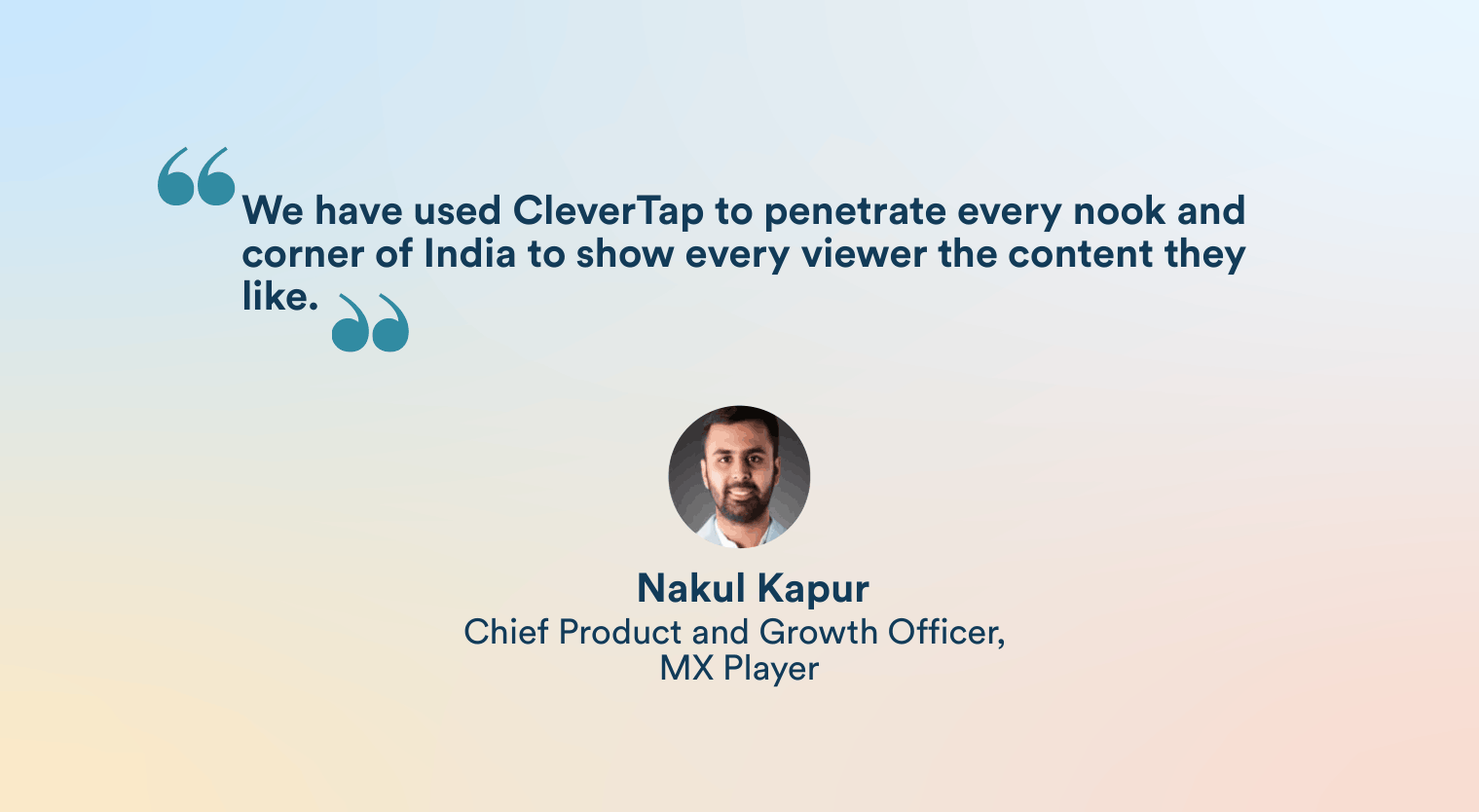
MX Player’s VDesi campaign, powered by CleverTap, is a strong proof point. By targeting Tier-2 and Tier-3 city audiences with push notifications in Hindi and regional languages, and optimizing Android push delivery by 40%, the campaign doubled CTR, increased market penetration by 38%, and drove a 3x user upswing in those cities.
For IPL, the same logic applies across the board. Align your campaigns by team and region. Marathi for Mumbai, Bengali for Kolkata, Telugu for Hyderabad, Kannada for Bengaluru.
Tips: Adapt creatives, don’t just translate them.
- The copy, cultural references, and offer framing all need rethinking for each regional audience.
- Pair this with regional influencers who understand local nuance, localized media placements, and regional-language SEO.
- Then measure by geography, and shift the budget toward the markets showing the strongest signal.
7. Omnichannel IPL Marketing Strategy
Winning IPL brands don’t rely on a single channel. They create seamless, connected experiences across touchpoints. An omnichannel strategy ensures users move fluidly from awareness to engagement to conversion.
CleverTap recommends the following approach:
- Orchestrated journeys: Connect paid media (TV, digital ads) with owned channels like push, email, in-app, and SMS for consistent messaging.
- Real-time engagement: Trigger contextual messages during live match moments (e.g., push notifications, in-app offers).
- Cross-channel personalization: Use unified customer data to deliver relevant experiences across devices and platforms.
- Post-match retargeting: Re-engage users based on behavior (clicks, views, app activity) to drive conversions beyond match time.
Tips: Unify data across channels, automate journeys, and optimize for full-funnel metrics, not just individual channel performance.
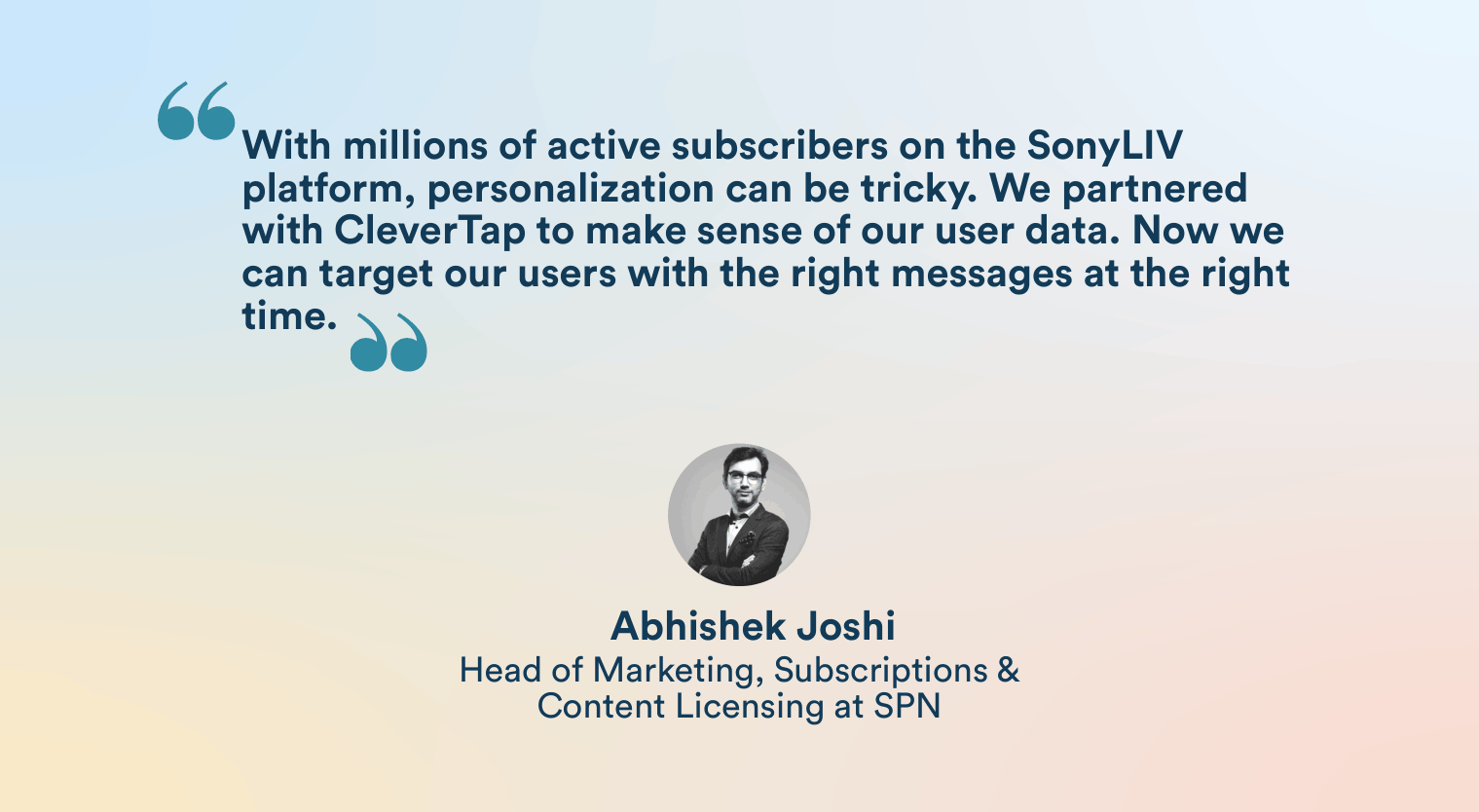
SonyLIV’s approach with CleverTap is a useful reference for any OTT or content brand planning around IPL. Rather than sending uniform campaign messages to 63 million+ users, SonyLIV built real-time micro-segments based on viewing history, preferred genres, and geolocation, then used mobile deep linking to take users directly to relevant content or subscription pages rather than a generic home screen. Free-to-paid conversion campaigns were triggered by specific in-app behaviors, not arbitrary schedules.
This approach boosted conversions by 16% and geo-specific campaigns delivered over 25% conversion rates.
For building an IPL marketing strategy, the lesson is the same: unified behavioral data feeding personalized, action-triggered journeys across channels will consistently outperform broadcast-style campaigns, regardless of audience size.
See how leading brands use CleverTap to trigger personalized campaigns in seconds, across push, WhatsApp, in-app, and more.
8. Performance Marketing During IPL
IPL marketing strategy isn’t just for brand awareness. IPL is also a high-intent window for performance marketing. With spikes in searches like “IPL live score” and “today’s match,” brands can capture demand and drive conversions in real time when running their IPL advertising strategy.
Tactics:
- Search & social ads: Target IPL-related keywords and trends, with geo-targeting aligned to match locations.
- Retargeting: Build audience segments based on sports content consumption and serve relevant IPL creatives.
- Budget optimization: Increase spend on conversion-focused campaigns (app installs, lead gen) and use dayparting during match hours.
- Funnel optimization: Ensure landing pages are fast, mobile-first, and IPL-themed with clear CTAs.
Tips: Track performance using UTMs, run A/B tests on offers, and shift budgets dynamically based on match-driven conversion spikes.
9. Lifecycle Marketing & Retention Campaigns
Most brands focus heavily on acquisition during IPL, but the real ROI comes from what happens after. Lifecycle marketing ensures that every user acquired during IPL is nurtured, engaged, and converted into a long-term customer.
How it works: IPL drives massive spikes in traffic and installs, but without structured follow-ups, most users drop off. Lifecycle campaigns help convert this short-term attention into sustained engagement and revenue.
Strategies:
- Onboarding journeys: Guide new users with personalized welcome flows tied to IPL offers or content.
- Behavioral triggers: Re-engage users based on actions, such as app installs, product views, or cart abandonment.
- Match-day nudges: Send contextual reminders during key moments (innings breaks, match start) to bring users back.
- Win-back campaigns: Re-activate dormant users with IPL-themed offers or personalized incentives.
Tips: Use segmentation to tailor journeys by user behavior and preferences. Automate campaigns across push, email, WhatsApp, and in-app to ensure consistent engagement throughout the IPL season.
10. AI-Driven IPL Marketing Strategy Optimization
IPL 2026 will be the most data-driven season yet. The brands that win won’t just react to moments; they’ll have anticipated them. That’s the CleverAI™ advantage: an agentic decisioning engine built to individualize at scale, at match speed, within the guardrails your brand defines.
- Predictive targeting: CleverAI™’s Predictions Agent uses AI-based predictive segmentation to forecast which fan cohorts will convert, churn, or re-engage, building dynamic segments that adapt continuously. Pre-load inventory and front-run demand before high-stakes matches begin.
- Real-time personalization: Action Agents orchestrate live 1:1 triggers. A six is hit, and a flash offer fires to Team X fans within seconds. A wicket falls, a timely nudge goes to fans most likely to purchase. These aren’t static rules; they self-learn and recalibrate with every match.
- Dynamic creative optimization: Creative Agents generate individualized copy, creatives, and channel strategies per user, understanding emotional context, preferences, and behavioral signals to serve the best-performing variant across 50+ options in real time.
- Intelligent automation: Strategy and Decision Agents run the full playbook, segmenting IPL audiences, prescribing next-best actions, and orchestrating journeys across push, WhatsApp, in-app, SMS, RCS, and CTV without manual intervention at every step.
Pre-IPL checklist: Activate CleverAI™’s Predictions Agent now. Connect live match data APIs, define your campaign guardrails, and test your trigger logic before the season opens. The goal is offers and creatives that update within seconds of each play, driven by agentic AI, freeing your team to focus on creative storytelling while CleverAI™ handles the execution.
Download our IPL 2026 Marketing Strategy eBook to learn how to turn match-time excitement into real customer engagement and conversions. Start building smarter, real-time campaigns that actually deliver results.
Step-by-Step IPL Marketing Strategy Framework for 2026
An effective IPL campaign needs more than ideas; it needs a structured plan. Here’s a six-step framework to guide your IPL 2026 strategy.
Step 1: Define goals. Be specific. “50 million GRPs and 10,000 new app installs” is a goal. “Get more likes” is not. Set clear KPIs upfront: brand recall lift, app downloads, cost per acquisition, and sales attributed to IPL spend.
Step 2: Segment audience. Map which consumer segments overlap with IPL audiences. Are you targeting hardcore fans, casual viewers, or team loyalists? Layer in geography and language. These choices shape every creative and channel decision that follows.
Step 3: Select channel mix. Smaller brands can skip TV and go deep on social and influencer. Mid-size brands can blend digital with selective OTT buys. Larger brands should aim for full omnichannel coverage. If your audience skews young, weight toward OTT and social. For mass-market reach, TV remains indispensable.
Step 4: Build a creative strategy. Build a roadmap that covers both planned brand assets and agile real-time content. Keep your brand voice consistent. Pre-produce modular templates: customizable video placeholders, regional-language cuts, and brandable meme formats ready to deploy at a moment’s notice.
Step 5: Plan for real-time execution. Set up your IPL war room before the season opens. Assign clear roles, build a match-aligned content calendar, and arm your team with live data feeds and social trend monitors.
Step 6: Measure and optimize. Track ad spend, traffic, installs, and conversions in real time. Run weekly check-ins to assess what’s working and shift budget accordingly. After each match week, do a quick retrospective and feed those learnings into the next cycle.
These six steps create a continuous feedback loop. The brands that win treat IPL not as a series of one-off ads, but as a focused two-month campaign with deliberate ramp-up, peak execution, and wind-down phases built in from the start.
How to Measure IPL Marketing Strategy Effectiveness
With high stakes comes scrutiny. Measuring IPL campaign success requires a unified, lifecycle view. Tracking ROI is notoriously hard in a multi-screen event, but CleverTap enables this with real-time analytics and user-level tracking across channels.
Key metrics to track include acquisition, such as installs and sign-ups, engagement, such as sessions, CTR, and time spent, and revenue, such as conversions, ARPU, and LTV. These metrics help understand the full-funnel impact.
- Cohort & funnel analysis: Use cohort analysis to compare IPL-acquired users vs. others, and funnel analytics to identify drop-offs from ad click to purchase, and optimize journeys.
- Attribution & segmentation: Leverage UTM parameters, event tracking, and campaign attribution to tie performance to specific matches, channels, or creatives. Segment users by behavior (e.g., match-time activity, high-intent actions) for deeper insights.
- Experimentation & optimization: Run A/B tests on messaging, timing, and offers to improve performance in real time.
- Lifecycle measurement: Go beyond match-day spikes. Track retention, repeat purchases, and engagement post-IPL to measure true ROI and long-term customer value.
In short, go beyond vanity metrics. Track conversions and sales lift whenever possible. Align your metrics with your goals, and be honest about what success means.
Win IPL 2026 with CleverTap
The strategies in this guide demand one thing above all else: the ability to act fast, at scale, without dropping the ball on personalization. That’s precisely what CleverTap is built for.
During a previous IPL season, CleverTap-powered brands sent over 14 billion push notifications, with individual campaigns delivering up to 50 million notifications in under 10 minutes, showcasing the ability to operate at massive scale in real time.
Timing is critical during IPL, and CleverTap allows brands to trigger campaigns within key moments like the toss or innings breaks, with up to 40 million personalized notifications sent in under 4 minutes, ensuring messages land when engagement is highest. Data-driven insights, such as higher CTRs on Android devices, further help optimize targeting and performance.
Combined with real-time segmentation and personalized journeys, this enables brands to drive conversions—whether purchases, subscriptions, or offer redemptions—while also reactivating dormant users during peak IPL engagement windows.
Behind those numbers is a platform built for the full IPL marketing lifecycle: rich customer data and analytics to understand who your fans are, omnichannel campaign orchestration to reach them across push, in-app, WhatsApp, SMS, RCS, and email, and CleverAI™ to predict intent, personalize at the individual level, and optimize in real time.
Whether you’re a streaming platform chasing activation, an e-commerce brand riding match-day demand, or a consumer brand building regional loyalty one language at a time, CleverTap gives you the infrastructure to turn IPL attention into lasting customer relationships.
From real-time engagement to AI-powered personalization, CleverTap helps you convert match-day attention into long-term customer value.

Subharun Mukherjee 
Heads Cross-Functional Marketing.Expert in SaaS Product Marketing, CX & GTM strategies.
Free Customer Engagement Guides
Join our newsletter for actionable tips and proven strategies to grow your business and engage your customers.