

















Table of Contents
Categories
Most Popular


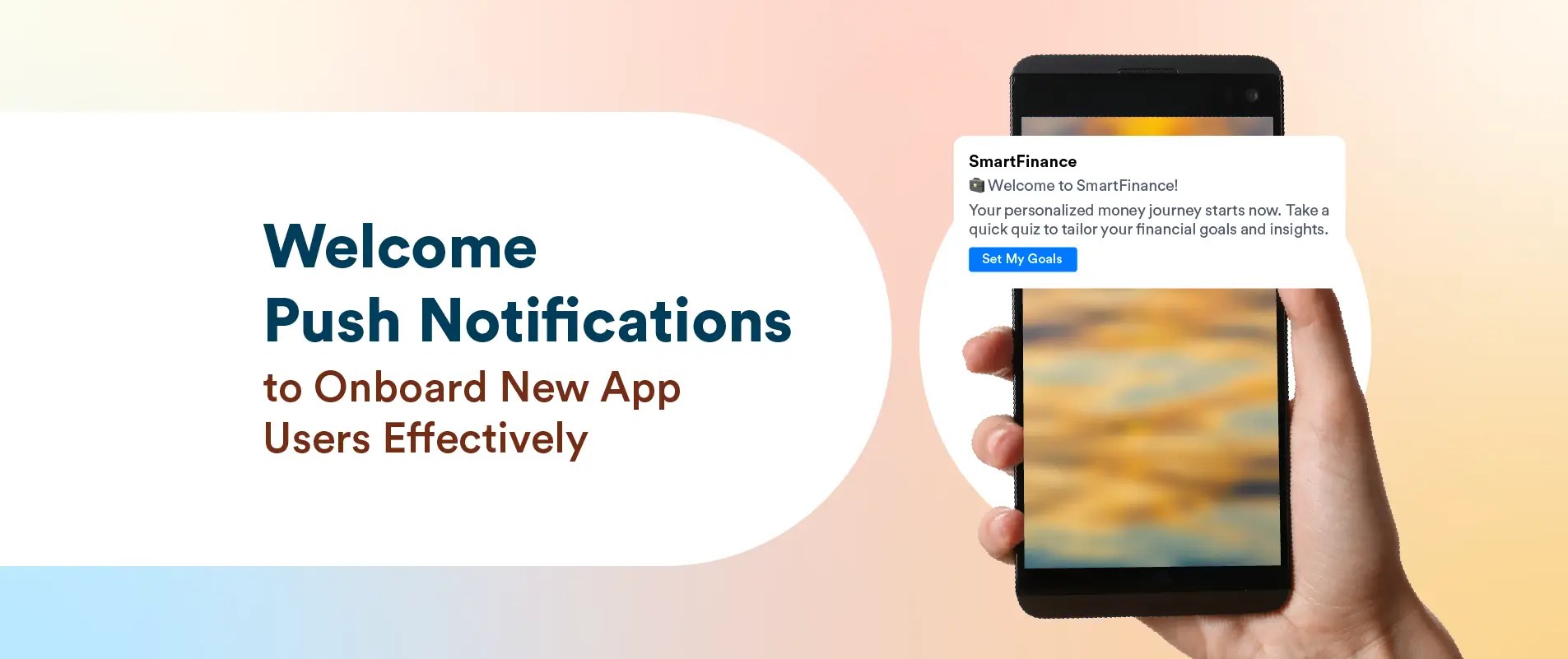
Welcome push notifications are messages specifically crafted to engage new users in the early stages of the app relationship. These push notifications do more than greet new users. When used strategically, they support onboarding, encourage early engagement, and guide users toward the actions that help them experience an app’s core value. A well-timed welcome push can introduce useful features, prompt an activation step, or nudge users toward their first conversion.
This matters because app downloads are only the first step in the user journey. Roughly 90% of downloaded apps are used only once, so a sustainable strategy must go beyond installs. Welcome pushes can counteract this trend by keeping users engaged through onboarding. In this article, we share practical welcome push notification examples, including sample copy, triggers, and the activation goals they support.
What Is a Welcome Push Notification?
A welcome push notification is a mobile message sent during the early stages of the app-user relationship to engage, orient, and guide new users. It can reinforce the app’s core value, support onboarding, bring users back after an early session, and encourage a first meaningful action, such as completing a profile, exploring a key feature, or making a first purchase.
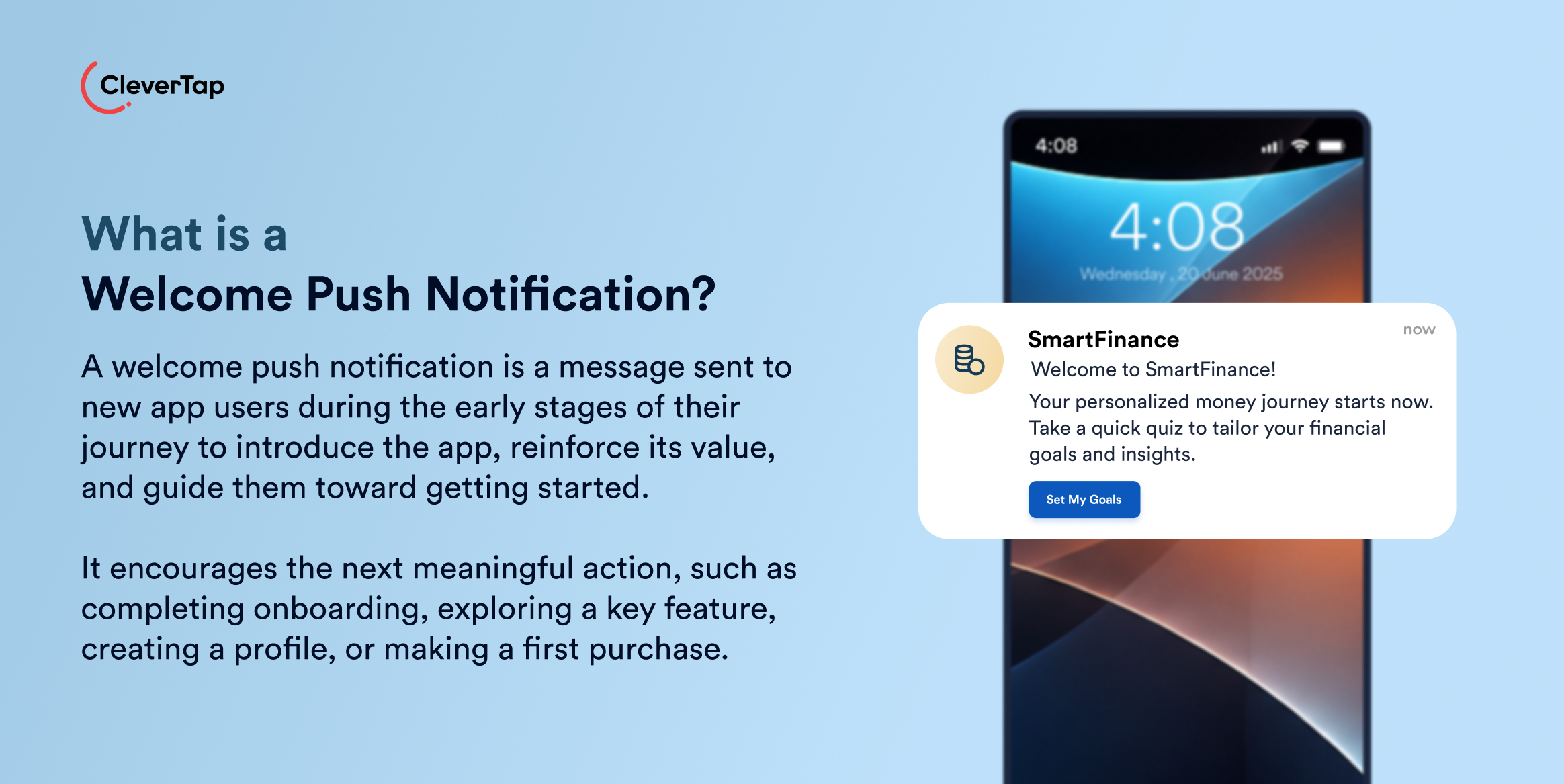
A well-crafted welcome push gives users a clear reason to continue engaging with the app. For example, a fitness app might prompt a user to start their first workout, while a sleep app could encourage them to begin tracking their sleep.
Welcome pushes can be delivered immediately after signup or first app open, scheduled for a relevant time, or triggered by user behavior. For instance, an app might send one after a user completes their first session or exits onboarding before finishing it. The goal is to make the next step clear and relevant rather than sending a generic greeting.
Welcome Push Notification vs. Onboarding Notification
An onboarding notification is any message used to guide users through setup and early adoption across channels. A welcome push is a specific mobile push sent early in that process, while onboarding messages may also include emails, in-app messages, and other follow-ups.
Welcome Push Notification vs. Welcome In-App Message
A welcome in-app message appears while the user is actively using the app, making it useful for immediate guidance. A welcome push reaches users outside the app and is better suited to bringing them back or prompting them to take the next action.
15 Welcome Push Notification Examples
Each example below targets a specific onboarding moment or activation goal.
1. Simple Welcome and Value Reinforcement
A simple welcome message works best immediately after signup, or the user’s first app opens, when their interest in the app is still high.
For example: “Welcome aboard, Sarah! 🎉 Let’s help you get the most out of your new app.”
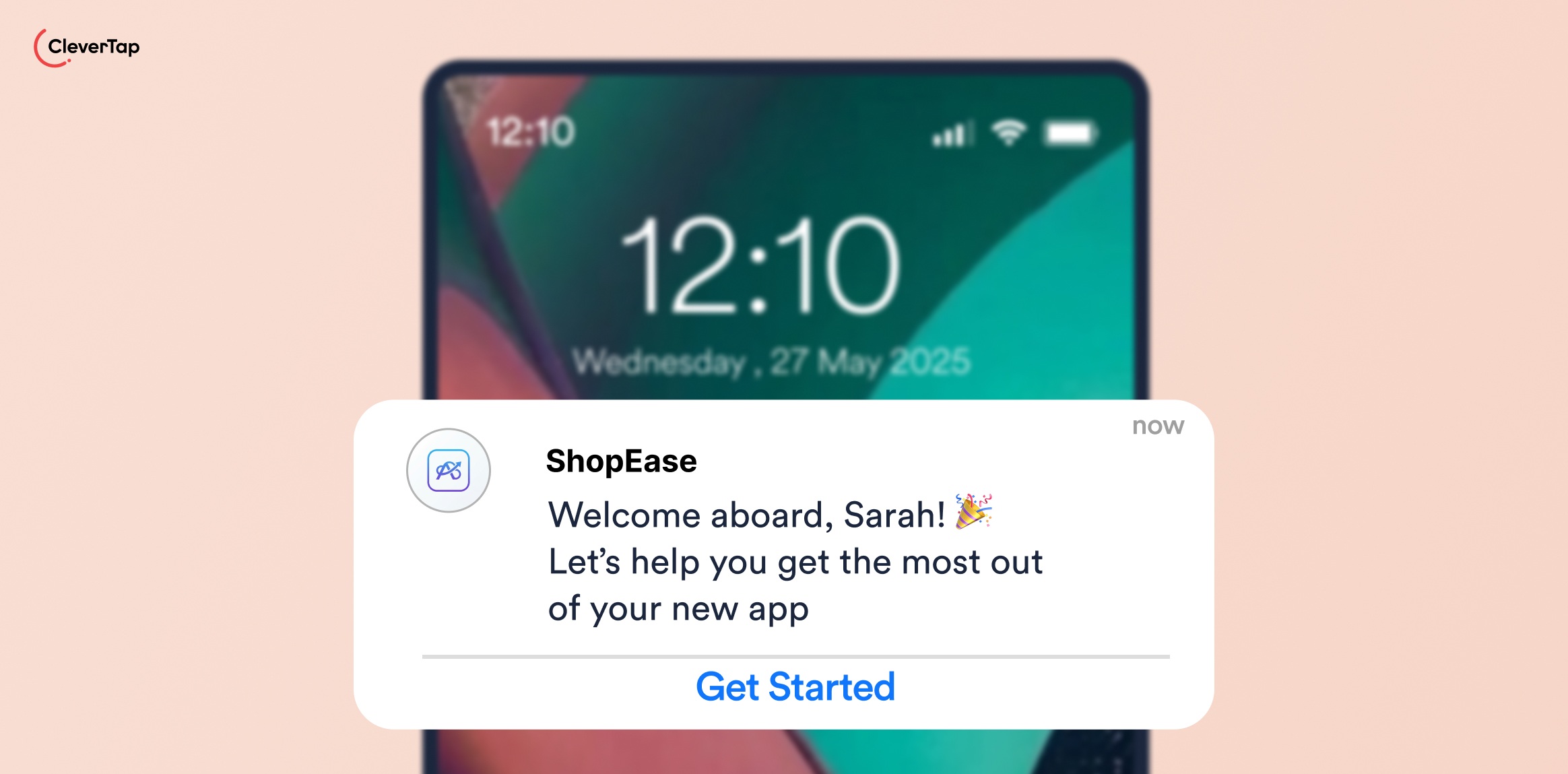
The notification creates a warm first impression while reinforcing that the app can help the user find value.
Personalizing it with the user’s name adds relevance without making the message overly complex. Deep-link the notification to the home screen or a personalized getting-started page, where users can begin exploring the app’s key features.
2. Complete Your Profile
Encourage users to finish their profile by showing them a clear benefit for doing so. For example: “Hello and welcome to FurnFab! 🎉 Fill out your profile for a 30% off coupon.”
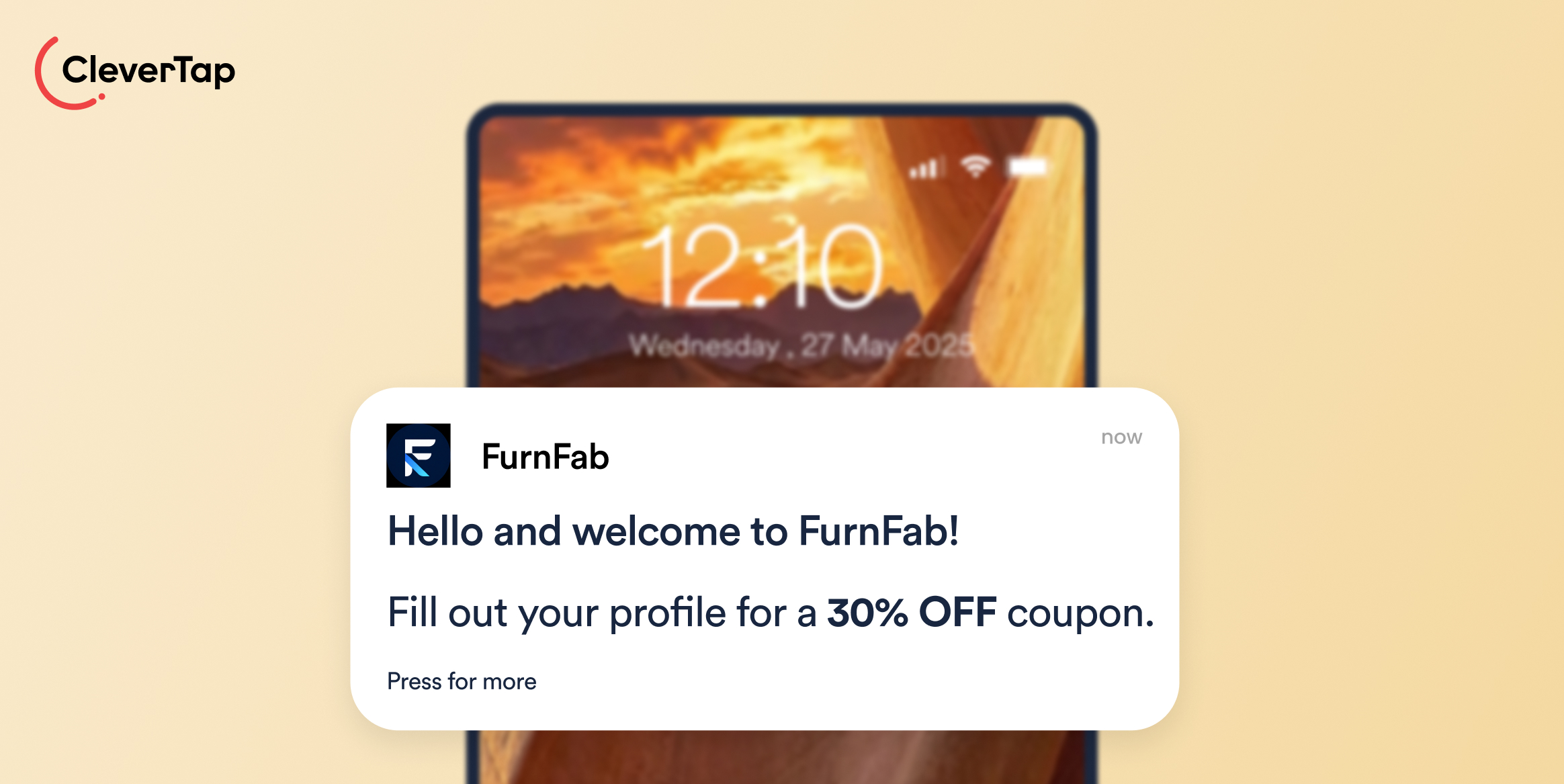
This works because it connects the setup task with an immediate reward, giving users a stronger reason to complete it. The push should take them directly to the unfinished profile fields and can be triggered only if their profile remains incomplete.
3. Finish Account Setup
A setup reminder is useful when a user begins onboarding but leaves before completing the required steps.
For example: “Still setting up? Pick up where you left off and complete your onboarding.”
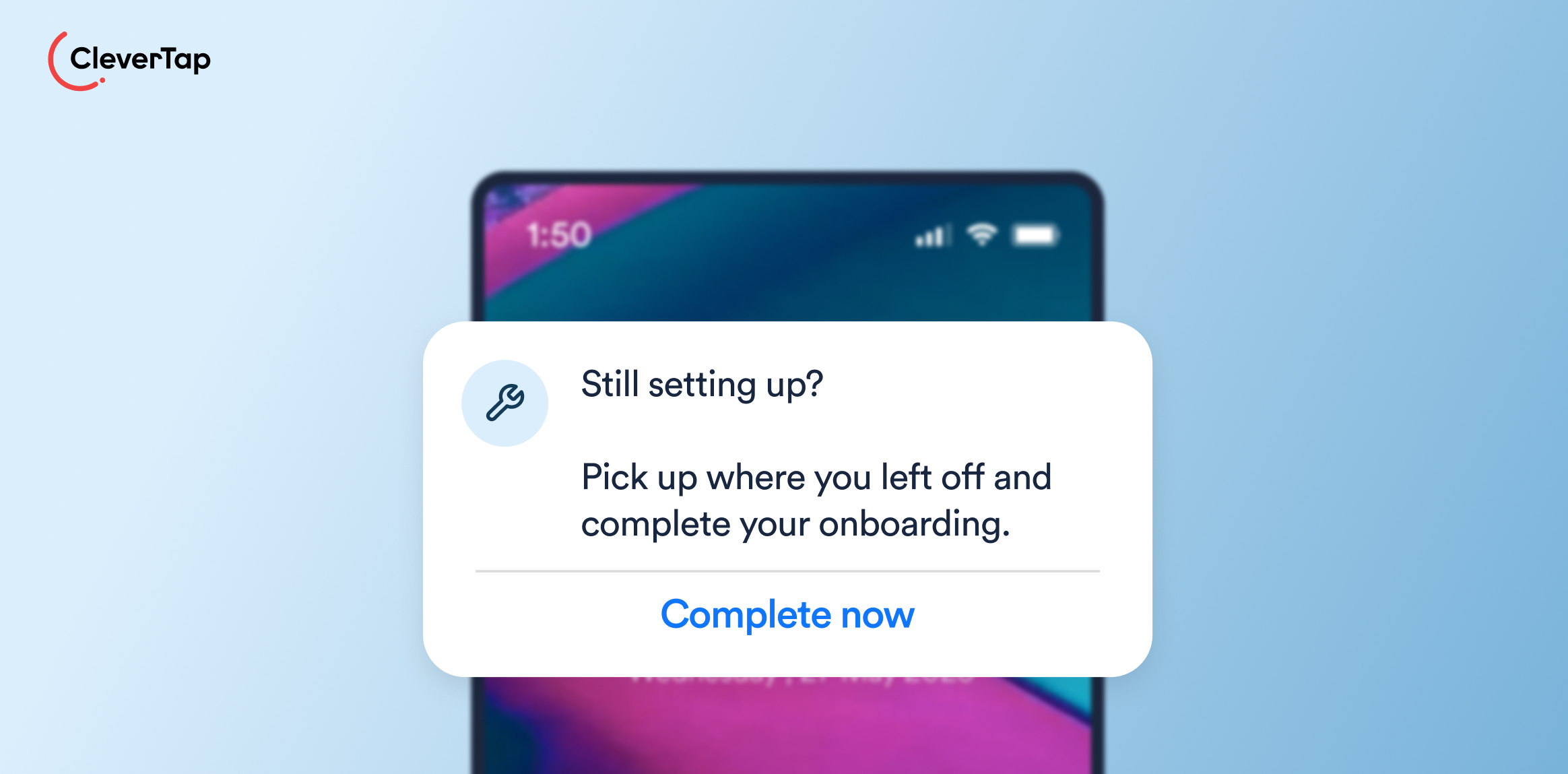
Deep-link the notification directly to the unfinished setup screen so users can resume without repeating earlier steps. This works because it acknowledges the user’s progress and gives them one clear action rather than sending a generic reminder. Trigger it after a period of inactivity and automatically suppress it if the user completes setup before the notification is sent.
4. Complete Identity Verification
An identity verification reminder is useful when users have signed up but have not completed KYC or another required verification step. For example: “👋 Just one step to go—complete your KYC to unlock full access.”
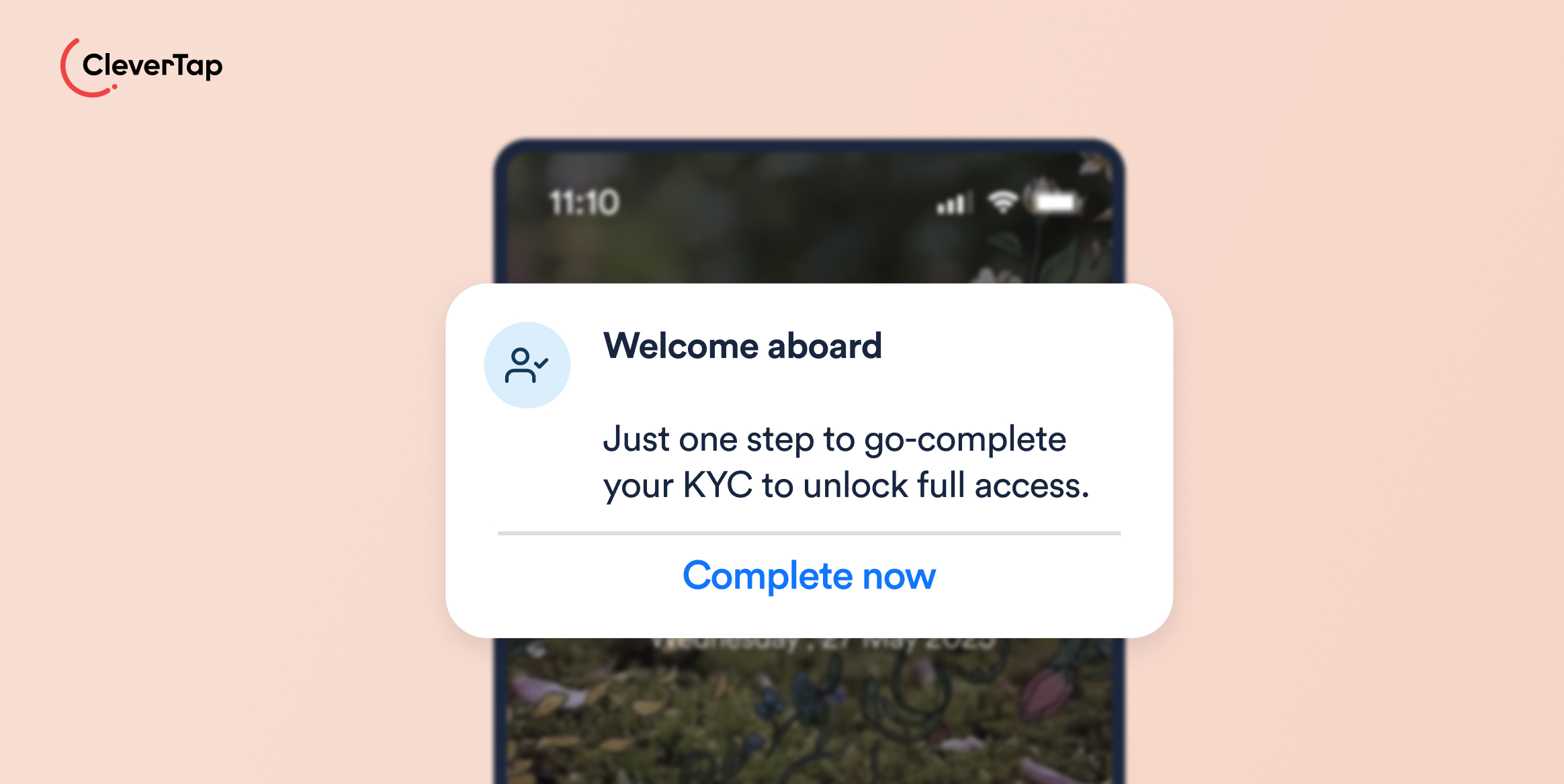
Deep-link the notification directly to the verification screen so users can continue without searching for the next step. This works because it clearly explains what remains and connects completing the action to an immediate benefit: full access to the app. Trigger the message after the user abandons verification, and suppress it as soon as they complete the process.
5. Select Preferences or Interests
Ask users to share their preferences early so you can personalize their experience from the start. This could include interests, goals, favorite categories, content preferences, or other information relevant to how they use the app.
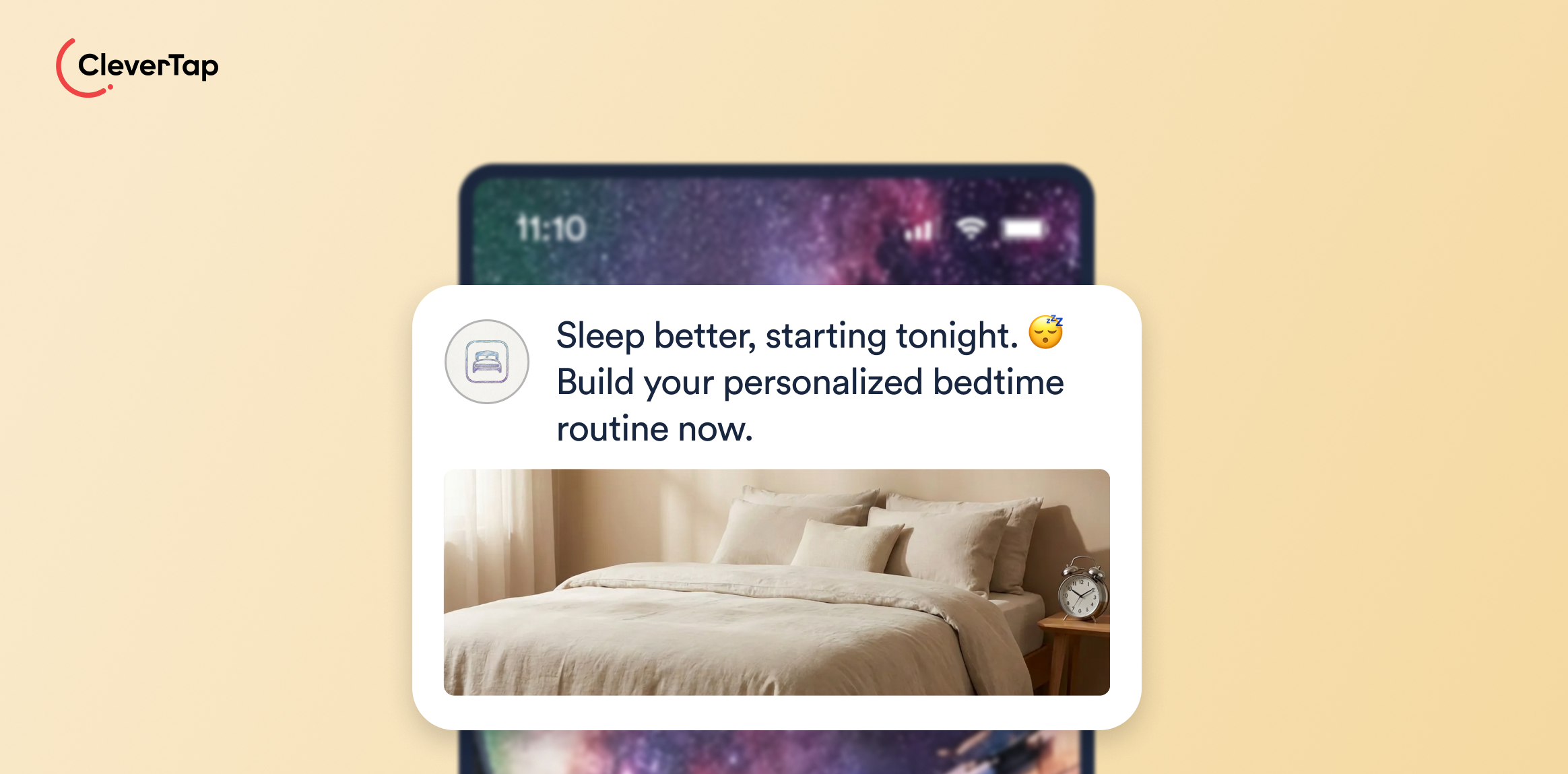
For example, a sleep and wellness app could prompt users to create a personalized bedtime routine based on their needs. By encouraging users to select preferences during onboarding, the app can recommend more relevant content, features, and notifications later in the customer journey.
6. Discover a Key Feature
Feature discovery messages can introduce users to a capability that helps them experience the app’s value sooner. For example: “Your built-in planner is ready! Organize your day in one tap.”
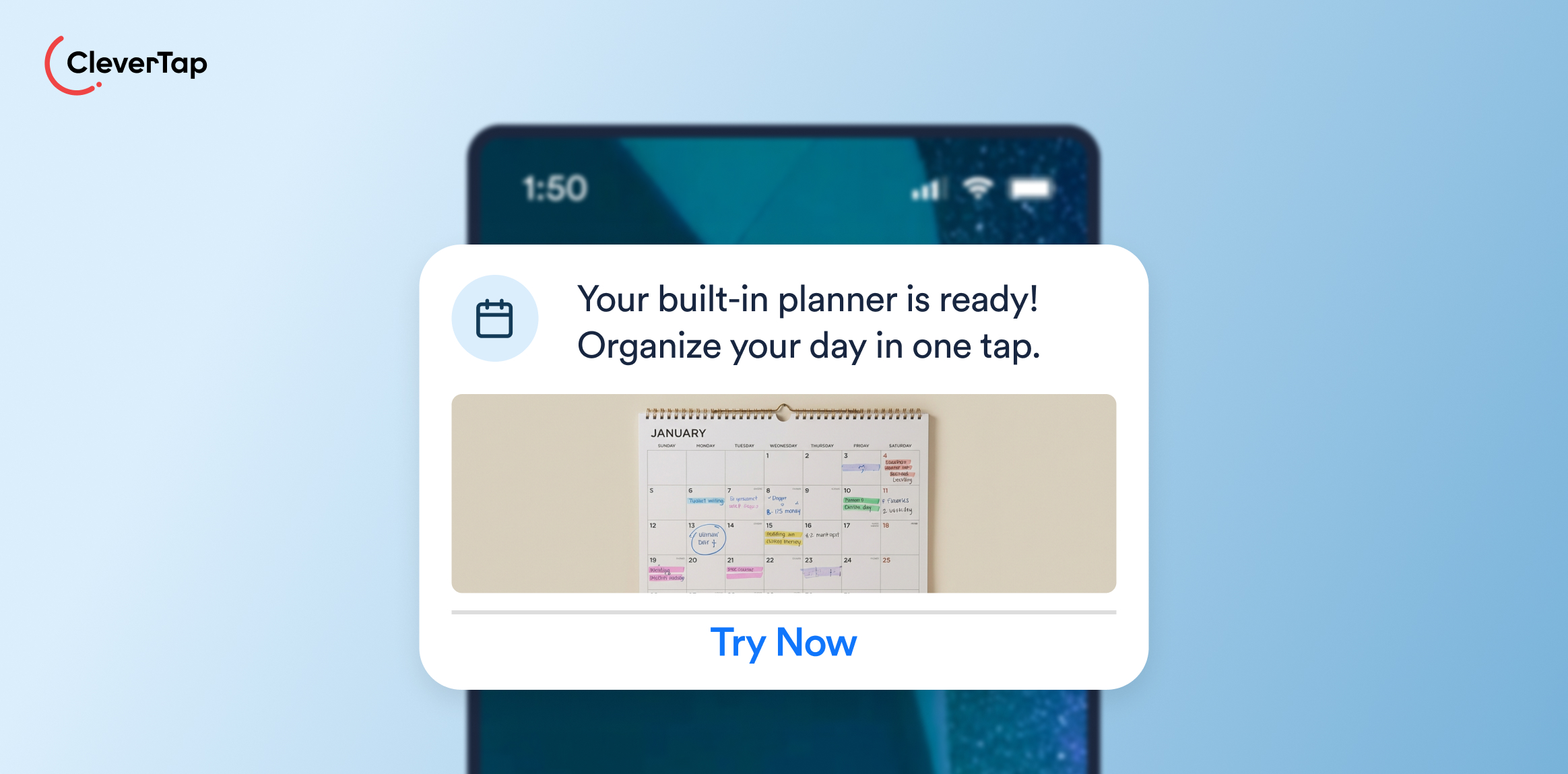
This works well after a user has completed initial setup but has not yet used an important feature. Tapping the notification can take them straight to the planner, making it easy to try the feature immediately. Focus on one useful capability and explain its benefit clearly rather than simply announcing that the feature exists.
7. Complete the First Meaningful Action
This push should encourage the action that represents true activation for the app, not simply another app open. For a rewards app, for example: “Save more: Earn 3% cash back when you spend with Amazon.” The “Learn More” CTA can take users to details about the offer or the steps needed to earn the reward.
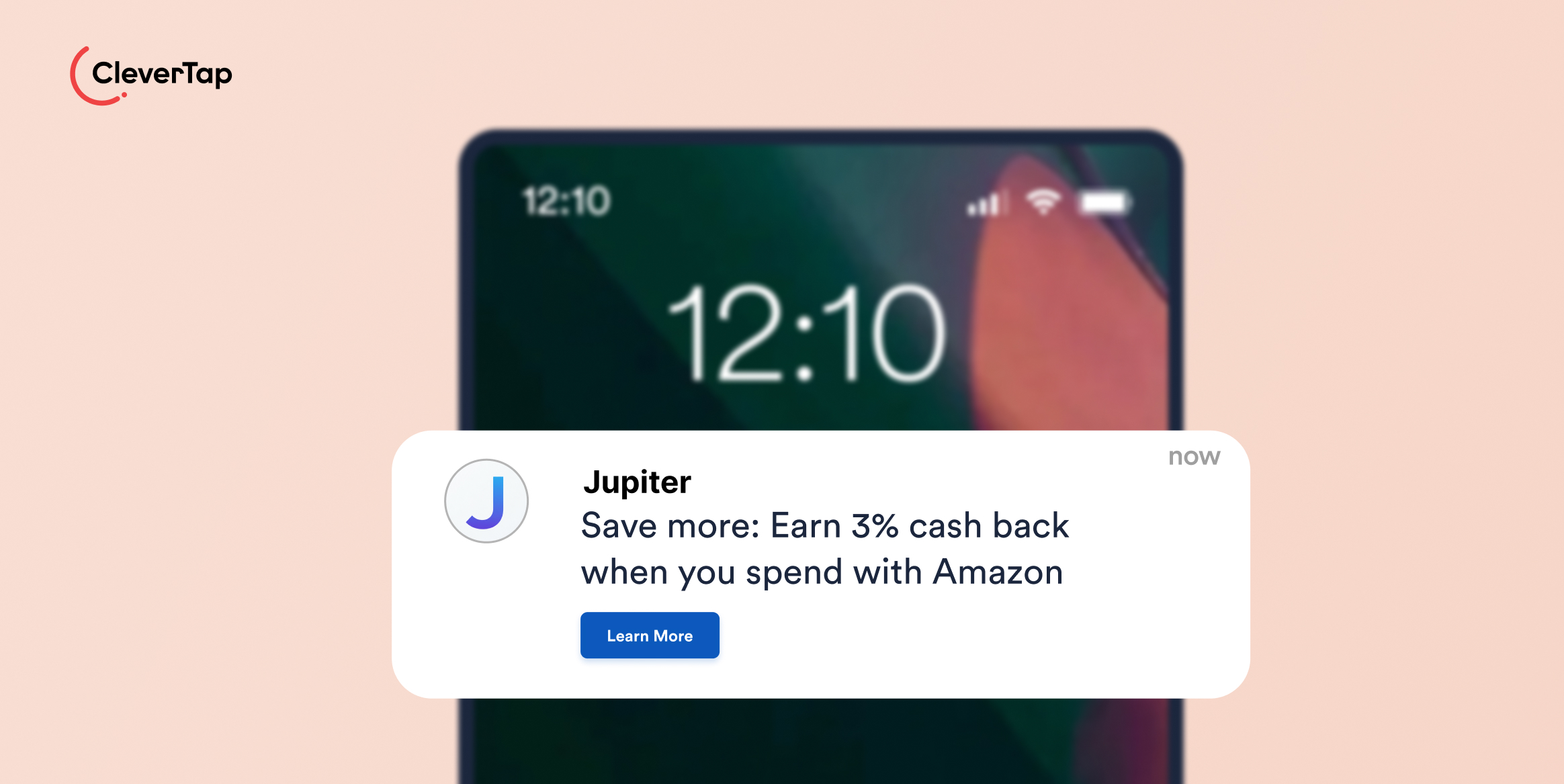
This works because it connects a specific action with a clear benefit, giving users a reason to move beyond browsing. Tailor the message to the app’s actual activation milestone, whether that means making a first purchase, completing a booking, creating content, or using a core feature.
8. Make the First Purchase or Booking
For shopping, travel, food delivery, and service apps, a welcome push can encourage users to complete their first transaction. For example: “It only takes 1 minute to book your Four Seasons Resort Hualalai stay. Book now.”
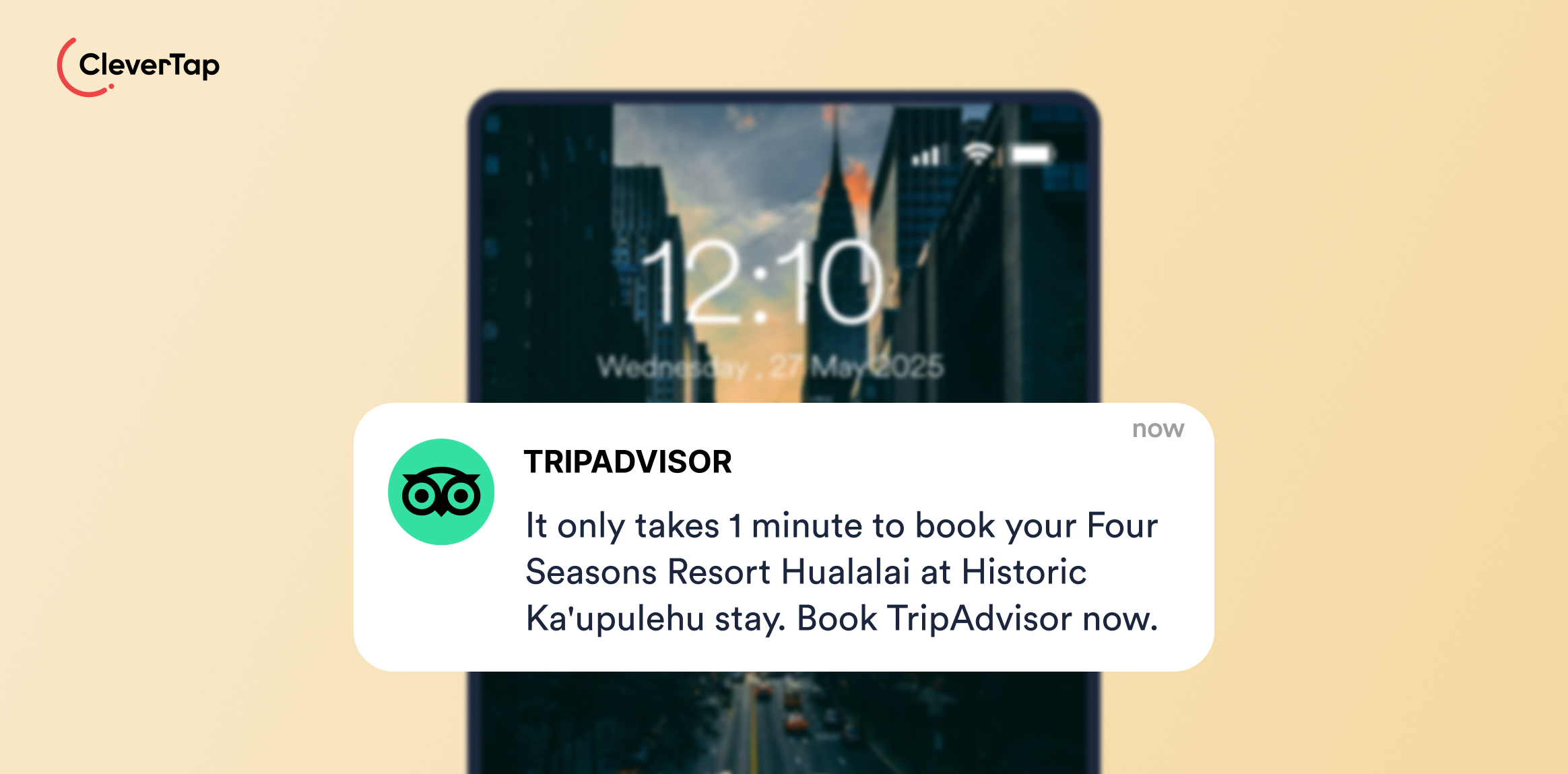
The message from TripAdvisor works because it highlights a specific option the user has already shown interest in and reduces perceived effort by emphasizing how quickly they can complete the booking. Send it after a user views an item, adds it to a cart, or starts but does not finish a booking, with the notification opening the relevant checkout or booking flow.
9. Complete the First Deposit or Financial Action
For banking, investing, or fintech apps, a welcome push can encourage users to complete their first meaningful financial action after setup. For example: “Boost your returns today 📈 Invest $100 and earn $5 instantly!”
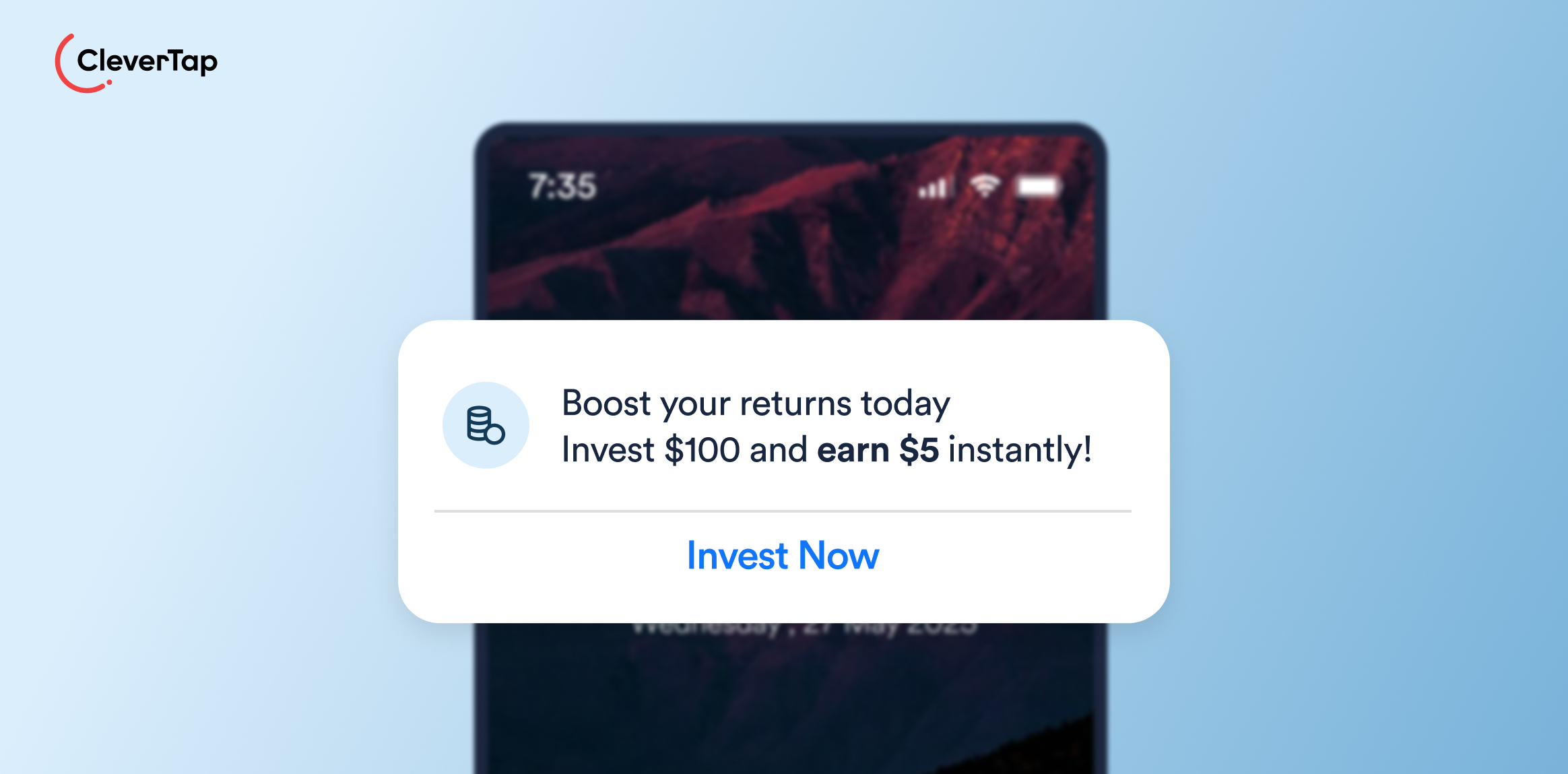
The “Invest Now” CTA takes users directly to the investment flow, removing friction between the prompt and the action. This works because it combines a clear financial action with an immediate incentive. Trigger it only when users are eligible to invest and have not yet completed their first transaction.
10. Start Playing or Finish the Tutorial
This type of welcome push works well for gaming, budgeting, productivity, learning, fitness, and other apps that use a tutorial or guided first experience. Send it when a user starts onboarding but leaves before completing the tutorial or taking the first core action. For example: “New to budgeting? No worries. Learn how to build your first budget in 2 minutes.”
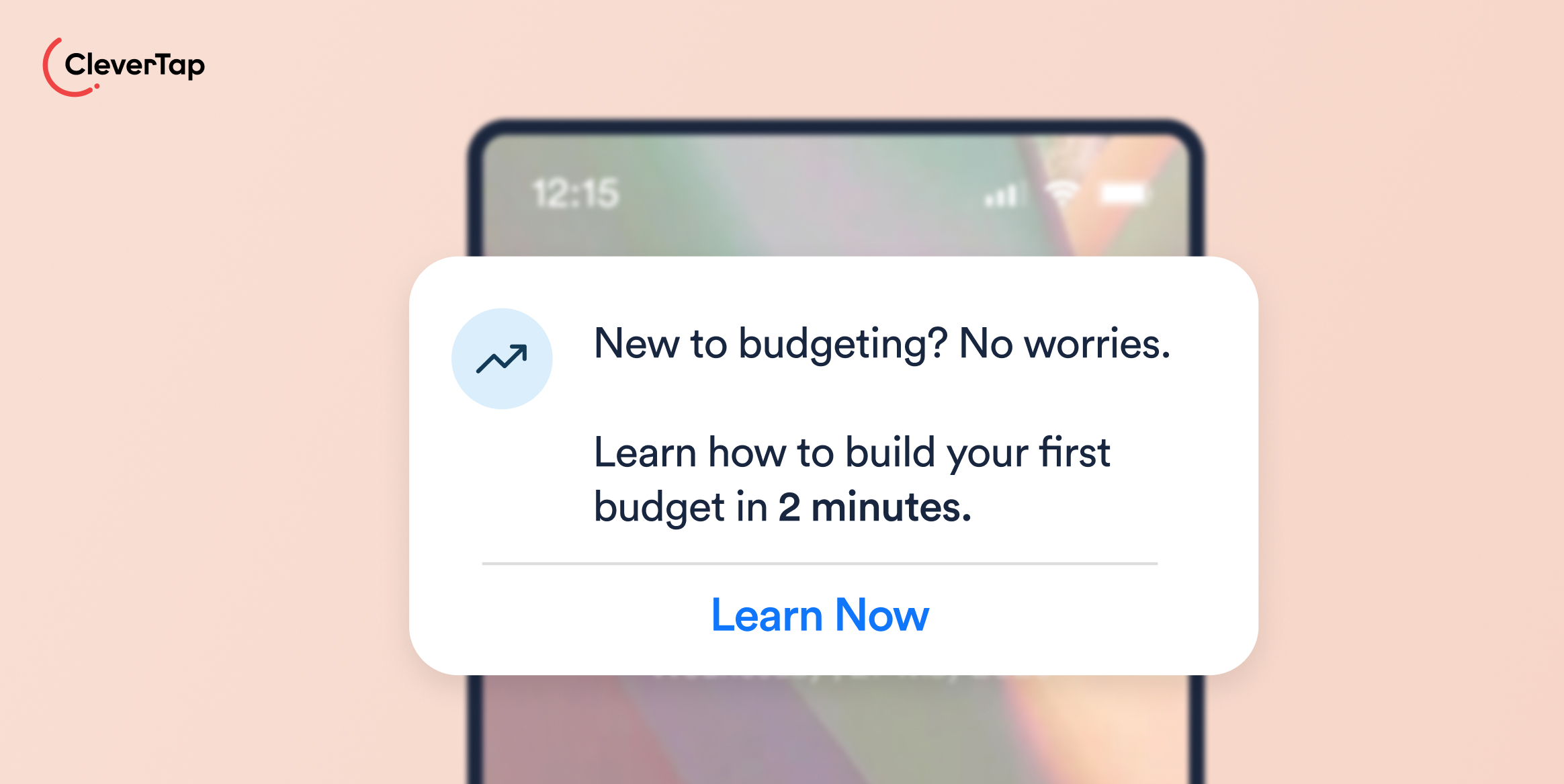
The “Learn Now” CTA can resume the tutorial at the exact point where the user left off. This helps reduce friction by making the next step feel quick and manageable rather than asking users to restart the entire onboarding process.
11. Explore Personalized Recommendations
Use what you know about a user’s viewing history, preferences, or past behavior to recommend content that feels relevant to them. Personalized recommendations can help new users discover value faster instead of leaving them to search through an overwhelming number of options.
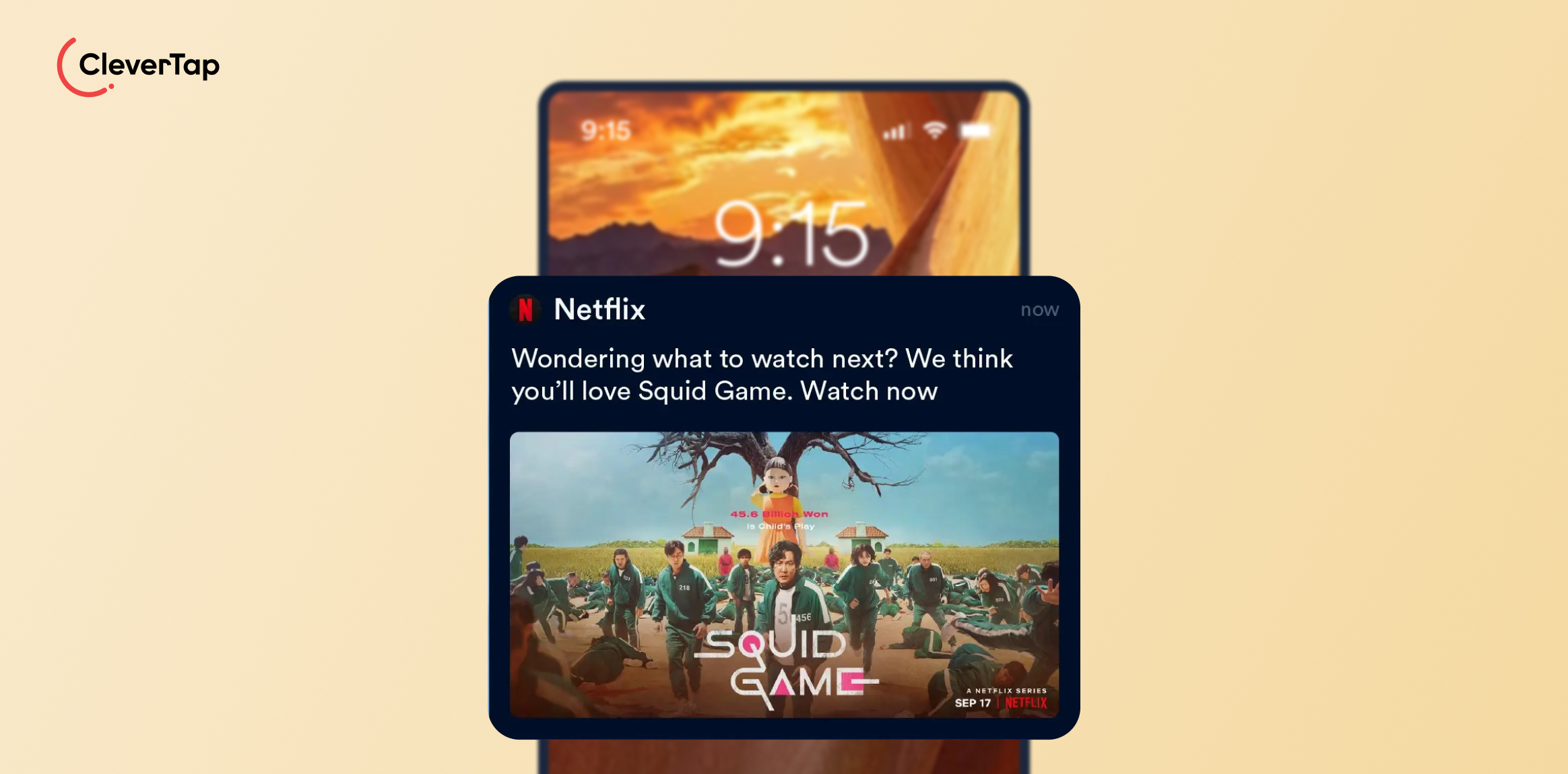
For example, Netflix can recommend a specific show based on what a user has previously watched or shown interest in. A message like, “Wondering what to watch next? We think you’ll love Squid Game” gives the user a clear next step and makes returning to the app feel more relevant and personalized.
12. Claim a Welcome Benefit or Reward
A welcome discount, credit, or other exclusive benefit can give new users an immediate reason to take action. This approach works particularly well for shopping, food delivery, travel, and subscription apps where a first purchase or booking is an important activation milestone. For example: “Your 25% welcome discount is waiting! 🎁 Complete your first order before it expires.”
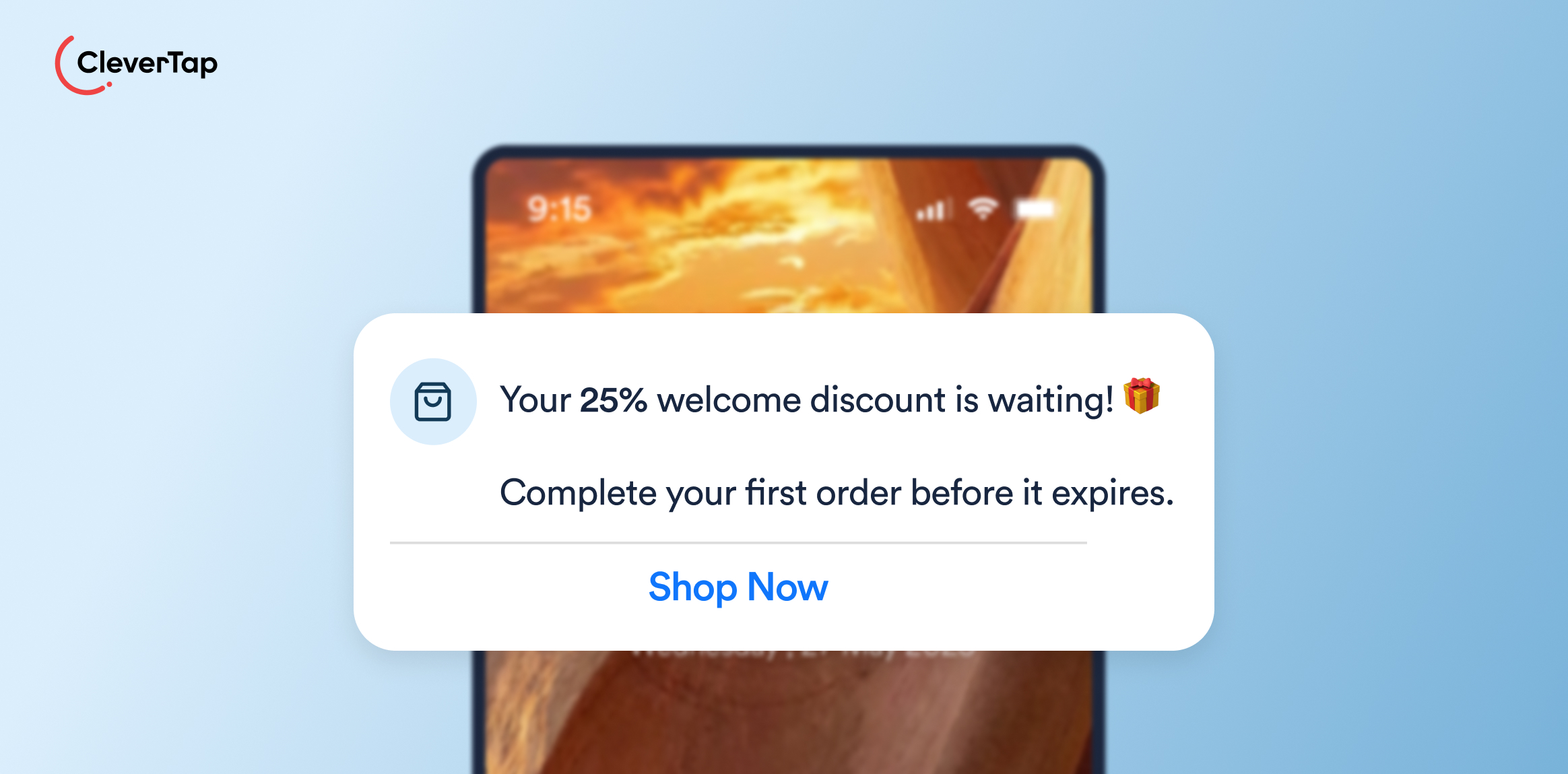
The time-sensitive offer creates FOMO, while the reward provides a clear incentive to act. Send it shortly after signup and stop the sequence once the user redeems the offer.
13. Celebrate Joining or New Users
Welcome new users with a message that makes their decision to sign up feel valued. A celebratory push notification can acknowledge the milestone while giving users an immediate reason to engage with the app, such as a welcome discount, free benefit, or exclusive offer.
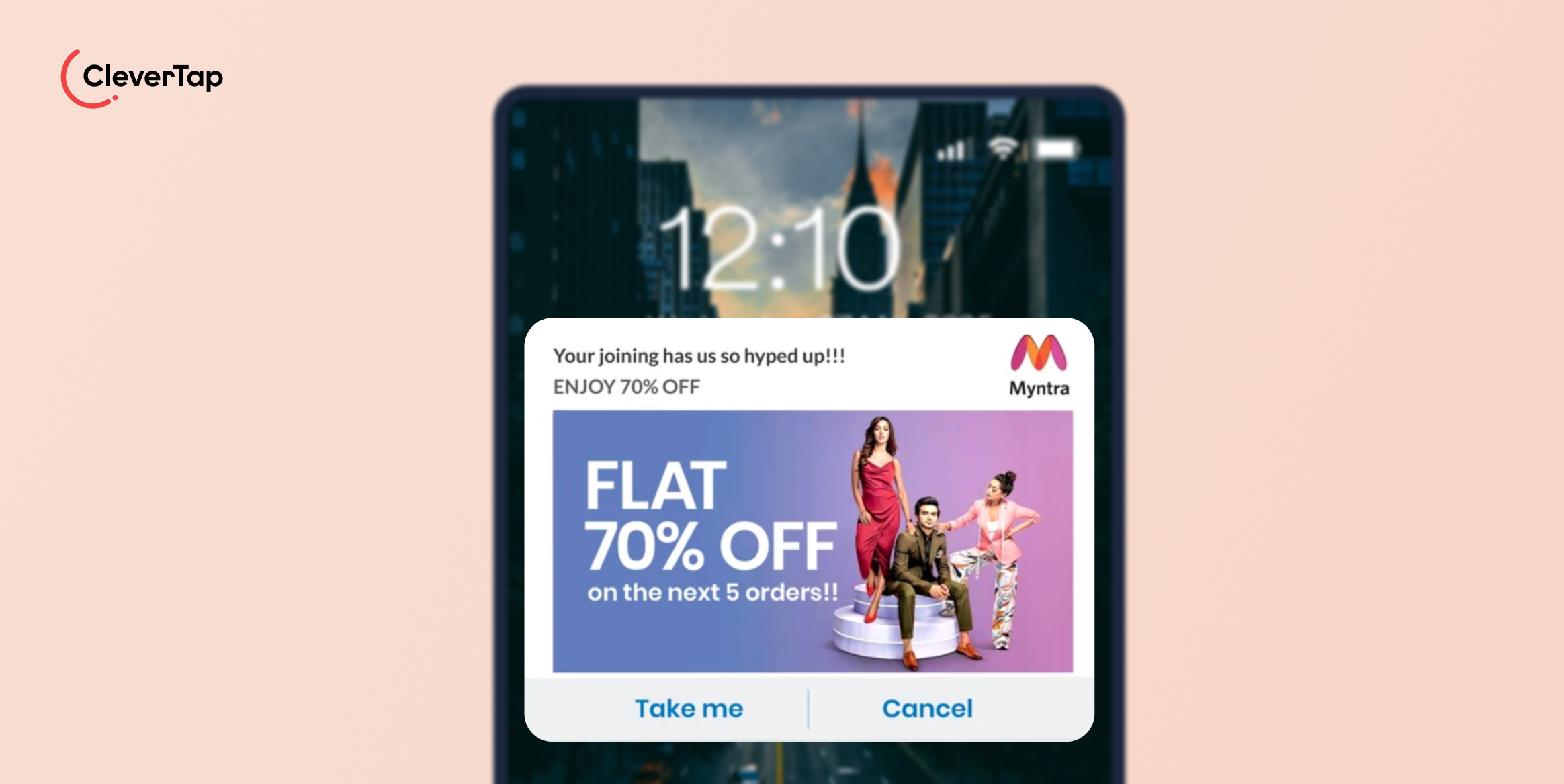
For example, Myntra welcomes new users with an enthusiastic message and an offer of 70% off on their next five orders. The message combines appreciation with a tangible incentive, encouraging users to move from sign-up to their first purchase and potentially return for additional orders.
14. First-Week Progress or Encouragement
Send an encouraging push during the user’s first week to reinforce early habits and bring them back before momentum fades. This works especially well for learning, fitness, productivity, wellness, and habit-building apps. For example: “⚠️ The day is almost over! You haven’t practiced yet. Extend your 4-day streak with a lesson!”
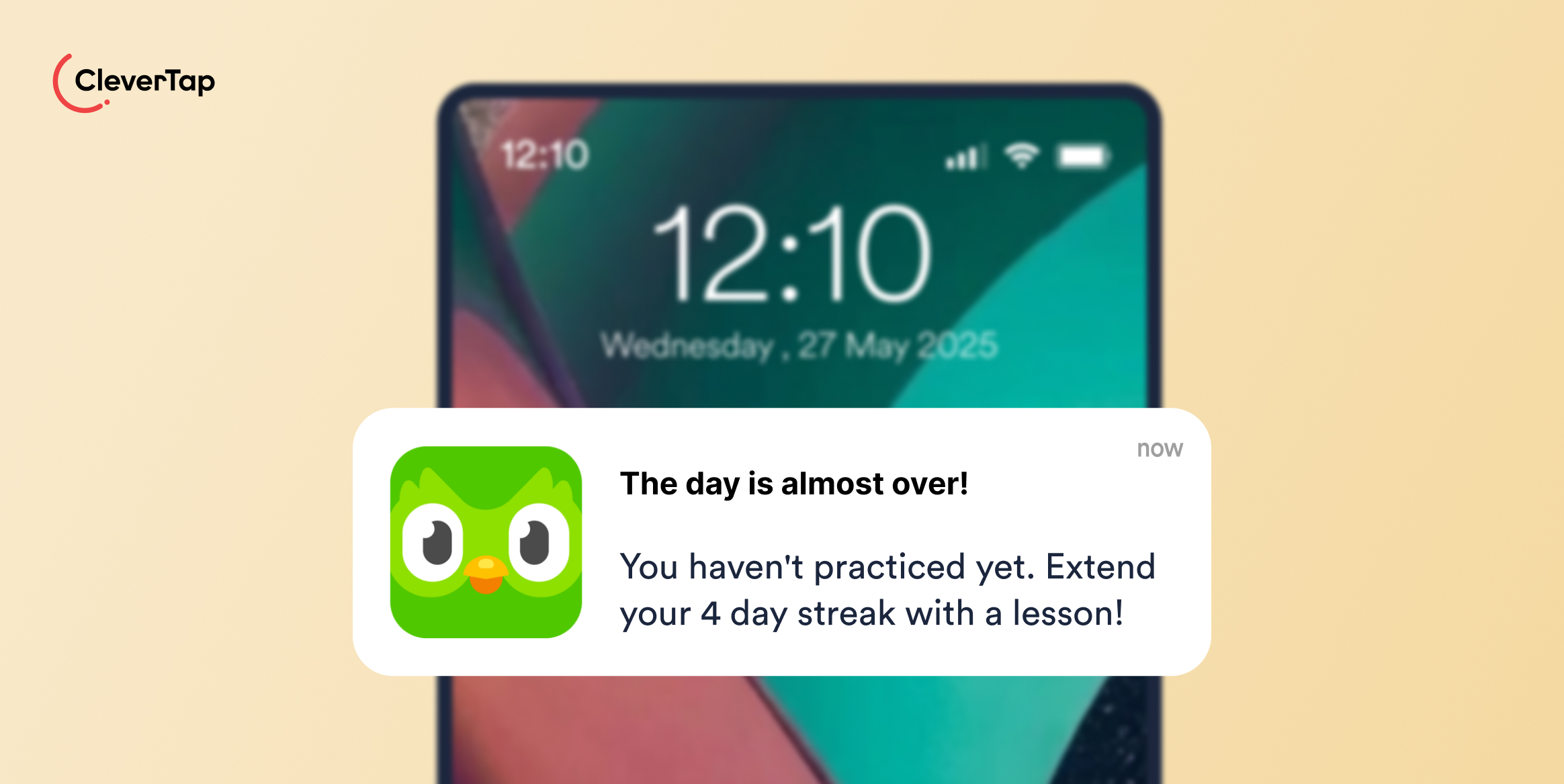
By highlighting the user’s existing progress, the message creates a sense of investment and encourages them to maintain their streak. Trigger it based on inactivity and personalize it with the user’s current progress, such as their streak length or completed sessions.
15. Timely Update Notification
Once a new user completes their first transaction, booking, or order, a timely push can reinforce the app’s value by keeping them informed without requiring them to check the app. This works well for food delivery, ride-hailing, travel, banking, and other service apps.
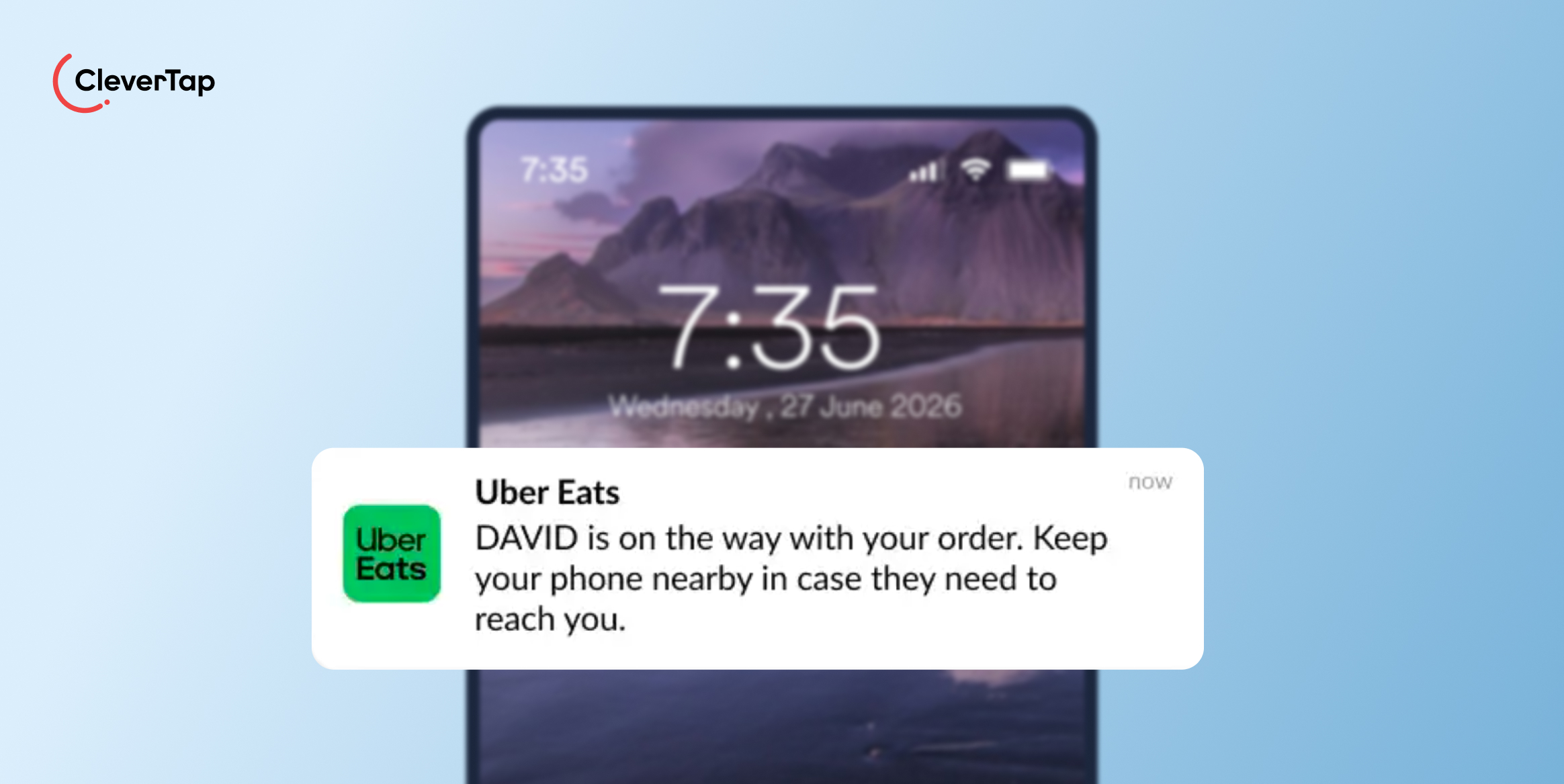
For example: “David is on the way with your order. Keep your phone nearby in case they need to reach you.” The update is specific, relevant, and tied to the user’s immediate activity, showing how the app can provide useful information at the right moment.
How to Create an Effective Welcome Push Sequence
An effective welcome push sequence should guide users from their first interaction toward a meaningful action without overwhelming them. Plan the journey around activation, adapt messages to user behavior, and make every notification relevant to where the user is in onboarding.
Define the Activation Goal
Start by identifying the meaningful behavior your welcome sequence should drive. Depending on your app, activation might mean completing a profile, viewing the first piece of content, making a purchase, booking a service, or using a core feature. Every message should help move users closer to that goal. For example, if activation is a first purchase, the sequence might encourage account setup, product discovery, and checkout.
Map the Key Onboarding Milestones
Outline the steps users typically take before reaching activation and identify likely drop-off points. A simple journey might look like:
Welcome → Complete setup → Discover value → Take first action → Continue engagement
Assign a purpose to each message based on these milestones. A user who has already completed setup should not receive a setup reminder. Instead, use conditional logic to skip irrelevant messages and move them to the next relevant step when they complete an action early.
Trigger Messages Based on Progress or Inactivity
Use behavioral triggers whenever possible instead of relying only on fixed schedules. For example, send a reminder when a user signs up but does not complete their profile, or highlight a relevant feature after they finish setup but remain inactive. Segments such as “signed up but no action” help deliver messages based on actual progress and intent, making the sequence more relevant.
Give Each Notification One Clear Purpose
Each push should encourage one specific next step. Avoid combining multiple requests, such as asking users to complete a profile, explore a feature, and invite friends in the same notification. Focused messages reduce friction and make it easier for users to understand what to do next.
Write Concise, Value-Led Copy
Lead with the benefit of taking action rather than simply issuing a reminder. For example, “Get 10% off your first order” gives users a clear reason to engage. Keep the copy short, direct, and easy to scan, while using a friendly tone that fits your brand. With limited notification space, every word should support the message’s purpose.
Personalize Beyond the User’s Name
Meaningful personalization uses behavioral and contextual data, not just a first name. Reference the feature a user has not explored, the category they browsed, or the step they abandoned. A message based on recent behavior feels more useful because it reflects what the user has already done and what they may want to do next.
Deep Link to the Intended Action
A tap should take users directly to the screen where they can complete the promised action. Deep-link a profile reminder to the profile page, a product message to the relevant product, or a feature prompt directly to that feature. Removing unnecessary navigation reduces friction between the notification and conversion.
Coordinate Push With In-App and Email
Welcome pushes work best as part of a connected onboarding experience. Use email for more detailed information, push notifications for timely prompts and re-engagement, and in-app messages for guidance while users are actively using the product. The messages should complement one another and reflect the user’s progress rather than repeat the same generic instruction across channels.
Stop or Adapt the Sequence After Activation
Once users reach the activation milestone, remove them from the welcome sequence or move them into a more relevant journey. Continuing to send onboarding reminders for completed actions can create frustration. Set activation events as exit conditions so the sequence automatically adapts when users achieve the intended goal.
Test Timing, Copy, Creative, and Sequence Length
Test different delays, message variations, creative formats, and sequence lengths to understand what improves activation and retention. Compare approaches such as sending a reminder one hour versus 24 hours after signup, or using a three-message sequence instead of a single push.
CleverTap’s IntelliNODE can test multiple journey paths and shift users toward better-performing experiences. Include a control group where possible and measure results against onboarding outcomes, such as activation and retention, rather than relying only on opens and clicks.
Common Welcome Push Notification Mistakes
Avoid these pitfalls in your onboarding campaigns:
- Sending only a generic welcome message: A simple “Welcome!” without a clear next step does little to guide users. Follow up with messages that reinforce value and support activation.
- Triggering notifications for completed actions: Check user progress before sending reminders. Users should automatically skip messages for steps they have already completed.
- Asking users to do too much at once: Give each push one clear purpose rather than combining multiple tasks or CTAs.
- Promoting too early: Help users understand the app’s core value before pushing products, upgrades, or offers.
- Using vague CTAs: Replace generic prompts like “Click here” with specific actions such as “Complete Profile” or “Verify Email.”
- Sending identical messages across channels: Adapt content for push, email, and in-app messages instead of repeating the same copy.
- Over-messaging new users: Space notifications appropriately and respond to engagement signals to avoid early opt-outs.
- Failing to stop after activation: End or adapt the sequence once users reach the activation goal.
- Measuring clicks without tracking onboarding outcomes: The overall average push notification CTR across industries is approximately 2.25%, so measure activation, onboarding completion, and retention alongside engagement metrics.
How to Measure Welcome Push Notification Performance
Track the following push notification metrics across different sequence variations and compare results with a control group.
Push Click-Through Rate
Formula: (Unique clicks ÷ Delivered notifications) × 100
CTR shows how many users tapped a push. Push clicks are often around 1–2%, making this a useful diagnostic metric for message relevance, but not the final measure of success.
Onboarding Completion Rate
Formula: (Users who complete onboarding ÷ Users who start onboarding) × 100
Track whether the sequence helps more new users finish key steps, such as profile setup, verification, or tutorials.
Activation Rate
Formula: (Users who reach the activation milestone ÷ Eligible new users) × 100
This measures whether users complete the meaningful action your sequence is designed to drive, such as a first purchase or key feature use.
Time to First Key Action
Formula: Total time taken to complete the first key action ÷ Number of users who completed it
A lower average can indicate that the sequence is helping users reach value faster.
First Conversion Rate
Formula: (New users who convert ÷ Total eligible new users) × 100
Use this when activation involves a purchase, booking, subscription, or another defined conversion. Compare conversion rates across different welcome sequences to identify which messages, triggers, and onboarding paths most effectively move new users toward conversion.
Early Retention
Formula: (Users active on Day 7 or Day 30 ÷ Users in the starting cohort) × 100
Compare retention between users who receive different sequence variations and a control group.
Notification Opt-Out and Uninstall Rate
Formula: (Users who disable notifications ÷ Users receiving pushes) × 100
Also track uninstall rates for signs of over-messaging. Treat clicks as supporting data; prioritize improvements in onboarding completion, activation, and retention.
Use CleverTap to create personalized welcome push journeys that guide new users toward activation and long-term engagement
Create Personalized Welcome Push Journeys With CleverTap
CleverTap is an all-in-one engagement platform with push notification capabilities. It helps marketers turn welcome push notification ideas into automated, behavior-driven onboarding journeys that respond to what each user does—or does not do.
The advanced push notification platform starts with unified customer profiles that bring together install, signup, profile, onboarding, and other in-app events. Using past behavior and Live User Segments, you can identify users based on their current journey stage, such as users who signed up but have not completed their profile or explored a key feature.
From there, trigger personalized push notifications in real time based on user actions and inactivity. Add personalization using details such as a user’s name, preferences, or recent activity, and use rich media, push templates, action buttons, and deep links to make messages more engaging and direct users to the relevant app screen. You can also schedule campaigns for specific times or trigger them automatically when users complete, or fail to complete, a defined action.
With CleverTap Journeys, you can connect push notifications with in-app messages, email, SMS, and WhatsApp to create a coordinated omnichannel onboarding experience. Build conditional paths, add delays between messages, define conversion goals, and set exit criteria so users automatically leave the journey once they complete the desired action.
The journey can adapt as behavior changes. For example, users who complete setup can proceed to feature discovery, while users exploring a feature can receive the next relevant recommendation. Users who convert can exit the onboarding flow, while inactive users can receive a timely re-engagement message. A/B testing, send-time, and journey optimization help improve performance, while Campaign and Journey Analytics show how users progress through each step.
Use CleverTap to create personalized welcome push journeys that guide new users toward activation and long-term engagement
Make Every Welcome Push Count
Welcome push notifications can do much more than greet new users. When timed around real user behavior, they can guide people through onboarding, encourage them to complete meaningful actions, and help them discover the value of your app sooner.
The most effective welcome push journeys focus on the user’s next step. Whether that means completing a profile, selecting preferences, exploring a key feature, making a first purchase, or claiming a welcome benefit, each message should have a clear purpose and lead naturally to the next stage of activation.
Personalization, relevant timing, deep links, and behavior-based triggers make these messages more useful than a one-size-fits-all welcome. Instead of sending the same sequence to everyone, adapt the journey based on what users complete, skip, explore, or abandon.
With the right strategy and automation platform, welcome push notifications can turn the first few interactions into the beginning of a long-term customer relationship. Try CleverTap to turn welcome push notifications into personalized journeys that drive activation and long-term engagement.

Kiran Pius 
Leads Product Launches, Adoption, & Evangelism.Expert in cross-channel marketing strategies & platforms.
Free Customer Engagement Guides
Join our newsletter for actionable tips and proven strategies to grow your business and engage your customers.