

































Table of Contents
Categories
Most Popular


Most teams know users are dropping off. Very few know exactly where it happens or why. That lack of clarity kills growth. If you cannot see which step users abandon, you end up guessing. You tweak copy, redesign screens, or add incentives without knowing what actually broke the customer journey.
Funnel analysis fixes this. It shows how users move step by step through critical flows and exposes the precise moment they stall, hesitate, or leave. Once you see the drop-off clearly, the fix becomes obvious. Teams are able to remove friction and recover conversions instead of silently losing users. Funnel analysis tools help identify drop-off points and automate campaigns to increase customer lifetime value.
What to Look for in a Funnel Analysis Tool
Choosing a funnel analytics tool is rarely straightforward. Many products look similar on the surface but solve very different problems in practice. Teams often end up juggling multiple tools with overlapping features, stitched together through partial integrations and manual workarounds.
Below are some features you can expect in a funnel analysis tool. Make your choice based on what you need:
- Real-Time Insights: Data should update instantly or close to it. This helps you spot drop-offs early and act before revenue is lost
- Segmentation: You should be able to break funnels by user type, behavior, or source. Comparing segments shows where and why users drop off.
- Clear Drop-Off Tracking: Good tools clearly show where users exit the funnel. Better ones highlight unusual churn so teams know what to fix first.
- Actionable Insights: Funnel data should lead to action. The best tools let you trigger campaigns or journeys for users who drop off, without switching platforms.
- Unified Customer View: The tool should track users across apps, web, and channels in one user profile. Funnels only work when they reflect the full journey.
- Easy Setup and Scale: Some tools allow retroactive funnels with minimal setup. Others need manual tracking. Choose what fits your resources and make sure it scales as data grows.
Top 10 Funnel Analysis Tools for 2026
These are solutions popular among growth, product, and marketing teams for understanding user funnels. Each funnel analysis tool was evaluated on the above criteria and overall fit for B2C growth needs.
1. CleverTap
Best for teams seeking funnel analytics and activation on a single platform
CleverTap is a comprehensive analytics and engagement platform purpose-built for customer growth and retention. It combines rich funnel analytics with built-in campaign tools, allowing lifecycle teams to move from insight to action in real time. For example, with CleverTap’s funnel analysis, Dua.com exposed a sharp drop between registration and the first swipe, prompting a product tweak that drove a strong lift.
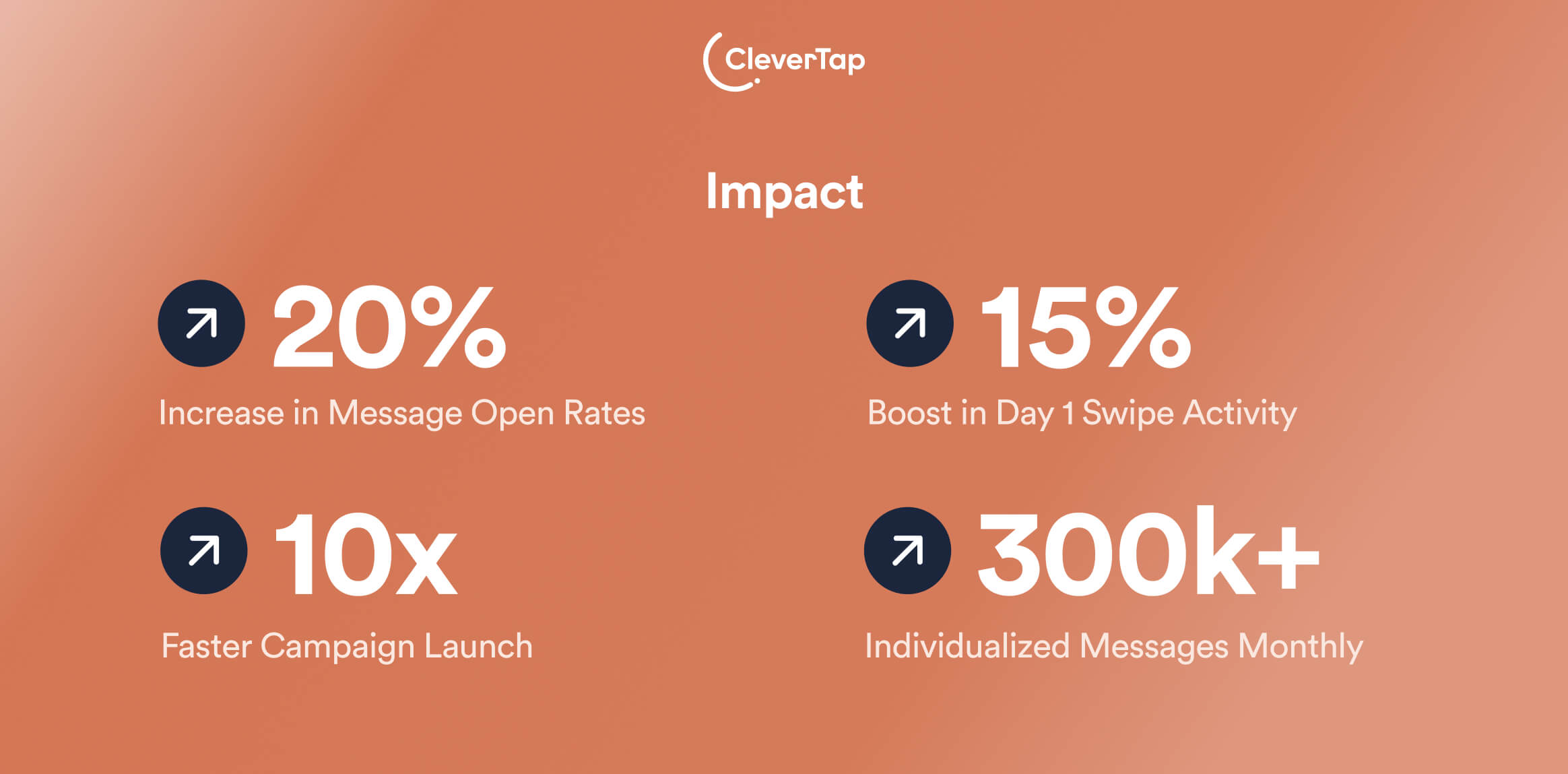
Using CleverTap, you can track each step of the user journey and immediately reach out to users based on their behavior.
CleverTap provides real-time funnel reporting with up-to-the-moment data on how users progress or drop off. The platform’s unified data model builds a single view of each customer across devices and channels. This means events from your mobile app, website, and other touchpoints all feed into the same funnel analysis, yielding an end-to-end picture of user behavior. Niyo, a global banking solution provider, achieved a 40% conversion rate and a 2% CTR for SMSes in the mobile-verified funnel.
Marketers and product managers can define funnels and instantly see conversion rates at each step. Conversion windows are adjustable to track quick flows (such as one-session signups) versus longer journeys, e.g., multi-day trial conversions.
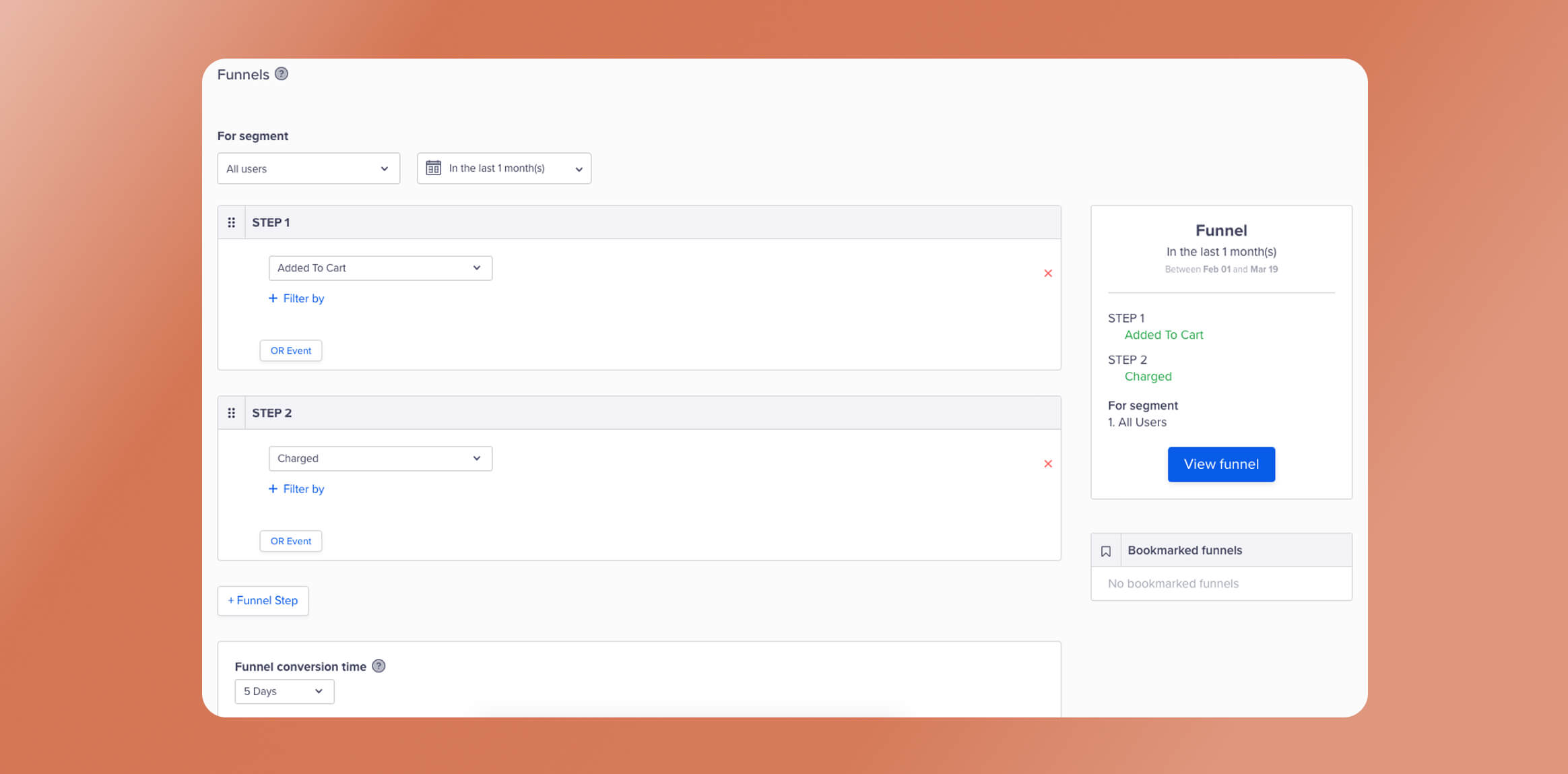
Here are a few core capabilities that CleverTap delivers in funnel analysis:
Granular Segmentation
CleverTap lets you filter and compare funnels by any user property or past behavior. For example, you can segment a funnel by user type or cohort. You could contrast frequent buyers vs. first-time users to see how conversion rates differ.
Its advanced filters allow stacking multiple conditions, such as demographics, in-app actions, campaign source, etc. It enables you to drill down into particular user segments.
Drop-off Analysis and Friction Detection
CleverTap’s funnels pinpoint exactly where users abandon the process, and how many are lost at each step. These insights are not just numbers on a dashboard; they’re actionable. CleverTap tightens integration funnel analytics with its omnichannel engagement suite. Funnels become actionable as you can create campaigns or journey flows targeting users who dropped off at a given step, directly from the funnel report.
Behavioral Analytics
Behavioral cohorts group users by actions and analyze or target them further. They’re automated, built to guide a user journey forward. For example, a funnel insight triggers an in-app tutorial or a drip email sequence to address the friction point.
Internally, CleverTap leverages AI/ML features like predictive segmentation and recommended next-best actions using Clever.AI™ to optimize engagement. Its UI is kept simple, marketer-friendly, and mostly code-free.
Why CleverTap Is the Best Funnel Analysis Tool
CleverTap is the best funnel analysis tool because it combines analytics and activation on a single platform. It’s ideal for growth marketers, lifecycle/CRM managers, and product teams that want to analyze user behavior and act on those insights immediately.
CleverTap is a one-stop solution for those who want to understand funnels and improve them through timely and personalized engagement. It particularly pushes the bar up when it comes to granular insights and rapid engagement in shoppers’ or customers’ lifecycle.
Want to see this in action? Try CleverTap for funnel analysis and activation.
2. Mixpanel
Mixpanel helps teams understand how users actually move through a product. It tracks unlimited events and lets you build multi-step funnels to see where users progress, stall, or drop off. Funnels update in near real time, so teams spot friction as it happens instead of waiting for delayed reports.
Teams can break down funnels by any user or event property to uncover patterns across regions, channels, or cohorts. The interface is built for non-technical users, making it easier to test ideas and validate changes.
To support this kind of hands-on analysis, Mixpanel offers a set of product analytics capabilities:
- Unlimited Event Tracking: Capture meaningful user action without usage caps.
- Flexible Multi-Step Funnels: Analyze complex journeys like trial to activation to upgrade.
- Near Real-Time Reporting: See conversion changes as users move through the funnel.
- Automatic Insights: Surface segments with unusually high or low conversion rates.
- Path Analysis: Visualize common user paths outside strict funnel steps.
Did you know? BukuKas improved new user activation by 60% using CleverTap’s funnels, cohort analysis, and RFM.
Why Choose Mixpanel
Mixpanel is a good tool for product managers and growth teams that need fast, self-serve insight into user behavior inside digital products. It works well for SaaS companies and mobile apps with complex user journeys and large volumes of event data.
3. Amplitude
Amplitude offers flexible funnels that reflect real user behavior. Teams use Amplitude when they need to analyze how different actions, sequences, and timings impact long-term outcomes.
The product analytics platform goes beyond basic funnel reporting by combining funnels with cohort analysis and path exploration. You can see where users drop off, understand what they did instead, and turn those insights into reusable cohorts for deeper analysis or activation.
While the platform requires more upfront setup than simpler tools, it rewards that investment with insights once fully implemented. To support this level of behavioral analysis, Amplitude provides these capabilities:
- Flexible Funnel Modeling: Build ordered or unordered funnels to reflect real-world user flows.
- Advanced Funnel Filtering: Apply multiple conditions and time constraints within a single funnel.
- Drop-Off Analysis With Pathfinding: Explore what users do when they abandon a funnel step.
- Cohorts From Funnel Stages: Create cohorts directly from users who convert or drop off.
Why Choose Amplitude
Amplitude can be used by product and growth teams that need in-depth funnel and behavioral analysis to guide data-driven decisions. Teams willing to invest time in instrumentation and setup will get the most value, as Amplitude excels at answering nuanced questions about user behavior.
4. Google Analytics 4
Google Analytics 4 is the default starting point for many teams tracking conversions. It offers basic funnel exploration to understand how users move through common flows like sign-ups or checkouts. GA4 is general-purpose by design and appeals to teams because it is free to start and tightly integrated into the broader Google ecosystem.
GA4 lets you build custom funnels or use templates for standard use cases such as e-commerce checkout. Teams can also track users across web and app in a single property, which helps when journeys span multiple platforms.
To support basic funnel and conversion analysis, GA4 includes the following capabilities:
- Cross-Platform Tracking: Analyze web and app behavior in a single view.
- Exploration Workspace: Break down funnels by source, device, geography, or user traits.
- Google Stack Integration: Share audiences directly with Google Ads and Firebase.
- BigQuery Export: Run advanced analysis outside GA4 when needed.
Why Choose GA4
GA4 can be used by marketing and web teams that need a free or low-cost way to track basic funnel conversions on websites or simple apps. It works well for content sites and e-commerce teams that want to identify drop-offs and retarget users through Google Ads.
5. Heap
Heap automatically records every click, tap, page view, and interaction without requiring teams to define events in advance. This removes the usual dependency on engineering and lets teams analyze user behavior immediately.
Teams are free to define events, build funnels, and segment users retroactively using historical data that Heap already captured. This makes it especially useful when you are not sure where users drop off or which flows matter most. You can ask new questions of old data without re-instrumenting your product.
To enable fast, no-code funnel analysis, Heap offers the following capabilities:
- Retroactive Funnel Creation: Build funnels on historical data without prior planning.
- Flexible Funnel Steps: Use clicks, page views, form submissions, or custom actions.
- Side-By-Side Segment Comparison: Compare conversion rates across user segments in one view.
- Journey Mapping Views: Visualize common paths and where users branch off.
Why Choose Heap
Heap is good for teams that want quick, no-code funnel insights without upfront planning for tracking. It works well for web and mobile products where teams need to explore conversion issues before fully understanding user behavior.
Non-technical teams benefit most, since Heap reduces reliance on developers and speeds up analysis.
6. Pendo
Pendo combines product analytics with in-app engagement to improve how users adopt software features. It’s primarily built for SaaS products, with a strong focus on tracking feature usage and identifying workflow friction.
Pendo supports funnel analysis for product adoption rather than traditional marketing funnels. Teams visualize how users navigate key in-app flows and evaluate whether changes improve completion rates over time. It allows teams to act directly inside the product by guiding users through the same flows where friction appears.
Pendo offers the following capabilities:
- User Journey Visualization: See how users progress or drop off across key workflows.
- Retention and Cohort Analysis: Compare funnel performance across user groups over time.
- In-App Guides And Walkthroughs: Deploy tooltips and onboarding flows without code.
- Contextual In-App Messaging: Address funnel drop-offs directly where users struggle.
Why Choose Pendo
Pendo is effective at improving feature adoption and time-to-value in complex products. Product managers and customer success teams benefit most, as they can identify funnel friction and immediately guide users through it within the app.
7. Kissmetrics
Kissmetrics focuses on tying user behavior to real identities. Instead of analyzing anonymous sessions, it tracks users as individuals across visits, devices, and stages of the customer lifecycle.
Kissmetrics centers its funnel analysis on revenue impact. Teams track how users move from anonymous visitor to signed-up user to paying customer, and then connect those funnel outcomes to metrics like LTV and retention rate.
To support revenue-focused funnel and cohort analysis, Kissmetrics offers the following capabilities:
- Person-Based Tracking: Tie all events to individual users once they identify themselves.
- Revenue-Centric Funnels: Analyze funnels with conversion rates linked to revenue outcomes.
- Cohort Retention Analysis: Measure how long converted users stay active or return over time.
- Cross-Device User Tracking: Follow users across devices after identification.
- Business-Focused Reporting: Emphasize financial impact over exploratory product analysis.
Why Choose Kissmetrics
Kissmetrics is best for subscription and e-commerce businesses that want to understand funnels through a revenue lens.
8. Woopra
Woopra is a customer journey analytics platform built around real-time tracking and unified customer profiles. It helps teams measure funnel performance while also understanding the broader set of paths customers take across acquisition, activation, and retention.
Woopra goes beyond strict funnels with Journey Reports, which visualize non-linear customer journeys across touchpoints. This matters because users rarely follow a clean, step-by-step flow.
Woopra offers the following capabilities:
- Real-Time People Profiles: Inspect individual-level behavior and attributes as events happen.
- Funnel Analytics: Measure step-by-step conversion and drop-offs across defined flows.
- Journey Reports: Visualize non-linear paths across product and marketing touchpoints.
- Native Integrations: Sync data with tools like Salesforce, HubSpot, Slack, and Zendesk for cross-team visibility.
- Real-Time Triggers And Automation: Push alerts and actions to other tools based on live behavior.
Why Choose Woopra
Woopra can be used by teams that want journey-based analytics with real-time funnel visibility, especially when multiple functions need the same customer story. If you value real-time alerts and automation tied to customer behavior, Woopra stands out.
9. Indicative
Indicative (now part of mParticle) connects directly to your data warehouse or data lake, so teams can analyze behavior without copying data into yet another analytics silo. Indicative’s defining feature is Multipath Funnels. Instead of forcing you to measure one correct path, it lets you analyze conversion across multiple paths in a single view.
To support warehouse-native, multi-path funnel and journey analysis, Indicative offers the following capabilities:
- Multipath Funnels: Compare multiple conversion paths side-by-side to find what works best.
- Segmentation and Breakdowns: Slice funnels by attributes and segments to spot patterns across audiences.
- Cohorts From Funnel Users: Explore and build cohorts from users who convert or drop off.
- Journey Mapping Tools: Visualize paths and touchpoints beyond strict funnels.
Why Choose Indicative
Indicative can be used by teams with a modern data stack that want advanced funnel analysis directly on warehouse data. It fits mid-market and enterprise companies where users reach conversion through multiple journeys, and teams need to compare those paths without writing SQL.
10. PostHog
PostHog is an open-source product analytics platform built for teams that want complete control over their data. You can self-host it on your own infrastructure or use PostHog’s managed cloud.
At its core, PostHog combines funnel analytics with experimentation and product tooling, making it feel like a Mixpanel or Amplitude paired with developer-first capabilities. PostHog supports standard event-based funnel analysis while extending it with tools that help teams diagnose and fix issues. This makes it suitable for teams that want analytics tightly coupled with product iteration.
To support analytics-driven experimentation and funnel optimization, PostHog delivers the following capabilities:
- User and Cohort Filtering: Segment funnels by identified user properties and cohorts.
- Exclusion Steps: Exclude users who perform specific actions between funnel stages.
- Feature Flags: Roll out features gradually and measure funnel impact per variant.
- A/B Testing And Experiments: Run experiments and analyze conversion differences in one place.
Why Choose PostHog
PostHog can be used by engineering-heavy product teams and startups that want a cost-effective, customizable analytics platform with built-in experimentation. It fits teams that care about data ownership, compliance, and flexibility, or those that find hosted analytics tools too restrictive or expensive at scale.
PostHog works well when teams want to connect feature rollouts and A/B tests directly to funnel performance.
Top Funnel Analysis Tools: At a Glance
To recap, here’s a quick comparison of these funnel analysis tools on key attributes:
| Tool | Real-Time Analytics | Segmentation Depth | Activation Capabilities | Best Fit |
| CleverTap | Yes (instant insights) | Advanced: behavioral + property filters, live segments | Built-in omnichannel campaigns (push, email, etc.) | Growth/retention teams needing analytics + engagement in one platform. |
| Mixpanel | Yes | By any event or user property, cohorts | Limited (analytics only; integrates with messaging tools) | Product teams that need self-serve product analytics and flexible funnels. |
| Amplitude | Near real-time | Flexible funnels, advanced cohort, and path analysis | None. Analytics only with a separate experiment module. | Product/growth teams seeking in-depth behavioral insights and custom funnel analyses. |
| Google GA4 | Near real-time | Predefined segments and limited filters | None. Exports audiences to ad platforms. | Marketing and web analytics for basic conversion tracking, small teams on the Google stack. |
| Heap | Yes | Point-and-click filters on captured properties | None. Analytics only, but can export data. | Startups/teams wanting code-free, retroactive funnels without upfront event definition. |
| Pendo | Yes | Segments by user behaviors and account | Built-in activation with in-app guides, tooltips, and surveys for users’ onboarding. | SaaS product teams focusing on feature adoption and user onboarding within the app. |
| Kissmetrics | Batch/Partial real-time | Person-based tracking, predefined funnels by people’s attributes | None | E-commerce and SaaS subscription businesses tracking revenue funnels and user LTV/churn. |
| Woopra | Yes (real-time) | Behavioral segmentation, journey mapping filters | None (integrates with CRMs, etc., for action) | Teams needing real-time journey analytics and funnel tracking integrated with CRM/support. |
| Indicative | Yes (warehouse-dependent) | Unlimited segmentation | None | Data-driven teams with big data want multi-path funnels and analytics directly on the data warehouse. |
| PostHog | Yes | Event and property filters, cohort-based funnels | Feature flags and A/B experiments | Tech startups/scaleups want open-source analytics with experimentation and full data control. |
Supporting Growth and Retention With CleverTap
CleverTap’s funnel analysis helps teams understand where users drop off and why. It breaks the user journey into clear steps and shows exactly where friction occurs. Instead of guessing, teams see the problem directly and fix what blocks progress. Removing these blockers increases activation and lifetime value.
Funnels also help teams prioritize the most significant opportunities. Not every issue has the same impact. Funnel data highlights the steps with the highest drop-off. This matters because driving more traffic makes no sense if users exit due to avoidable issues.
Segmentation makes funnels even more helpful. Funnels segmented by channel, region, or cohort reveal why some users convert but don’t stay, or why others drop off at a specific step. These insights enable targeted fixes rather than broad changes. This is where CleverTap stands out.
See how CleverTap combines real-time funnel analysis with instant engagement. Schedule a demo today!

Agnishwar Banerjee 
Leads content and digital marketing.Expert in SaaS sales, marketing and GTM strategies.
Free Customer Engagement Guides
Join our newsletter for actionable tips and proven strategies to grow your business and engage your customers.