
































Table of Contents
Categories
Most Popular


Mobile apps lose 77% of users within three days of install, but teams that personalize their apps slash that churn by up to 40% and see 3–7x higher conversions.
Mobile app personalization means using user data to deliver the right content, features, and messages at just the right moment in the app, directly tackling that early churn by making every interaction feel relevant and timely. This guide equips growth marketers and product leads with 14 proven strategies to turn Day-1 drop-offs into lasting retention and revenue.
What Is Mobile App Personalization?
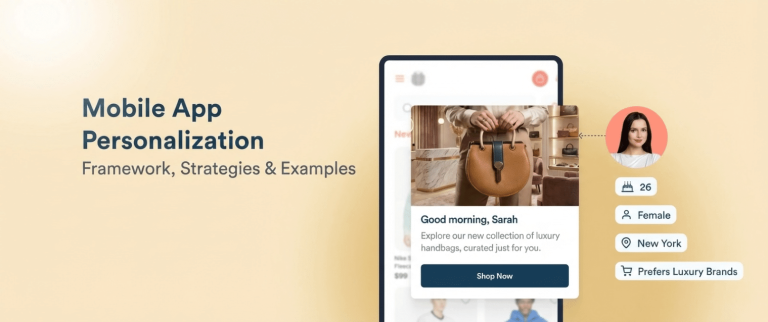
Mobile app personalization tailors the entire user journey, dynamically serving content, recommendations, notifications, and features based on real-time data like behavior, location, device context, and past interactions. Think of it as giving each user their version of your app.
It’s not just your usual segmentation, which lumps users into broad groups based on age or gender. Real personalization shifts in real time based on what people actually do in your app, their preferences, and the moment.
AI-driven UX now makes this level of sophistication feasible at scale, enabling it to meet the heightened consumer expectations shaped by launches like Spotify’s Discover Weekly, which analyzes listening history to curate weekly playlists. Spotify’s AI is driving 30% higher engagement through uncanny relevance. This competitive edge boosts retention and sets market leaders apart.
Benefits of Mobile App Personalization
Personalization helps you find measurable gains across various metrics. Real brands have proven these benefits through their experiences.
Higher Engagement & Session Duration: Personalization helps users extend their time on the app by matching content to their interests, reducing bounce rates on first visits. For example, Netflix’s recommendation engine powers over 80% of viewed content, boosting session times significantly.
Improved Conversions & Revenue: Tailored recommendations and offers turn interest into action, lifting purchase rates without broad blasts.
Reduced Churn & Higher Retention: Contextual nudges help re-engage at-risk users, preventing early drop-offs that are common in new installs. Apps with personalized onboarding reports 40% retention lifts over generic flows.
Stronger Customer Loyalty & LTV: Relevant experiences foster repeat visits and advocacy, compounding value from casual to committed users. Headspace customizes onboarding with goal-based meditation plans and gamified streaks tailored to user objectives, driving 109% higher week 1 retention. Personalized push notifications boost open rates up to 800% through timely, context-aware delivery.
Types of Mobile App Personalization
Mobile app personalization can take many forms, depending on where and how it’s applied in the user journey.
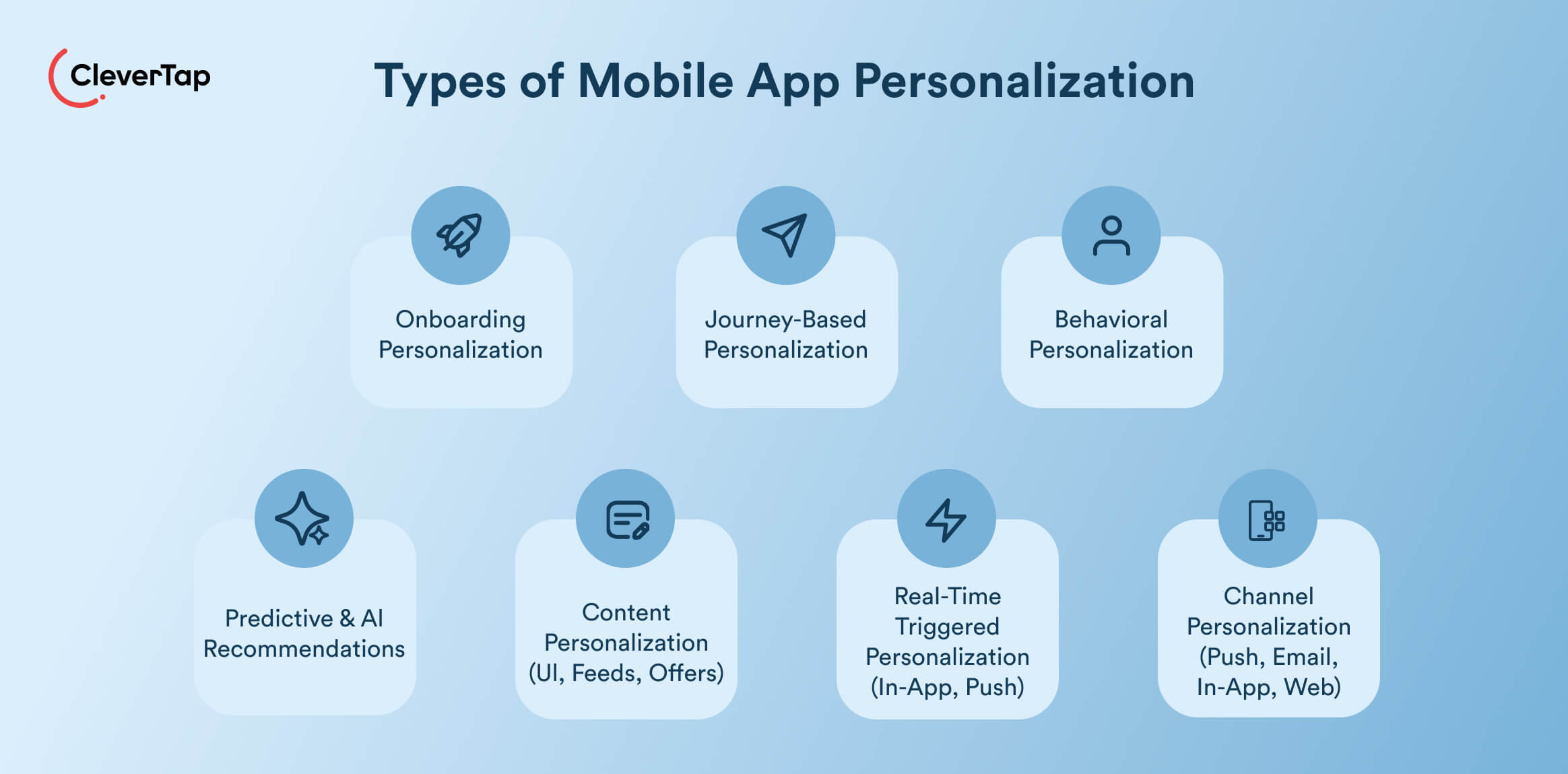
- Onboarding Personalization: Tailors first-time experiences based on user goals, intent, or context to reduce friction and speed up activation.
- Journey-Based Personalization (Lifecycle Mapping): Delivers contextual messages and nudges based on where users are in their lifecycle, from activation to retention and re-engagement.
- Behavioral Personalization: Adapts content, recommendations, and messaging based on in-app actions, usage frequency, and engagement depth.
- Predictive & AI Recommendations: Uses machine learning and AI personalization in e-commerce to anticipate user needs, next-best actions, churn risk, or content preferences, before users explicitly signal them.
- Content Personalization (UI, Feeds, Offers): Dynamically changes app surfaces like home screens, feeds, banners, and offers to match individual preferences and intent.
- Real-Time Triggered Personalization (In-App, Push): Responds instantly to user actions during a session, delivering help, incentives, or guidance at high-intent moments.
- Channel Personalization (Push, Email, In-App, Web): Optimizes not just what is sent, but where and how often, based on user responsiveness across channels.
14 Proven Mobile App Personalization Strategies You Can Adopt
1. Personalized Onboarding Flows
Personalized onboarding flows help customize the first-time user experience by asking a few simple questions about goals, preferences, or context early on, then adapting screens, tips, and features to match. This skips all the boring parts and gets users to what they are looking for faster.
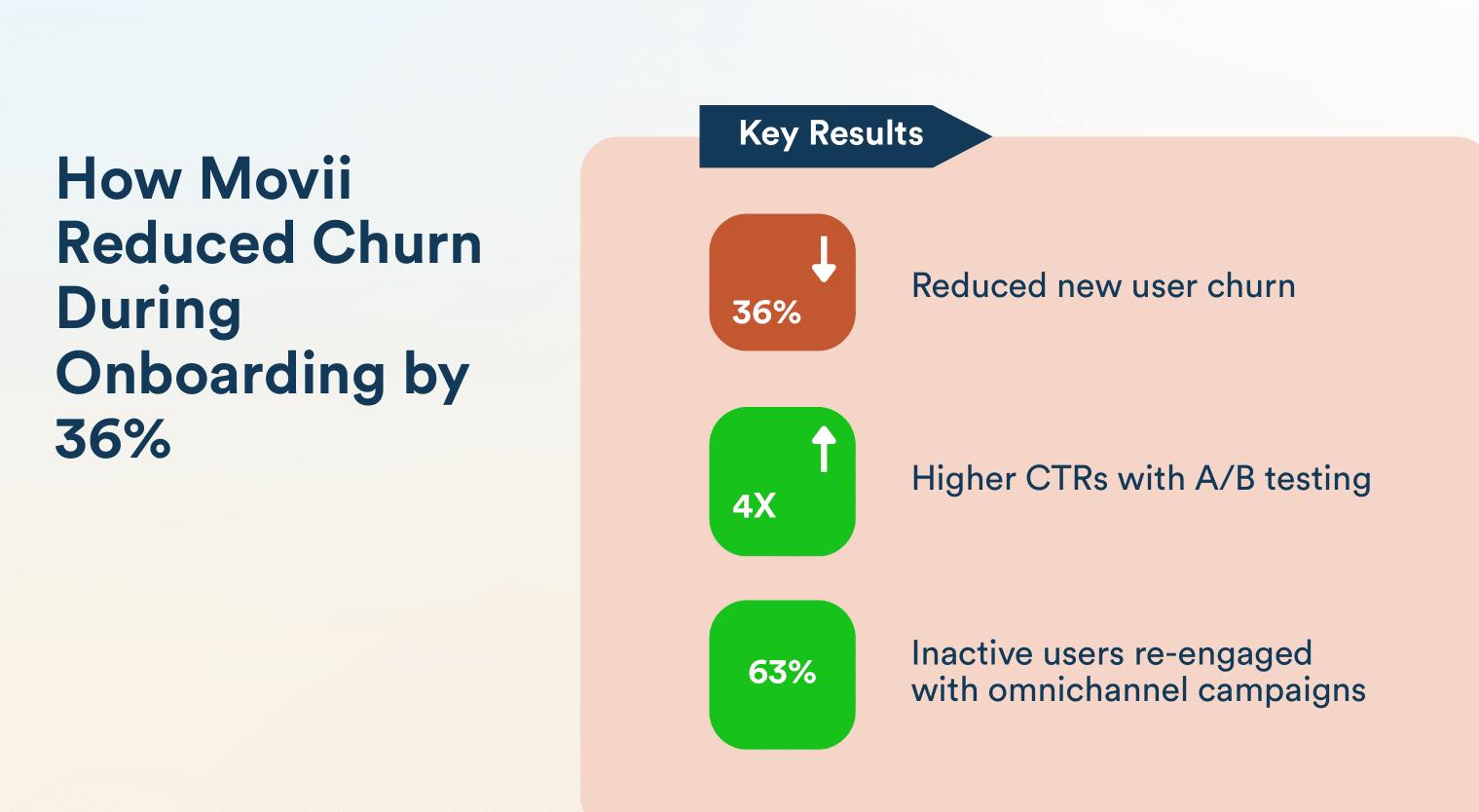
For example, Movii partnered with CleverTap to use behavioral analytics and funnel analysis, identifying drop-off points during debit card onboarding. They launched automated omnichannel journeys with tailored education on digital payments, achieving a 36% reduction in onboarding churn and a 63% reactivation rate among stalled users, turning hesitant installs into confident, active transactors.
Read the full case study here.
2. Dynamic Home Screens
Dynamic home screens change what users see on their main app page based on how they’ve used the app, like moving favorite tools to the top or hiding items they rarely use. This strategy makes the app feel made just for them from the start, saving time and clicks.
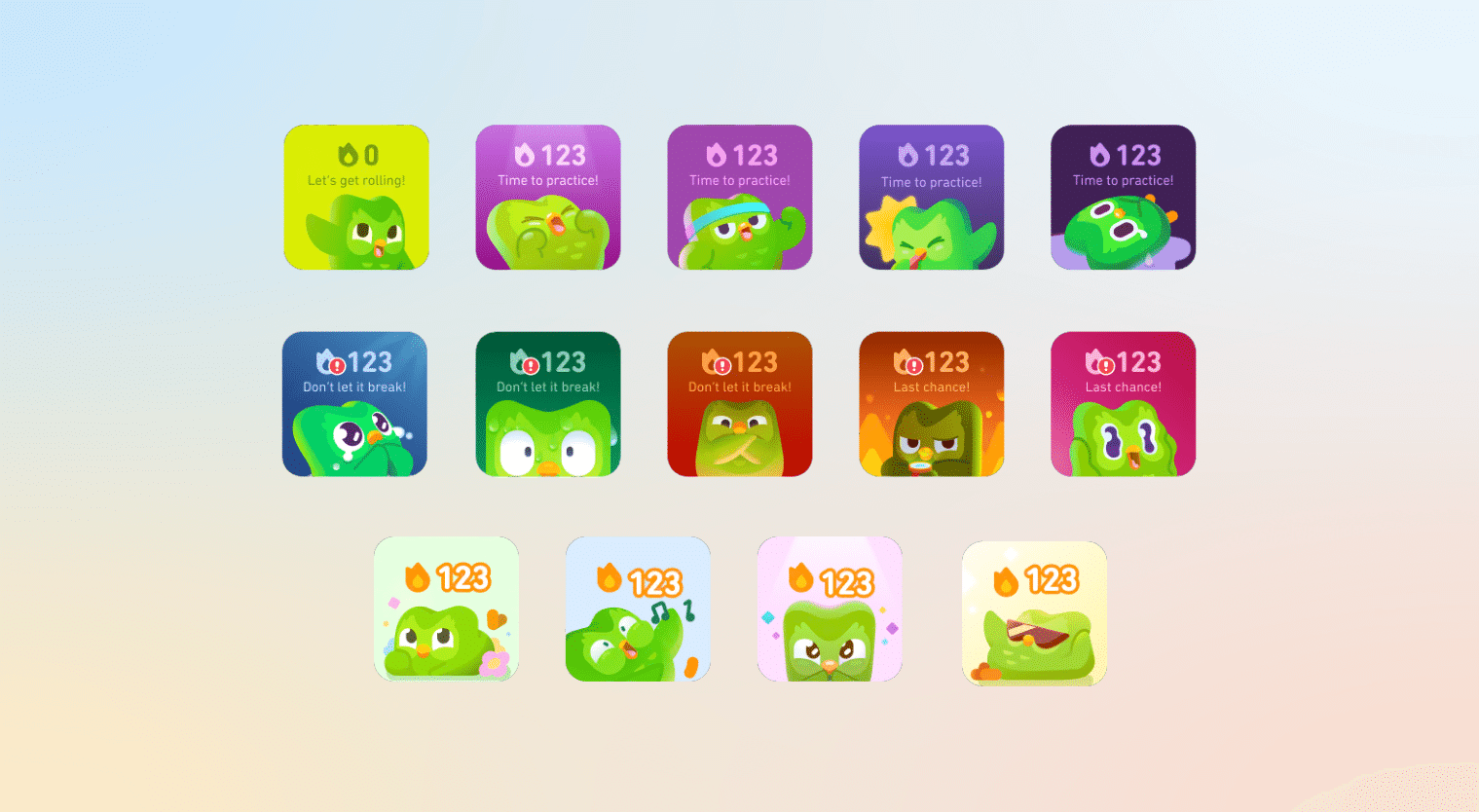
Duolingo prioritizes language lessons and daily streaks right on the home screen, using widgets that are based on progress and habits. The result was a 20% boost in daily active users during their growth push, as learners jumped straight into relevant practice without having to dig.
3. Behavioral Recommendations
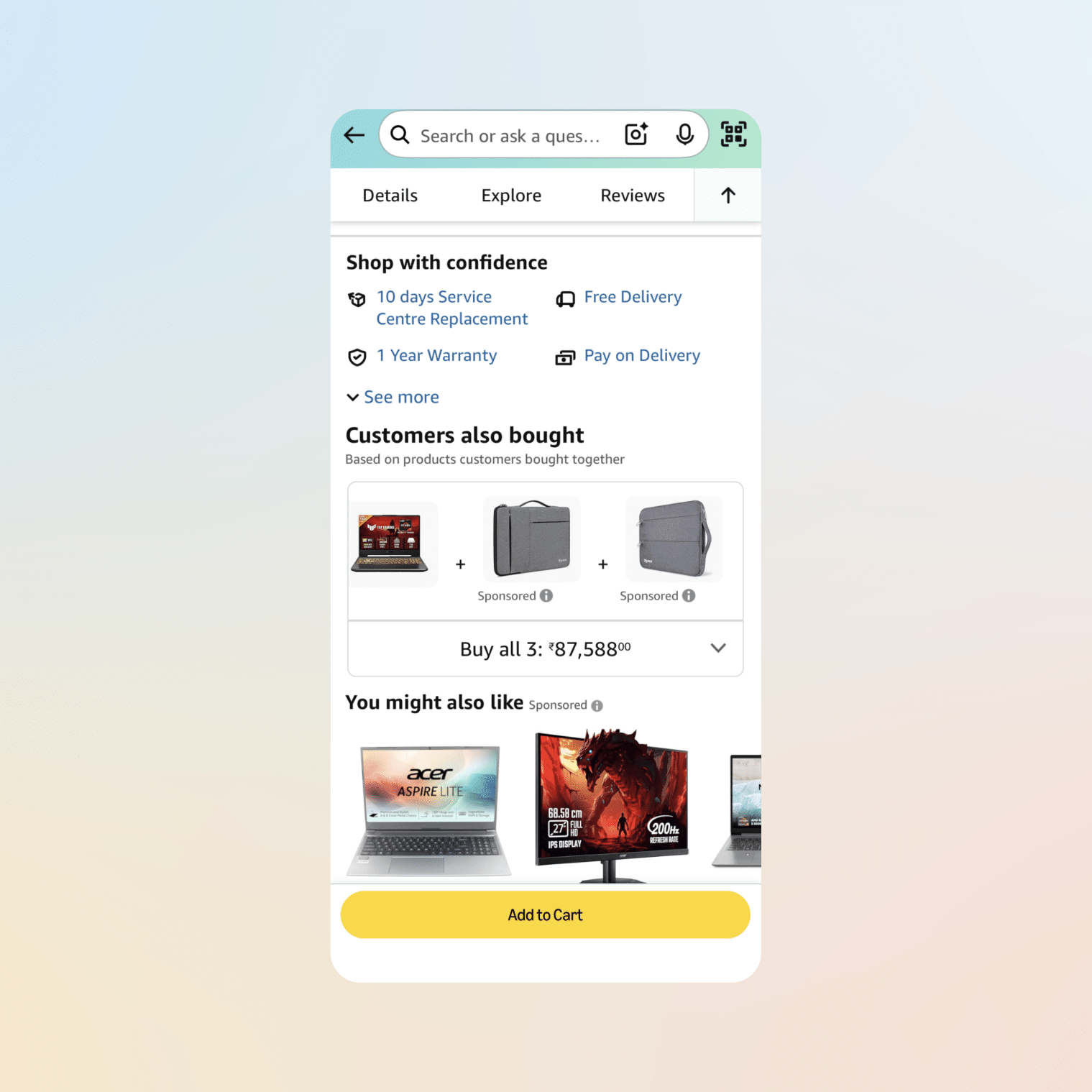
Behavioral recommendations analyze in-app actions, such as pages viewed, cart adds, search patterns, or feature usage, to suggest the next-best content or actions that keep users moving forward. E-commerce personalization tools help turn these signals into timely, relevant experiences that increase engagement and conversions.
Amazon’s “Frequently Bought Together” and “Customers also viewed” match real-time behavior to similar shopper patterns, dynamically surfacing complementary products during browsing sessions. This powers their sales engine by reducing decision friction and turning casual browsers into confident ones.
4. AI-Powered Content Ranking
AI-powered content ranking uses machine learning to analyze watch history, likes, searches, and engagement patterns, dynamically reordering feeds and search results to prioritize content users are most likely to consume.
YouTube’s home page and recommendation engine process these signals in real time, surfacing videos that match viewing habits and emerging interests. This intelligent sorting, where 70% of views come from recommendations, slashes decision fatigue, extends session times, and creates addictive “just one more” loops that keep users immersed far longer than static feeds ever could.
5. Predictive Churn Interventions
Predictive churn interventions use machine learning models to score user drop-off risk by tracking declining session frequency, stalled feature progress, or fading engagement depth across user cohorts.
Brands can use automated journeys that are triggered 24-48 hours pre-churn: personalized win-back offers for high-CLV users, progress nudges for mid-funnel drop-offs, and exclusive loyalty perks for at-risk power users.
These models continuously retrain on re-engagement outcomes, while A/B testing intervention types help maximize recovery rates and transform passive monitoring into proactive retention, keeping revenue-generating users active.
6. Geolocation-Based Personalization
Geolocation-based personalization leverages GPS data to surface hyper-local content, nearby stores, events, deals, or services that match user proximity and context.
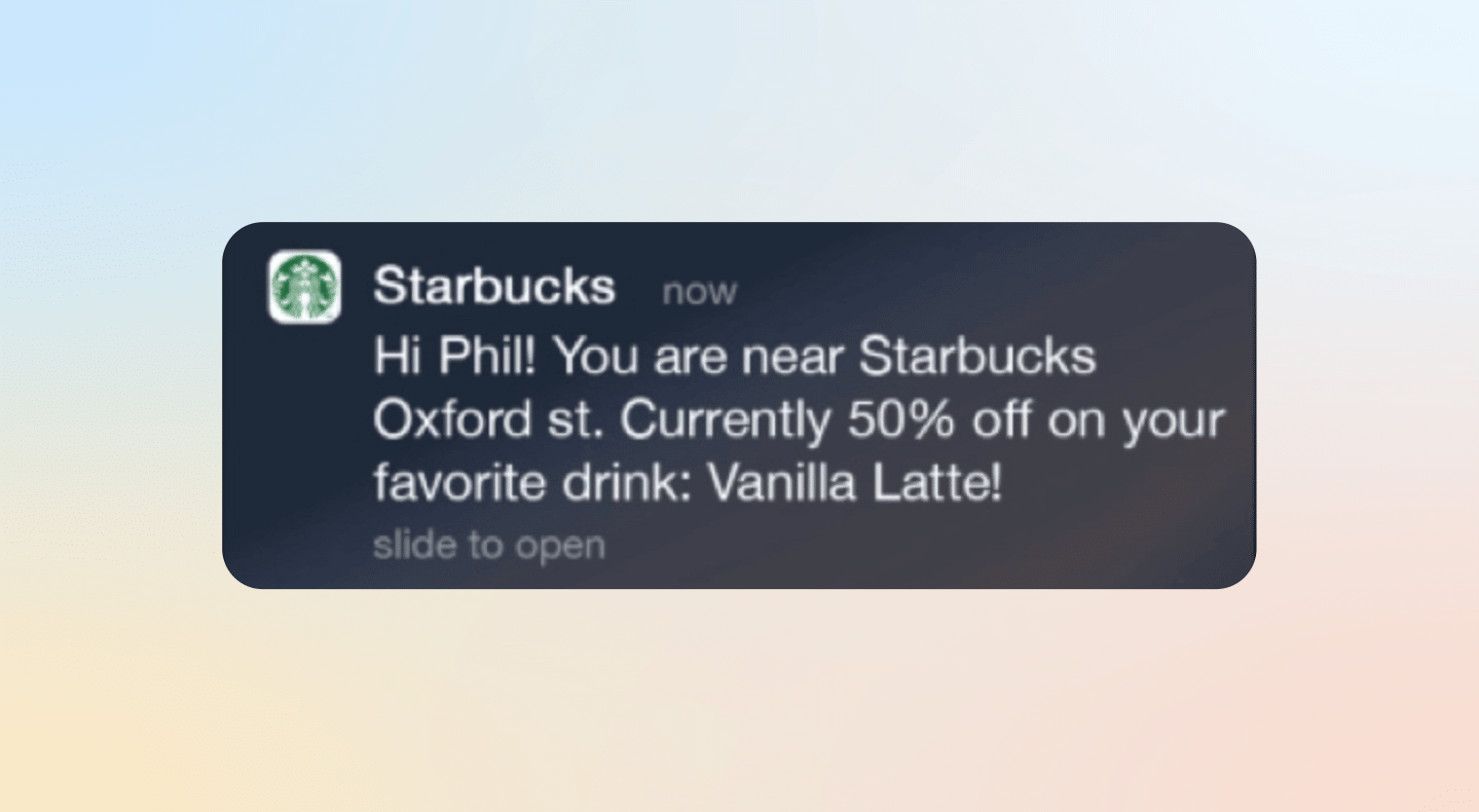
Starbucks draws precise geo-fences around locations to trigger app-exclusive discounts exactly when users approach, capitalizing on high-intent foot traffic moments. This turns passive passersby into active customers by delivering time-sensitive, location-relevant value that doesn’t feel intrusive, driving store visits from users who wouldn’t have stopped otherwise.
Learn how to build location-based marketing and geofencing marketing strategies.
7. Real-Time In-App Messages Based On Behavior
Real-time in-app messages trigger instantly during a session when users hit key moments, like adding items to a cart, then pausing or completing a task, to deliver help, tips, or deals that fit the exact situation.
Brands can implement this strategy by mapping user journeys to message variants; for example, progress blockers get tutorial overlays, cart browsers see dynamic discounts on viewed items, and feature explorers receive personalized walkthroughs.
Brands can even A/B test message timing (immediate vs. 5-second delay) and format (tooltips vs. modals) while tracking micro-conversions like next-action completion to optimize flow without disrupting momentum.
8. Personalized Offers & Discounts
Personalized offers customize discounts or promos based on past purchases, browsing, or stated preferences, making deals feel handpicked rather than just handed a coupon.
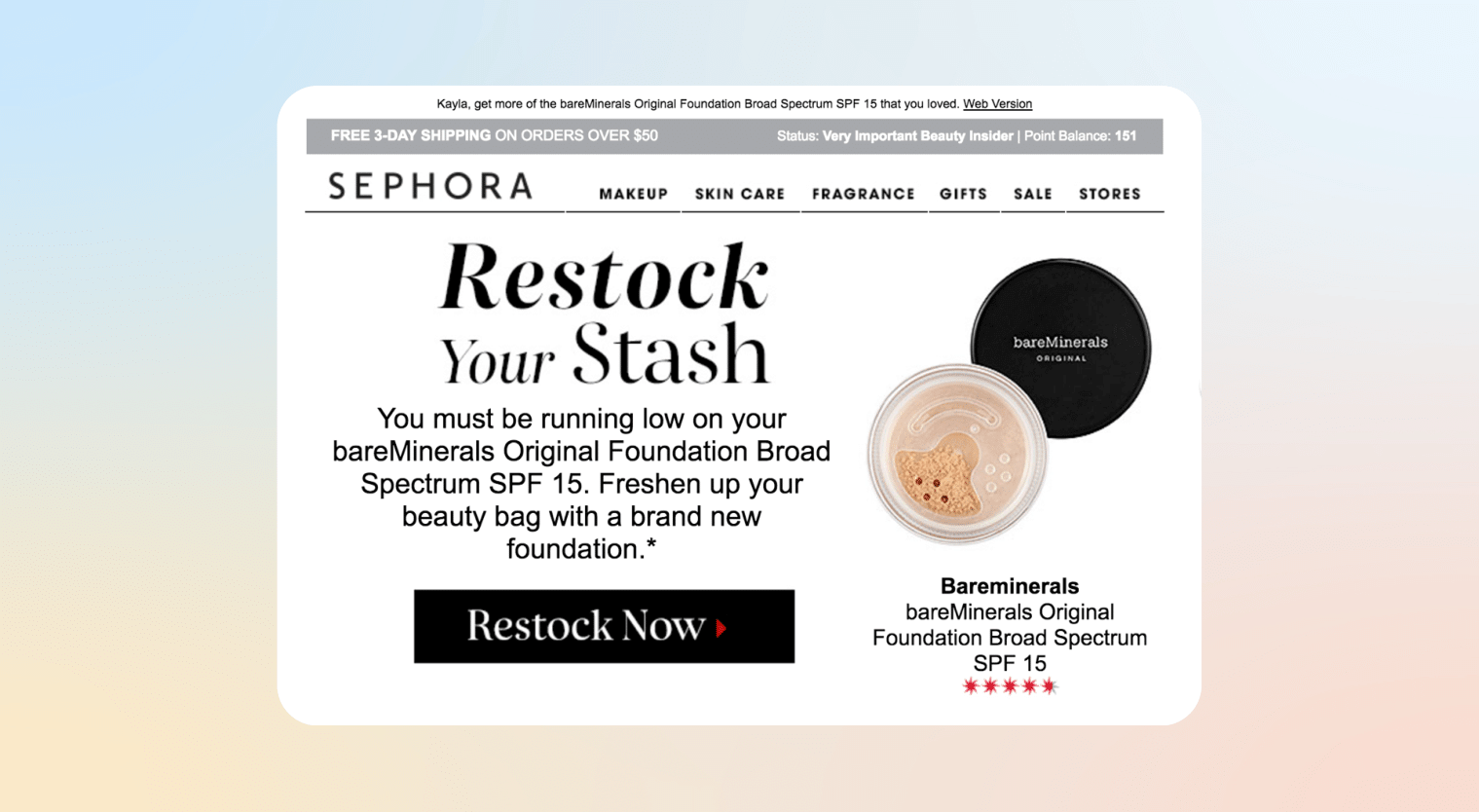
Sephora tailors rewards emails and in-app coupons to your beauty routine and past buys, like suggesting serums if you’ve shopped for skincare. This mobile app personalization strategy lifted their email open rates from 17% to 40% and redemption rates by 30%, per their loyalty program reports.
9. Cart & Funnel Recovery Personalization
Cart recovery personalization launches multi-step omnichannel sequences targeting abandoned carts and funnel drop-offs. 1-hour gentle reminders with product images, 24-hour item-specific discounts referencing past purchases, and 48-hour final offers with free shipping or bundle incentives help capture cart abandonment events to dynamically populate push, email, and SMS with exact items, prices, and personalized CTAs.
A/B test urgency messaging (low stock vs. limited-time deals) across channels while exit-intent surveys identify friction points to prevent future drop-offs and continuously optimize recovery flows.
10. User Milestone Personalization
User milestone personalization celebrates key achievements, like login streaks, levels reached, or goals hit, with custom rewards, badges, or messages to keep momentum going.
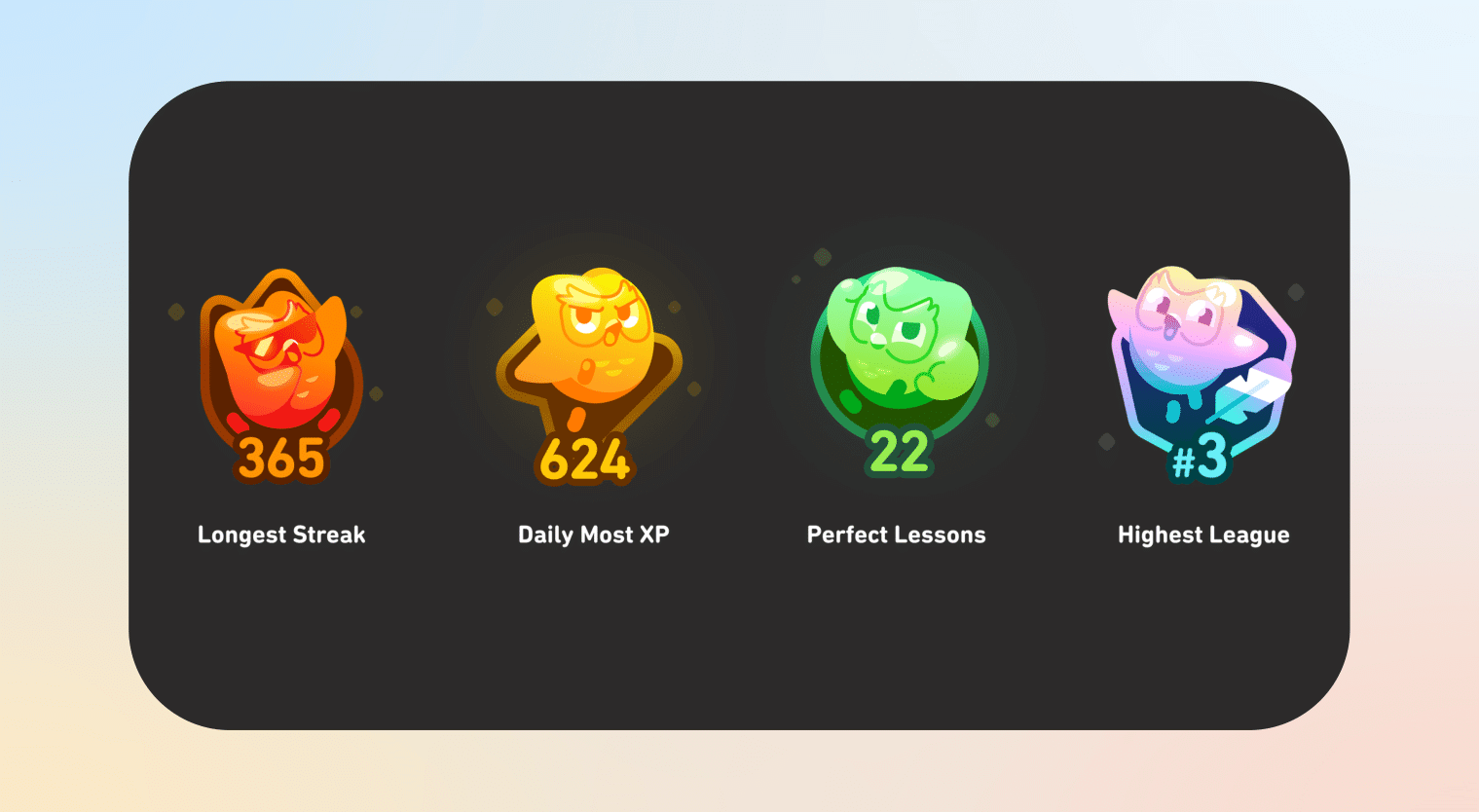
Duolingo does app personalization best, marking your learning streaks with tailored badges and bonus lessons matched to your progress. This helps extend retention, and users are 30% more likely to complete their course because they chase the next milestone instead of quitting.
11. Personalizing Gamification Elements
Personalizing gamification elements adapts challenges, badges, leaderboards, and point systems to individual skill levels, progress speed, and play styles for balanced, addictive engagement.
Brands can implement this by segmenting users into cohorts and dynamically adjusting difficulty based on win/loss streaks or session data. A/B test reward types (XP boosts vs. exclusive cosmetics) and progression pacing while tracking completion rates and session lift to create fair challenges that evolve with each player, boosting long-term retention across all skill tiers.
12. Preference-Based Customization
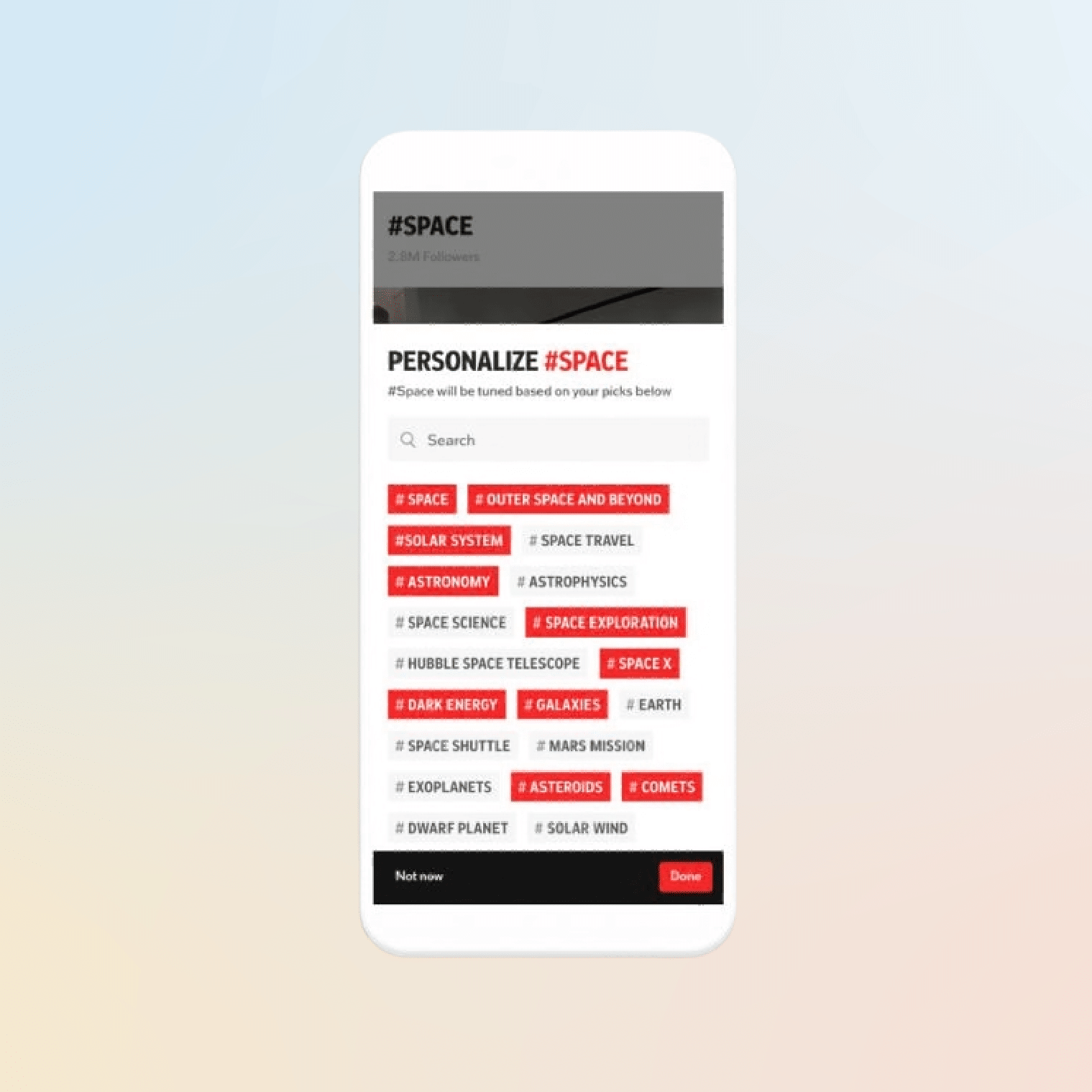
Preference-based customization lets users pick and save their favorites, like themes, notification types, layouts, or content filters, and then the app remembers and applies them every time. News apps like Flipboard let you tweak topic layouts based on your preferences.
This raises user satisfaction, as the app starts feeling like their personal dashboard from day one. Companies that excel in these personalization activities generate 40% more revenue than those that do not.
13. Personalized Push Notification Cadence
Personalized push notification cadence optimizes timing and frequency based on engagement signals such as open rates, session length, and last interaction time. Brands can take advantage of this by creating frequency caps for low-engagement users (2-3/week), ramping up for active segments (daily), and A/B testing send windows (morning vs. evening) tied to user time zones.
Dynamic throttling pauses notifications after ignored streaks while re-engaging lapsed users with high-value offers, turning potential spam into anticipated updates that lift opens.
CleverTap’s Best Time feature boosts push notification engagement by learning when each user is most active based on past behavior. It assigns users to optimal two-hour time windows and delivers messages in their local time zone for maximum impact. You can set fallback times for inactive users while respecting Do Not Disturb rules. The result is more personalized messaging and higher engagement and conversions.
Tata CLiQ Luxury leveraged CleverTap to tailor message timing and channel mix across push, email, SMS, web pop-ups, and exit-intent touchpoints based on user behavior and intent signals. By executing real-time, cohort-aware campaigns and optimizing with A/B testing, they saw significantly higher engagement and a 159% uplift in revenue from personalized, well-timed communications.
Read the full case study here.
14. Time-Based Personalization
Time-of-day content adjustment tailors feeds, recommendations, and notifications to user circadian rhythms and routines. Brands can implement this strategy by serving morning productivity briefs or goal reminders during the 6-9 AM segment, lunchtime content breaks, and evening recaps or wind-down offers after 8 PM.
Map peak engagement windows per user cohort using session timestamps, then schedule dynamic carousels and A/B test delivery timing to match daily patterns, boosting opens and dwell time during optimal attention windows.
Explore the top 20 examples of personalization from real brands.
How Mobile App Personalization Works (Step-by-Step Framework)
Mobile app personalization is a system that continuously learns, decides, and adapts. Here’s a simple framework that shows how it works in practice.
Step 1: Data Collection (Behavioral, Contextual, Demographic)
Personalization starts with collecting the right signals: not just who users are, but how and when they engage. This includes behavioral data (events, clicks, sessions), contextual data (time, device, location), and demographic or declared preferences. The goal is to build a unified, real-time user profile that reflects intent, not just identity.
Step 2: Segmentation & Cohort Modeling
Raw data becomes useful only when users are grouped meaningfully. Segmentation can be rule-based (new users, power users, dormant users) or model-driven (RFM, intent scores, churn risk). Cohorts help teams understand patterns at scale and tailor experiences for users at similar lifecycle stages.
Step 3: Real-Time Decisioning (Rules + AI Models)
At this stage, personalization logic decides what a user should see or receive next. Simple rules handle deterministic cases (first app open, cart abandonment), while AI models predict best actions, such as optimal timing, content ranking, or churn prevention. The strongest systems blend both.
Step 4: Content Personalization & Delivery
Once decisions are made, content is dynamically assembled and delivered across touchpoints, such as home screens, in-app messages, push notifications, email, or web. This can include personalized copy, product recommendations, UI layouts, offers, or message timing, all adjusted per user.
Step 5: Experimentation & Optimization
Personalization is never “done.” Continuous A/B testing, holdout groups, and cohort analysis help teams refine segments, messaging, and models. Feedback loops ensure strategies improve with every interaction rather than becoming stale.
30–60–90 Day Implementation Roadmap
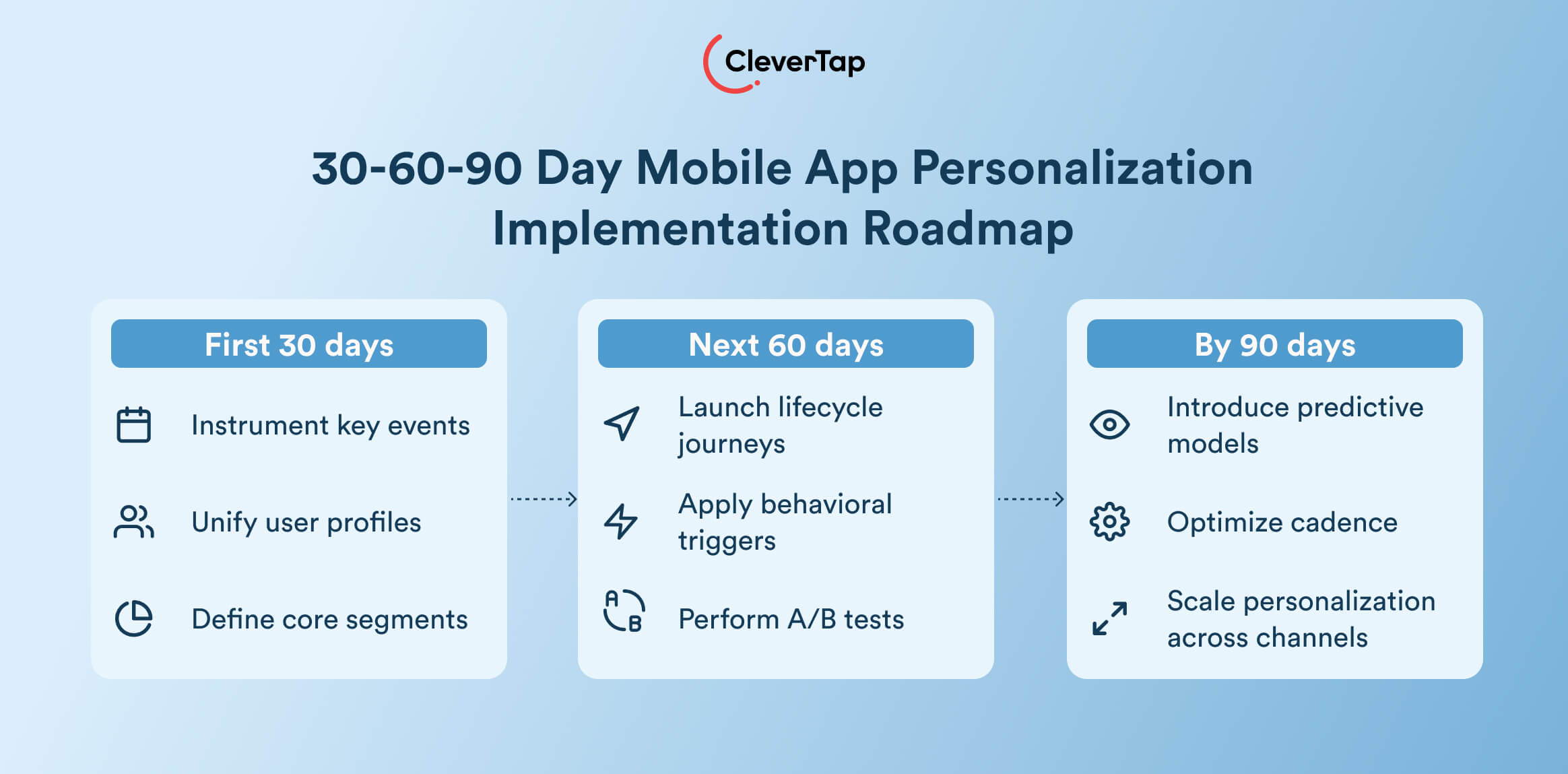
- First 30 days: Instrument key events, unify user profiles, define core segments
- Next 60 days: Launch lifecycle journeys, behavioral triggers, and A/B tests
- By 90 days: Introduce predictive models, optimize cadence, and scale personalization across channels
How CleverTap Enables Scalable Mobile App Personalization
CleverTap powers mobile app personalization by giving teams the tools and APIs to adapt experiences in real time based on individual user behavior and data. Once personalization is enabled in the SDK, apps can access live user profiles, session data, and event history to tailor content, features, and messaging as users interact with the app.
With CleverTap’s personalization platform, developers can dynamically personalize in-app experiences using profile attributes and behavioral signals, while marketers can insert real-time placeholders into messages to deliver context-aware notifications and offers. With Remote Config and Product Experiences, teams can modify UI elements, workflows, and feature access for specific segments without pushing an app update. Real-time segmentation and location-based signals ensure every interaction stays relevant, timely, and aligned with the user’s current context.
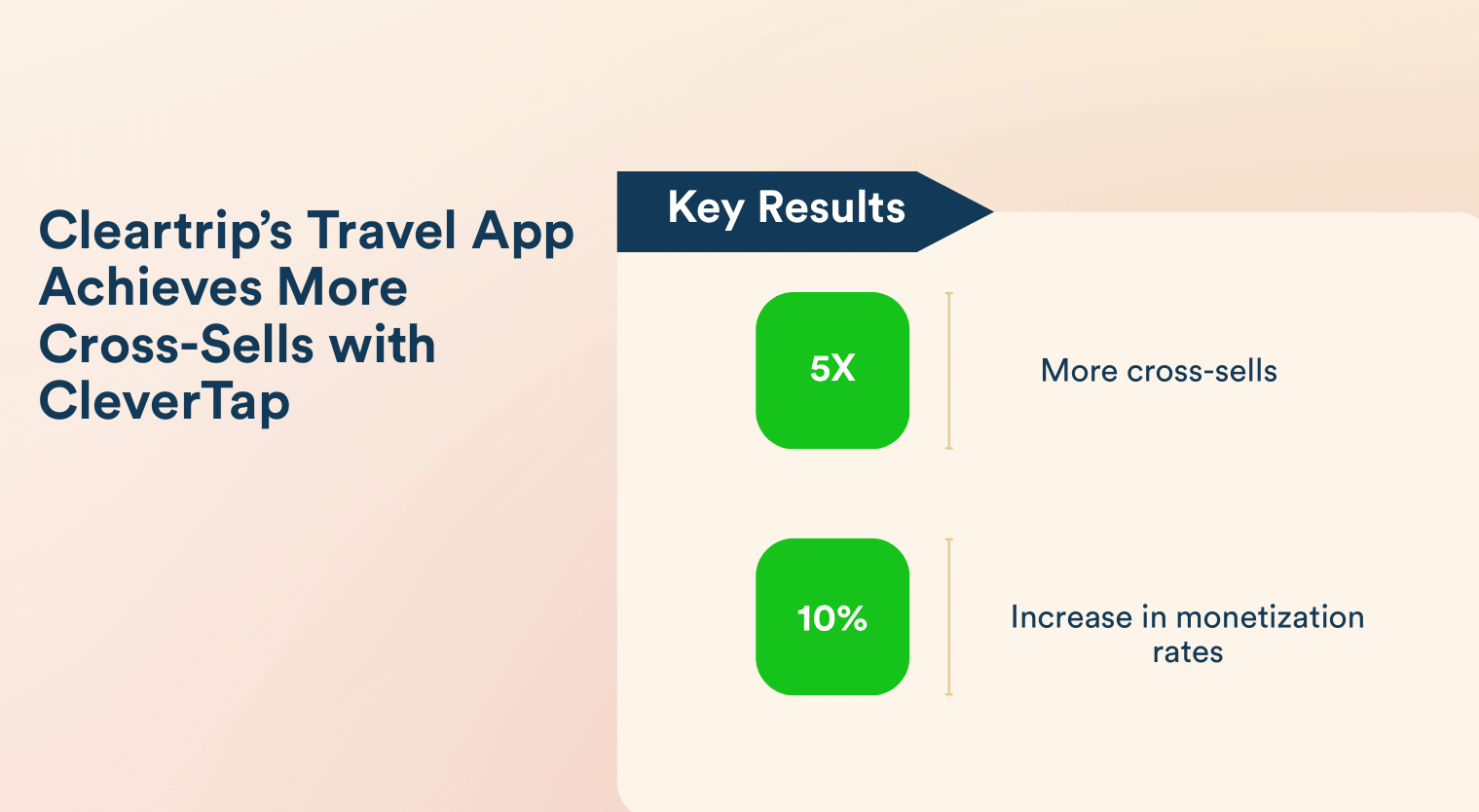
Cleartrip used CleverTap to personalize the travel journey across push, email, SMS, and in-app messaging based on real-time behavior and lifecycle stage. By triggering timely, context-aware recommendations for hotels, activities, and add-ons, they delivered relevant nudges at key moments. This omnichannel personalization strategy helped Cleartrip drive 5X more cross-sells and significantly improve monetization.
Read the full case study here.
Discover why CleverTap is a Leader in the 2026 Gartner® Magic Quadrant™ for Personalization Engines. Get the full report.
The Metrics & KPIs That Prove Personalization ROI
Personalization success must be measurable. These KPIs help teams tie experience improvements directly to business outcomes.
- Engagement Metrics (DAU, MAU, Session Time): Track whether personalized experiences increase how often and how long users engage with the app.
- Conversion Metrics (Add-to-Cart, Purchase, Plan Upgrade): Measure how effectively personalization nudges users toward key actions and revenue-driving events.
- Retention & Churn: Analyze cohort retention curves and churn rates to see whether personalized journeys keep users active longer.
- Revenue Impact (ARPU, LTV): Assess how personalization influences average revenue per user and long-term customer value.
- Funnel Drop-Off Improvements: Identify where personalization reduces friction across onboarding, checkout, or subscription funnels.
Frequently Asked Questions (FAQs) about Mobile App Personalization
Q1. What is app personalization?
App personalization is the practice of tailoring in-app experiences, content, messaging, and offers to individual users based on their behavior, preferences, context, and lifecycle stage. It helps apps feel more relevant by showing users what matters most to them at the right time.
Q2. What are examples of mobile personalization?
Common examples include personalized onboarding flows, product or content recommendations based on past behavior, dynamic home screens, milestone-based rewards, time-optimized push notifications, and real-time in-app messages triggered by user actions.
Q3. How does in-app personalization work?
In-app personalization works by collecting user data (events, preferences, context), segmenting users into cohorts, and using rules or AI models to decide what content or message to show. These experiences are then delivered instantly within the app based on real-time behavior.
Q4. Is personalization good for user experience?
Yes, personalization improves user experience by reducing friction, avoiding irrelevant content, and guiding users toward their goals faster. When done correctly, it makes the app feel intuitive and helpful rather than overwhelming or intrusive.
Q5. Does personalization improve conversions?
Personalization consistently improves conversions by delivering relevant nudges at high-intent moments. Apps that personalize experiences often see higher activation rates, better retention, and increased purchases because users receive content and offers that align with their needs and intent.
Turn Personalization Into Revenue
Mobile app personalization is now a core growth driver. When teams move from generic messaging to journeys shaped by real behavior, personalized onboarding, relevant recommendations, and well-timed notifications, experiences feel useful instead of intrusive.
Learn how CleverTap can help you achieve 1:1 personalization.

Kiran Pius 
Leads Product Launches, Adoption, & Evangelism.Expert in cross-channel marketing strategies & platforms.
Free Customer Engagement Guides
Join our newsletter for actionable tips and proven strategies to grow your business and engage your customers.