




























![10 Best E-Commerce Personalization Tools [Features + How to Choose]](https://clevertap.com/wp-content/uploads/2026/01/10-Best-E-Commerce-Personalization-Tools_header.jpg?w=1024&w=721)

Table of Contents
Categories
Most Popular


Modern e-commerce personalization tools go well beyond basic tactics like adding a customer’s name to marketing messages. Buyers now expect unique journeys, and brands that personalize the shopping experience see higher conversions.
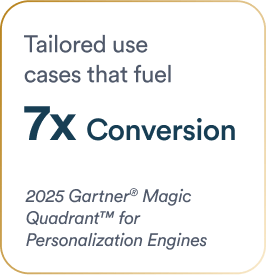
This experience covers personalized product recommendations, content, offers, and most importantly, communication. On the e-commerce front, it influences average order value and customer lifetime value, in addition to revenue. In a press release, CleverTap reports that brands achieve 7x more purchases with advanced real-time personalization than those adopting one-size-fits-all strategies. Clearly, the stakes are high.
With so much at stake, you need a reliable platform to automate this personalization across different customer segments. In this article, we’ll rank the best e-commerce personalization tools for other use cases.
What are E-Commerce Personalization Tools?
E-commerce personalization tools use customer data and AI to create tailored shopping experiences for each user. Instead of showing the same content or product catalog to everyone, these tools dynamically adjust what each shopper sees based on their behavior, preferences, and past interactions.
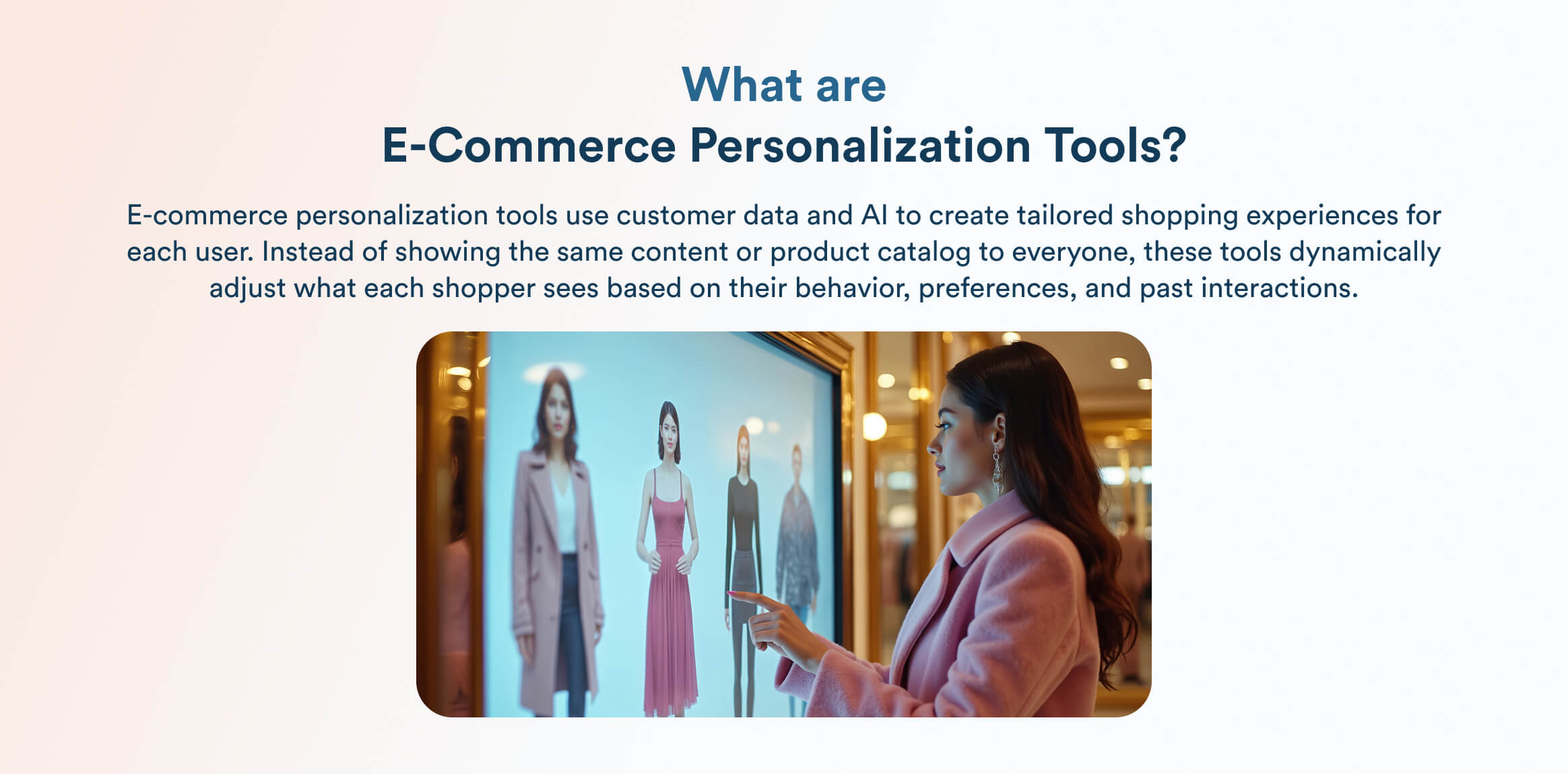
Under the hood, most e-commerce personalization platforms combine several elements, such as data collection, customer segmentation, and AI-driven decisioning. They gather browsing and purchase data, unify it to build a 360° profile for each customer, and then apply machine learning or rule-based algorithms to determine which content or products to show each person. Advanced systems use predictive analytics to go beyond reactive rules and proactively surface the most relevant items for each individual.
For example, if a shopper has been viewing running shoes, the system might showcase complementary products or personalized deals on sneakers during their session or in a follow-up email.
When you’re personalizing the experience, you’ll come across omnichannel and channel-specific personalization. The former personalizes experience across all channels where customers interact with you. The latter are point solutions. You need an omnichannel e-commerce personalization engine to influence the entire customer journey.
Key Capabilities to Look For in E-Commerce Personalization Tools
Not all e-commerce personalization tools are equal. When evaluating solutions, keep an eye out for some key capabilities that the best tools offer:
- AI-Driven Recommendations: Show people what they are most likely to buy or view using AI personalization in e-commerce. Not random items. No fixed rules. Smart systems learn from clicks, views, and past buys to power “also viewed,” “recommended for you,” and bundle suggestions.
- Customer Segmentation and Predictive Analytics: Group users by what they do and who they are. Strong tools go further and predict intent to identify who is ready to buy, who may churn, and who brings high value. This keeps campaigns focused and useful.
- Journey Orchestration: Build journeys that react in real time. If a user adds to the cart and leaves, trigger a follow-up. If they still don’t buy, send a second message. Visual journey builders make this easy and keep every channel in sync.
- Real-Time Behavioral Tracking: Track actions as they happen. Real-time data matters because timing matters.
- Omnichannel Personalization: Personalize every key touchpoint. The best platforms keep the experience consistent so users don’t feel like they’re starting over on each channel.
- Multichannel Messaging and Integrations: Use tools that send messages natively or plug in easily. Solid integrations with e-commerce platforms, CRMs, and analytics tools reduce setup time and errors.
- A/B Testing and Analytics: Test everything. Then measure what works. Clear dashboards should show a lift in clicks, conversions, and revenue. If you can’t see impact, personalization is just guesswork.
The 10 Best E-Commerce Personalization Tools: Ranked and Reviewed
The best e-commerce personalization platform is CleverTap, as it’s a complete package. If you choose CleverTap, it lets you take care of overall customer engagement through one platform while ensuring customer journeys are personalized.
1. CleverTap for Omnichannel Personalization and Retention
CleverTap is an all-in-one customer engagement and personalization platform famous for its strength in mobile app and omnichannel marketing. It’s a top choice for brands looking to retain and grow customers through personalized experiences across every touchpoint. CleverTap combines real-time analytics and multi-channel campaign orchestration in one package.
What really sets CleverTap apart is its recent CleverAI™ agentic upgrade, which introduces an agentic AI engine capable of autonomously optimizing campaigns.
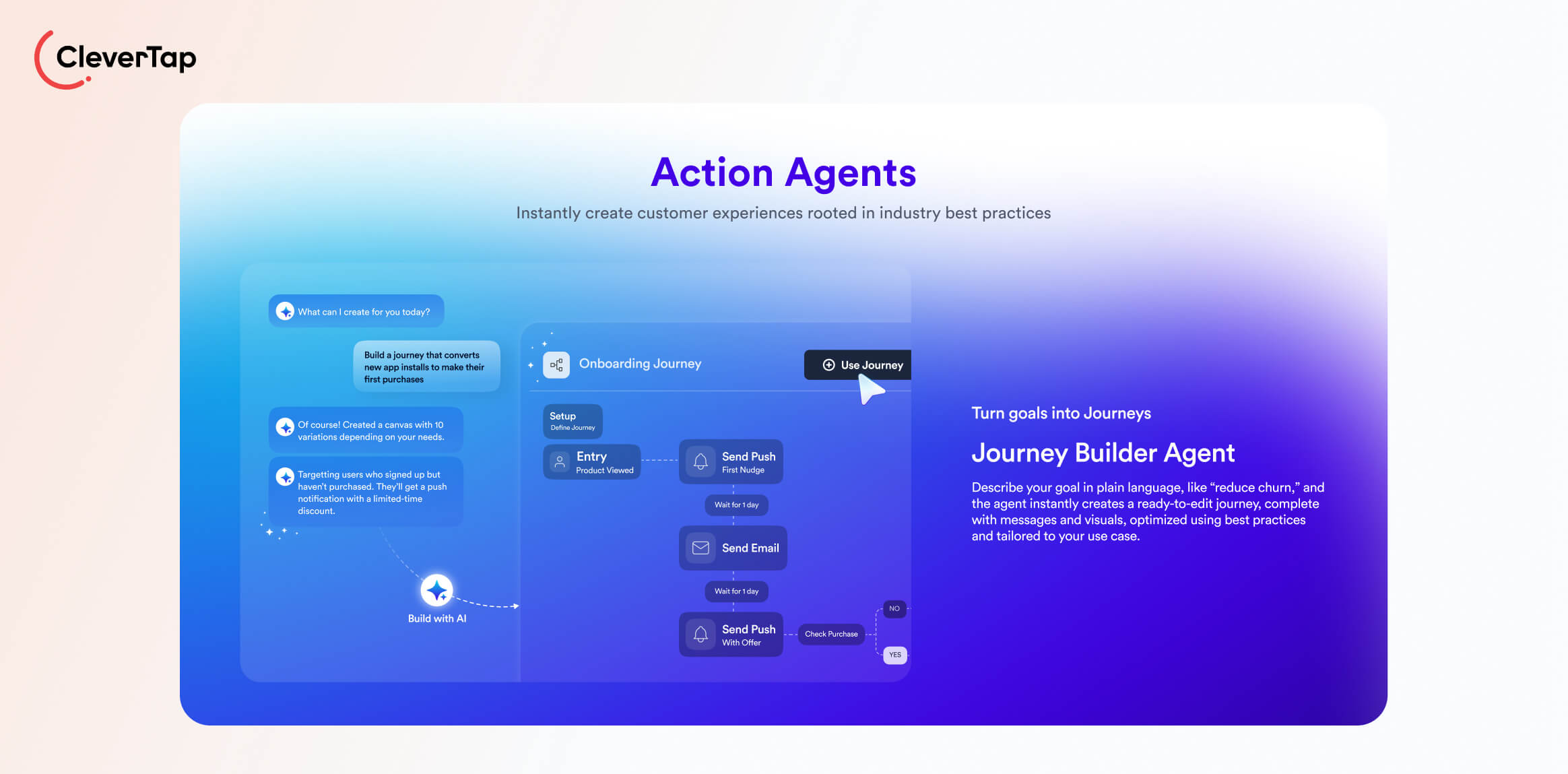
Below are a few key features of CleverTap.
- Unified Profiles and AI Segmentation: Builds a single profile per user from app and web activity. For example, you get the ability to target high spenders who haven’t purchased in 30 days or new users likely to churn next week using predictive scores.
- Omnichannel Messaging: Send coordinated messages across push, in-app, email, SMS, and WhatsApp.
- App and Web Personalization: Change what users see inside your app or on your site.
- Journey Orchestration: Automate multi-step flows with if/then logic.
- Analytics and A/B Testing: Track funnels and campaign impact in real time. For example, test two recommendation layouts and automatically scale the one that drives higher conversion or revenue.
- CleverAI: AI agents choose the right message, create the content, and send it when users are most likely to convert.
CleverTap is a truly unified solution that doesn’t create any data silos. It empowers marketers to orchestrate omnichannel personalization effectively. It’s particularly powerful for mobile app-centric businesses and those with high repeat usage due to its mobile push, in-app, and retention focus.
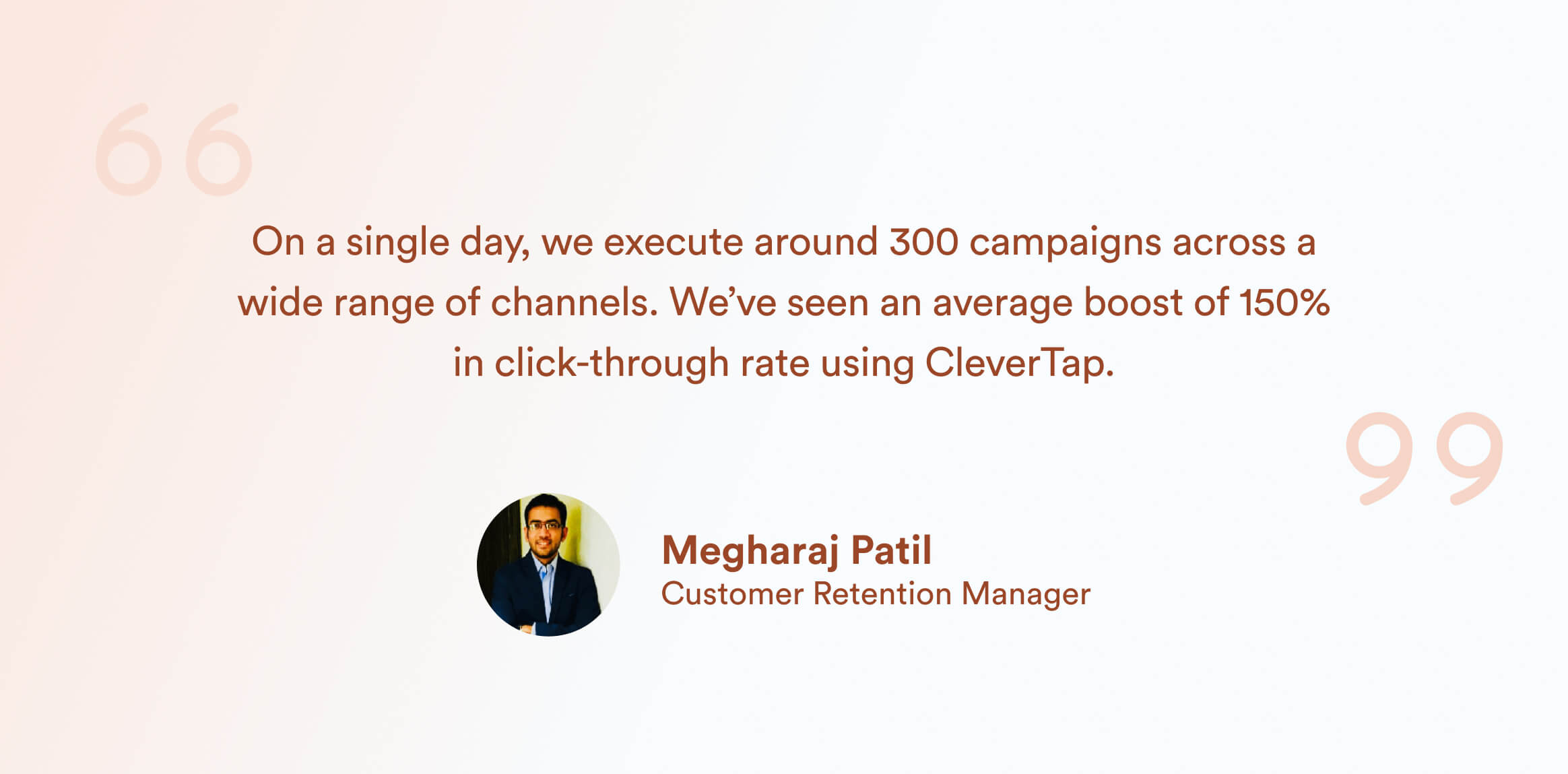
“On a single day, we execute around 300 campaigns across a wide range of channels. We’ve seen an average boost of 150% in click-through rate using CleverTap,” observes Megharaj Patil, Customer Retention Manager at Tata Cliq Luxury.
CleverTap has a proven ROI. One large fashion retailer observed a 4x increase in conversion and 300% increase in revenue YoY. It’s best for digital consumer brands and apps that want to maximize customer lifetime value and retention through personalization. It blends analytics, engagement, and personalization seamlessly. You get to analyze user behavior, instantly create a segment from an insight, launch a personalized campaign to that segment, and have AI optimize it.
Discover why CleverTap is a Leader in the 2026 Gartner® Magic Quadrant™ for Personalization Engines. Get the full report.
2. Dynamic Yield
Dynamic Yield is an e-commerce personalization platform built for optimizing on-site experiences. Now part of Mastercard, it focuses on product discovery and rigorous experimentation, primarily on web and mobile web.
Here’s what it does well:
- Personalized content and layouts, such as changing banners, CTAs, or navigation based on user behavior or traffic source.
- Best-in-class A/B and multivariate testing, with auto-personalization that learns which experience works best for each user segment.
- Behavioral targeting, including exit-intent offers, category-based triggers, and geo or source-based rules.
- Strong integrations with major e-commerce platforms and ESPs to power personalization across touchpoints.
Dynamic yield supports mid-market and enterprise retailers with high traffic and large catalogs who want to maximize on-site conversion.
3. ActiveCampaign
ActiveCampaign is an email-first marketing automation platform with built-in CRM and light personalization. It’s for small and mid-sized businesses that want targeted, behavior-based messaging without enterprise cost or complexity.
Here’s what it does well:
- Personalized email and SMS, such as showing different products or offers based on past purchases or customer attributes.
- Automation workflows using simple if/then logic for welcome series, abandoned cart emails, post-purchase follow-ups, and re-engagement.
- Site tracking and triggers, like sending a follow-up email when a user views a product multiple times.
- CRM-based segmentation, allowing targeting by tags, spend level, repeat purchases, or engagement history.
ActiveCampaign is best for personalizing email-led customer journeys and automating lifecycle messaging without needing a dedicated tech team.
4. Nosto
Nosto is an e-commerce personalization tool built for fast setup, especially on Shopify. It helps mid-market retailers lift conversion and AOV with on-site recommendations and tailored content, without heavy dev work.
Here’s what it does well:
- Product recommendations like “frequently bought together” on cart pages or “you may also like” on PDPs.
- Personalized content and pop-ups, such as first-time visitor offers vs. VIP loyalty discounts.
- Category page personalization, like re-ordering products so each shopper sees what they’re most likely to buy.
- Built-in testing and reporting, so you can compare “Trending” vs “Personalized” widgets and track revenue impact.
Nosto works best for mid-market ecommerce teams that want quick on-site personalization and merchandiser control, without enterprise complexity.
5. Optimizely
Optimizely is an experimentation platform that powers personalization through testing. It’s ideal for teams that treat personalization as a continuous optimization program, not a one-time setup.
Here’s what it does well:
- A/B and multivariate testing, like testing two checkout layouts or three homepage hero messages.
- Audience-based personalization, such as showing different promos by device, location, or returning vs. new visitors.
- Advanced rollouts, like releasing a new feature to 10% of users before expanding to everyone.
- Full-stack experiments, where product and engineering teams test bigger changes beyond the front-end.
- Strong results reporting, with clear lift, confidence, and goal tracking.
Optimizely fits mid-to-large brands with a CRO mindset that want proof-driven personalization and have people to run tests well.
6. Salesforce Marketing Cloud + Salesforce Commerce Cloud
Salesforce delivers personalization through Einstein AI across commerce and marketing, plus real-time decisioning through Marketing Cloud Personalization. It’s powerful, but it’s built for enterprise stacks.
Here’s what it does well:
- Einstein recommendations, such as personalized product grids on-site and product picks in emails.
- Real-time on-site decisioning, such as showing VIP incentives when high-value shoppers show exit intent.
- Connected customer data, using CRM and CDP signals like loyalty tier, service tickets, and offline purchases.
- Large ecosystem integrations, so personalization aligns across commerce, marketing, service, and ads.
Salesforce is best for large retailers already in the Salesforce ecosystem that need deep, cross-channel personalization at scale.
Compare the top Salesforce Marketing Cloud competitors to choose the best fit.
7. Bloomreach
Bloomreach focuses on commerce discovery. It’s strongest when search and category navigation drive a large share of revenue, and when you need personalization across the full browsing journey.
Here’s what it does well:
- AI site search, like smarter results, synonyms, and ranking tuned for conversions.
- Product recommendations, such as personalized recs on homepage, PDP, and cart using shared discovery signals.
- Personalized merchandising, such as boosting brands a shopper prefers or tailoring category sorting to each user.
- Content personalization, such as landing pages that change banners and modules based on a segment.
- Commerce analytics includes search performance, zero-results queries, and revenue from discovery changes.
Bloomreach is best for mid-to-large ecommerce brands with catalogs that want search and discovery personalization to improve product findability and conversion.
8. Insider One
Insider One is a cross-channel personalization and engagement platform that unifies web, app, and messaging. It’s built for growth teams that want one place to run journeys and personalization quickly.
Here’s what it does well:
- Web and app personalization, such as tailored banners, pop-ups, and behavior-based product recs.
- Predictive segments, such as “high intent to buy” users or “likely to churn” audiences.
- Multi-channel messaging, across email, SMS, web push, mobile push, and ad audience sync.
- Marketer-friendly execution, with templates for cart recovery, price-drop alerts, and win-back flows.
Insider One is best for digital brands that want web, app, and messaging personalization on a single platform, without stitching together multiple tools.
Discover the top Insider One competitors.
9. Netcore Cloud
Netcore is an omnichannel engagement platform with strong coverage for email, SMS, push, and WhatsApp. It’s widely used in mobile-first markets where speed, reach, and deliverability matters.
Here’s what it does well:
- Cross-channel journeys, like cart abandonment flows that use email first, then WhatsApp or SMS for urgency.
- AI-powered personalization, such as product recommendations and behavior-based tailored landing pages.
- Strong messaging stack, especially for high-volume email, SMS, and WhatsApp campaigns.
- Segmentation and unified profiles, so audiences update in real time as users browse and buy.
- On-site and in-app engagement, like nudges, banners, and guided flows for conversion or activation.
Netcore fits mid-to-large brands that need broad channel coverage and want a single platform for personalization and messaging.
Discover the top Netcore Cloud competitors to choose the best platform for your needs.
10. Adobe Experience Cloud
Adobe’s personalization runs primarily through Adobe Target, often paired with Adobe Analytics and other Experience Cloud products. It’s powerful and flexible, but it demands budget, skill, and a mature program.
Here’s what it does well:
- Enterprise A/B and multivariate testing, including automated allocation and targeting at scale.
- Rules-based personalization, like showing different content for loyalty tiers, geos, or high-value segments.
- Recommendations, such as “similar items” modules, that you can test and tune inside Target.
- Deep analytics-driven segments, using Adobe Analytics audiences to power targeting decisions.
- Cross-channel alignment, when paired with Adobe’s broader stack for messaging and journey decisions.
Adobe is best for large enterprises already invested in Adobe that need highly customizable personalization and experimentation across complex digital properties.
How to Choose the Right E-Commerce Personalization Platform
Choosing an e-commerce personalization platform feels complex because it is. You are not buying software alone. You are committing to a data strategy, operating model, and growth path. The safest way to decide is to assess readiness first, then narrow options based on real constraints, not vendor promises.
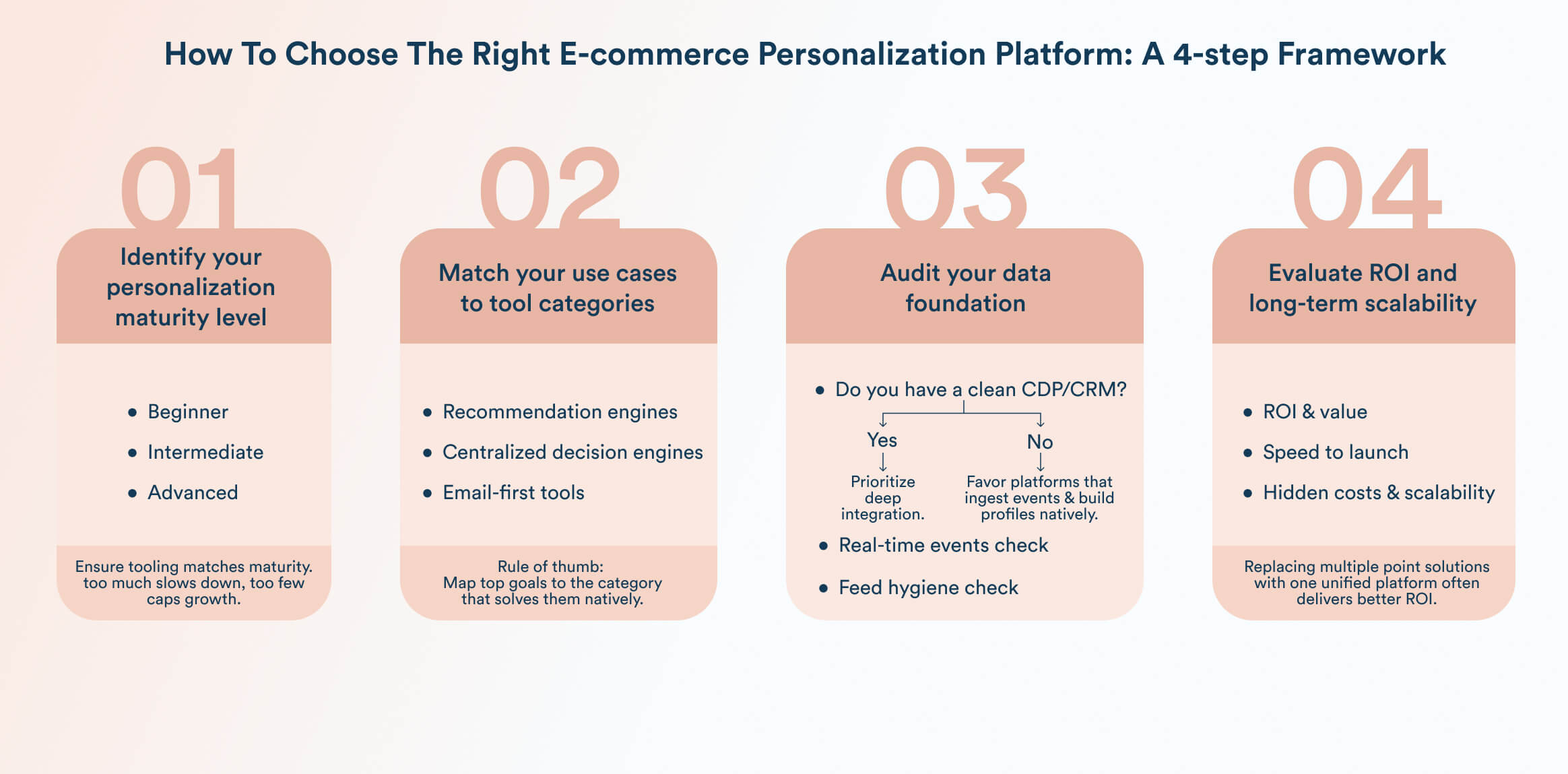
Below is a four-step framework that cuts through hype and anchors the decision in data, capability, and ROI.
1. Identify Your Personalization Maturity Level
Most personalization initiatives fail because companies buy tools that outpace their readiness. Start by placing yourself honestly in one of these stages.
- Beginner: You run basic campaigns with minimal personalization. Segmentation is manual and broad. Behavioral data exists but is underused. In practice, you’d have the same homepage for all visitors, one newsletter for all subscribers, and manual product spotlights. You have a small team and limited analytics depth. There’s a risk of overbuying AI that you can’t operationalize.
- Intermediate: You personalize in pockets. Email and on-site efforts exist but operate in silos. Logic is mostly rule-based. You have cart abandonment emails with product images. There are segments like “repeat buyers” or “high spenders” and separate tools for email and recommendations. You might feel limited by disconnected systems.
- Advanced: You personalize continuously across channels using unified customer profiles. Decisions happen in real time, not on schedules. You deliver dynamic content per session through ML-driven targeting and timing. There might be some execution complexity.
You need to ensure your tooling matches the maturity. Too much sophistication can slow the team down, and too few capabilities will cap growth.
2. Match Your Use Cases To Tool Categories
Personalization tools for e-commerce are not interchangeable. Each category optimizes for a different outcome. For example, recommendation engines like Nosto and Dynamic Yield focus on product discovery and conversion. Use them when your biggest upside is on-site merchandising and product relevance.
If you want something more powerful, platforms like CleverTap act as a centralized decision engine across channels. It’s best for retention, lifecycle management, and brands that rely on mobile app personalization for their growth.
Some tools are email-first. They facilitate a strong email-led revenue model. However, might shy away from offering reliable on-site and real-time capabilities.
Rule of thumb: Map your top goals to the category that solves them natively.
3. Audit Your Data Foundation
The performance of e-commerce personalization solutions directly correlate with data quality. If you buy advanced tooling without fixing data plumbing, it guarantees disappointment. If you already run a CDP or CRM with clean profiles, prioritize tools that integrate deeply. If not, favor platforms that ingest events and build profiles natively.
Many modern engagement platforms double as lightweight CDPs, reducing integration overhead. Additionally, real personalization requires real-time events. If your stack cannot send events in real time, AI-driven personalization will underperform regardless of vendor claims.
For product and content feeds, recommendation quality depends on feed hygiene. Missing categories or stale inventory data directly reduce relevance. Native integrations with Shopify, Magento, or custom APIs often outperform manual feeds.
4. Evaluate ROI And Long-Term Scalability
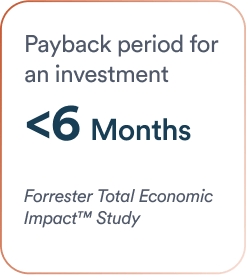
This is where decisions should be won or lost. Forrester found that CleverTap customers achieved 561% ROI over three years, mainly driven by retention and repeat usage.
Ask vendors how fast you can launch your top two use cases, not how powerful the platform is in theory. It’s a good signal if you can get things running in under 30 days. When you’re optimizing for ROI, also consider the hidden parts of the equation that come along with the platform’s license fees. For example, implementation and training costs, and what it takes to maintain the platform with ongoing optimizations.
Replacing multiple point solutions with one platform often delivers ROI.
Explore the top 20 examples of personalization from real brands to inspire your own strategy.
Frequently Asked Questions (FAQs) about E-Commerce Personalization Tools
Q1. What is e-commerce personalization in simple terms?
E-commerce personalization is the practice of tailoring the shopping experience to each customer based on their behavior and preferences. Instead of a one-size-fits-all website or message, a personalized e-commerce experience will show you content or products that are especially relevant to you.
Q2. Why do I need a personalization tool? Can’t I do this manually?
Manually personalizing content for each user is impractical once you have more than a handful of customers. Personalization tools use software and AI to automate this at scale.
Q3. How do personalization platforms actually know what to show each customer?
Most e-commerce personalization tools combine rules and machine learning algorithms. They collect data such as pages viewed, products clicked, items added to cart, purchases, time on site, etc. The platforms combine that with contextual data (location, device, time of day) and, when available, third-party data such as weather or demographic information. With that, they might use if-else rules, content-based filtering, and other predictive models.
Q4. Will personalization work if I don’t have much customer data yet?
You can start personalizing with limited data, but the tactics will be more contextual and real-time rather than historical. For brand-new visitors, you obviously have no prior data. However, you can use a referral source or geolocation. You can also let users self-segment with preference centers or quizzes.
Q5. How do I measure the success of personalization efforts?
There are key ways to measure the success of personalization efforts, for example, A/B testing, lift in critical metrics such as conversion rate, average order value, and revenue per user. Engagement metrics show a positive effect. Moreover, customer feedback delivers the qualitative side of the effect of personalization.
Q6. Is there such a thing as too much personalization? Could it ever backfire?
Yes, there is a balance to strike. Done poorly, personalization can feel creepy or pushy. For instance, over-personalizing with very personal data might unsettle customers if not handled tactfully.
Level Up E-Commerce Personalization With CleverTap
With several e-commerce personalization software on the market, the real differentiator is not features, it is impact. Most platforms solve one slice of the problem well. Few solve the whole journey. For e-commerce brands, the winners will be those that reach customers at the right moment, on the right channel, with the right message every time. This is where CleverTap pulls ahead. It treats personalization not as a tactic, but as a system.
What truly sets CleverTap apart is how intelligently it operates at scale. Real-time analytics capture intent while it is still warm. Lifecycle journeys ensure users never fall through the cracks, and CleverAI adds a layer of judgment without constant human intervention. Most importantly, CleverTap balances power with practicality. It offers enterprise-grade depth without demanding enterprise-sized teams. Marketers build, test, and personalize without writing code or waiting on consultants.
CleverTap does not just personalize experiences; it simplifies complexity and turns customer attention into long-term value.
Get 1:1 personalization for your e-commerce business with CleverTap.

Kiran Pius 
Leads Product Launches, Adoption, & Evangelism.Expert in cross-channel marketing strategies & platforms.
Free Customer Engagement Guides
Join our newsletter for actionable tips and proven strategies to grow your business and engage your customers.