
























Table of Contents
Categories
Most Popular


Delivering truly 1:1 personalization across every channel is a top goal for modern marketers, but it’s hard. Customers expect seamless, tailored experiences no matter how they interact, yet only about a third of companies have a mature omnichannel program. Many brands make the mistake of optimizing just one channel or using static, rules-based segments. The result is fragmented data, inconsistent experiences, and limited ROI.
This guide explains how to build a truly omnichannel personalization strategy and outlines a step-by-step framework to implement it. You’ll discover proven strategies across different online channels and offline touchpoints, with a practical 90-day roadmap to shift from siloed campaigns to a customer-first omnichannel engine.
What Is Omnichannel Personalization?
Omnichannel personalization means delivering highly customized, relevant experiences to each customer consistently across all channels. It relies on a unified 360° customer profile that captures actions across web, mobile, email, and physical stores, enabling messages and offers to be tailored in context.
For example, recommending a product based on a recent app view or triggering an in-store coupon tied to online browsing behavior.
True omnichannel personalization is defined by three elements: a unified customer view, contextual consistency, and real-time responsiveness. By consolidating all first-party data, such as app events, website clicks, purchase history, and loyalty information, brands can recognize the same customer everywhere and deliver persona-driven experiences across touchpoints.
Personalization decisions also happen instantly, allowing behaviors like cart abandonment to trigger timely, relevant follow-ups. The result is a connected, one-to-one experience at every interaction.
Omnichannel vs. Multichannel vs. Cross-Channel
To clarify terms: Multichannel marketing simply means using multiple channels, but each runs independently. In multichannel mode, email, mobile app, social, etc., may all carry promotions, but they aren’t coordinated or based on a unified profile. Cross-channel marketing steps it up by coordinating messages across channels: the content might align (e.g., an email followed by a related push), but it may still rely on separate customer data. Think of cross-channel as multiple channels working together.
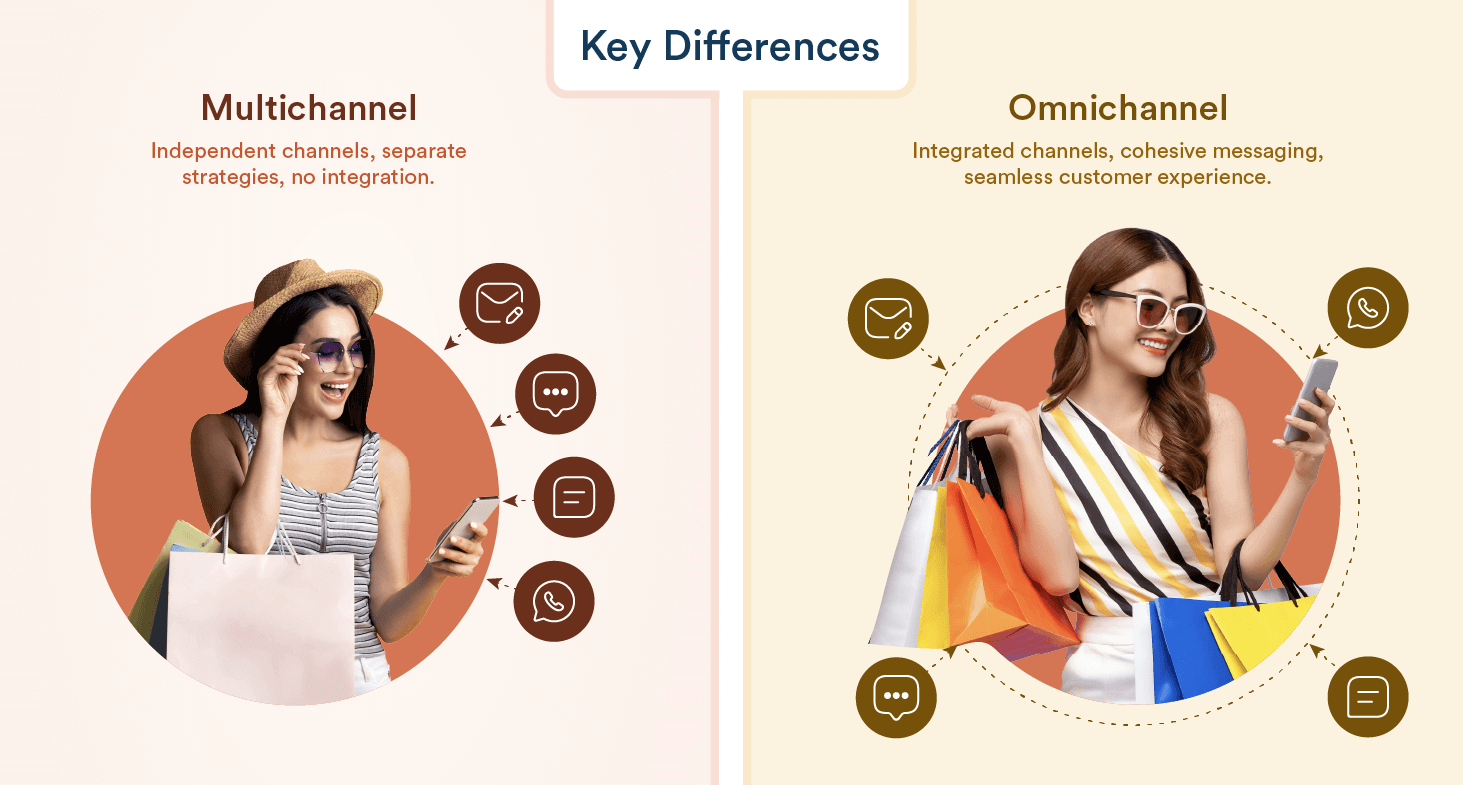
True omnichannel ties everything into one. All channels, online and offline, are fully integrated and feed into the same customer profile. Here, the system knows who the customer is and what they did last and uses that context to tailor every interaction.
What Most Brands Get Wrong About Omnichannel Personalization
- Data silos: Customer data often lives in separate systems like CRM, app, website, and store, making a unified view impossible.
- Channel fragmentation: Brands frequently personalize only one channel at a time. Multichannel marketing is common, but it fails to give a seamless journey. For example, you may send a promo email yet ignore that same customer’s in-app behavior.
- Static tactics: Many teams rely on fixed segments and batch campaigns. This scales poorly and misses real-time intent. Batch approaches can decrease revenue by 5–10%, whereas real-time personalization can increase revenue by 5–15%.
- Weak ROI: With fragmented campaigns, it’s hard to attribute lift to personalization. Brands see engagement but don’t know which channel or message earned a sale. Many fail to tie personalization to conversion or retention metrics.
Why Omnichannel Personalisation Matters Today
Omnichannel personalisation has become essential because customer journeys are no longer linear. People move seamlessly between apps, websites, email, messaging platforms, and even physical stores, and they expect brands to keep up.
Customer Expectations are Higher Than Ever: Customers expect brands to recognise them instantly, remember their preferences, and deliver interactions that feel tailored. When experiences feel disconnected or repetitive across channels, trust drops and churn rises.
The Channel Landscape Has Exploded: Marketing is no longer confined to email or ads. Customers engage across push notifications, WhatsApp, SMS, in-app messaging, social platforms, and offline touchpoints. The challenge isn’t just being present everywhere but delivering coordinated, consistent messaging across all of them.
AI-Driven Experiences are Becoming the Standard: With AI, personalisation is no longer limited to static segments or manual rules. Modern platforms can predict intent, recommend next-best actions, and optimise journeys in real time. As AI-powered experiences become the norm, brands that rely on siloed campaigns will fall behind those delivering intelligent, adaptive engagement at scale.
How Omnichannel Personalization Works (6-Step Framework)
Omnichannel personalization works by connecting customer data, intelligence, and engagement across every touchpoint, so each interaction feels consistent, relevant, and real-time. Instead of running disconnected campaigns by channel, brands build a unified system where data drives decisions, and decisions trigger coordinated experiences across the entire customer journey.
Here’s a practical 6-step framework for how omnichannel personalization works in practice:
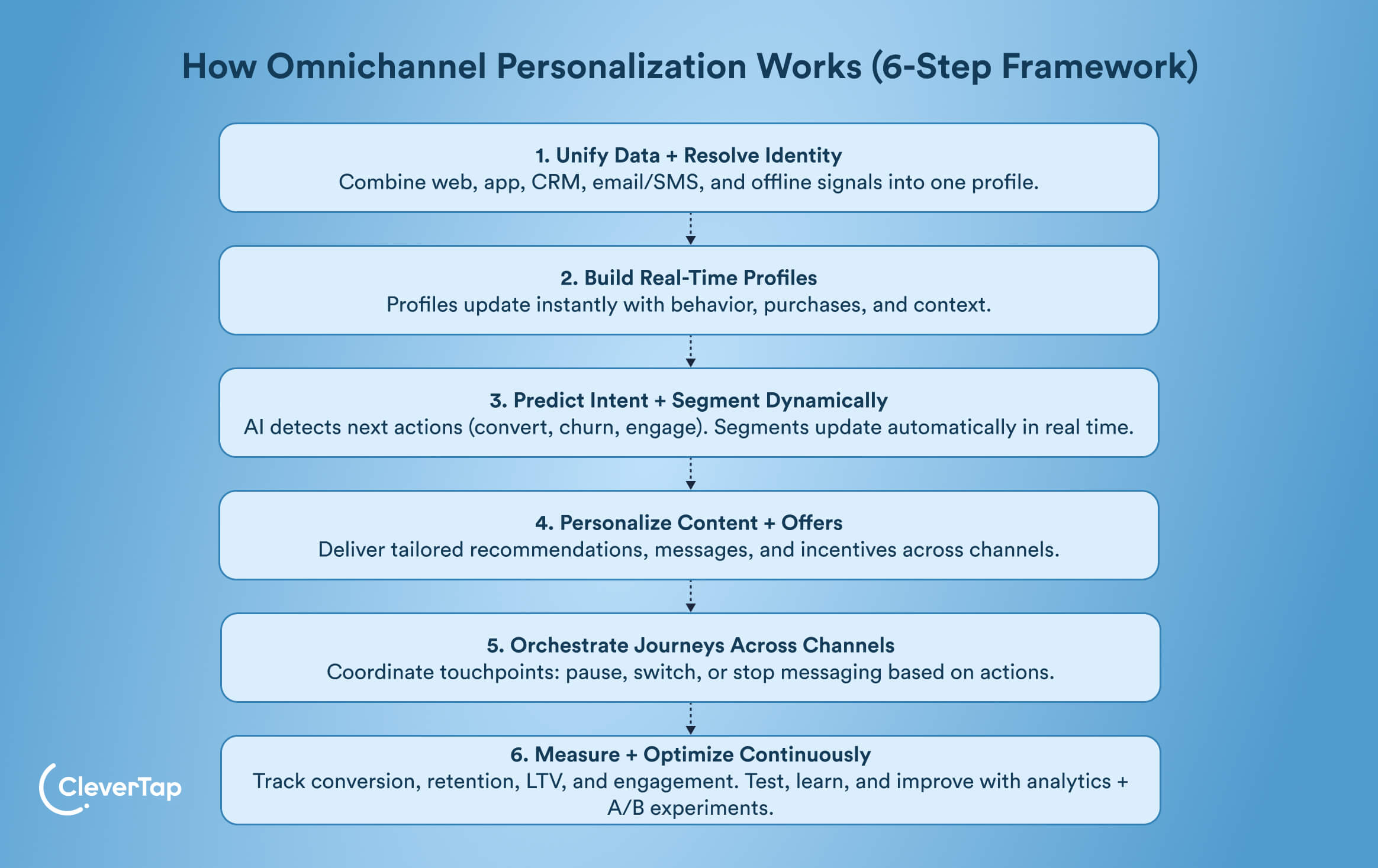
Step 1 – Unify Customer Data & Resolve Identity
The foundation of omnichannel personalization is a single, unified customer view. Start by consolidating all first-party data—CRM records, website activity, app events, email/SMS engagement, and offline signals such as POS or loyalty scans—into a single system.
A core challenge here is identity resolution: recognizing that an anonymous web visitor is the same person who later logs in on mobile or makes an in-store purchase. This is typically done by linking device IDs to known identifiers, such as email addresses, phone numbers, or loyalty data.
CleverTap’s customer data and analytics layer help brands ingest and stitch these signals into one master customer profile, eliminating silos and enabling personalization across channels.
Step 2 – Build Real-Time Customer Profiles
Once data is unified, omnichannel personalization depends on real-time customer profiles that update instantly with every interaction.
These profiles capture behavioral signals (browsing, app usage), transactional history (purchases, subscriptions), and contextual data (device, location, time). This matters because batch segmentation can’t keep up with modern expectations. In fact, studies show customers now expect personalization instantly. For example, 71% of consumers said they expect real-time personalization.
CleverTap’s TesseractDB is designed to process and activate customer context in milliseconds, so every click, purchase, or event immediately shapes the next experience.
Step 3 – Understand Intent & Segment Dynamically
With real-time profiles in place, the next step is interpreting customer intent. AI and analytics help identify what users are most likely to do next: browse, convert, disengage, or churn.
Instead of static lists, omnichannel personalization relies on dynamic segments that update automatically as behavior changes. For example, a user who browses products in the last 24 hours is instantly added to the “Active Shopper” segment and removed when intent fades.
CleverTap supports event-driven segmentation, helping brands engage customers at the exact moment when intent is highest.
Step 4 – Personalize Content, Recommendations, and Offers
Now you can tailor what each customer sees across channels. Personalization can include:
- Product recommendations based on browsing history
- Dynamic messaging with names or preferences
- Contextual offers tied to lifecycle stage or intent
The goal is relevance: aligning content with what the customer needs right now.
CleverTap enables this through dynamic templates, AI-assisted messaging, and personalized experiences across web, app, email, push, and more.
Get inspired by real-world personalization examples from today’s most innovative brands.
Step 5 – Orchestrate Journeys Across Channels
Omnichannel personalization means sending the right message through the right channel at the right time. This requires orchestration: coordinating touchpoints so journeys adapt in real time. For example:
- Suppress an email if a push notification is opened
- Stop promotions once a purchase happens
- Shift to WhatsApp if the email goes unopened
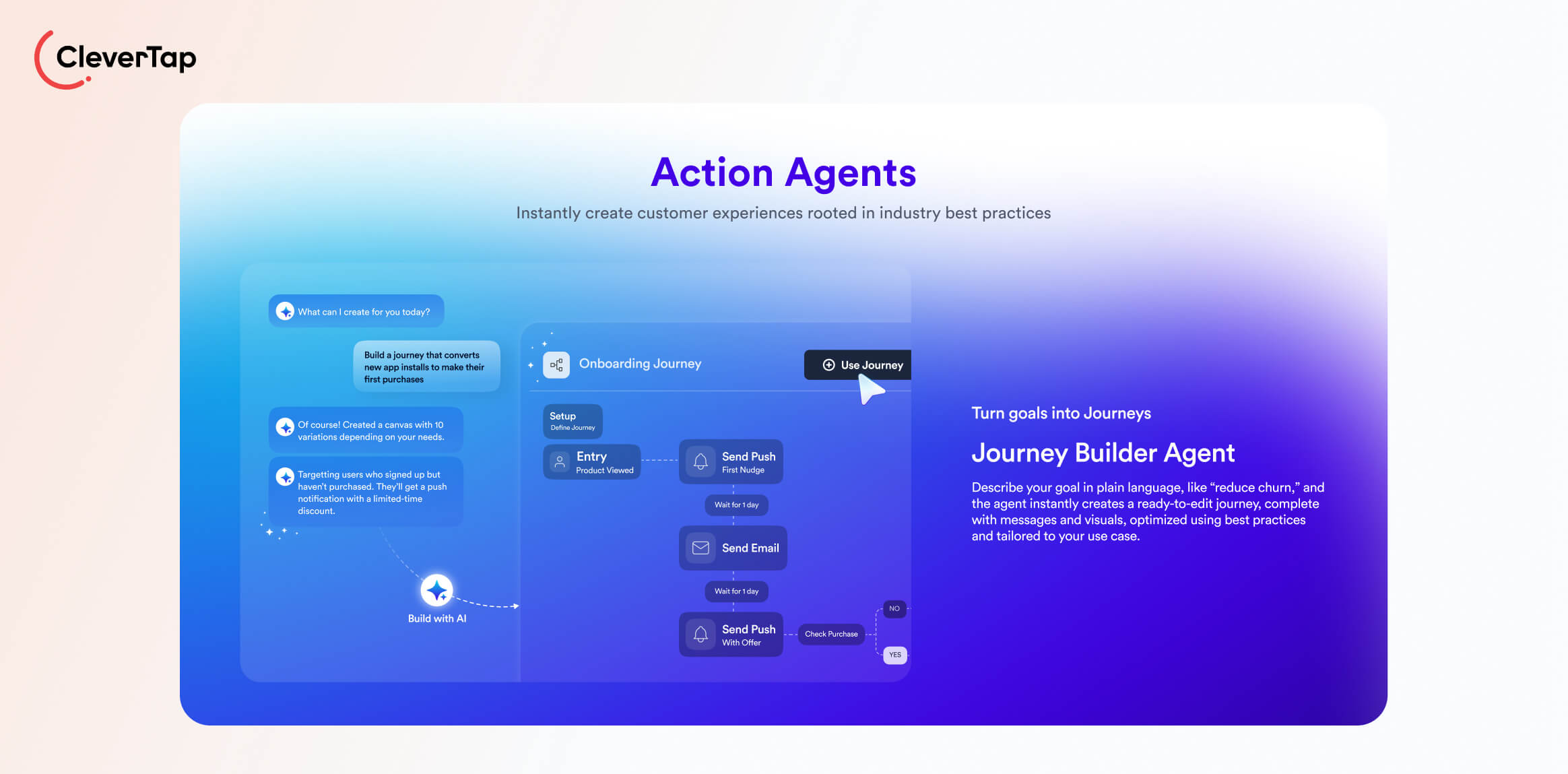
CleverAI’s Journey Builder helps marketers automate these cross-channel flows across push, in-app, email, and SMS, ensuring every interaction feels connected rather than fragmented. It learns from past outcomes to continuously improve journeys.
Step 6 – Measure, Learn, and Optimize Continuously
Finally, omnichannel personalization improves through continuous feedback. Track impact using metrics like:
- Conversion lift
- Retention and churn reduction
- Customer lifetime value (LTV)
- Engagement depth across channels
Use experimentation and control groups to quantify what personalization is driving and feed results back into smarter segmentation, timing, and content. CleverTap provides campaign analytics and A/B testing tools that make omnichannel optimization an ongoing loop, not a one-time effort.
For instance, CleverTap enabled Paysend to track user behavior and automate omnichannel engagement campaigns across push, email, and SMS, giving the team real-time visibility into campaign performance.
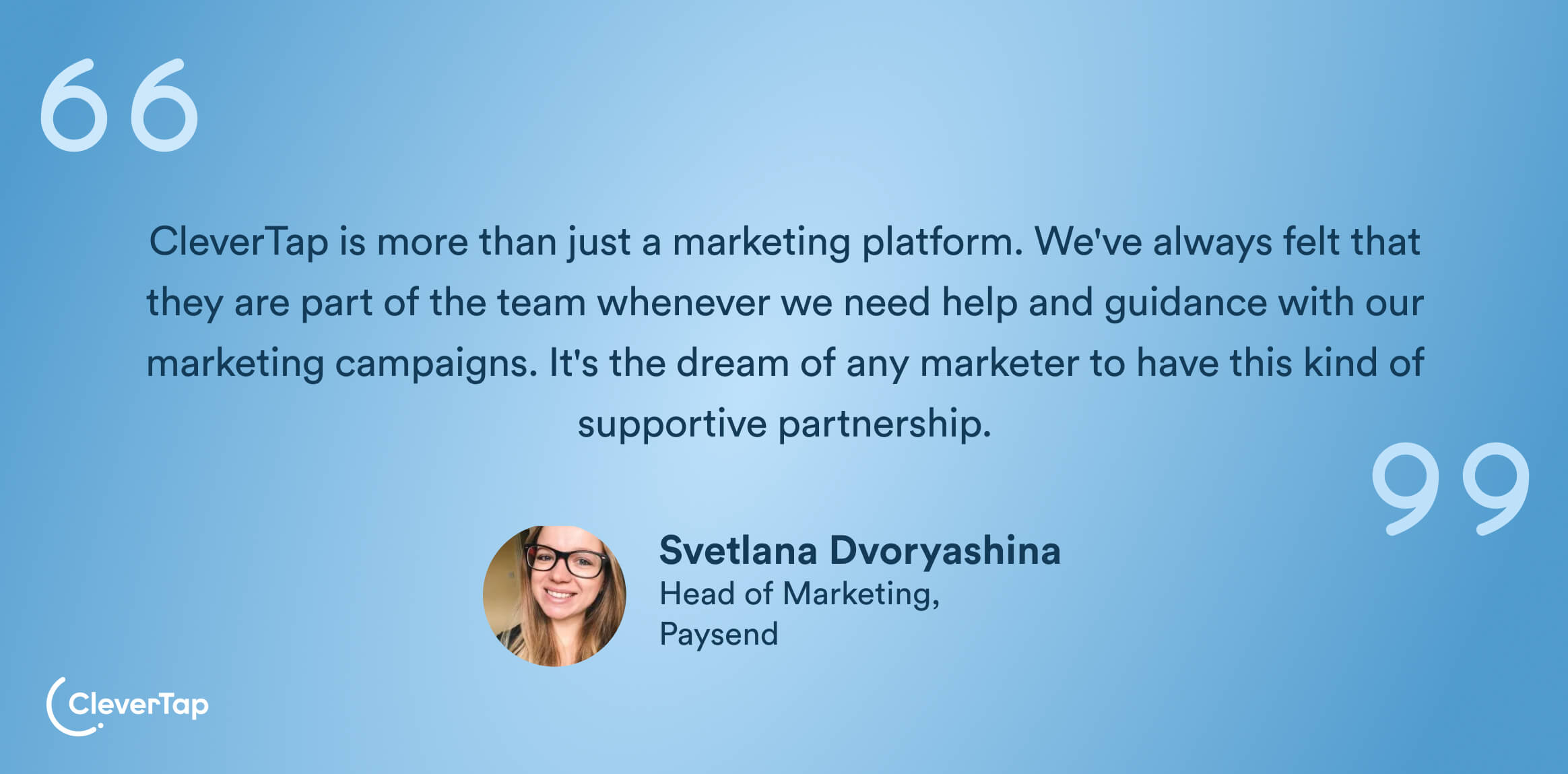
With predictive segmentation and automated journeys, Paysend saw a 23% increase in repeat transactions, a 22% rise in weekly registrations, and an average push notification CTR that was 10X the industry average. By using these insights to optimize messaging and timing, Paysend significantly improved engagement, conversion, and long-term customer value.
Omnichannel personalization works best when every step is connected: unified data creates real-time profiles, AI interprets intent, journeys adapt across channels, and optimization compounds over time. With the right platform, brands can move from siloed campaigns to seamless, customer-centric engagement at scale.
Learn how CleverTap can help you achieve 1:1 personalization.
Omnichannel Personalization Strategies Across Key Channels
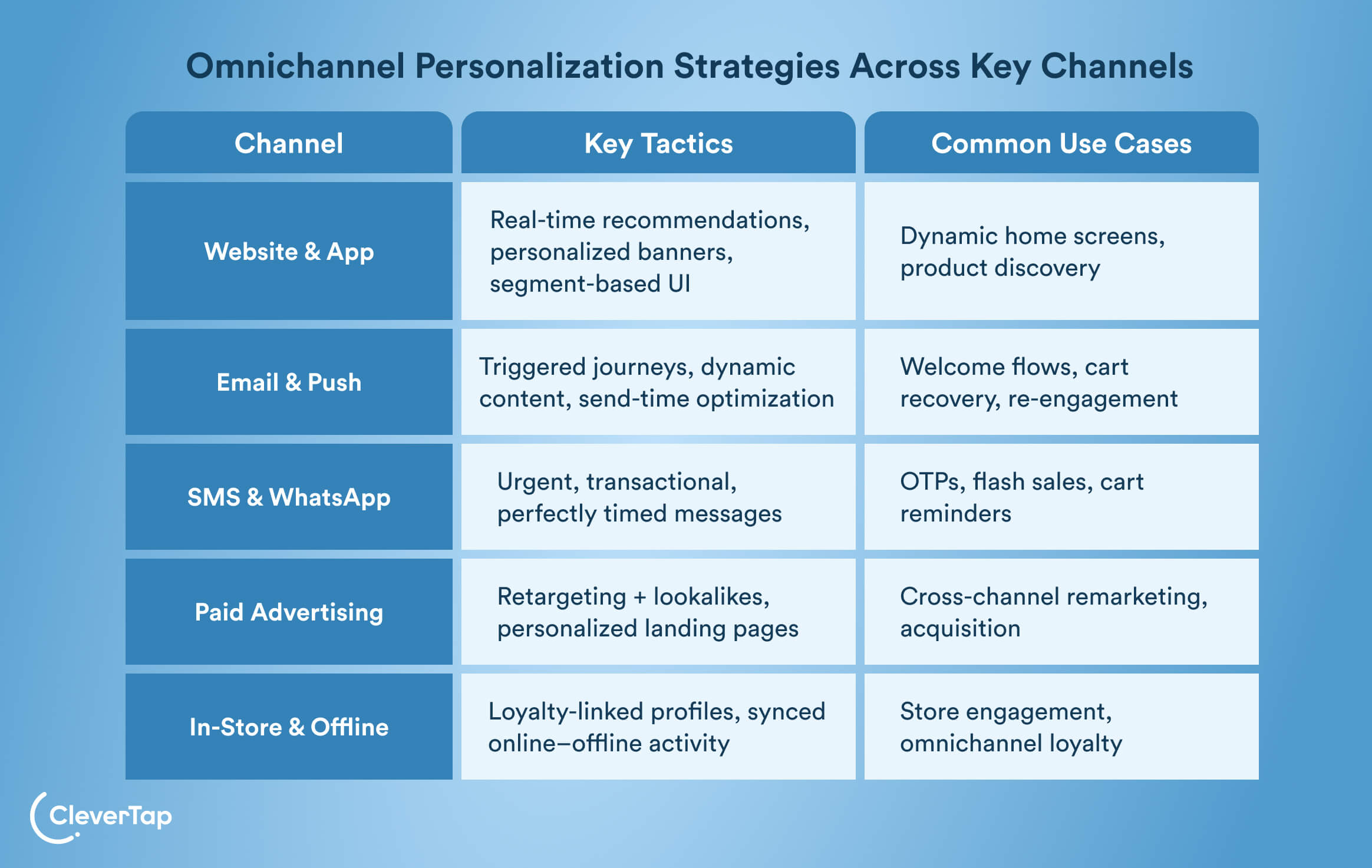
Omnichannel personalization isn’t one-size-fits-all. Each channel plays a different role in the customer journey, so personalization strategies must adapt based on customer intent, context, and timing. Below are proven omnichannel tactics across key channels, paired with real-world examples of brands putting them into practice.
Website & App: Real-Time Experiences That Adapt Instantly
Website and mobile app personalization have the most immediate impact. Brands can tailor experiences dynamically by showing recently viewed items, behavior-based recommendations, and contextual banners like “Welcome back, [Name].”
Home screens, navigation, and content modules can also shift based on user segments: new visitors versus loyal customers, casual browsers versus high-intent shoppers.
For example, Cleartrip’s travel app implemented context-aware campaigns, resulting in 5X more cross-sells (upselling hotels and activities) and a 10% increase in overall monetization. By recommending relevant add-ons based on users’ destination and itinerary, they increased secondary revenue.
Streaming leaders like Netflix and Spotify also exemplify this strategy, where their homepage and email recommendations are customized per user, a classic example of omnichannel personalization working.
Learn how to build an e-commerce personalization strategy and discover the e-commerce personalization tools that help you build one.
Email & Push: Triggered Journeys Across the Lifecycle
Email and push notifications are powerful channels for lifecycle engagement, especially when campaigns respond to behavior in real time. Common omnichannel journeys include welcome flows, cart abandonment recovery, browse reminders, and win-back messaging.
The strongest personalization comes from dynamic content (recent activity, preferences, predictive insights) and send-time optimization so messages reach customers when they’re most likely to act.
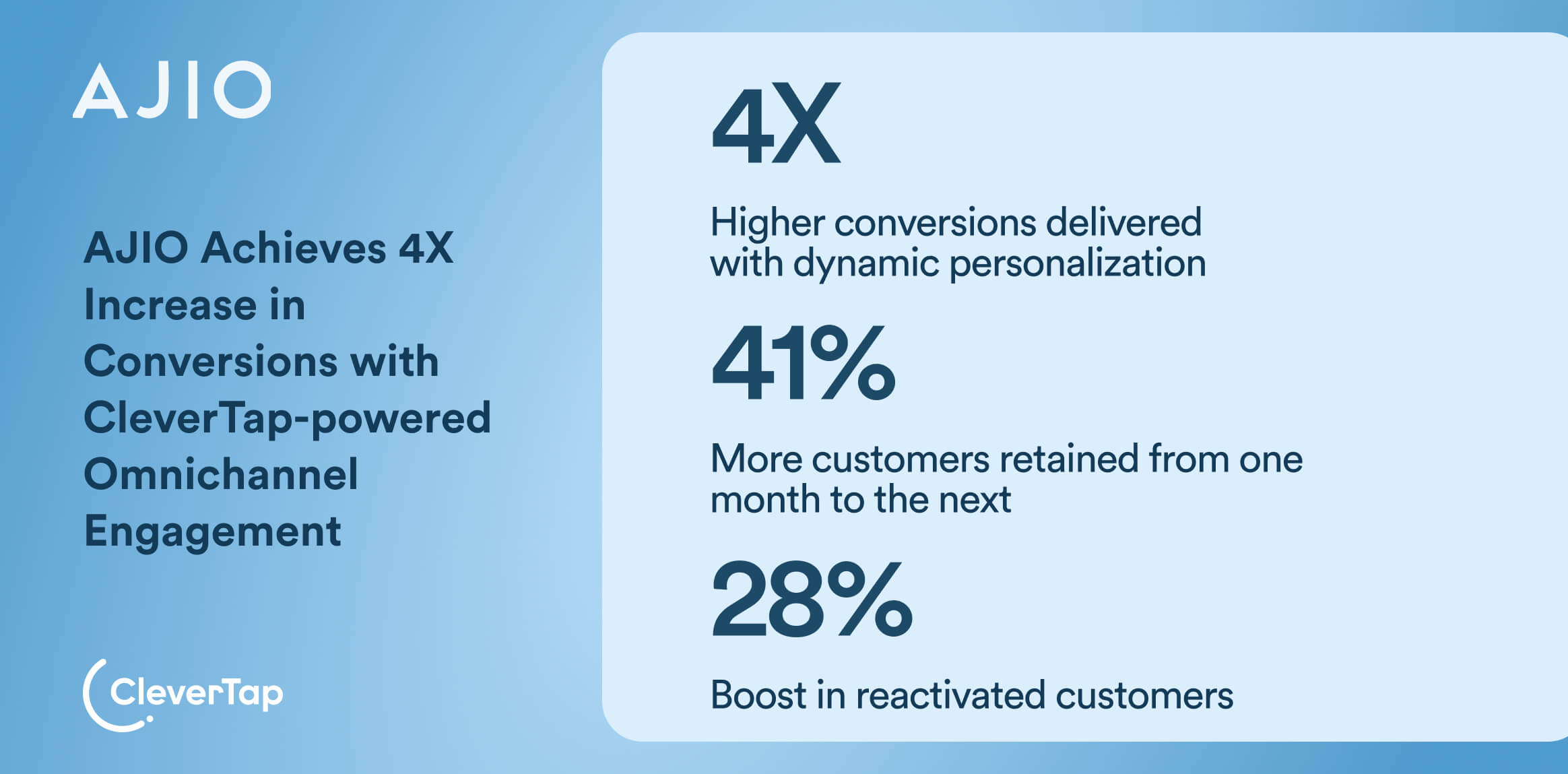
Indian retailer AJIO used dynamically personalized push, email, and in-app messaging and achieved 4X higher conversions and a 41% bump in month-to-month retention. They accomplished this by personalizing recommendations and offers throughout the buyer’s journey.
Aha, an OTT platform, doubled its viewership and saw a 5X increase in engagement by sending personalized push notifications to segmented user groups.
SMS & WhatsApp: Perfect for Urgent, High-Intent Moments
SMS and WhatsApp work best for time-sensitive and transactional engagement, such as OTPs, delivery updates, appointment reminders, or flash sale alerts.
They’re also effective fallback channels when email or push goes unopened. The key is keeping messaging short, personal, and precisely timed. Key use cases include cart reminders minutes after abandonment, limited-time offers, or real-time service alerts that require immediate action.
Paid Advertising: Retargeting That Feels Connected, Not Random
Omnichannel personalization extends beyond owned channels into advertising. Brands can retarget known users with consistent creative across email, push, and ads, while using lookalike audiences to acquire similar high-value customers.
Personalized landing pages are critical here: matching the ad’s promise with the customer’s prior behavior to create continuity from click to conversion. Retail and D2C brands often combine retargeting with personalized onsite experiences, ensuring shoppers see consistent messaging across ads, email, and product pages.
In-Store & Offline: Bridging Digital and Physical Journeys
True omnichannel personalization connects online and offline touchpoints. By linking loyalty IDs, phone numbers, or payment data to digital profiles, brands can trigger relevant app or SMS messages during store visits and ensure offline purchases shape future online engagement.
The goal is continuity: what happens in-store should immediately inform what happens online and vice versa.
Sephora is a leading omnichannel model, syncing loyalty accounts across app and store experiences so customers receive consistent recommendations, offers, and personalized service wherever they engage.
Getting Started: Your 90-Day Omnichannel Personalization Plan
Days 1–30: Foundation
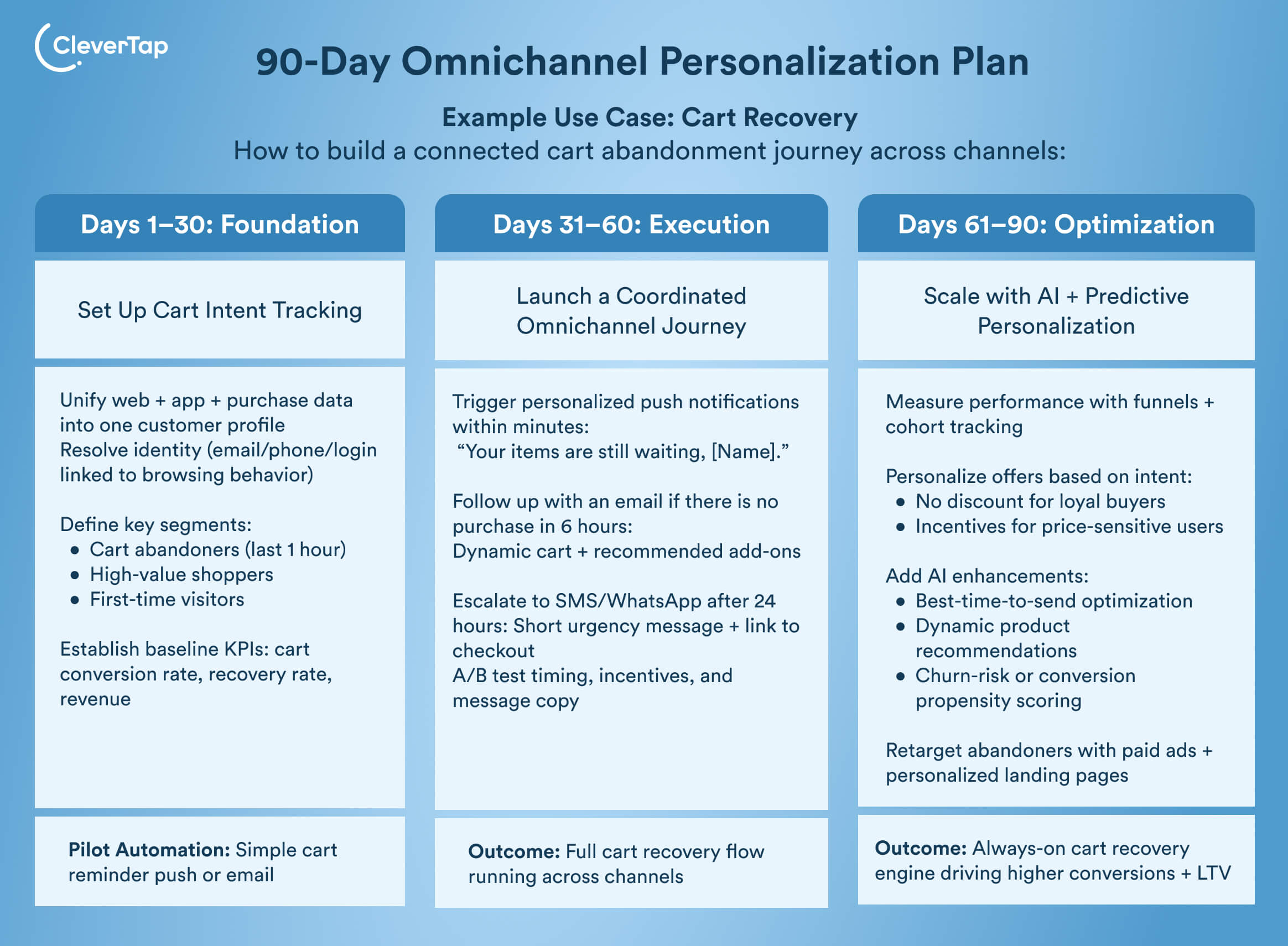
Unify your customer data across key systems, so every interaction feeds into a single profile. Set up identity resolution by linking logins, email addresses, and phone numbers. Define core segments (new vs. returning, high-intent vs. dormant) and establish baseline KPIs, such as conversion, retention, and active users.
Launch 1–2 pilot automations, such as a welcome series or cart-abandon push, to validate the setup. By day 30, you should have unified profiles and live automated messaging.
Days 31–60: Execution
Roll out coordinated, behavior-triggered journeys across channels. For example: send a personalized push after cart abandonment, follow up with email if there’s no action, and escalate to SMS if needed.
Begin A/B testing messaging and timing, monitor results closely, and expand into additional use cases like churn prevention. By day 60, multiple automated journeys should be running across channels, driven by real-time behavior.
Days 61–90: Optimization
Measure performance using funnels, cohorts, and channel-level ROI. Double down on what works, refine underperforming flows, and introduce advanced personalization—real-time triggers, send-time optimization, dynamic recommendations, and predictive scoring (churn or conversion propensity).
Start integrating paid channels through CDP-powered retargeting. By day 90, you’ll have a repeatable omnichannel personalization engine delivering measurable lifts in revenue, retention, and customer lifetime value.
Measuring the ROI of Omnichannel Personalization
Omnichannel personalization is only valuable if it drives measurable business impact. The strongest teams track ROI across three core areas:
- Conversion lift: Measure increases in purchases, sign-ups, or upgrades versus control groups.
- Retention & LTV: Track repeat engagement, reduced churn, and growth in customer lifetime value over time.
- Engagement depth: Look beyond clicks to multi-channel activity, session frequency, and sustained usage.
Attribution Challenges in Omnichannel Personalization
Attribution remains tricky in omnichannel journeys where multiple touchpoints influence a single conversion. Customers may engage with ads, emails, and search before purchasing, making single-channel credit misleading. With CleverTap’s multi-touch attribution models, funnels, and cohort analysis, you can estimate impact, supported by clean UTM tagging and unified interaction data in your CDP.
Even if attribution isn’t perfect, prioritize outcome metrics, such as CLV, retention, repeat purchases, and overall lift, over pinpointing one “winning” channel.
What to Look for in an Omnichannel Personalization Platform
Omnichannel personalization requires intelligence, orchestration, and scale. Here are the core capabilities to look for, and how CleverTap enables them:
Real-Time Data Ingestion: Omnichannel personalization depends on immediacy. The platform must capture customer behavior as it happens and make that data instantly available for activation. With CleverTap, brands can unify customer interactions across web, mobile, and offline systems into a single real-time profile. This enables timely triggers such as cart recovery, onboarding nudges, and in-session recommendations.
AI-Driven Segmentation and Decisioning: Static segments and manual rules can’t keep up with dynamic customer intent. The most effective platforms use AI to continuously learn from behavior, predict next actions, and automatically optimize journeys.
CleverTap’s CleverAI™ powers predictive segmentation, propensity scoring, churn risk detection, and next-best-action decisioning. Instead of relying on fixed cohorts, marketers can engage customers based on live intent.
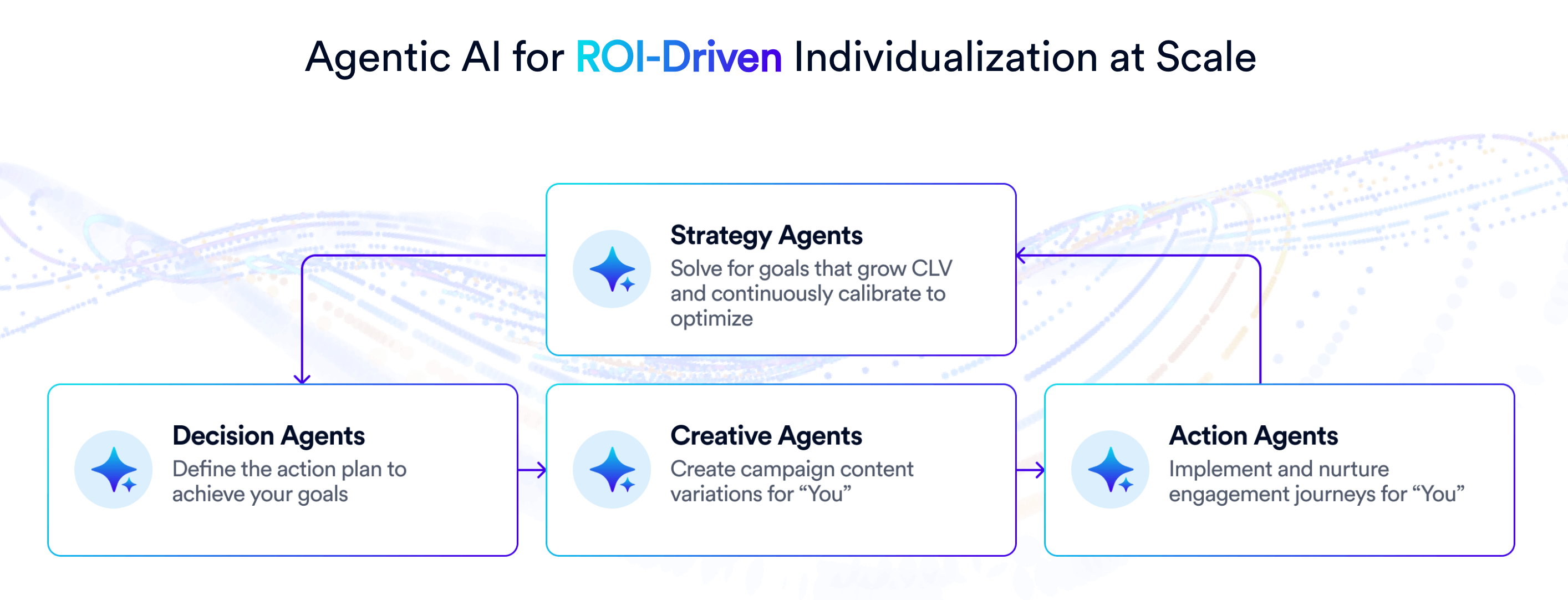
Native Channel Integrations and Orchestration: True omnichannel personalization requires more than sending messages across channels. It requires coordination. Customers should experience one connected journey, whether they’re on email, push, SMS, WhatsApp, or in-app.
CleverTap provides native engagement channels and journey orchestration in one platform, making it easy to deliver consistent personalization across touchpoints. Marketers can build cross-channel flows where the next message adapts automatically, for example, switching from email to WhatsApp if a user doesn’t engage, or triggering in-app experiences immediately after a purchase.
Continuous Optimization Built In: The best omnichannel personalization platforms learn and improve over time. Campaign performance should feed back into the system, so experiences become smarter with every interaction. CleverTap supports closed-loop optimization through real-time analytics, experimentation, and AI-driven recommendations, helping teams continuously refine engagement strategies without adding manual complexity.
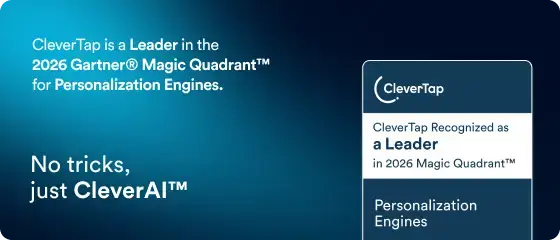
Discover why CleverTap is a Leader in the 2026 Gartner® Magic Quadrant™ for Personalization Engines. Get the full report.
Frequently Asked Questions (FAQs) about Omnichannel Personalization
Q1. What’s the difference between multichannel and omnichannel personalization?
Multichannel uses multiple channels independently. Omnichannel connects all channels with shared data to deliver a seamless, consistent customer experience.
Q2. How do I measure the impact of personalization?
Track metrics like conversion rate lift, retention, and customer lifetime value. Use A/B testing and cohort analysis to compare personalized experiences against control groups.
Q3. What features should I look for in an omnichannel personalization solution?
Look for unified customer data, real-time segmentation, cross-channel campaign orchestration, personalization engines, and strong analytics.
Q4. Do I need AI for omnichannel personalization?
AI isn’t required, but it helps at scale. Rules work for simple use cases, while AI enables predictive recommendations and next-best-action decisioning.
Q5. How do I prove ROI on personalization?
Measure revenue and retention lift between personalized and non-personalized cohorts. Focus on improvements in conversion rates, repeat purchases, and CLV.
Make Omnichannel Personalization the Norm
The right omnichannel personalization platform combines real-time customer data, AI intelligence, and seamless cross-channel activation, and that’s exactly what CleverTap is built to deliver at scale.

Agnishwar Banerjee 
Leads content and digital marketing.Expert in SaaS sales, marketing and GTM strategies.
Free Customer Engagement Guides
Join our newsletter for actionable tips and proven strategies to grow your business and engage your customers.