











































Table of Contents
Categories
Most Popular


Location-based marketing has become central to digital strategy as consumers move seamlessly between online and physical spaces. Brands that understand where their audiences are can deliver more relevant messages, reduce wasted spend, and improve customer experience.
Location-based marketing uses real-time or inferred location data to deliver contextually relevant messages to users based on where they are or have been.
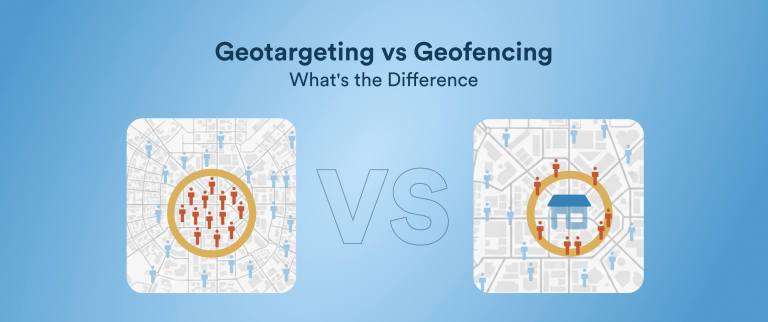
Geotargeting and geofencing marketing are widely used yet frequently confused because both rely on location data. In practice, they serve different purposes, operate at different levels of precision, and work best at different points in the customer journey.
This comparison article explains what each approach means, how it works, where it excels, and how marketers can choose, implement, and measure the right tactic for their campaigns.
What Is Geotargeting?
Geotargeting is a marketing technique that delivers content, ads, or messages to users based on their geographic location, such as country, state, city, ZIP code, or a defined radius around a point. Instead of targeting individuals, geotargeting focuses on places.
Geotargeting targets users based on their location, focusing on geographic segments rather than real-time movement. If a user falls within a selected location boundary, they become eligible for the campaign. This makes geotargeting well-suited for market-level targeting rather than individual, real-time interactions.
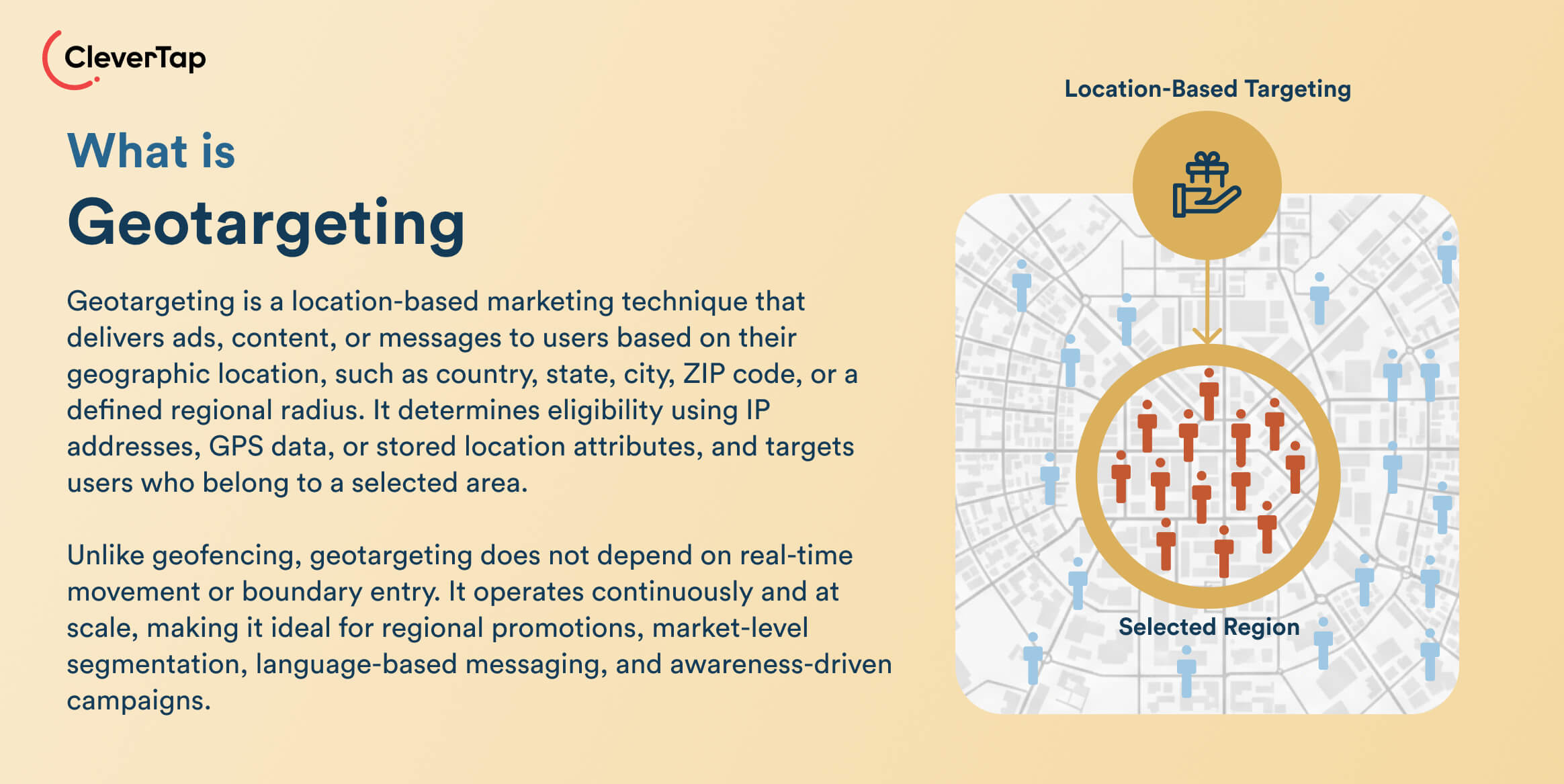
Technically, geotargeting typically relies on IP addresses, GPS signals, Wi-Fi networks, or device location data to determine where a user is. Ad platforms like Google, Meta, and programmatic networks allow marketers to define geographic filters before serving ads. Similarly, marketing automation platforms like CleverTap allow brands to segment users based on saved location attributes such as city, country, or region and send targeted push notifications, email campaigns, or in-app messages accordingly.
A key characteristic of geotargeting is that it does not require real-time movement tracking. A user does not need to enter or exit a boundary to receive a message; they simply need to be located in or associated with a particular geography. For example, a fintech app might geotarget users in Tier-2 cities with special offers, or an e-commerce brand might promote winter clothing only in colder regions.
Common marketing applications of geotargeting include local awareness campaigns, city-specific promotions, regional product launches, language-based messaging, and demand generation in high-priority markets. It is also widely used in performance marketing to reduce wasted ad spend by excluding irrelevant regions.
Geotargeting works best when the objective is reach, relevance, and scale rather than immediacy. It is particularly useful for top-of-funnel (TOFU) and mid-funnel (MOFU) campaigns where marketers want to educate, nurture, or build familiarity over time.
What Is Geofencing?
Geofencing marketing is a precise and real-time location-based marketing technique that creates a virtual boundary or “fence” around a specific physical location. When a user with a mobile app crosses into or out of this boundary, it triggers an automated action such as a push notification, SMS, or in-app message. Unlike geotargeting, which is area-based, geofencing is event-based.
Geofencing relies on GPS, Wi-Fi triangulation, Bluetooth beacons, or cell tower signals to detect when a device enters or exits a predefined radius. Most geofencing implementations are app-based and rely on location permissions to function effectively. Platforms with geofencing solutions allow marketers to set up geofences around stores, malls, airports, stadiums, or competitor locations and trigger contextual messages in real time.
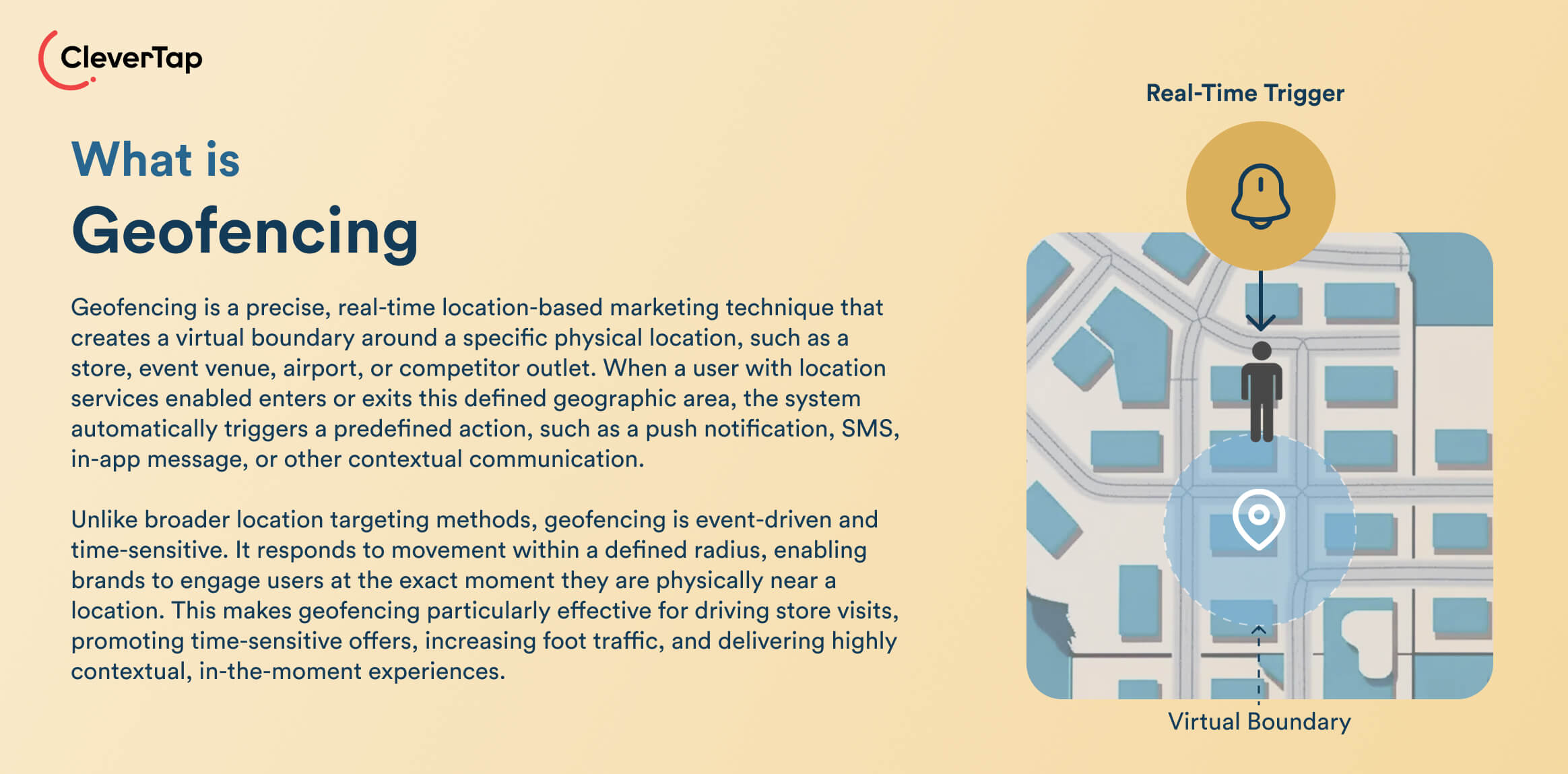
The goal of geofencing is not long-term nurturing but in-the-moment engagement. For example, a retail brand can send a discount coupon when a customer walks near a store. Similarly, a food delivery app might send lunch offers when users enter a business district around noon.
Common applications of geofencing include foot-traffic driving, event marketing, competitor conquesting, and contextual engagement. Retailers often use geofencing to increase store visits by sending personalized offers to nearby users.
Geofencing works best when timing is critical. If your objective is to influence behavior at a specific moment, such as walking into a store, attending an event, or passing a competitor, geofencing is often the more effective approach. However, it requires user consent for location tracking and works primarily through mobile apps, making it less suitable for purely web-based campaigns.
Explore now: 10 Best Geofencing Marketing Platforms Compared [+How to Choose the Best]
Geotargeting vs Geofencing: Key Differences Explained
The difference between geotargeting and geofencing comes down to static vs dynamic targeting. Geotargeting is about who belongs to a place, while geofencing is about who is moving through a place at this moment. This distinction affects targeting logic, timing, and campaign execution.
Geotargeting is inclusion-based, which means users qualify if they fall within a defined geography. Geofencing is trigger-based, meaning something must happen, like a user entering or exiting a boundary, to activate the message. This makes geofencing far more precise but also more restrictive.
Timing is another major differentiator. Geotargeting campaigns can run continuously over weeks or months, allowing repeated exposure and gradual influence. Geofencing campaigns are time-sensitive. If the user leaves the area before engaging, the immediate opportunity to influence behavior is reduced. This makes delivery speed and relevance critical in geofencing vs geotargeting.
They also differ in terms of scalability. Geotargeting can cover millions of users across cities or countries, making it ideal for large-scale campaigns. Geofencing, by contrast, is highly localized and may only reach hundreds or thousands of users at a time, but with much higher relevance.
From a cost and setup perspective, geotargeting is easier to implement through standard ad platforms. Geofencing requires more technical setup, including mapping locations, defining radii, and integrating mobile SDKs.
Here’s a side-by-side comparison:
| Feature | Geotargeting | Geofencing |
| Target type | Region-based | Location-boundary-based |
| Trigger | User resides in an area | User enters or exits an area |
| Precision | Medium | High |
| Timing | Long-term | Real-time |
| Scale | Large | Localized |
| Channels | Ads, email, push | Primarily mobile push |
| Setup complexity | Low | Moderate |
| Best for | Awareness | Conversion |
Ultimately, the choice between geofencing vs geotargeting depends on whether your goal is broad influence or immediate action. Both strategies are valuable, but in different marketing contexts.
Related reads: What are Location-Based Push Notifications? How They Work and Best Use Cases
Common Marketing Use Cases for Geotargeting vs Geofencing
While the differences are clear in theory, their impact becomes more evident in real-world use cases.
Geotargeting is most effective for awareness and acquisition. Brands launching in new markets often use geotargeting to build visibility before opening stores or rolling out services. For example, an e-commerce brand entering a new city might run geotargeted ads to educate users about delivery benefits, promotions, and trust signals.
A strong illustration of this approach comes from SonyLIV, which used location-based audience segmentation within CleverTap to tailor content and engagement by region. By aligning recommendations, promotions, and messaging with local preferences, the brand increased the relevance of its campaigns and strengthened engagement across markets. This demonstrates how geotargeting supports long-term demand generation rather than moment-of-need conversion.
Geofencing, in contrast, is designed for in-the-moment engagement. Retailers commonly use it to trigger offers when users are physically near a store. Food and quick-commerce brands deploy it in high-footfall business districts around meal times, while event companies use it to communicate with attendees on-site.
Many high-performing brands combine both approaches in a layered strategy. A retailer may geotarget an entire city with brand-building campaigns while simultaneously geofencing individual store locations for conversion-focused notifications.
How to Choose Between Geotargeting and Geofencing
Choosing between geotargeting and geofencing is influenced by intent, context, and execution. It depends on how your campaign aligns with user intent, channel readiness, and timing. Use the following decision framework and criteria to make the right call:
- Campaign objective: Use geotargeting for awareness, consideration, and lead generation, and use geofencing for immediate action such as store visits, app usage, or event engagement.
- User mindset: If the purchase requires research or comparison, lean toward geotargeting. If the buying behavior is impulse-driven, such as coffee, quick shopping, or food delivery, prioritize geofencing.
- Channel readiness: If your primary channels are ads, email, or web, geotargeting is simpler and scalable. On the other hand, if you have a strong mobile app with location permissions, geofencing becomes highly effective.
- Scale vs precision: Choose geotargeting if you need a broad reach across cities or regions. Geofencing is suited for hyper-local influence near a specific place.
Ask these questions to confirm the right approach:
- Do I want reach or immediacy?
- Do users need time to decide, or can they act now?
- Do I have reliable real-time location data?
- Am I optimizing for scale or local impact?
Common misapplications to avoid:
- Avoid using geofencing for broad awareness campaigns because its hyper-local nature limits reach and makes it inefficient for top-of-funnel goals.
- Do not rely on geotargeting for real-time engagement, as it is designed for broader, ongoing targeting rather than moment-based interactions.
- Do not deploy geofencing unless you are delivering clear, relevant value to the user, as you risk appearing intrusive or spammy.
- Do not use geotargeting without meaningful local relevance, as generic messaging undermines trust and reduces campaign effectiveness.
Also read: Top 6 Location-Based Marketing Platforms Compared: Which is the Best?
Measuring Performance for Location-Based Campaigns
Measuring success in location-based marketing depends on whether you are optimizing for reach or immediacy. Because geotargeting and geofencing serve different intents, the key performance indicators (KPIs) and attribution models also differ.
KPIs that matter for geotargeting campaigns
Geotargeting performance should be evaluated using broader, market-level metrics that reflect reach and sustained engagement. These typically include the following:
- Impressions and reach within target regions
- Click-through rate (CTR) and cost per click (CPC)
- Conversions and cost per acquisition (CPA)
- Regional performance lift (city vs city comparisons)
- Incremental website or app engagement from targeted areas
Marketers should compare results across cities, states, or regions to identify high-performing markets and allocate budget accordingly. Longer attribution windows are appropriate, as users may convert days or weeks after initial exposure.
KPIs that matter for geofencing campaigns
Geofencing requires more granular, real-time metrics. Key indicators include the following:
- Number of geofence entries and exits
- Push notification delivery and open rates
- In-app engagement after entry
- Coupon redemptions or offer claims
- Store visits or proximity-based conversions
- Attributed revenue per visit
Because geofencing is designed to influence immediate behavior, measurement focuses on short attribution windows and near-term outcomes.
When the objective is broad reach, measurement should prioritize scale-oriented metrics such as impressions, reach, and regional lift, which align closely with geotargeting strategies.
On the other hand, when the objective is to drive immediate action, measurement should center on behavioral outcomes such as engagement, visits, and conversions, which are more relevant for geofencing campaigns.
As a best practice, marketers should conduct A/B tests by comparing users who received geofence-triggered messages with a control group to accurately quantify incremental impact.
How CleverTap Helps You Run Location-Based Campaigns and Measure Results
CleverTap is a customer engagement and retention platform that helps marketers combine location data with behavioral signals to run targeted, real-time campaigns and measure their impact across the customer lifecycle.
The platform supports both geotargeting and geofencing by leveraging location attributes stored in user profiles and real-time behavioral events, once the location data has been collected via the app, SDK, or your backend systems.
Instead of treating location as a standalone trigger, CleverTap integrates it with user intelligence such as purchase history, engagement patterns, and recency signals, making location-based campaigns more relevant and outcome-driven.
Target Users with Geotargeting (Where your users are)
In CleverTap, geotargeting is driven by stored location attributes within user profiles, such as city, region, or country, rather than real-time movement signals. Instead of manual campaign tagging, marketers can segment users by city, region, country, or market using these stored attributes, enabling precise targeting.
These segments are persistent and can be reused across campaigns, making geotargeting suitable for always-on, large-scale targeting. Marketers can further refine these audiences by combining location with behavioral data such as past purchases, browsing activity, recency, and engagement frequency.
This makes it easier to localize messaging at scale while maintaining a consistent data foundation across channels.
For example, a brand can target users in a specific city who have previously engaged with a product category, ensuring that location targeting is paired with demonstrated intent.
Trigger Actions with Geofencing (When your users are there)
In CleverTap, geofencing is event-driven and based on real-time location signals generated when a user enters or exits a defined geographic boundary. For geofencing, CleverTap allows brands to define virtual boundaries around physical locations using latitude, longitude, and radius parameters.
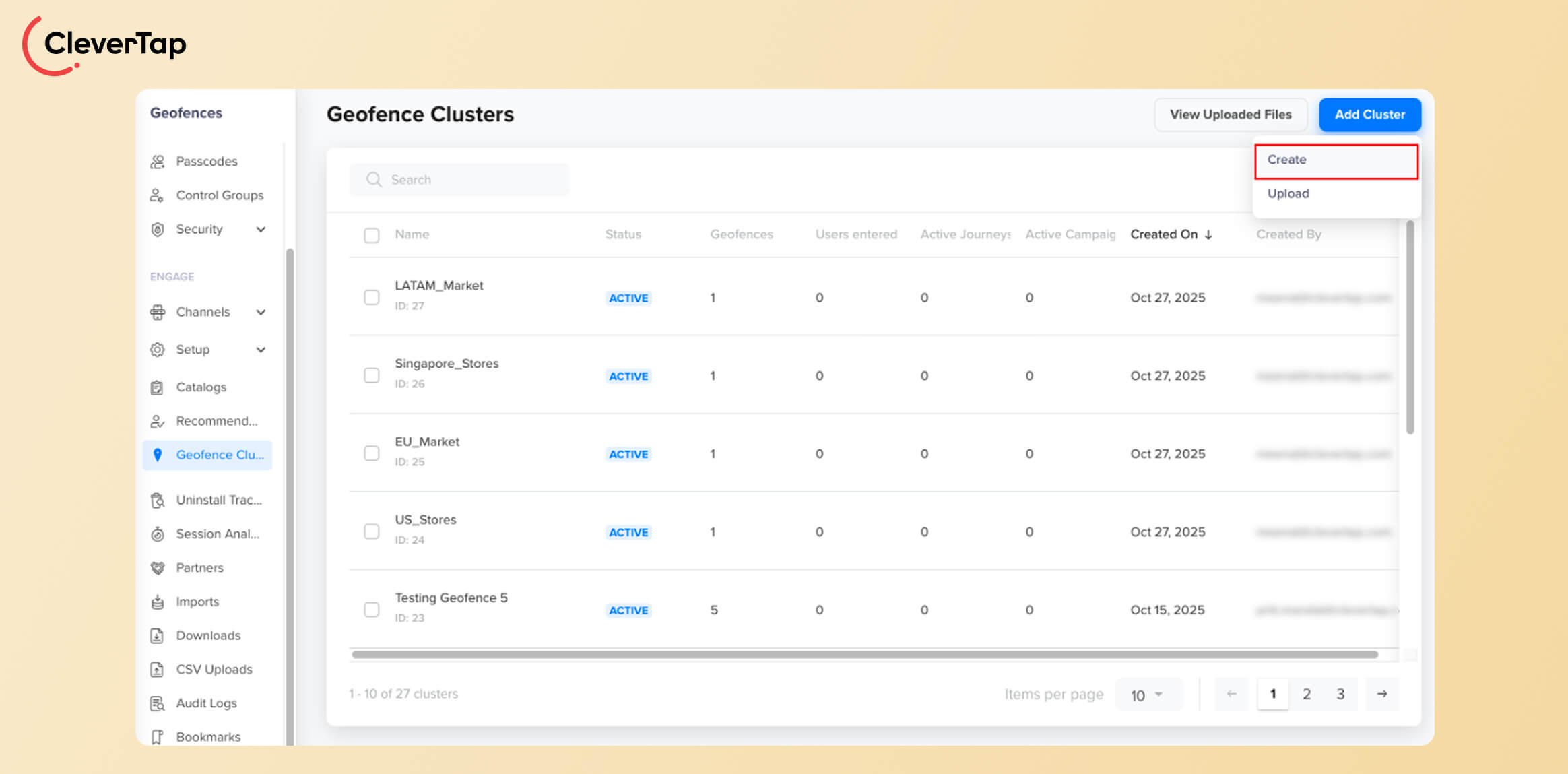
These boundaries can be configured as circles or polygons and grouped into clusters, enabling marketers to manage large networks of locations such as retail chains, venues, or service centers efficiently. Marketers can create clusters of geofences from the dashboard and configure campaigns that trigger when users enter or exit these zones.
Real-time events such as “geofence entered” and “geofence exited” act as immediate triggers that can initiate push notifications, in-app messages, or multi-step cross-channel journeys.
These signals power timely, contextual outreach, such as sending a push notification when a shopper approaches a store or an in-app message when an attendee arrives at an event venue. Because these triggers align with physical-world movement, they capture moments of high intent, making them effective for driving immediate actions such as store visits, offer redemption, or app engagement.
Orchestrate Experiences with Lifecycle Journeys (What happens next)
CleverTap’s Journey Builder enables marketers to orchestrate location-driven experiences that adapt based on user actions and context.
For example, a user entering a store’s geofence can receive a welcome message, and later be routed to a follow-up offer based on browsing or purchase behavior. Location events can be combined with other behavioral signals to create more intelligent, multi-step journeys.
In CleverTap, location events are not isolated triggers. They function as entry points, conditions, or decision nodes within journeys, allowing campaigns to evolve based on user behavior. A geofence entry can initiate a journey, while subsequent actions such as app engagement, store visit confirmation, or purchase can determine the next step in the flow.
This enables marketers to connect physical-world interactions with digital follow-ups, ensuring that engagement continues beyond the initial trigger.
As a result, geofencing becomes part of a continuous lifecycle strategy rather than a one-time notification, improving both engagement and conversion rates over time.
Improve Precision with CleverAI (Who to engage and how)
CleverTap’s CleverAI adds a predictive layer to location-based campaigns, helping marketers prioritize which users to engage and how to engage them. Instead of targeting every user within a region or geofence, CleverAI evaluates behavioral signals to identify users with the highest likelihood of responding or converting.
- Predictions score users based on their likelihood to engage, visit, or convert
- Decisioning determines the next-best action based on user context and past behavior
- Channel optimization selects the most effective channel for each user, such as push, email, or WhatsApp
This ensures that location-based campaigns are not only timely but also relevant, reducing unnecessary messaging and improving efficiency. By combining where a user is with how they behave, marketers can move from reactive messaging to more anticipatory, intent-driven engagement.
Measure What Actually Drives Results (Did it work?)
The platform comes with channel- and journey-level analytics that track delivery, engagement, and conversion outcomes. Marketers can compare performance across regions, geofences, and touchpoints, and apply short attribution windows for real-time triggers.
In CleverTap, location events are directly connected to downstream metrics such as visits, conversions, and repeat engagement, and feed into funnels, retention analysis, and revenue reporting. This helps teams understand which location-based interactions actually influence user behavior, not just which ones generate activity.
For example, marketers can measure whether a geofence-triggered campaign increases store visits or improves conversion rates over time. This shifts measurement from surface-level engagement metrics to business outcomes, making it easier to identify which campaigns, locations, and triggers drive meaningful impact.
By connecting location signals with behavioral data and lifecycle journeys, CleverTap enables marketers to turn location-based campaigns into a measurable, outcome-driven strategy.
See how CleverTap helps you turn location signals into measurable growth.
Blend geotargeting and geofencing for measurable growth
The difference between geotargeting and geofencing lies in scale, timing, and intent. Geotargeting is best for broad, strategic audience reach, while geofencing is ideal for real-time, context-driven engagement. Rather than choosing one over the other, high-performing teams use both as complementary tools.
If your goal is to build awareness and grow demand across regions, geotargeting will serve you well. If your goal is to influence behavior at the exact moment of opportunity, geofencing is the superior approach.
Platforms like CleverTap make it easier than ever to implement both strategies at scale, enabling brands to segment users by location, trigger timely messages, and measure impact accurately. Schedule a demo today!

Sagar Hatekar 
Leads product managementExpert in Marketing Analytics & Engagement platforms.
Free Customer Engagement Guides
Join our newsletter for actionable tips and proven strategies to grow your business and engage your customers.