







































Table of Contents
Categories
Most Popular


Today’s shoppers expect e-commerce personalization. They want retailers to recognize them as individuals.
About 71% of consumers expect personalized interactions, and 76% say they get frustrated when a brand treats them generically. AI-driven personalized product recommendations can account for roughly 35% of Amazon’s revenue, and retailers using tailored experiences see 7x more purchases than those relying on one-size-fits-all tactics.
In this guide, we’ll define e-commerce personalization, explain its key benefits with industry data, introduce a three-part personalization framework, outline 12 high-impact personalization strategies, and share real-world examples of personalization, along with a step-by-step implementation roadmap.
What Is E-Commerce Personalization?
E-commerce personalization is the practice of tailoring a shopper’s online experience to their individual preferences, behavior, and context. Instead of showing every visitor the same homepage, products, or offers, the site dynamically changes content (banners, product listings, messages, etc.) based on data about that customer.
This can include past browsing or purchase history, demographic or first-party data, and even contextual information such as location or device. The goal is to make each customer feel understood and valued, which boosts engagement and sales.
Personalization vs. Customization
Personalization and customization are often confused. Personalization is data-driven and automated. Retailers use analytics and AI to tailor experiences, such as recommending products based on past purchases. Customization gives shoppers control, allowing them to choose colors or build gift boxes. In short, personalization is done for customers; customization is done by them.
Key Benefits of Personalization in E-Commerce
Personalization for e-commerce delivers measurable business value. Key benefits include:
- Improves Conversion Rates: By showing shoppers the products and offers they care about, personalization removes guesswork and drives more purchases. Using tailored product recommendations can boost conversion rates by up to 8%.
- Boosts Average Order Value (AOV): Personalized cross-sells and upsells encourage customers to add more items. Data shows brands can increase AOV by about 12% by recommending complementary products and offers along a customer’s journey. This is like having a 1:1 sales assistant suggesting higher-value items, which naturally grows each order size.
- Raises Retention and Loyalty: Companies that nail e-commerce personalization see higher loyalty: 65% of consumers say they are more likely to remain loyal to a brand that understands and recognizes them.
- Reduces Friction in the Shopping Journey: Personalized experiences reduce friction by showing instantly relevant content and alerts. Real-time stock and price updates prevent bounce—72% of consumers expect accurate real-time inventory information—keeping shoppers moving smoothly toward checkout.
The E-Commerce Personalization Framework
Successful e-commerce personalization requires a foundation of data, a smart decision engine, and the ability to deliver tailored content anywhere. We can think of it as a three-pillar framework:
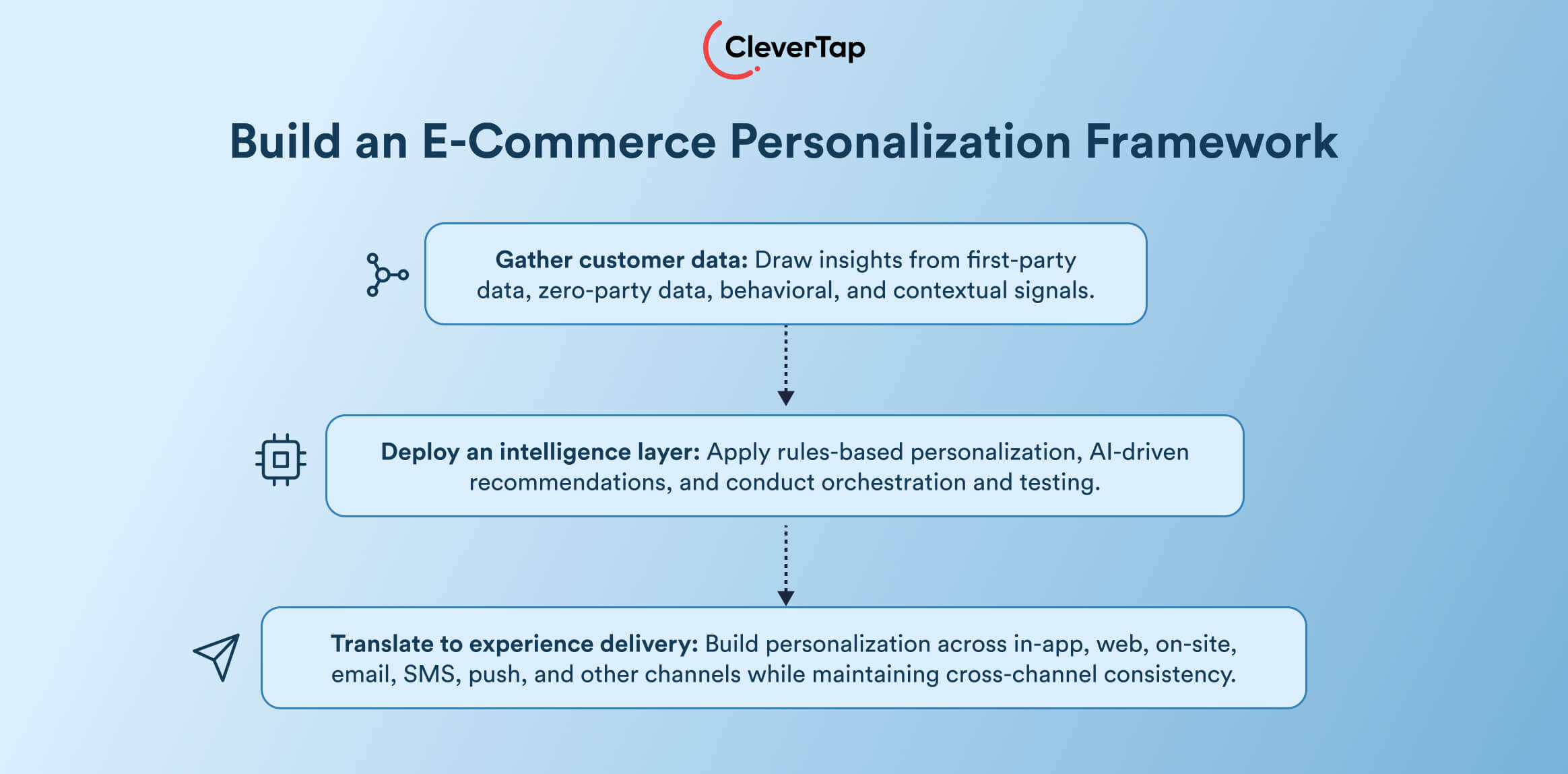
Pillar 1: Customer Data & Insights
The quality of your customer experience depends on how well you collect, connect, and interpret signals from your users. The most effective personalization strategies are built on four core data types:
- First-Party Data: Information customers generate through direct interactions with your brand: browsing behavior, purchase history, app activity, loyalty status, demographic details, and even offline data like in-store purchases or CRM records. This is the foundation of personalization because it reflects real engagement.
- Zero-Party Data: Preferences customers intentionally share to get a better experience, such as quiz responses, surveys, or communication preferences. Because this data is volunteered, it’s highly accurate and powerful for targeting.
- Behavioral Signals: Real-time actions like page views, searches, clicks, and cart activity. These signals reveal intent in the moment and let you personalize when interest is highest.
- Contextual Signals: Dynamic factors such as device type, location, time of day, referral source, or even weather. These inputs help anticipate needs and tailor experiences to the situation.
A customer data platform (CDP) brings these signals together into a unified profile. The first step is to audit and structure your data so it’s clean, accessible, and ready to power segmentation, triggers, and journeys.
Pillar 2: Intelligence Layer
The intelligence layer is where data turns into decisions. It determines what experience each customer sees and when. This layer can be powered by simple business logic, advanced AI, or, most often, a combination of both.
- Rules-Based Personalization: Marketer-defined “if/then” logic that’s easy to deploy and control. Examples include cart abandonment emails, geo-specific homepage banners, welcome journeys, or birthday offers. Rules are ideal for predictable, high-intent scenarios where clarity and speed matter.
- AI-Driven Recommendations: Machine learning models analyze large volumes of behavioral and transactional data to predict what each user is most likely to engage with next. Unlike static rules, AI adapts continuously, factoring in catalog-wide interactions and evolving preferences to deliver real-time product or content recommendations.
- Orchestration & Testing: A mature intelligence layer includes experimentation and optimization. A/B and multivariate testing, propensity and churn scoring, and event-based triggers help teams refine personalization and prove impact.
Most e-commerce personalization tools use a mix of rule templates and AI recommendation engines. The best approach is to define your use cases and then pick the right technology for each.
Pillar 3: Experience Delivery
Experience delivery is where e-commerce personalization becomes visible to the customer. It’s how insights and decisions translate into real, meaningful interactions across every touchpoint.
- On-Site and In-App or Web Personalization: Tailoring the digital experience in real time with dynamic homepage banners, personalized product listings, search results, and product detail recommendations. A returning shopper might immediately see categories they’ve explored before or product suggestions aligned with their browsing history.
- Marketing Channels (Email, SMS, Push, etc.): Activating personalization across email, push notifications, SMS/WhatsApp, and even ads. This could mean sending product recommendations based on recent behavior or timely offers triggered by intent signals like cart or browse abandonment.
- Cross-Channel Consistency: The key is making sure personalization is seamless wherever the customer engages. Ideally, the same data feeds all channels so that a user sees a coherent experience: e.g., they get a push reminder about the items left in their cart, and then see those same items featured on the website when they return. Modern personalization solutions often integrate with customer data platforms and campaign tools to activate data across email, the web, apps, and more.
When data and intelligence are tightly connected to delivery, brands achieve true 360-degree personalization that feels seamless, timely, and personal at scale.
12 Effective E-Commerce Personalization Strategies With Real-World Examples To Inspire You
Here are the 12 best e-commerce personalization strategies that many top retailers use. These leverage the pillars above to create more relevance and lift key metrics.
1. Personalized Homepage Banners
Your homepage is often the first and most valuable moment to establish relevance. Personalized hero banners adapt this prime space to each visitor’s context and intent, instead of showing the same message to everyone.
- New visitors can be introduced to bestsellers, brand value propositions, or first-order incentives that reduce friction and encourage exploration.
- Returning or logged-in users can see a “Welcome back” experience featuring categories or products they’ve previously browsed, helping them pick up where they left off.
- Contextual cues like location, seasonality, or timing can further refine banners: highlighting swimwear in summer, regional collections, or time-sensitive offers.
For instance, Saks Fifth Avenue introduced an AI-powered homepage tailored to each individual shopper. Every section, such as new arrivals and recommended categories, dynamically adjusts based on the customer’s browsing history and inferred preferences. This personalized homepage experience helped Saks drive an estimated 10% increase in conversions.
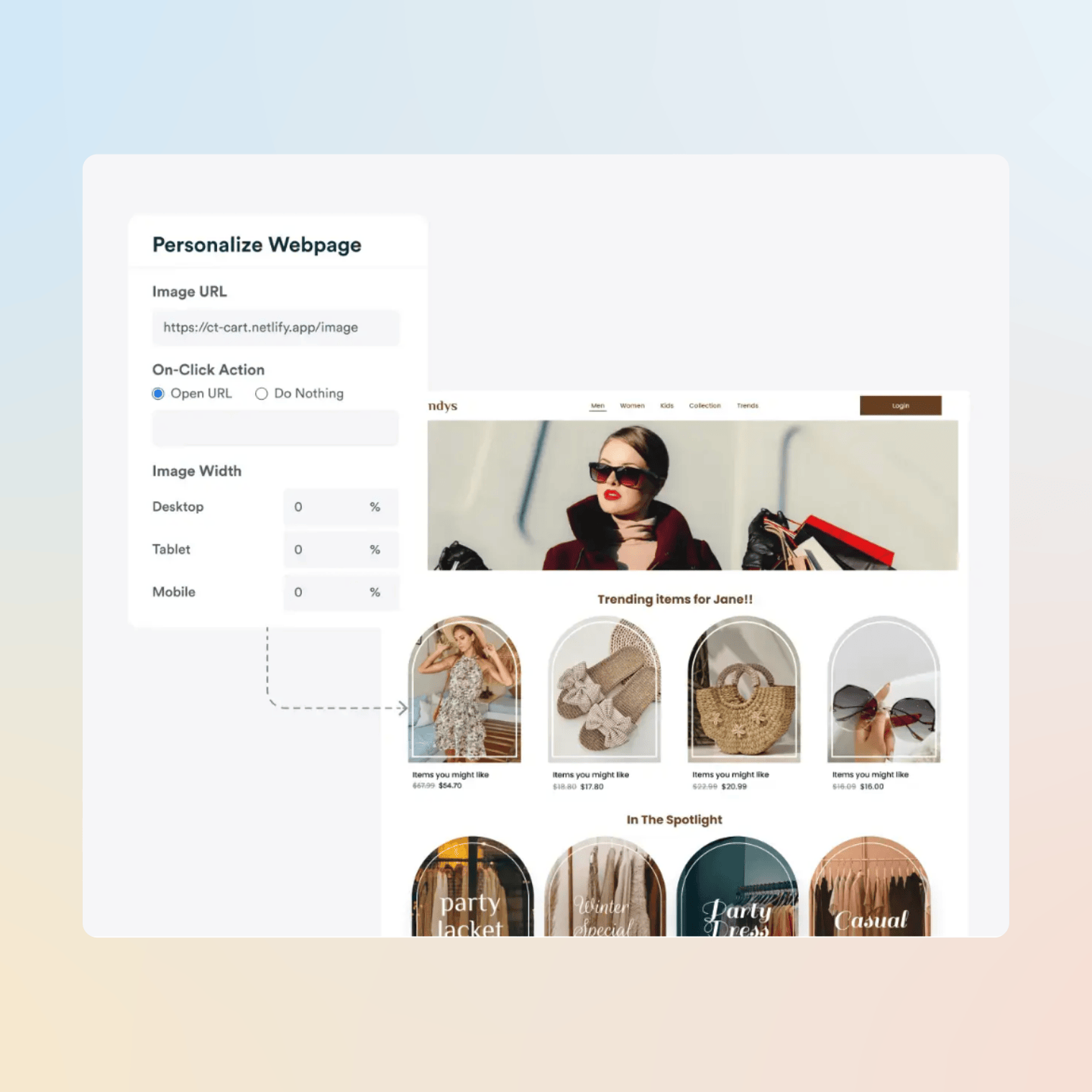
The CleverTap Website Visual Editor enables non-technical teams to update homepage banners, images, and text on the fly without code. You can create multiple banner variants tied to segments and launch them in real time to see what resonates best.
2. AI-Driven Product Recommendations
AI-driven recommendations personalize discovery by showing each shopper the products they’re most likely to care about, at every stage of the journey. Common placements include “You may also like” carousels on product pages, “Recommended for you” sections on the homepage or cart, and personalized product blocks in email or push campaigns.
Behind the scenes, machine learning models analyze browsing behavior, purchase history, and catalog interactions to identify patterns and predict intent, far beyond what static rules can achieve.
When done well, recommendations reduce decision fatigue, increase basket size, and accelerate conversions. Their impact is proven: industry benchmarks show that recommendation engines can drive a significant share of revenue, as seen with leaders like Amazon.

Similarly, ASOS reported a 75% jump in email click-throughs after implementing AI-powered product suggestions. By guiding users to products they are predisposed to buy, you not only improve conversion but also average order value.
CleverTap’s personalization engine can power real-time recommendation campaigns. For instance, you can use CleverAI to recommend products in push notifications or in-app messages.
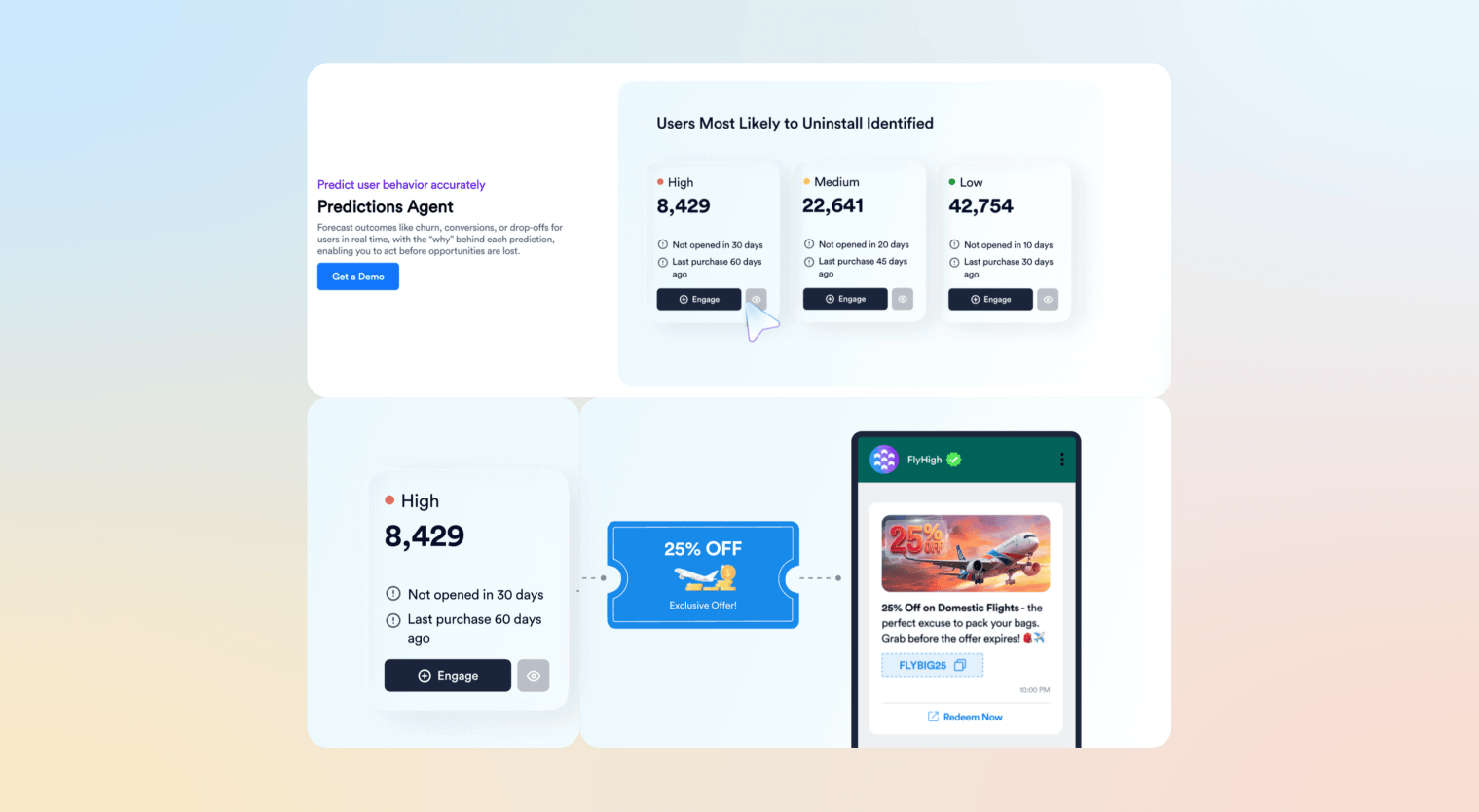
Learn how AI personalization works in e-commerce, along with strategies and examples.
3. Dynamic Onsite Search
Onsite search is one of the strongest signals of purchase intent, so personalizing it can dramatically impact conversions. Dynamic search adapts results in real time based on who the shopper is and how they’ve behaved, instead of treating every query the same.
If a customer frequently shops for women’s footwear, a search for “sneakers” can automatically prioritize women’s styles. Autocomplete suggestions can reflect regional demand or past interests, while search-driven category pages can arrive pre-filtered or sorted by known preferences such as brand, size, or price range.
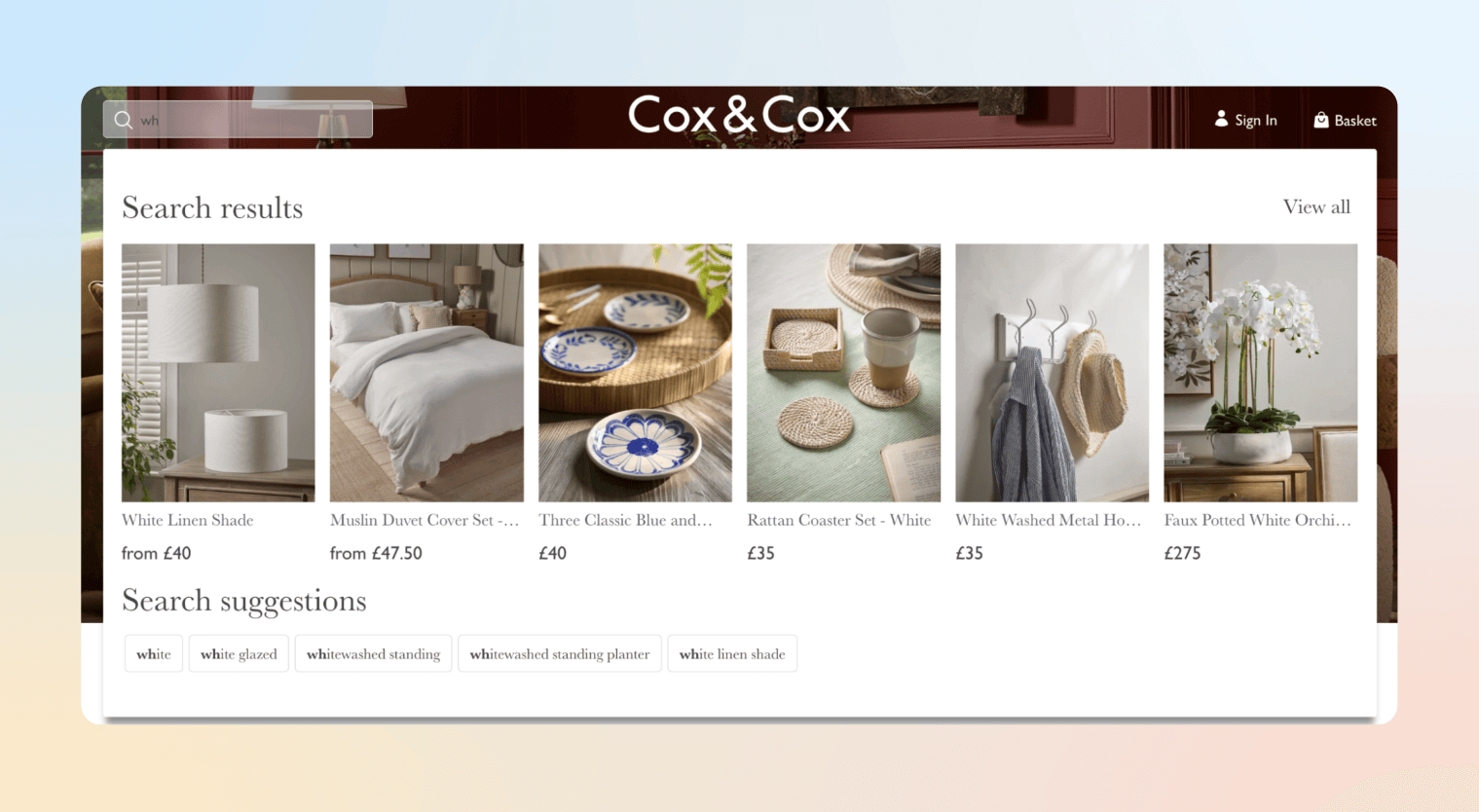
Cox & Cox offers a strong example of dynamic onsite search in action. When a shopper types “wh” into the search bar, the system intelligently interprets intent and surfaces suggestions like white furniture and white lighting shades, rather than generic keyword matches. This semantic, intent-aware approach helps shoppers discover relevant products faster, reducing friction and accelerating the path to purchase.
4. Personalized PDP Blocks
The product detail page (PDP) is a moment of peak intent. By dynamically adapting PDP elements to the shopper, brands can increase relevance without interrupting the purchase flow.
Personalized upsell and cross-sell widgets can highlight complementary or higher-value products aligned with the user’s browsing and purchase history. Testimonials and FAQs can surface content most relevant to the shopper’s concerns, while alternate hero images can reflect preferences like style, use case, or category affinity.
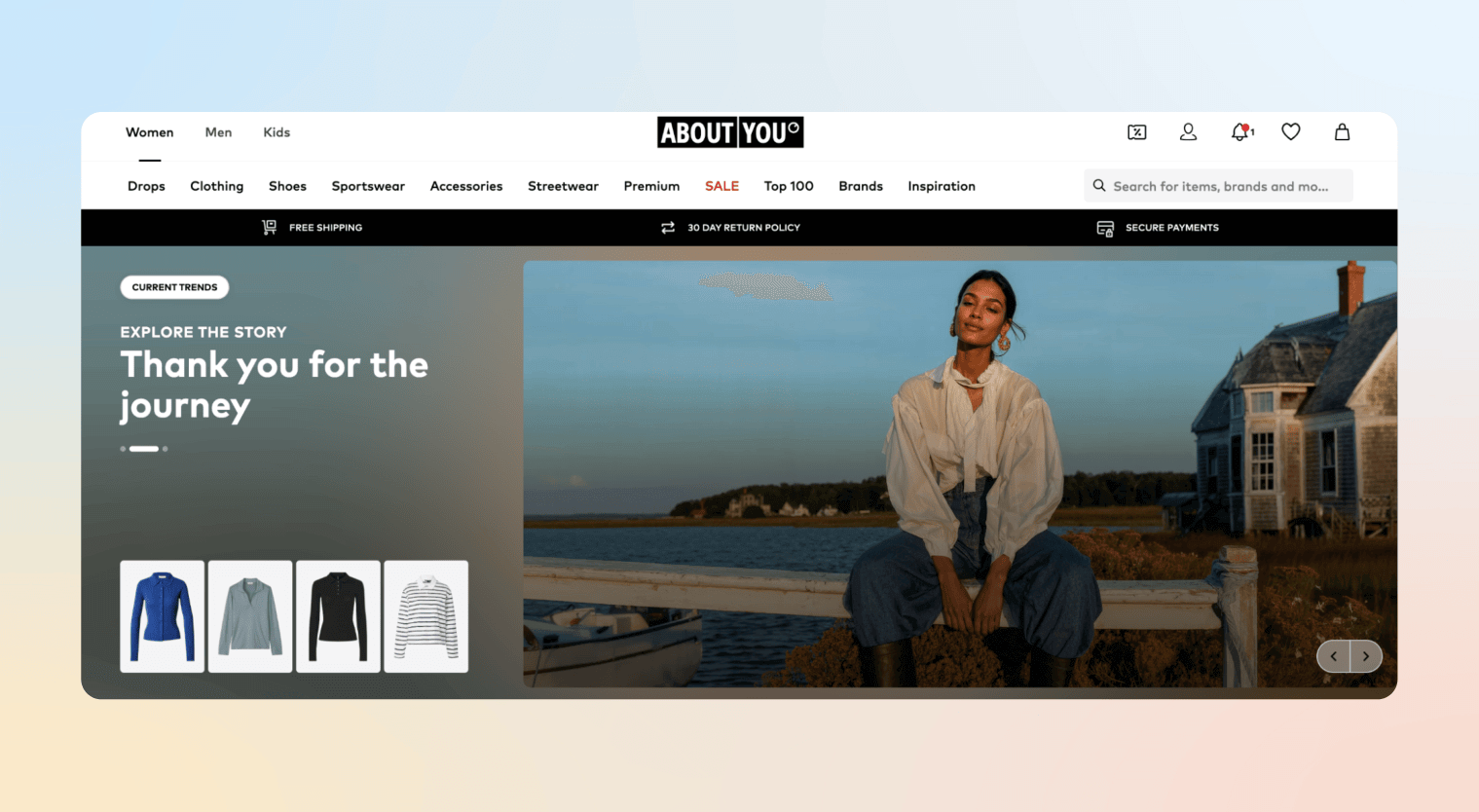
For example, European fashion retailer About You tailors the homepage and product feeds (including related product recommendations) to the individual’s previous likes, purchases, and browsing behavior.
The PDPs often reflect this personalization too, with tailored suggestions and dynamic content designed to match user interest profiles.
5. Cart Abandonment Personalization
E-commerce personalization allows you to trigger dynamic follow-ups when a customer abandons their cart. Cart abandonment emails or push notifications are a classic personalization use case: you automatically identify when a user adds items to the cart but leaves without buying, then send a reminder featuring those exact items. Personal touches can include:
- A visual of the abandoned items and a direct “return to cart” link.
- Personalized incentives (e.g., “We saved these items for you, plus here’s 10% off”).
- Cross-sell recommendations (“While you’re here, customers who abandoned this cart often also check out X”).
Such interventions dramatically recover otherwise-lost sales. Industry data shows 60% of shoppers return to complete a purchase after a personalized abandoned cart reminder.
A leading UAE e-commerce brand used CleverTap to trigger personalized cart abandonment journeys featuring abandoned product reminders, tailored offers, and contextual nudges across channels. By re-engaging high-intent shoppers at the right moment, the brand achieved a 4X increase in conversions, turning abandoned carts into completed purchases at scale.
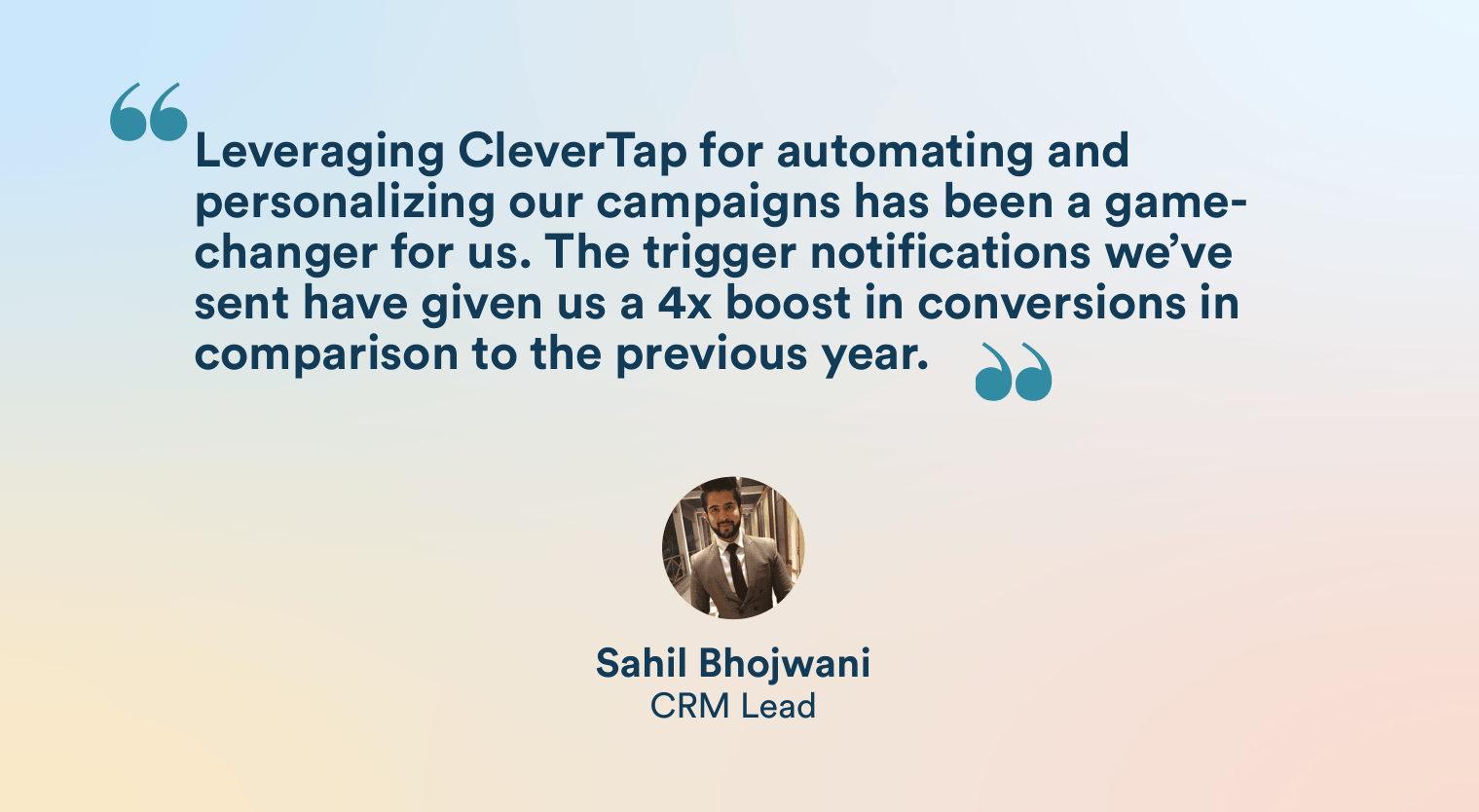
Read the full case study here.
6. Price-Drop & Back-in-Stock Personalization
As part of an e-commerce personalization strategy, you can notify customers about important changes to products they care about. Two key examples:
- Price-Drop Alerts: If an item a customer viewed or favorited goes on sale or has a price cut, send them a targeted notification. This leverages urgency to reactivate interest.
- Back-in-Stock Messages: When an out-of-stock item a user was interested in becomes available, automatically alert them.
These contextual triggers leverage timely data. The payoff is high: after all, 72% of consumers expect real-time inventory and price info, and 91% of shoppers won’t wait for an item to be restocked. By proactively informing the shopper, you capture sales that would otherwise slip away.
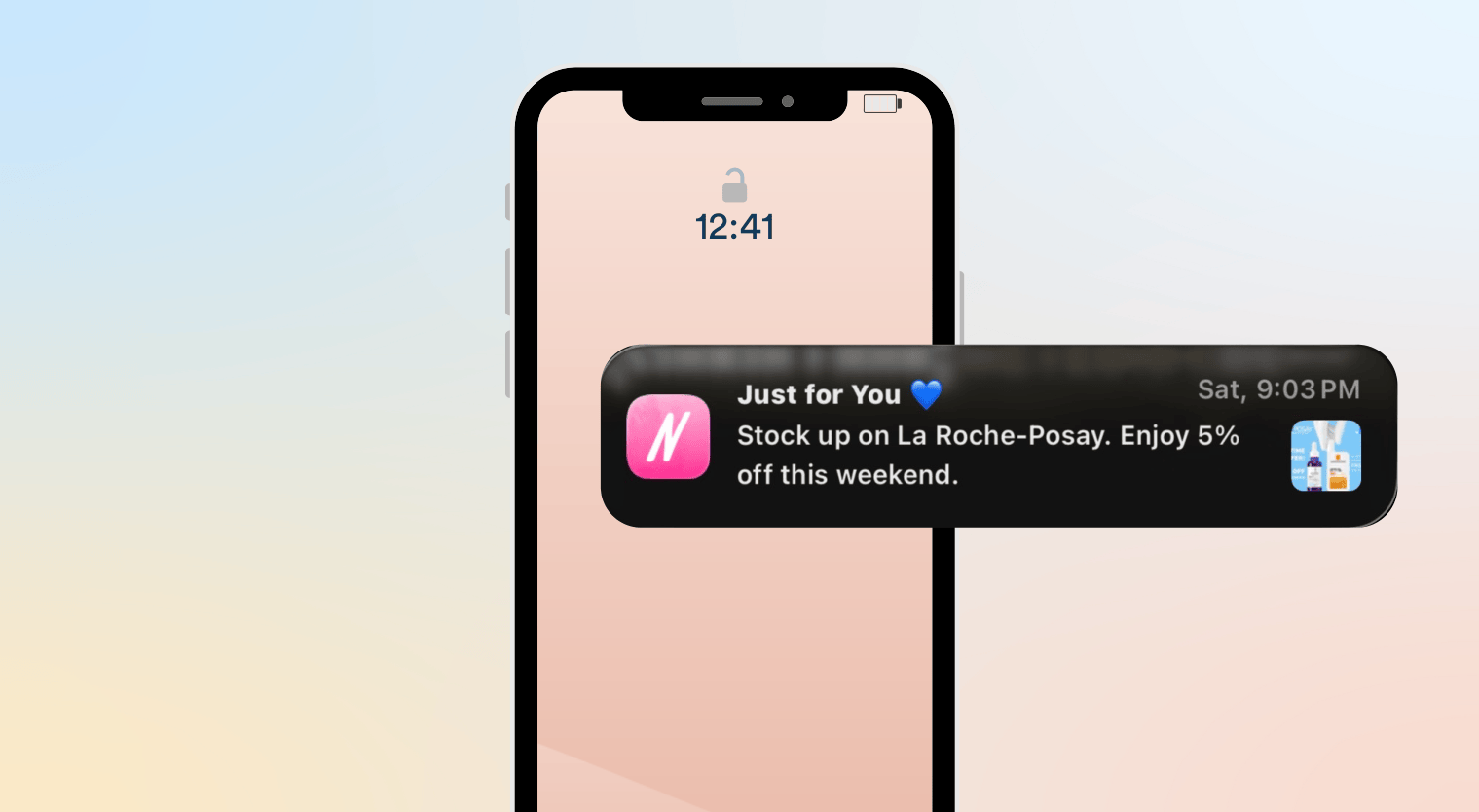
For example, Nykaa, an Indian e-commerce beauty brand, sends targeted restock push notifications with a personalized discount to engage shoppers.
7. First-Time Visitor Personalization
Using broad signals, you can personalize experiences for first-time visitors. Welcome them with sign-up incentives, highlight best-sellers or trending products, and tailor hero content based on referral source or location. This early engagement builds relevance, captures user data, and often improves first-visit conversion rates.
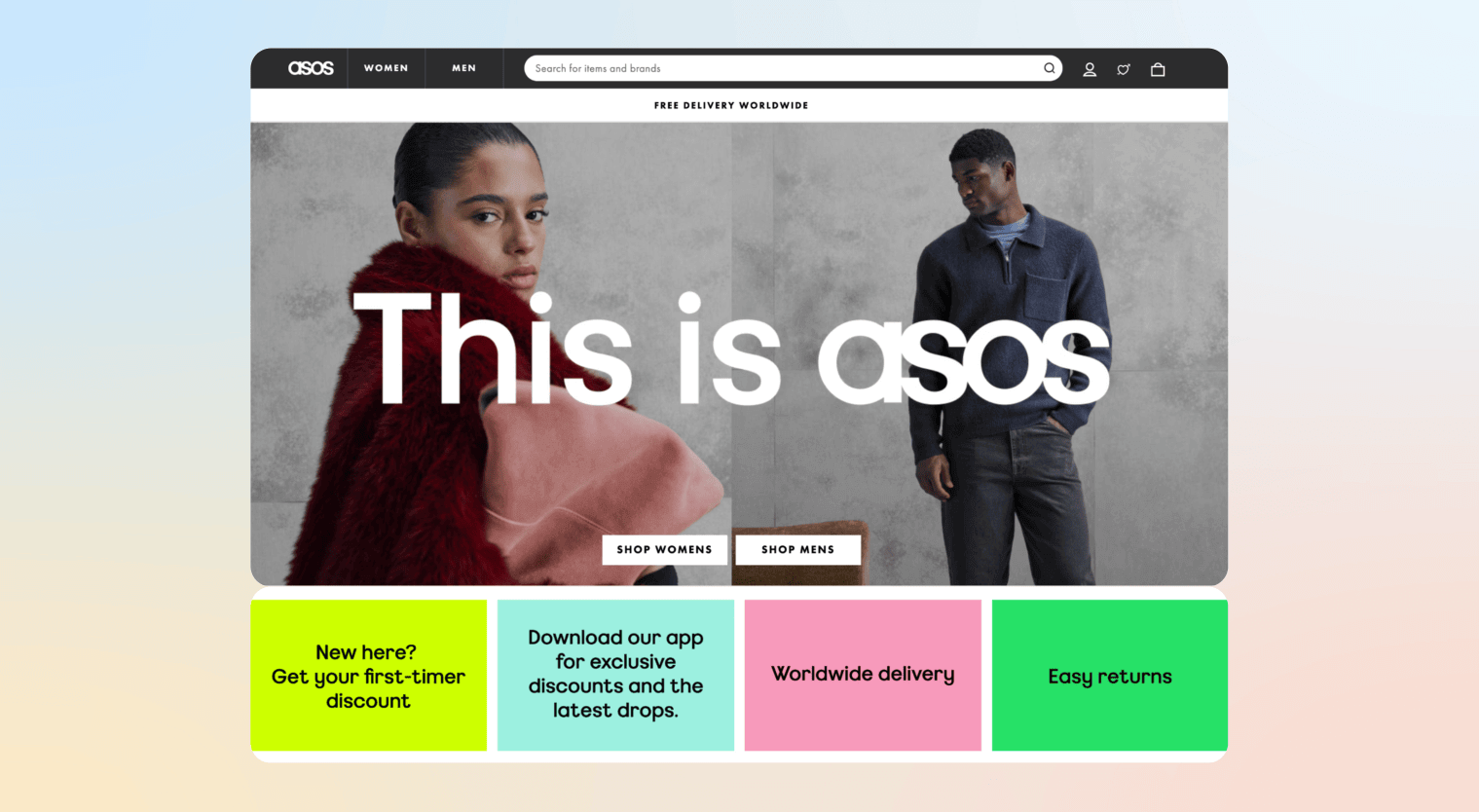
ASOS dynamically tailors its homepage and content for new visitors by introducing the brand. It adds a “new here?” banner with a first-timer discount right on the homepage.
Rather than presenting a generic storefront, ASOS highlights a diverse range of trending items and featured categories that resonate with broad shopper interests, helping convert first visits into deeper browsing and signups.
8. Personalized Email Flows
E-commerce personalization in email helps replace generic newsletters with journey-based emails, such as personalized welcome series, browse abandonment reminders, and re-engagement drips featuring products from the categories each customer prefers.
Personalized email campaigns dramatically outperform generic blasts. These have open rates that are 82% higher than non-personalized emails. Emails with a personalized subject line are 26% more likely to be opened.
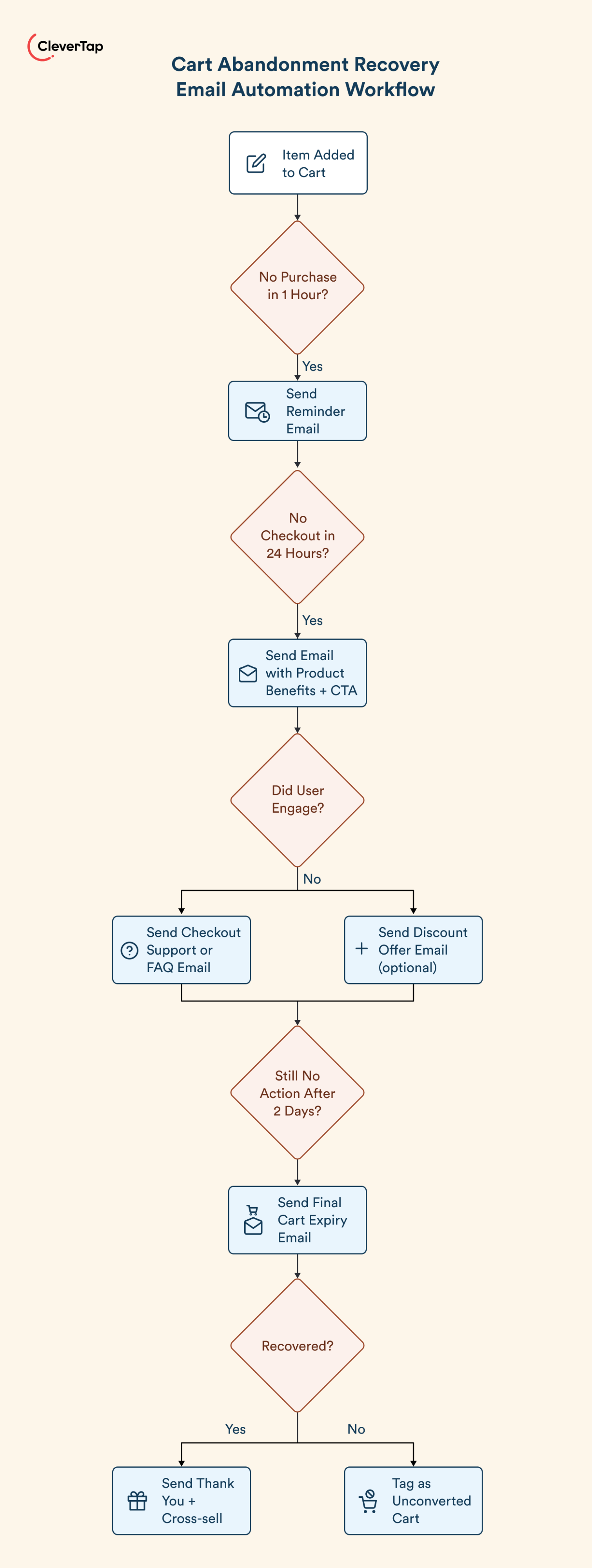
CleverTap’s email automation ties into its user profiles. You can build multi-step flows that insert personalized content (product recs, name, membership tier, etc.) for each recipient.
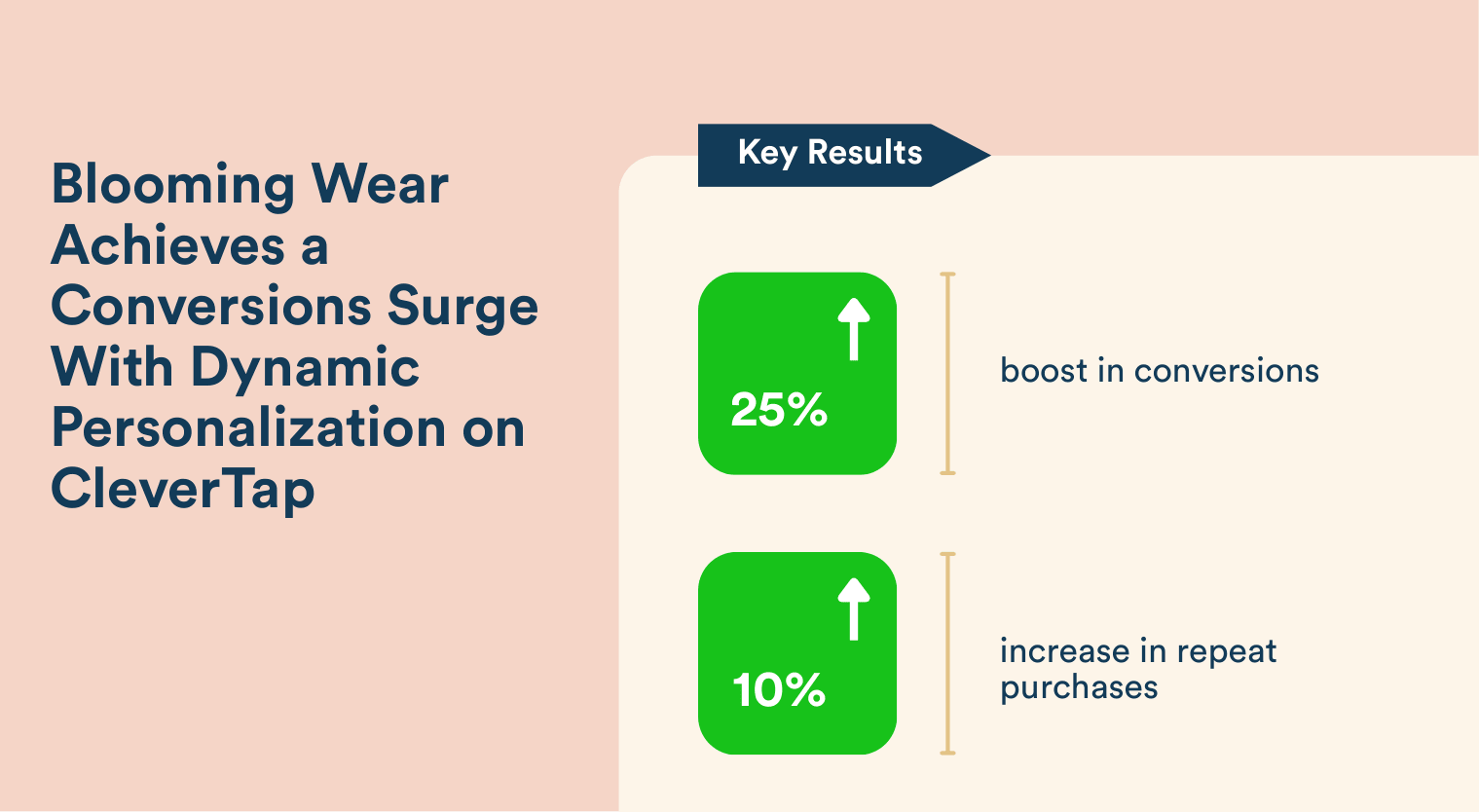
For example, Bloomingwear used CleverTap’s email automation and dynamic personalization to deliver behavior-driven email and omnichannel journeys, resulting in a 25% increase in conversions, demonstrating how personalized, automated emails consistently outperform generic campaigns.
Read the full case study here.
9. Retention-Focused Personalization
Drive repeat purchases by treating loyal customers as VIPs. Segment by purchase frequency, value, or loyalty tier, and personalize rewards reminders, tier-upgrade nudges, and exclusive perks.
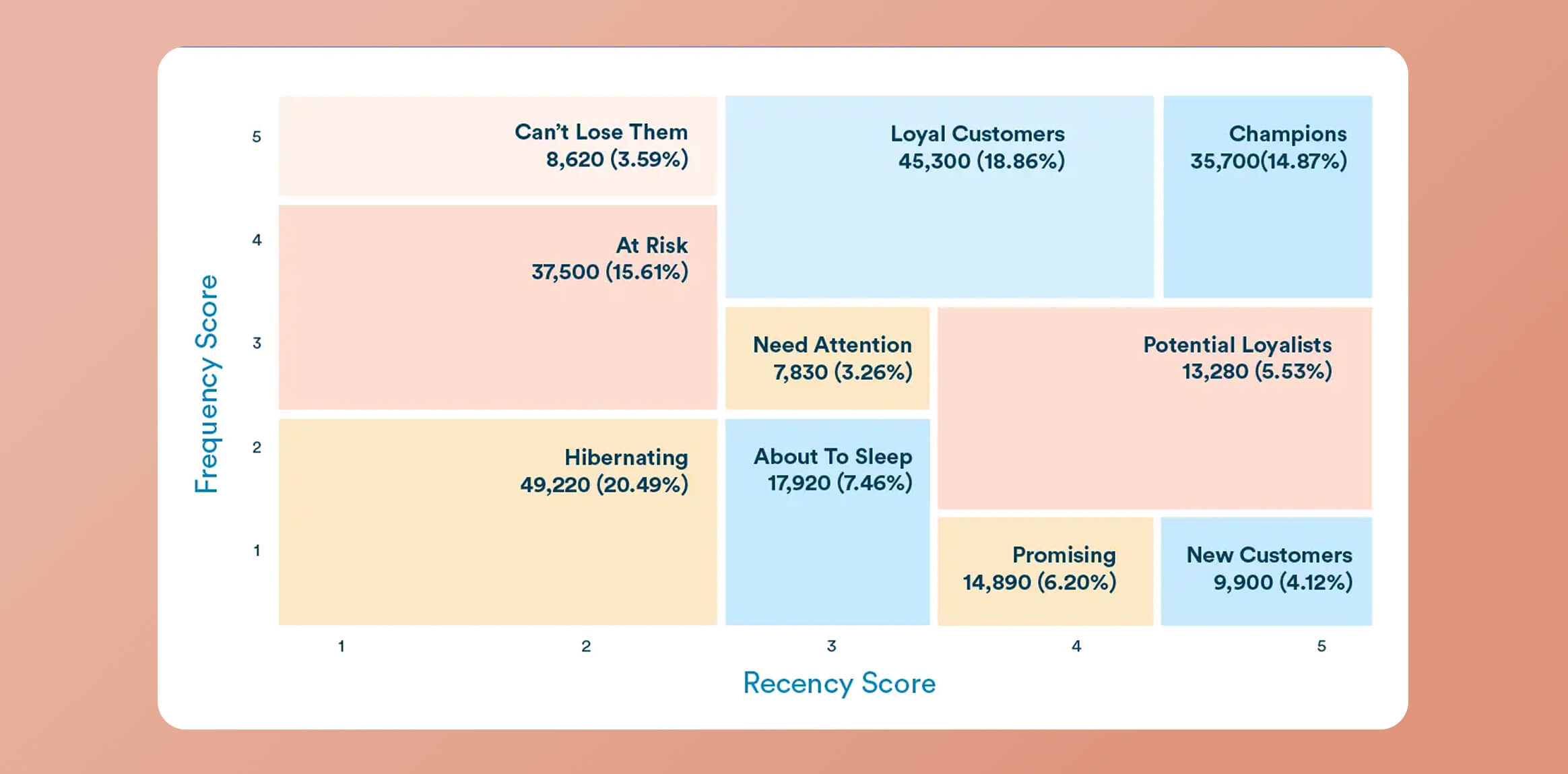
RFM analysis adds precision to this approach by identifying your best customers, customers at risk of churning, and those primed for reactivation. By tailoring messages based on how recently and often customers buy, and how much they spend, brands can prioritize high-impact retention actions. Loyalty-focused personalization builds emotional connection: loyalty members generate 12–18% more revenue than non-members.
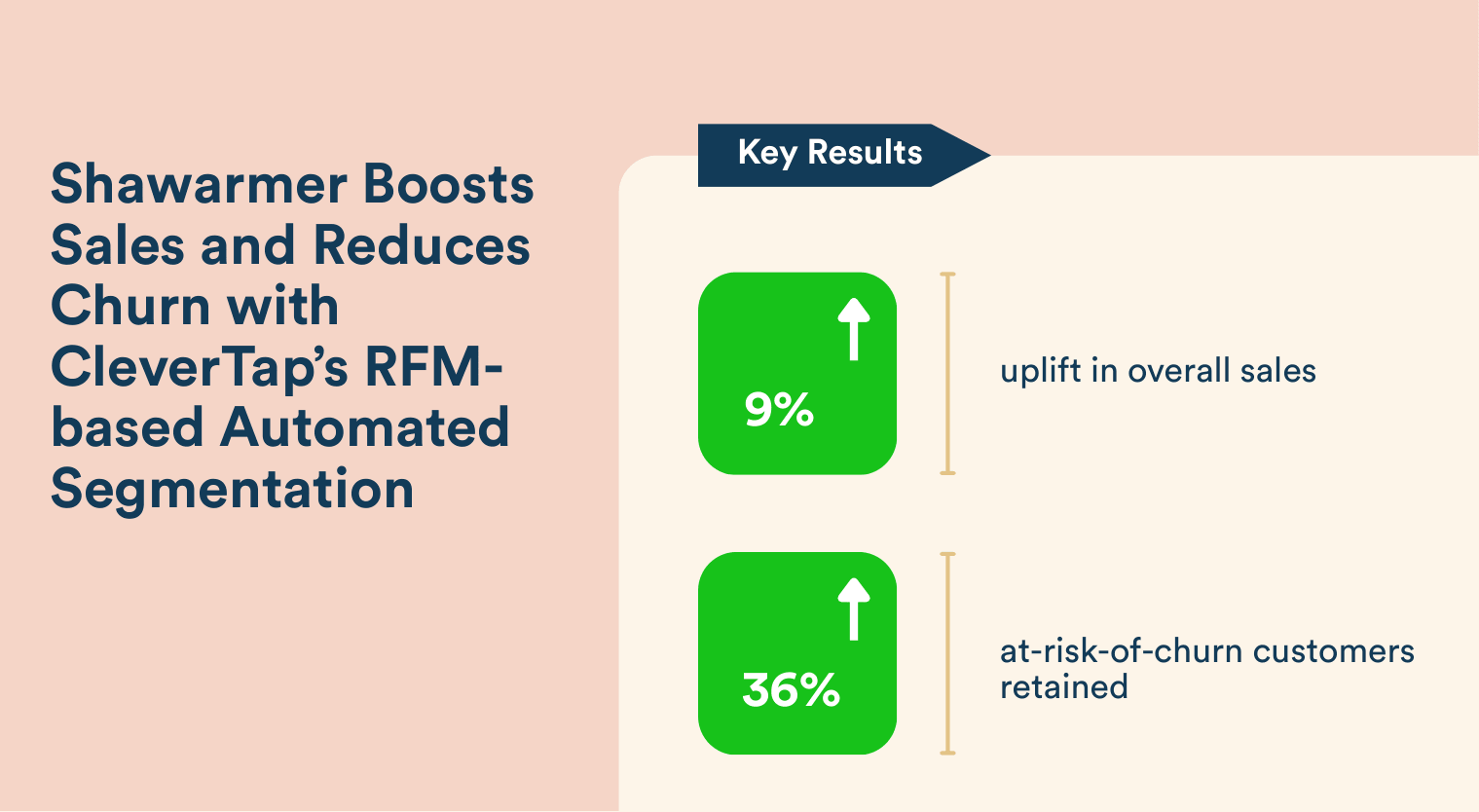
For example, Shawarmer leveraged CleverTap’s RFM-based automated customer segmentation to personalize retention messages by purchase behavior and customer value, driving a 9% uplift in overall sales and 36% retention of at-risk customers.
Read the full case study here.
10. Personalized Bundles
Personalized bundles package relevance and convenience into a single offer. Instead of generic sets, brands can curate bundles based on a customer’s past purchases, browsing behavior, lifecycle stage, or even timing and seasonality.
For example, a returning skincare shopper might see a routine-based kit built around products they already use, while a first-time buyer might be offered a starter bundle. Home office kits, travel packs, or seasonal collections reduce decision fatigue by solving a complete need in one click.
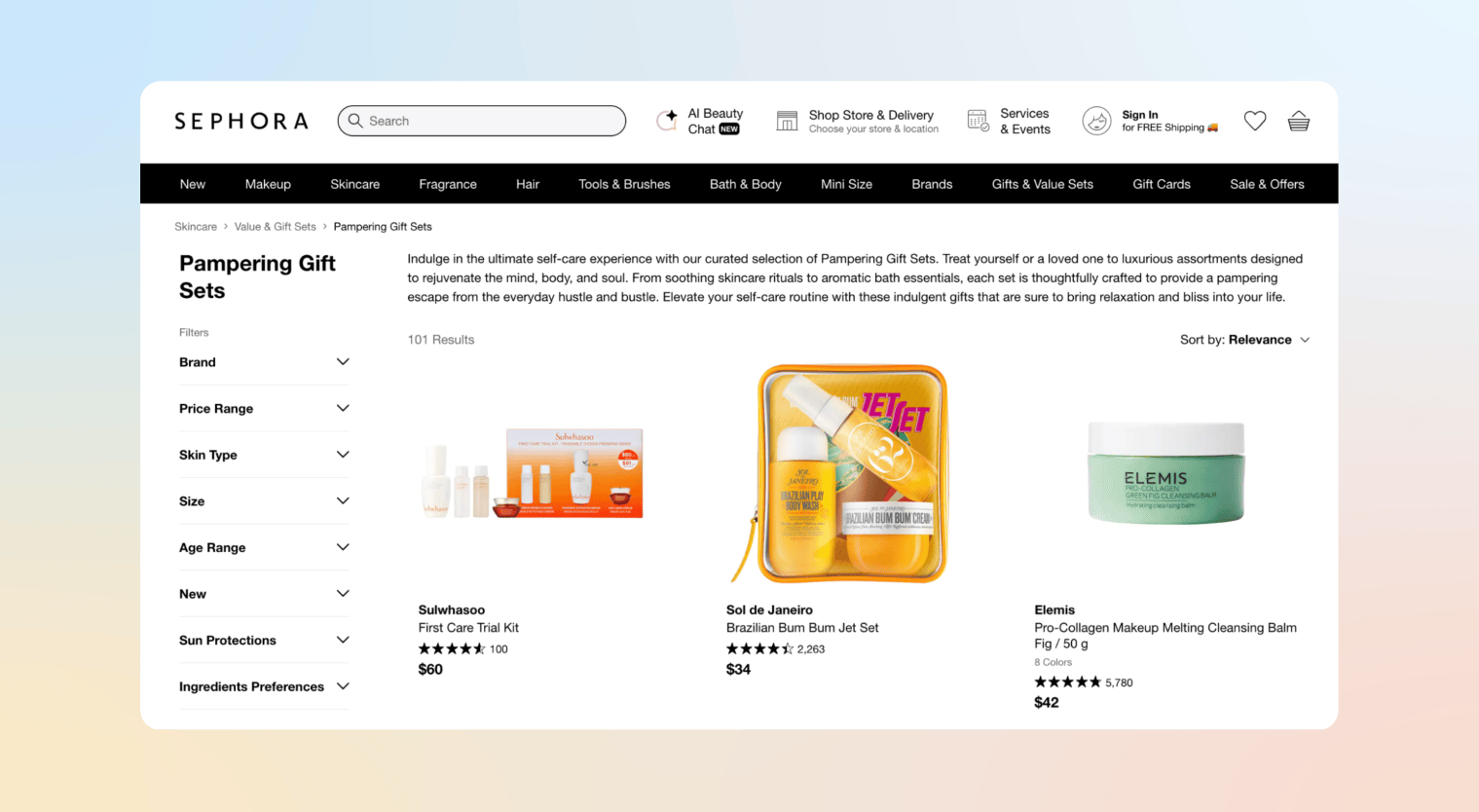
Sephora uses personalized bundles and routine-based kits to recommend curated product sets based on a shopper’s skin concerns, purchase history, and lifecycle stage, helping customers buy complete solutions while increasing average order value.
11. Seasonality & Context-Based Personalization
Adapt your content to seasonal or situational context. This overlaps with contextual signals but is worth calling out as its own strategy:
- Seasonal campaigns: Change your personalization around holidays, seasons, or events. A skincare site might show sunscreen in summer but add moisturizer bundles in winter.
- Real-world context: Use data like weather or local events. For example, if it’s raining in the user’s location, highlight raincoats or umbrellas. Or if there’s a major sports event, promote related gear.
- Time-of-day personalization: Offer breakfast items in the morning, browse or dinner deals in the evening.
Being context-aware shows customers you’re relevant to their current situation. It can make the shopping experience feel “fresh” (new, creative, limited-time urgency) and can nudge sales for season-specific products.
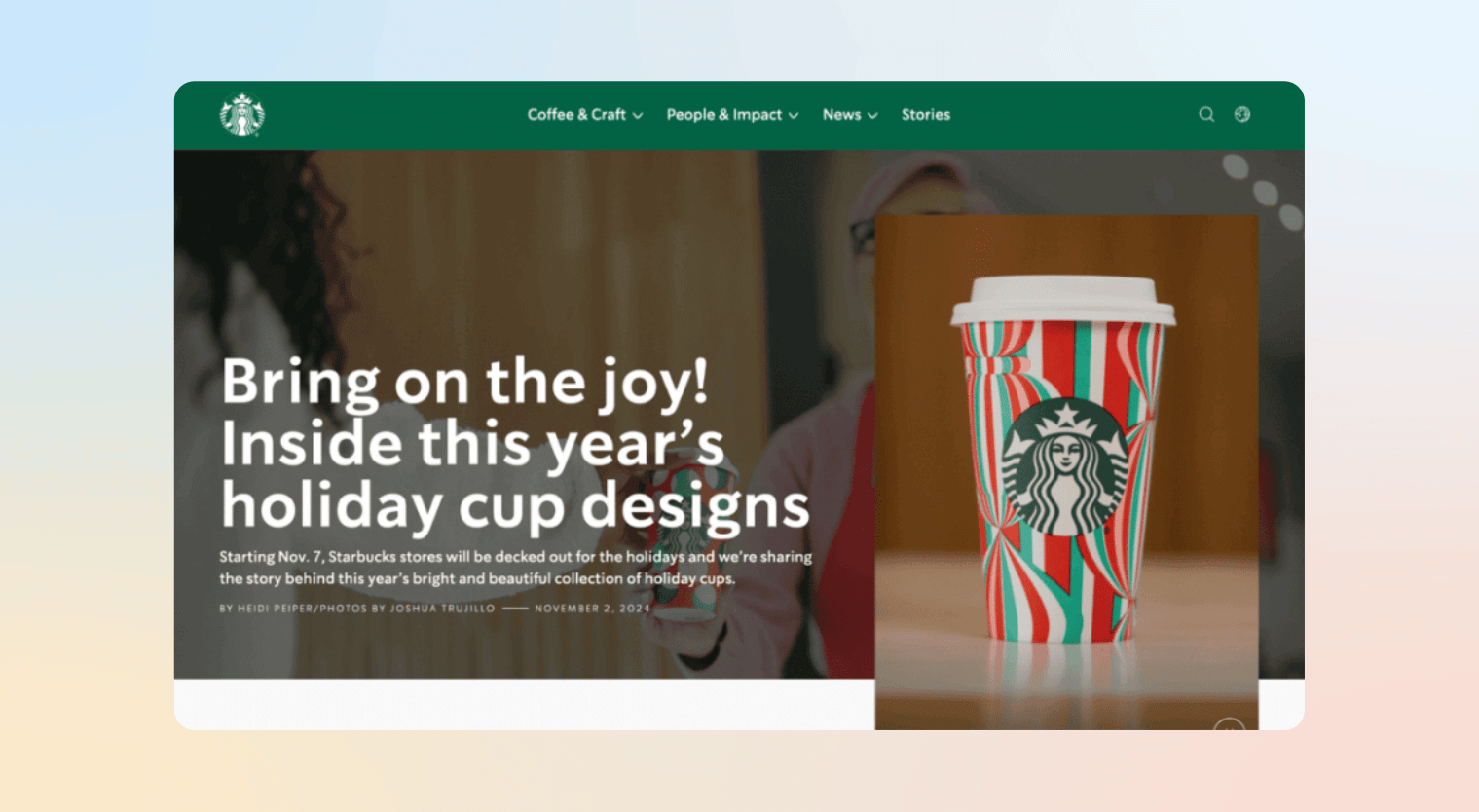
Starbucks adapts its experience around seasonal context through initiatives like its 2024 holiday cup collection using festive design, limited-time visuals, and personal touches to create urgency and emotional relevance during peak moments.
CleverTap can trigger time-sensitive campaigns using event rules. For example, schedule a flash sale push at 6 PM local time for each user segment or use location triggers to segment audiences by climate.
12. Post-Purchase Personalization
The funnel doesn’t stop at checkout. Personalize the post-purchase experience too. Ideas include:
- Thank-you content: After an order, show personalized recommended add-ons (“Customers who bought X also liked Y”) on the order confirmation page or follow-up email.
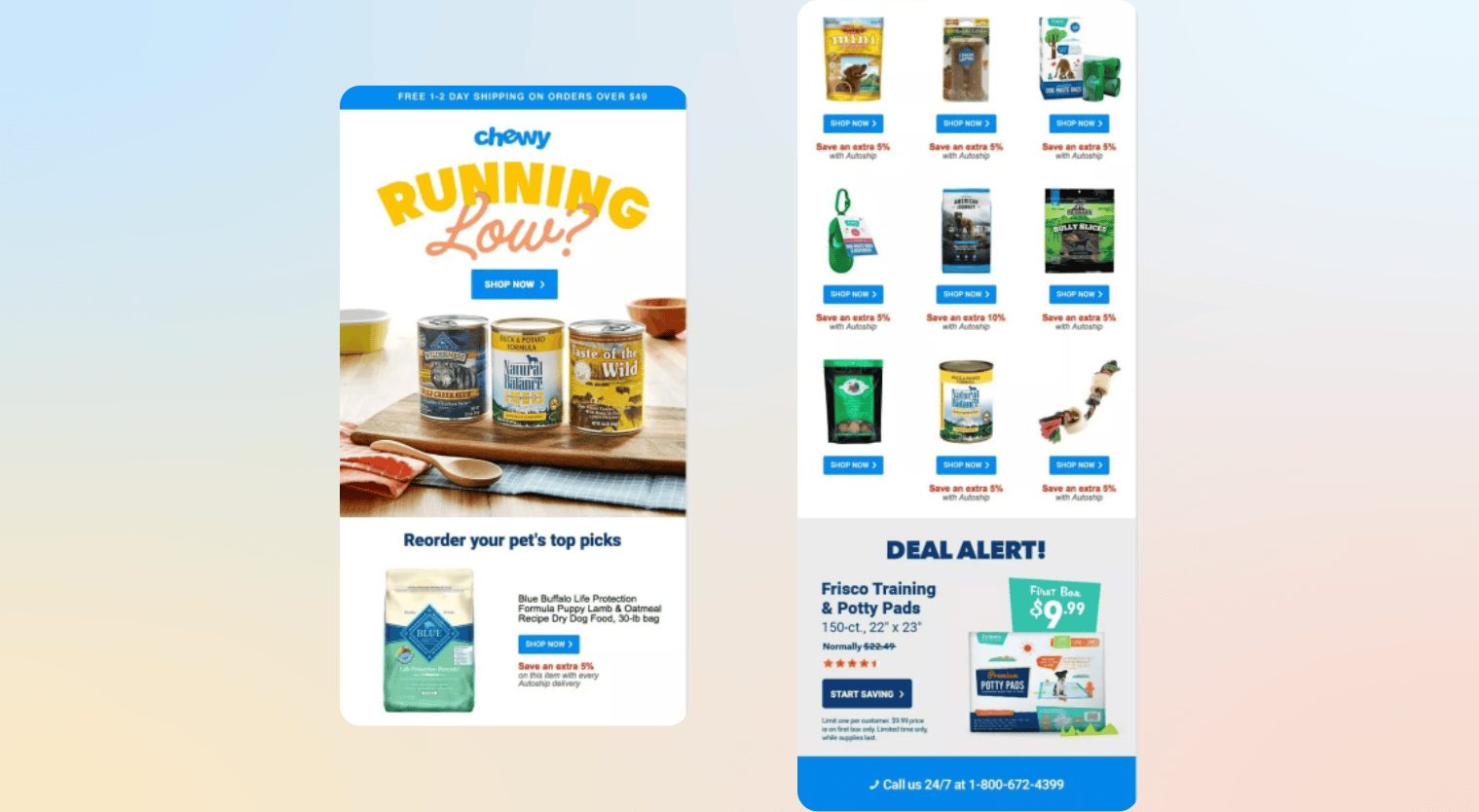
- Reorder reminders: For replenishable goods (skincare, pet food, etc.), predict when a customer might run out and send a reminder with a repurchase link.
- Cross-sell next steps: Suggest complementary products after a purchase (e.g., a conditioner after a shampoo purchase).
- Gather reviews or referrals: A personalized note asking for feedback on the specific product they bought.
- Loyalty enrollment: Invite them to a loyalty program, possibly offering bonus points for joining after their first purchase.
Personalized post-purchase touchpoints can boost retention and CLV. For example, if a customer just bought a camera, immediately recommending a matching lens or case is often more effective than a generic sale email. This keeps the customer engaged and thinking of your brand in their next buying occasion.
For example, Chewy personalizes the post-purchase journey with predictive reorder reminders, product-specific follow-ups, and complementary recommendations, driving repeat purchases and long-term customer loyalty.
Trigger in-app or email messages based on purchase events. In CleverTap, you can create a workflow like: on “Order Completed” event, wait 3 days, then send a thank-you push with product recommendations.
You could also set up a 30-day drip that checks whether a certain product category has been repurchased and then sends a refill offer. CleverTap’s real-time analytics let you track how each post-purchase message performs on retention.
How to Implement E-Commerce Personalization (4-Step Roadmap)
Getting started with personalization can seem daunting, but following a clear process helps:
1. Collect the Right Data
Begin by unifying customer data across touchpoints—browsing behavior, purchase history, app activity, location, device, and engagement events. Focus on intent-rich signals like product views, cart actions, recency, frequency, and value (RFM) rather than vanity data. Clean, connected data is the foundation of effective personalization.
2. Segment Intelligently From Broad to Precise
Create actionable segments based on lifecycle stage, behavior, and value—first-time visitors, repeat buyers, high-value customers, churn-risk users, and loyal VIPs. Layer in RFM analysis and contextual signals (seasonality, time of day, location) to prioritize high-impact audiences and tailor messaging more precisely.
3. Personalize Key Moments Across the Journey
Activate personalization where it matters most:
- Onsite (personalized PDPs, bundles, recommendations)
- Lifecycle messaging (welcome flows, cart abandonment, price-drop alerts)
- Post-purchase (cross-sells, reorder reminders, loyalty nudges)
Use dynamic content blocks to insert relevant products, offers, and messaging in real time.
4. Test, Learn, and Optimize Continuously
Personalization is not set-and-forget. A/B test subject lines, offers, timing, and content variations. Track engagement, conversion, AOV, and retention metrics, and refine journeys based on real-time performance insights. Continuous iteration ensures personalization stays relevant as customer behavior evolves.
How CleverTap Powers E-Commerce Personalization
CleverTap helps e-commerce brands deliver personalization across the entire customer lifecycle by unifying customer data, enabling real-time segmentation, and activating contextual messaging at scale.
Unified Customer Profiles Built for Personalization
CleverTap brings together behavioral, transactional, and engagement data into a single customer view. Every product view, cart action, purchase, and message interaction updates the user profile in real time, giving marketers the foundation needed to personalize experiences based on true intent.
Advanced Segmentation and RFM Analysis
With built-in RFM analysis and behavioral segmentation, brands can easily identify high-value customers, loyal buyers, first-time shoppers, and churn-risk users. These segments update automatically, allowing teams to prioritize retention, reward loyalty, and trigger personalized journeys without manual effort.
Real-Time, Trigger-Based Journeys
CleverTap enables event-driven personalization across channels like email, push, in-app, SMS, and onsite. Brands can trigger messages based on actions like cart abandonment, price drops, back-in-stock events, or inactivity, ensuring every interaction is timely and relevant.
Dynamic Content and Product Personalization
Using dynamic content blocks, CleverTap allows marketers to personalize emails, push notifications, and in-app messages with product recommendations, offers, user attributes, and contextual data. This makes it easy to deliver on mobile app personalization and use cases like personalized PDP recommendations, abandoned cart reminders, cross-sell nudges, and post-purchase follow-ups.
Built-In Experimentation and Optimization
CleverTap includes A/B testing and real-time analytics, helping teams continuously optimize personalization strategies. Marketers can test messaging, timing, offers, and content variants, and iterate quickly based on what drives conversions, retention, and customer lifetime value.
Discover why CleverTap is a Leader in the 2026 Gartner® Magic Quadrant™ for Personalization Engines. Get the full report.
Frequently Asked Questions (FAQs) about E-Commerce Personalization
Q1. Why is e-commerce personalization so important now?
Today’s shoppers expect tailored experiences. With endless online choices, personalization helps customers find what they want faster and makes brands more memorable. It also directly improves conversion, AOV, and retention, making it a competitive necessity, not a nice-to-have.
Q2. How is personalization different from customization?
Personalization is done by the brand using data to automatically tailor content or messages. Customization is done by the customer, such as choosing options or configuring a product. Personalization scales effortlessly, while customization requires user effort.
Q3. What are the main benefits of e-commerce personalization?
Personalization drives higher conversions, increases average order value, and improves retention. Brands consistently report better engagement, stronger loyalty, and more repeat purchases from personalized experiences.
Q4. How can a small e-commerce site get started with personalization?
Start small with high-impact use cases. Examples include a personalized welcome email, homepage product recommendations, or segmented email campaigns using basic behavioral data. Many brands begin with email and onsite recommendations before expanding.
Q5. What metrics should I track to measure personalization success?
Track conversion rate, average order value, and repeat purchase or retention rate. Engagement metrics like clicks or add-to-cart rates also matter. Always compare personalized experiences against a control group to measure true impact.
The Right Way to Scale E-Commerce Personalization Without Losing Trust
There’s a fine line between helpful and creepy. McKinsey warns that overly specific personalization can feel “unsettling” to customers. Personalization should never replace privacy or surprise value. Always prioritize relevance and consent. Always include control groups or holdouts when rolling out new personalization tactics. This way, you can quantify the real impact. Brands with mature personalization strategies often see far higher ROI: Clevertap found that companies using advanced personalization outperformed the industry conversion benchmark by 500%. Use those benchmarks to set goals.
Learn how CleverTap can help you achieve 1:1 personalization.

Subharun Mukherjee 
Heads Cross-Functional Marketing.Expert in SaaS Product Marketing, CX & GTM strategies.
Free Customer Engagement Guides
Join our newsletter for actionable tips and proven strategies to grow your business and engage your customers.