

















Table of Contents
Categories
Most Popular


Running WhatsApp campaigns is easy. Running campaigns that actually drive engagement, responses, and conversions is much harder.
As more brands adopt WhatsApp as a marketing channel, the difference between sending messages and building effective campaigns has become more visible. Messages land in a highly personal space, where irrelevant or poorly timed communication is ignored almost instantly. At the same time, WhatsApp continues to see significantly higher visibility and engagement compared to traditional messaging channels, making the stakes for getting it right even higher.
The campaigns that perform well are not broadcast-driven. They are timely, contextual, and triggered by real user behavior, often designed to feel like a natural interaction rather than a promotion.
This blog breaks down 10 WhatsApp marketing examples from brands across industries, showing how they drive engagement across onboarding, activation, and re-engagement. Each example highlights what worked and how the same approach can be applied in your own campaigns.
Why Are Brands Using WhatsApp for Marketing Campaigns?
WhatsApp crossed 3 billion monthly active users in 2025, with users spending an average of 59 minutes per day on the app. That kind of daily attention makes it a high-value marketing channel.
WhatsApp marketing campaigns work differently because the channel is opt-in by design. Users choose to start or continue a conversation. They don’t tolerate spam the way they scroll past a promotional email. That higher bar is also the channel’s biggest advantage: messages that earn attention get acted on.
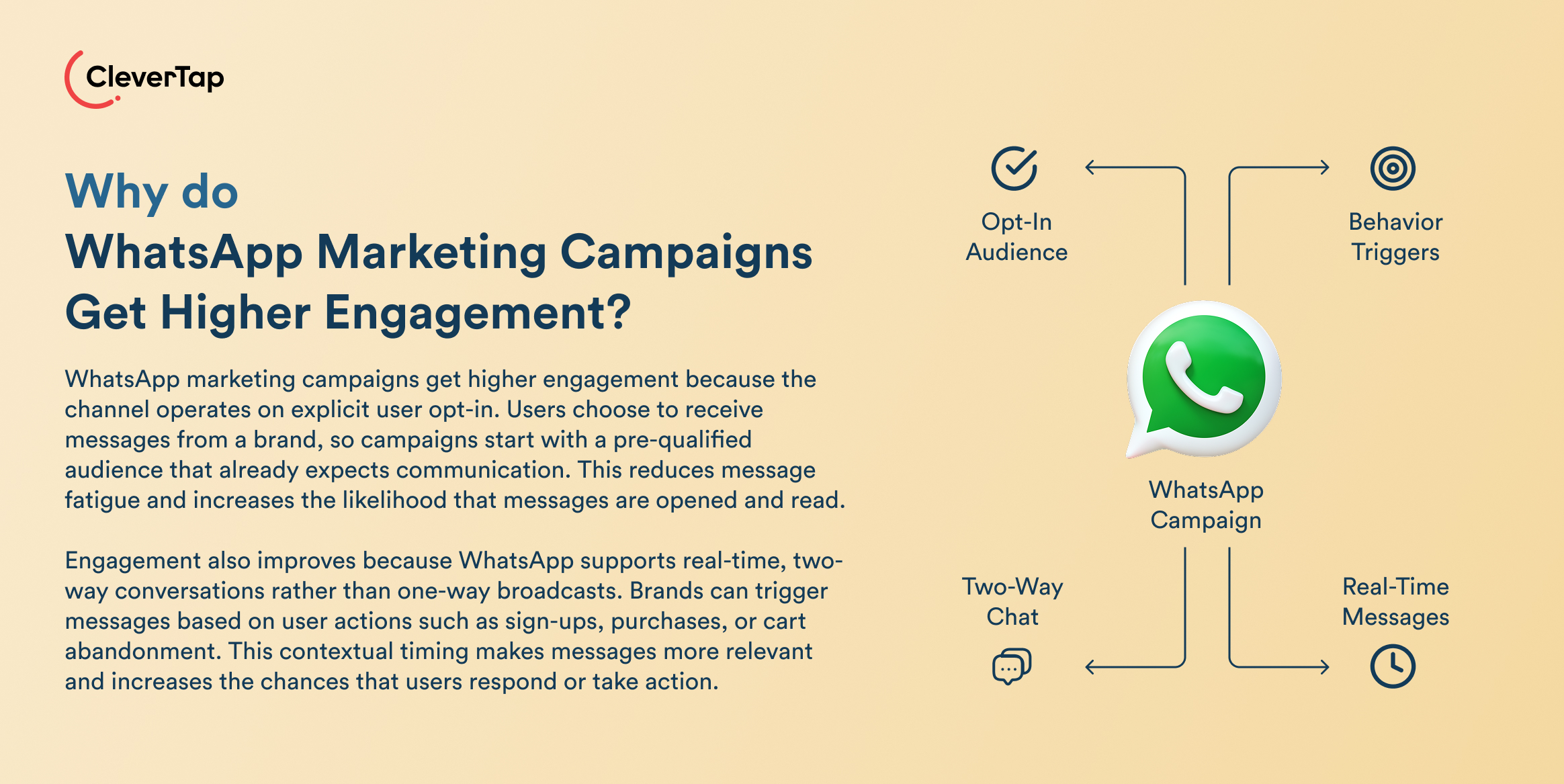
Juniper Research projected conversational commerce spending to reach $290 billion by 2025, up from $41 billion in 2021. Brands already see the shift. But brands that get results treat WhatsApp campaigns as two-way conversations, not broadcast blasts.
Every successful WhatsApp campaign follows one rule: deliver value before asking for anything. The best WhatsApp marketing examples share this trait regardless of industry, audience, or objective.
What Makes a WhatsApp Marketing Campaign Effective
Effective WhatsApp campaigns start with clear user permission and context. The user opted in for a reason.
- Your first message should honor that reason, whether it’s a product update, a discount, or onboarding help. Starting with anything unrelated breaks trust fast.
- Conversational tone matters more here than in any other channel. WhatsApp sits between personal chats with friends and family. A message that reads as a press release feels out of place. Short copy, a clear ask, and a single CTA work better than long paragraphs with multiple links.
- Timeliness separates good WhatsApp campaigns from forgettable ones. A message about an expiring offer lands differently at 10 a.m. on a Tuesday than it does on a Saturday night. Behavior triggers, such as a cart abandonment or an onboarding milestone, give your message context that generic blasts lack.
Two-way interaction is where WhatsApp outperforms almost every other channel. Quick replies, interactive buttons, and conversational flows turn passive readers into active participants.
These principles run through every WhatsApp marketing campaign example below.
Top 10 WhatsApp Marketing Campaign Examples
These are actual campaign examples, not suggestions. Take inspiration, or use them as food for thought to create an impactful WhatsApp marketing campaign.
1. Increase Engagement and CTR Across Campaigns for a Multilingual User Base
Example: BharatPe’s vernacular omnichannel WhatsApp campaign
Region: India
BharatPe is a fintech platform that lets over 6 million merchants accept UPI payments through a single QR code. Their problem wasn’t reached. It was relevance. The team had been running generic, spray-and-pray campaigns with no personalization or user segmentation, and had no reliable way to measure whether content, timing, or imagery was actually moving the needle.
They needed to go from blasting notifications to the entire base to running targeted, measurable campaigns across push, email, SMS, in-app, and WhatsApp. That’s where CleverTap came in.
What CleverTap enabled on WhatsApp specifically:
WhatsApp was a high-priority channel for BharatPe given its massive adoption among Indian merchants (over 340 million active users in India), and WhatsApp messages consistently showed high readability. But sending WhatsApp messages isn’t the hard part. Sending the right message to the right segment in the right language is.
Using CleverTap’s segmentation engine, BharatPe created audience segments based on geographic distribution, past behavior, intent, and language. For example, if a campaign needed to go out in another language, CleverTap automatically segmented merchants by location and behavioral signals, rather than requiring the team to build those lists manually.
CleverTap also powered control-group analysis, allowing BharatPe to isolate variables: images versus text-only messages, personalized versus generic copy, and optimal send times. Every campaign became a structured test, not a guess. The platform’s funnel analytics helped the team understand which journeys, campaigns, and segments were performing best and which needed further optimization.
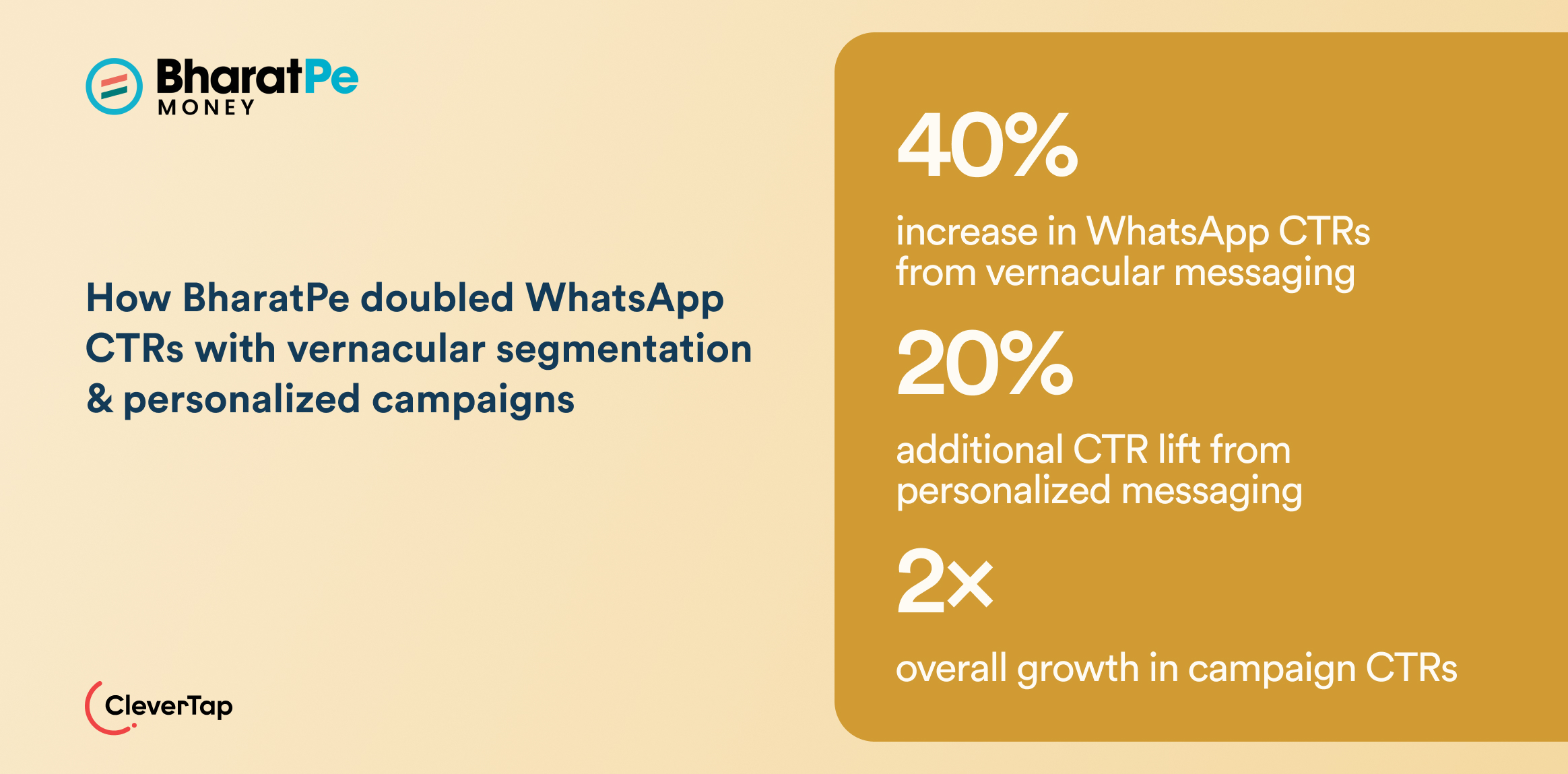
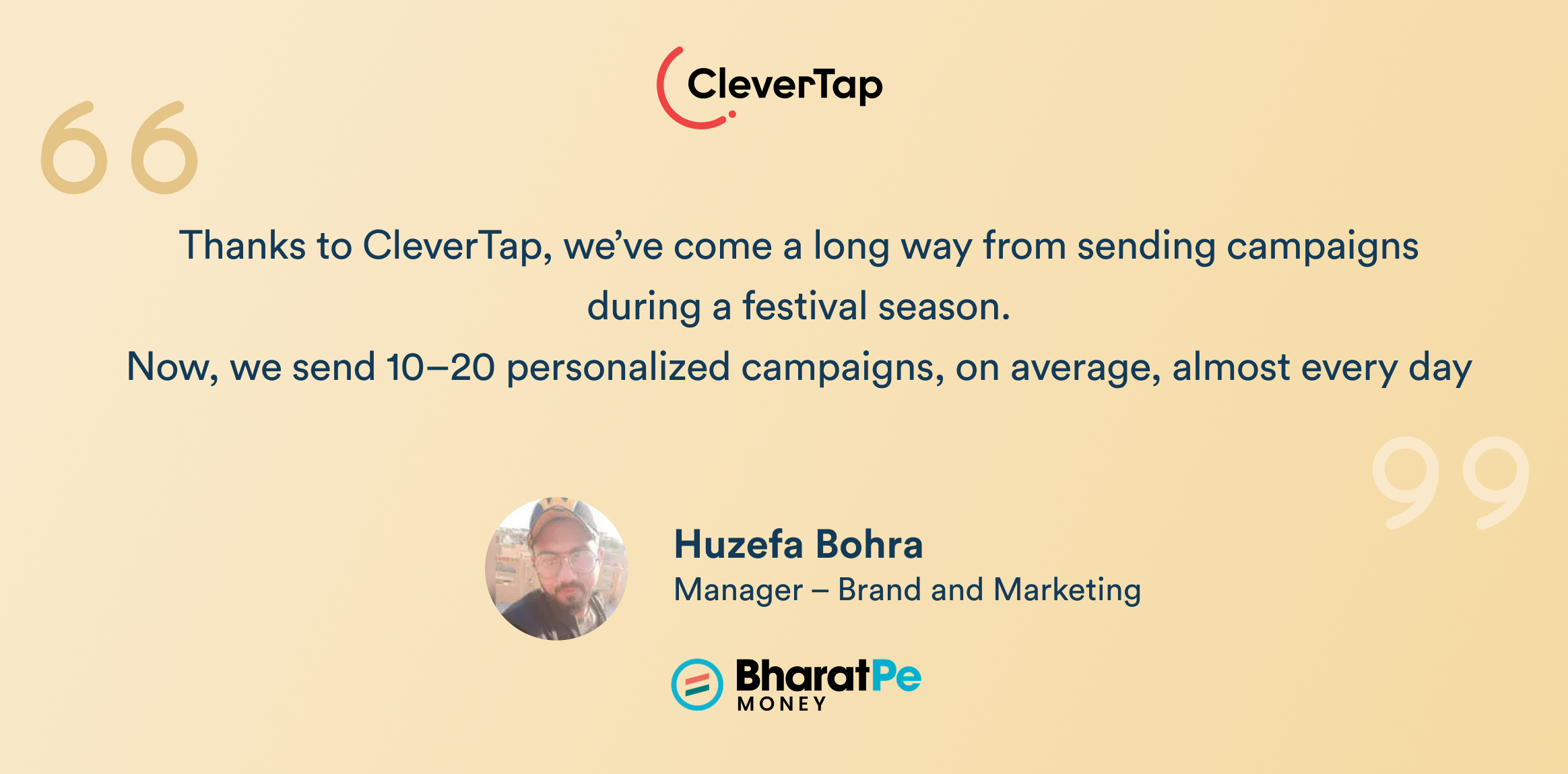
As a result, Vernacular messaging on WhatsApp drove a 40% increase in CTRs. Personalization using user attributes added another 20% lift. Overall, BharatPe doubled its CTRs and scaled from seasonal campaigns to running 10 to 20 personalized campaigns every day.
Why it worked on WhatsApp: A message in Marathi or Hindi inside a merchant’s most personal app doesn’t feel like marketing. It feels like a conversation. CleverTap made this scalable by integrating segmentation, language targeting, A/B testing, and cross-channel orchestration on a single platform, so the team didn’t need to stitch together five different tools to run a single vernacular campaign.
Key takeaway: The best WhatsApp marketing campaign results come from the message itself and who it’s sent to, not just the channel. Vernacular copy paired with behavioral segmentation doubles your click-through rates, but only if your engagement platform lets you test, personalize, and automate at scale without adding operational overhead.
Discover CleverTap’s robust WhatsApp marketing platform and its capabilities.
2. Drive product discovery and online sales during a themed event.
Example: Clarins’ personalized promotion for National Lipstick Day
Region: France
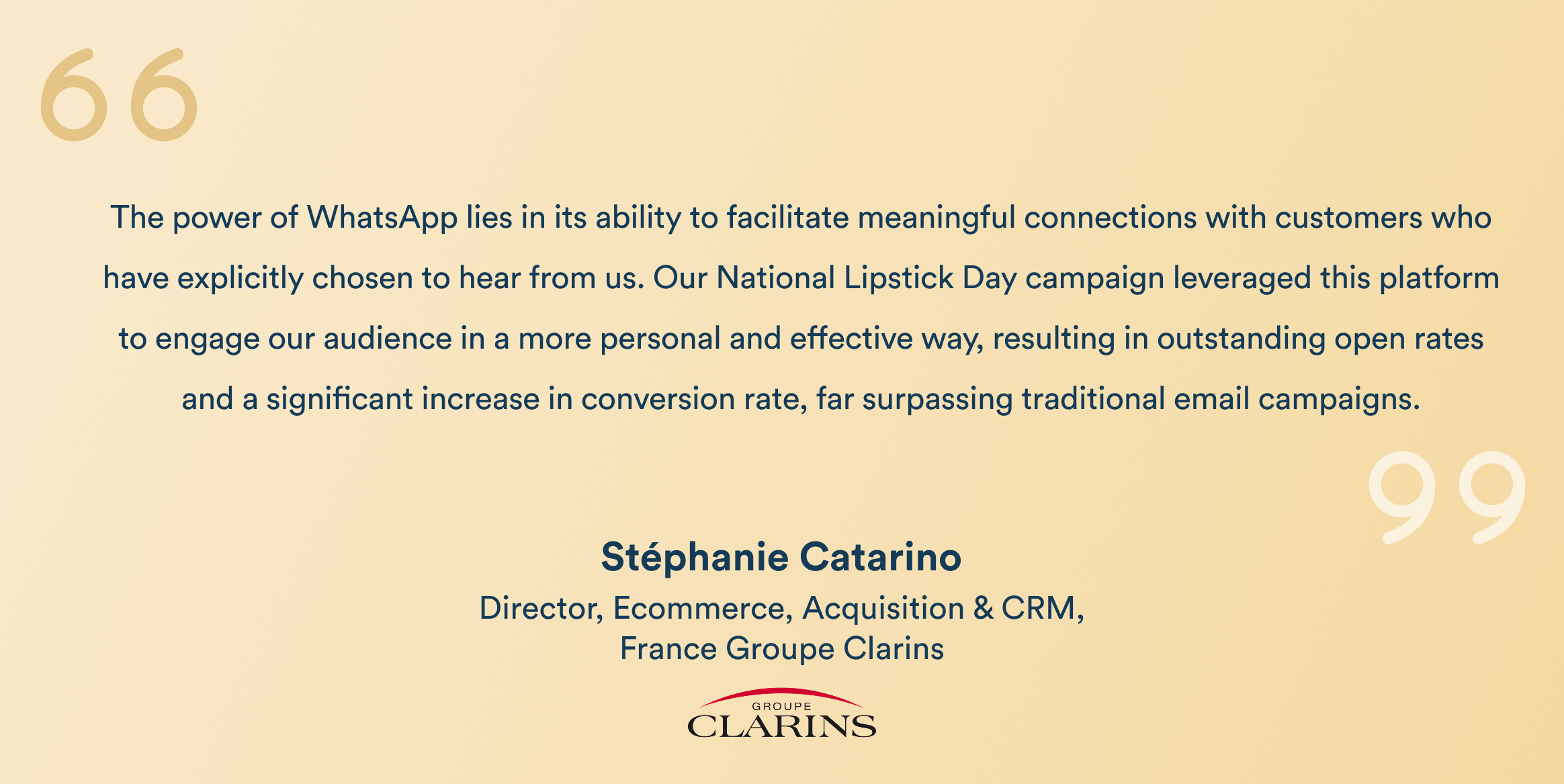
Clarins ran a WhatsApp campaign in France for National Lipstick Day (July 19 to August 1, 2024). Instead of pushing a generic discount, Clarins invited previous customers into an interactive flow. Users chose their favorite lipstick type, watched a short, personalized video, and received tailored product advice that linked them back to the Clarins website.
The campaign achieved a 90% open rate, delivering 4.5x more opens and 7x more conversions than a similar email campaign.
Why it worked on WhatsApp: The choose-and-respond flow made each user feel like they were getting a one-on-one consultation, not a bulk promotion. WhatsApp’s conversational format turned a product push into a beauty advice session.
Key takeaway: Interactive message flows that guide the user toward a personalized result outperform static promotional blasts, even during time-bound events.
3. Speed Up Lead Qualification and Reduce Cost Per Lead For Commercial Van Sales
Example: Mercedes-Benz hybrid lead generation campaign
Region: Turkey
Mercedes-Benz Turkey’s existing process required form fills followed by two-day call-center follow-ups.
They tested three approaches side by side: traditional lead gen ads, Click-to-WhatsApp ads (CTWA), and a combined strategy. The hybrid approach paired social ads with CTWA, so interested buyers could start a WhatsApp conversation immediately.
Results in a single month: 93% more incremental conversions, 2.7x more qualified leads, and a 78% drop in cost per qualified lead. The CTWA campaign directly contributed to the sale of five Vito vans
Why it worked on WhatsApp: High-consideration purchases need real-time answers. WhatsApp removed the two-day gap between ad click and sales conversation, which cut friction at the most critical stage of the funnel.
Key takeaway: WhatsApp campaigns don’t have to replace your ad strategy. Layering Click-to-WhatsApp into existing paid campaigns can dramatically lower acquisition costs while speeding up qualification.
4. Build daily brand affinity and recall without direct product promotion
Example: Maggi’s WhatsApp cooking course for brand engagement
Region: Germany
Maggi (Nestlé) launched a free WhatsApp cooking course in Germany through a virtual assistant named “Kim.” Kim sent step-by-step cooking instructions, technique videos, and ingredient suggestions. Each lesson is adapted to the user’s skill level. The campaign ran as an ongoing onboarding experience rather than a single promotional blast (Zixflow).
Within the first two months, Maggi sent over 200,000 messages. The campaign generated a 4.2-point lift in ad recall.
Why it worked on WhatsApp: WhatsApp’s conversational format made daily cooking tips feel like getting help from a friend rather than receiving marketing from a food brand. The chatbot provides personalized instructions without requiring a human team to manage every interaction.
Key takeaway: WhatsApp campaign ideas don’t always need to push a product. Content-led campaigns that embed your brand into daily habits build recall and trust that compound over time.
5. Drive Revenue Through Personalized WhatsApp Promotions During Sale Events
Example: Tata CLiQ’s behavior-based promotional campaign
Region: India
Tata CLiQ, a Tata Group e-commerce platform, started with informational WhatsApp messages and then moved to personalized promotions. The team tailored messages based on browsing behavior, sending discounted product recommendations during festive sale campaigns like Diwali and Black Friday.
A single one-month campaign generated $500K in revenue. WhatsApp delivered a 57% click-through rate and 10x ROI compared to email.
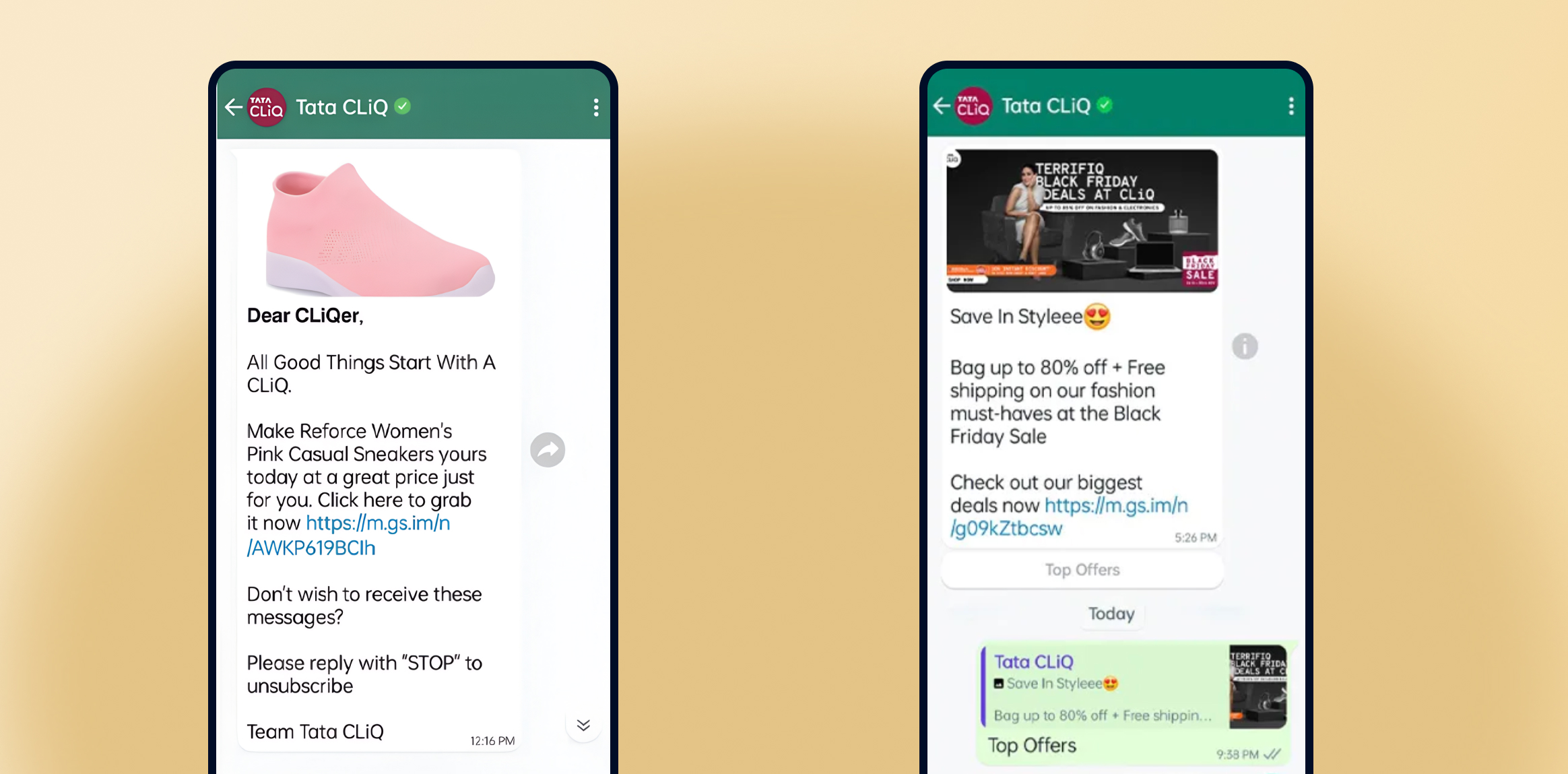
Why it worked on WhatsApp: Browsing-based personalization meant each user saw products they had already shown interest in. The message felt like a helpful nudge, not a mass broadcast. WhatsApp’s high attention rate turned that relevance into clicks and purchases.
Key takeaway: Behavior-triggered WhatsApp marketing messages, like this one, show that personalization beyond first-name tokens, based on what users actually browse, can outperform email by an order of magnitude.
Also read: Top 10 WhatsApp Marketing Automation Tools for Faster Growth & Better Retention
6. Launch a New Product Line Using Offline-to-Chat Conversion
Example: Unilever’s offline-to-WhatsApp product launch
Region: Brazil
Unilever placed over 10,000 billboards across São Paulo with a single WhatsApp number. When users messaged that number, a chatbot called “MadameBot” gave fabric care tips and introduced the new product line. The conversation ended with a 50% discount and a free shipping offer.
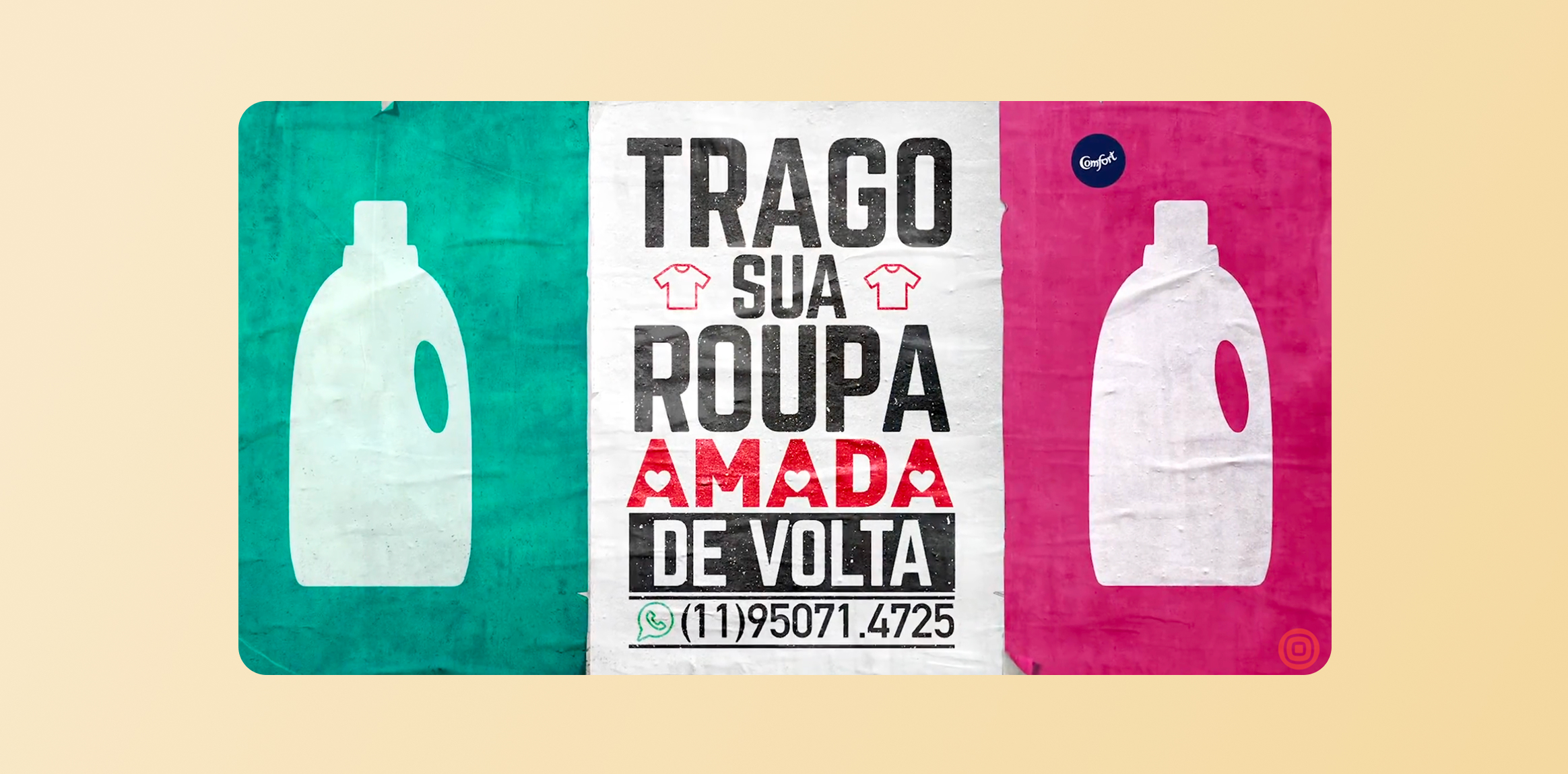
Why it worked on WhatsApp: The billboard created curiosity. WhatsApp turned that curiosity into a conversation. The chat flow educated users before making an offer, so the discount felt earned rather than random.
This offline-to-WhatsApp funnel is one of the earliest and most-cited WhatsApp marketing examples for product launches.
Key takeaway: Physical media combined with a WhatsApp entry point creates a seamless bridge from awareness to conversation. The chat becomes the landing page.
7. Convert Free-Trial Users into Paying Customers Through Behavior-Based WhatsApp Journeys
Example: myBillbook’s micro-moment onboarding journeys via CleverTap
Region: India
myBillbook, an Indian SaaS billing platform for small businesses, chose WhatsApp as its primary engagement channel. SMB owners in India spend more time on WhatsApp than in their email inboxes. The team segmented free-trial users with a Need-Intent-Fit (NIF) model and triggered personalized micro-moment journeys, a 12-to-48-hour series of messages that moved users from onboarding to sales conversations.
The results: 15% WhatsApp reply rate, 3x more hand-raisers reaching Inside Sales, a 35% jump in Inside Sales revenue, and 30% higher revenue per agent.
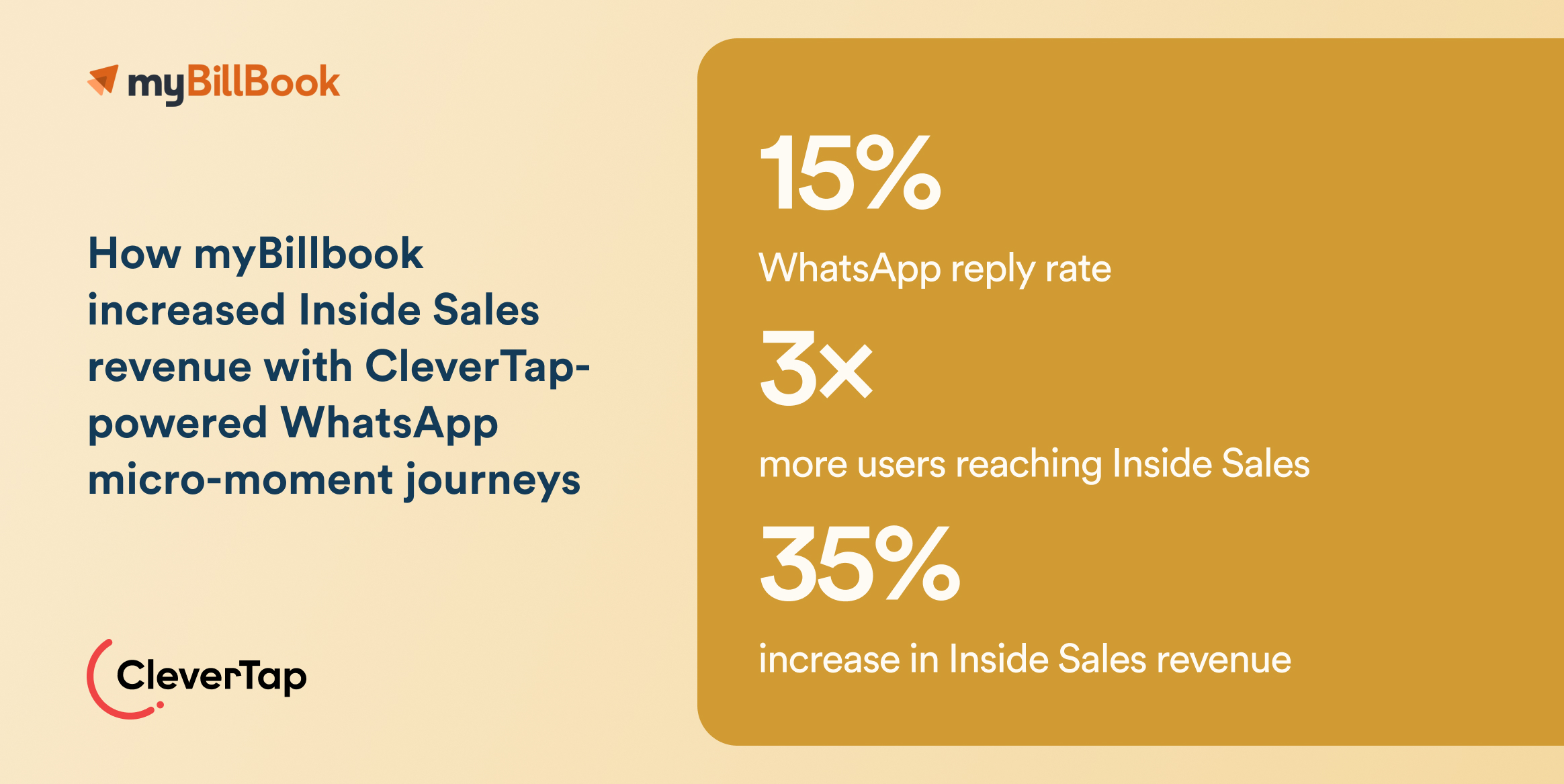
Why it worked on WhatsApp: The micro-moment approach met users where they already were. Instead of a single welcome email, myBillbook sent a series of short, timed messages that adapted to user behavior. A “boomerang user” moment, triggered when lapsed users returned, became a strong new lead source.
Key takeaway: WhatsApp campaigns for SaaS onboarding work best as behavior-triggered journeys, not one-time blasts. A series of short, well-timed nudges can turn trial users into sales-qualified leads.
8. Win Back Dormant Users with Emotionally Intelligent Messaging
Example: Niyo’s AI-powered re-engagement WhatsApp campaign
Region: India
Niyo, a fintech neobank for international travel, faced a wave of dormant users. The team used WhatsApp and email to re-engage them with personalized travel and cashback offers. What made this campaign different was the use of CleverTap’s Scribe, an AI content tool, to generate emotionally aware copy that built anticipation, urgency, and trust.
Scribe-powered messages helped Niyo achieve 2x better CTR (3% versus 1.5% for earlier messaging). The campaign re-engaged 12% of the dormant user base over two months.
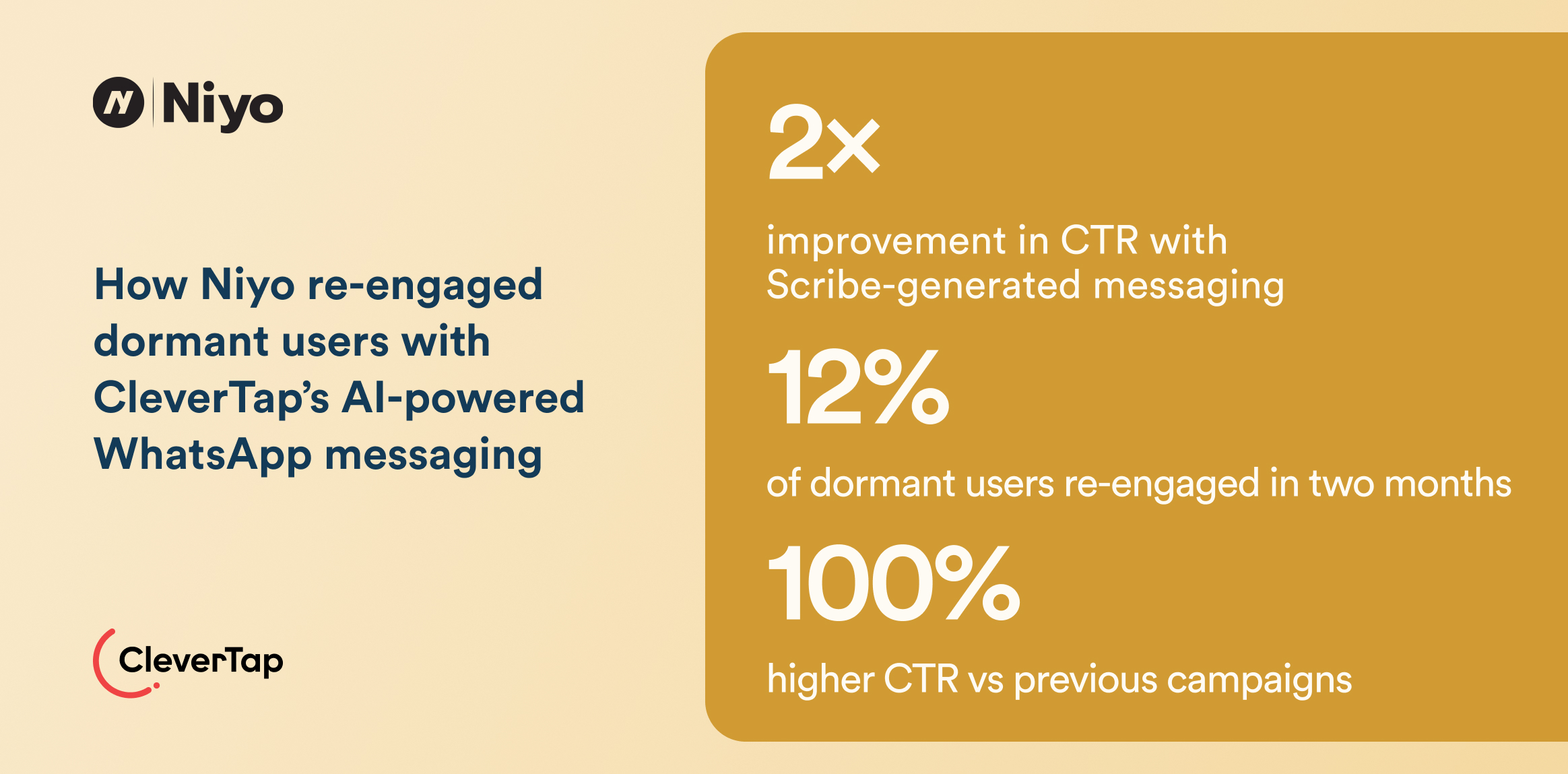
Why it worked on WhatsApp: Re-engagement messages need to earn back attention, not just request it. AI-generated copy that matched the user’s emotional state made the message feel relevant again.
Key takeaway: WhatsApp re-engagement campaigns benefit from AI-assisted copy that adapts tone and emotion to the dormant user’s context. Generic win-back messages get ignored. Emotionally tuned ones get clicked.
9. Shift Customer Communication to WhatsApp and Grow the Marketing Database
Example: Merco’s database growth via WhatsApp Business
Region: Mexico
Merco, a Mexican supermarket chain, adopted WhatsApp Business Platform as a primary customer communication channel. Within 18 months, the retailer grew its marketing database by 70% and moved 95% of customer interactions to WhatsApp.
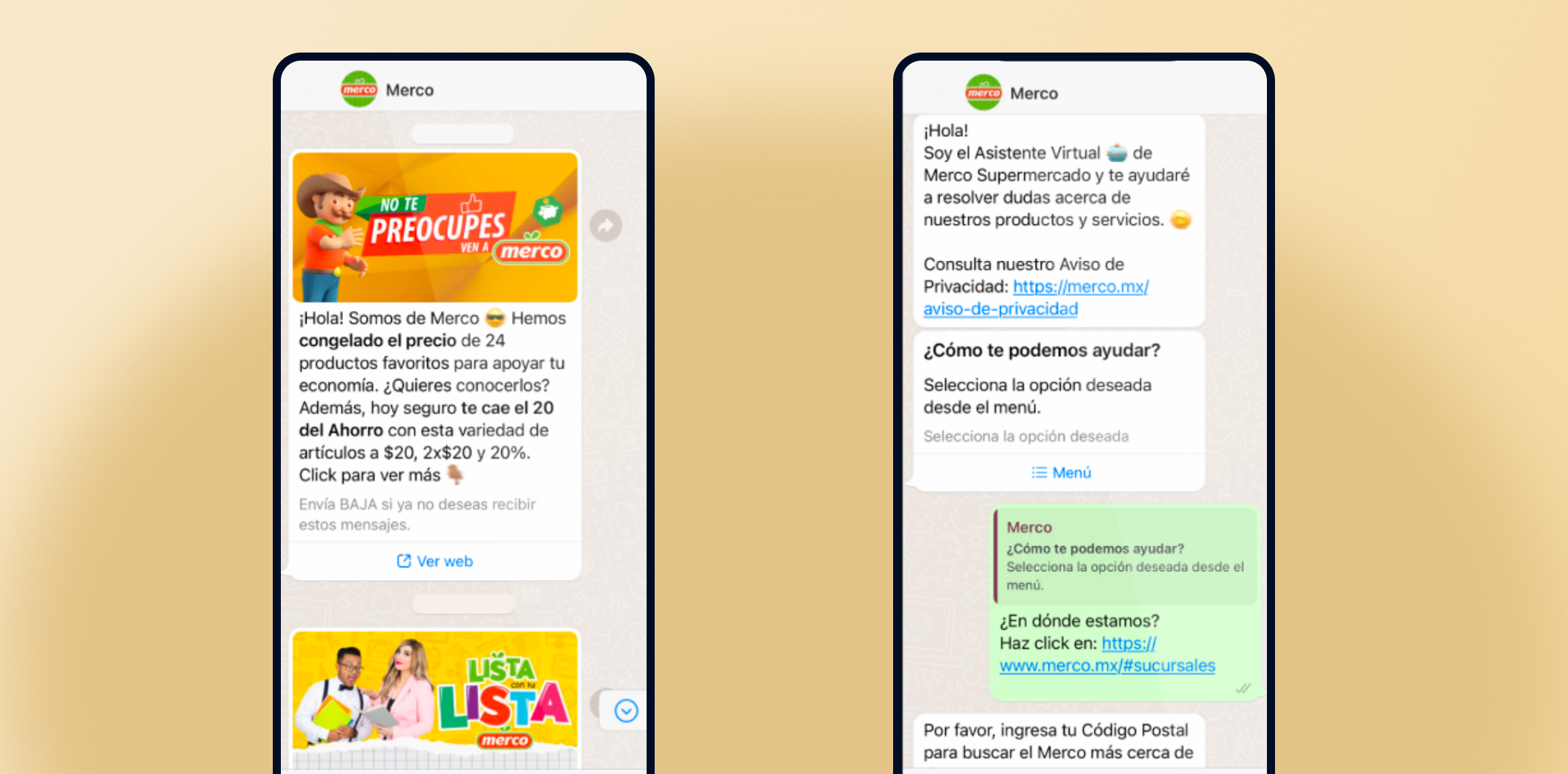
Why it worked on WhatsApp: Retail customers already use WhatsApp daily. Meeting them there, rather than forcing them into email or app downloads, removed friction from every interaction, from order updates to promotional offers.
Key takeaway: WhatsApp can become your primary communication channel, not just an add-on. When a brand commits to the platform and builds real workflows around it, both the database and the engagement rate grow together.
Keep reading: 13 WhatsApp Marketing Metrics and KPIs Every Marketer Should Track
10. Compare WhatsApp Campaign Performance Against Email and SMS for Conversions
Example: Baro Cosmetics’ cross-channel WhatsApp campaign
Region: Italy
Baro Cosmetics ran comparable campaigns across WhatsApp, email, and SMS. The results were clear: WhatsApp delivered a 700% increase in conversions over email and a 300% increase over SMS.
Why it worked on WhatsApp: Cosmetics buying is personal and visual. WhatsApp’s rich media format (images, videos, interactive buttons) presented products in a context that email plain text and SMS character limits simply can’t match.
Key takeaway: If you’re still running the same campaign on email, SMS, and WhatsApp, test each channel independently. WhatsApp’s format and attention dynamics can produce results that are multiples higher than those of other channels for the same creative.
Common WhatsApp Campaign Patterns You Can Replicate
These 10 WhatsApp marketing campaign examples share several patterns that any marketing team can adapt.
- Broadcast Plus Quick-Reply Patterns: Clarins, Tata CLiQ, and Baro Cosmetics all used rich media broadcasts paired with interactive buttons or quick replies. The broadcast gets attention. The reply option turns attention into action. This combination consistently outperforms link-only messages by keeping the user in the conversation.
- Time-Bound Offers With Behavior Triggers. Tata CLiQ sent browsing-based product recommendations during sale events. Mercedes-Benz Turkey paired ad impressions with instant WhatsApp conversations. Both used timing and behavior to make the message feel urgent and relevant, not random.
- Personalization Beyond Name Tokens. The best WhatsApp campaigns in this list are personalized based on browsing history, skill level, onboarding stage, language, and emotional context. First-name personalization is table stakes. Behavior and context-based personalization drive results.
- Conversational CTAs Versus Link-Only CTAs. Clarins asked users to choose a lipstick type before showing products. Unilever’s MadameBot taught fabric care before offering a discount. These conversational CTAs earned the click by delivering value first. Contrast that with a plain “Shop now” link, which asks the user to do all the work.
Recognizing these patterns is the first step. Putting them into action at scale requires the right infrastructure.
How to Build High-Performing WhatsApp Marketing Campaigns at Scale
Running a single WhatsApp campaign is straightforward. Running dozens of targeted WhatsApp campaigns every week, each personalized to a different segment, needs a system behind it.
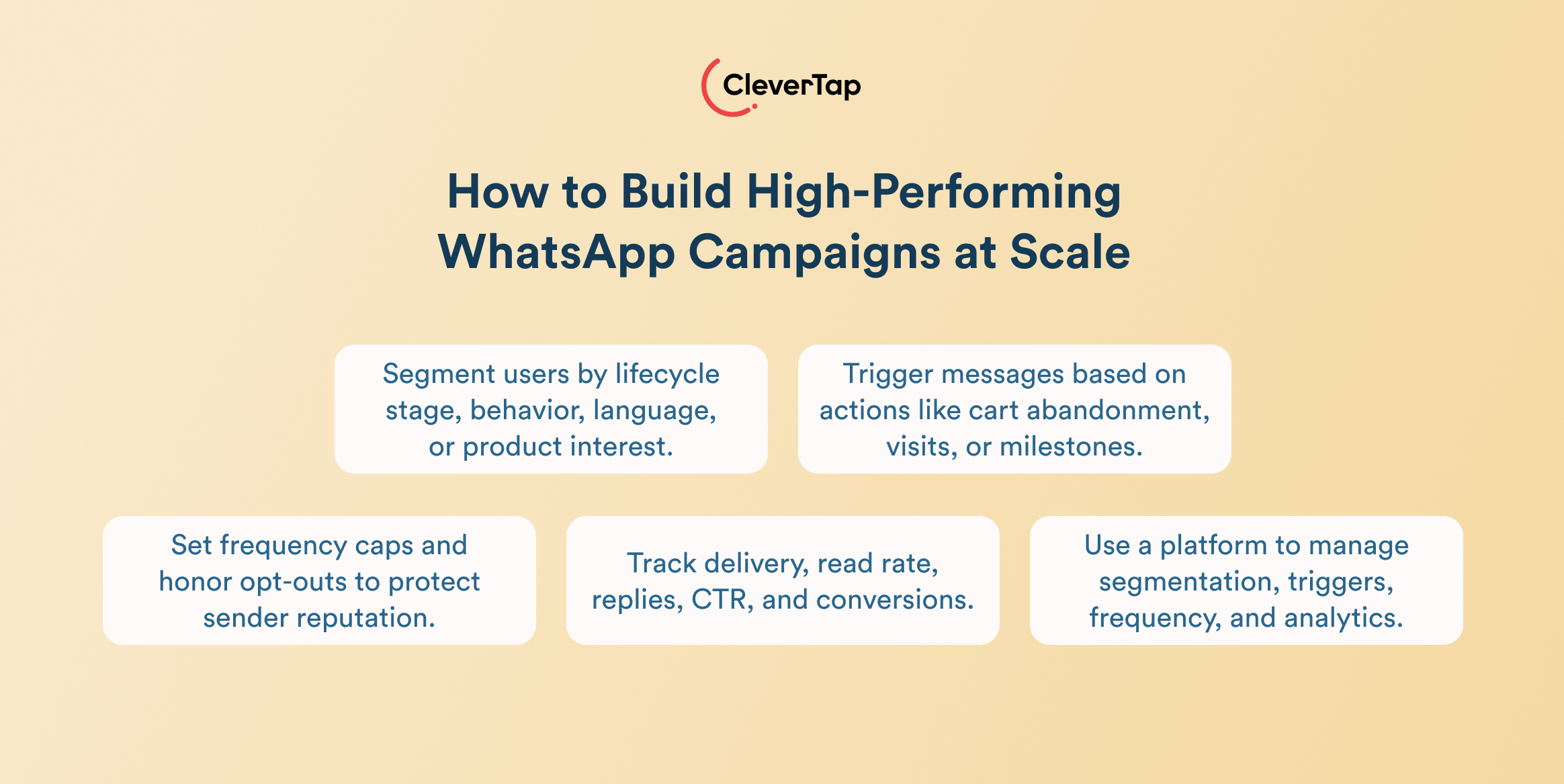
- Audience segmentation is the starting point. Group users by lifecycle stage, behavior, language, or product interest. myBillbook’s NIF model and BharatPe’s vernacular segmentation both show that the right segments turn average messages into high-performing ones. Avoid sending the same WhatsApp broadcast to your entire database.
- Campaign triggers beat one-time blasts. The highest-performing WhatsApp campaigns in this article were triggered by specific actions: cart abandonment, return visit, trial milestone, or ad click. Trigger-based sends are timely by definition, and timeliness is the single biggest predictor of WhatsApp engagement.
- Frequency control and opt-out hygiene protect your sender reputation and your user relationships. WhatsApp’s quality rating system penalizes brands that get blocked or reported. Set frequency caps, honor opt-outs immediately, and monitor block rates after every campaign.
- Measurement basics for WhatsApp differ from email. Track delivery rate, read rate, reply rate, CTR (for link and button clicks), and conversion rate. Response rate is especially important because it signals genuine engagement, not just passive consumption. Mercedes-Benz Turkey’s approach of running controlled A/B tests across campaign types is a strong model for measurement.
The right platform ties all of these pieces together: segments, triggers, frequency rules, and analytics in one place.
How CleverTap Helps You Run High-Performing WhatsApp Campaigns at Scale
CleverTap is an all-in-one customer engagement platform that helps brands run behavior-driven WhatsApp campaigns as part of a unified lifecycle strategy. Instead of managing WhatsApp as a standalone channel, it connects messaging across push notifications, email campaigns, SMS, in-app, and web so campaigns are informed by the same user data, segmentation, and journey logic.
What this enables in practice is exactly what the campaigns above demonstrate.
Build and Target the Right Audience with Behavioral Data
CleverTap’s segmentation engine uses real-time behavioral data, lifecycle stage, intent signals, and user attributes to build precise audiences. This is how teams like BharatPe delivered vernacular campaigns at scale and how myBillbook triggered different onboarding journeys based on user intent.
Instead of sending one broadcast to the entire base, each campaign is mapped to a specific user state, ensuring messages are relevant to where users are in their journey.
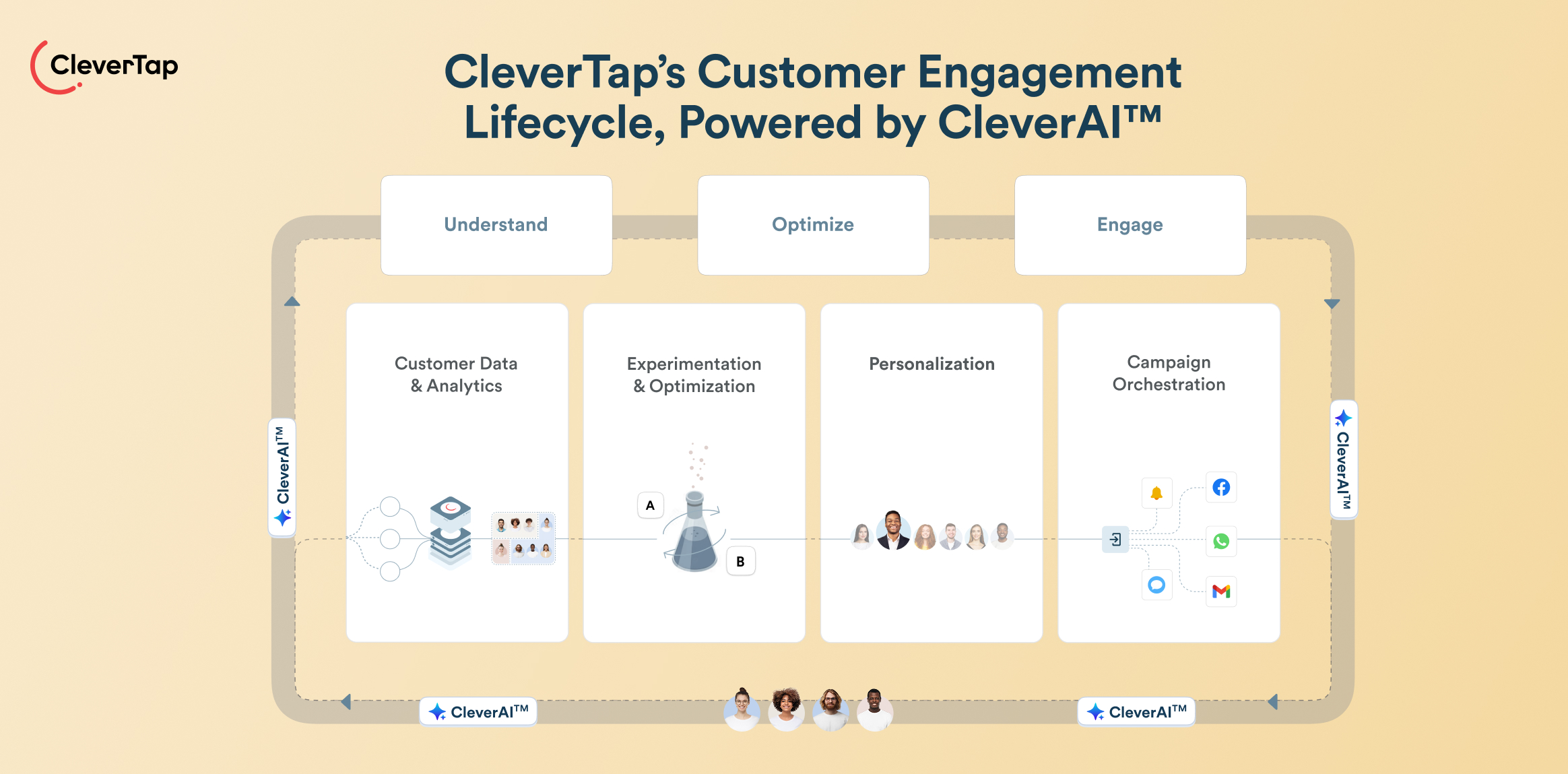
CleverAI strengthens this by adding predictive and generative capabilities. It helps identify which users are most likely to engage, optimize send timing based on user behavior, and generate high-performing copy using AI-powered tools like Scribe. This is what enabled Niyo to improve CTR through emotionally tuned re-engagement messaging rather than generic win-back campaigns.
Orchestrate Campaigns That Respond to User Behavior
Journey orchestration ties these elements together. Marketers can build multi-step WhatsApp flows triggered by real-time actions such as app installs, product views, trial milestones, or inactivity.
For example, a user who engages with a push notification can be moved into a WhatsApp conversation, while a drop-off in onboarding can trigger a follow-up sequence. This ensures that campaigns respond to user behavior instead of relying on fixed schedules.
CleverTap’s cross-channel orchestration allows marketers to design journeys where users are engaged across push, email, and WhatsApp based on how they respond at each step. This ensures continuity across channels rather than isolated campaigns.
Deliver Interactive, High-Intent WhatsApp Experiences
CleverTap supports rich, interactive WhatsApp experiences through media, quick replies, and button-based interactions, allowing brands to turn messages into guided conversations instead of one-way notifications.
These formats make it easier to replicate flows like Clarins’ product selection journey or Unilever’s conversational onboarding directly within WhatsApp.
WhatsApp campaigns can also be connected with acquisition touchpoints such as Click-to-WhatsApp ads, allowing users to move from discovery into real-time conversations. This reduces friction at high-intent moments, as seen in campaigns like Mercedes-Benz’s lead qualification flow.
Measure, Optimize, and Scale What Works
CleverTap also supports experimentation and measurement across these campaigns. Teams can run A/B tests, use control groups, and analyze funnel performance to understand which segments, messages, and journeys drive conversions.
To maintain performance and trust, CleverTap helps manage user preferences and ensures campaigns are aligned with WhatsApp’s opt-in requirements. This is critical in a permission-based channel where relevance and timing directly impact engagement.
By combining segmentation, AI-driven optimization, journey orchestration, interactive messaging, and cross-channel execution, CleverTap allows teams to scale the same principles seen in these examples: relevance, timing, personalization, and interaction.
Launch smarter, behavior-driven WhatsApp campaigns with CleverTap.
Making WhatsApp Campaigns Work at Scale
WhatsApp marketing campaigns work when they respect the channel’s core dynamic: users expect conversations, not broadcasts. Every successful example in this article treated the WhatsApp message as the start of an interaction, not the end of a funnel.
These WhatsApp campaign ideas are blueprints, not templates. The brands that got results adapted their strategy to fit the channel’s strengths: rich media, two-way interaction, high attention, and personal context. Strategy and timing matter more than volume.
If you’re ready to run WhatsApp campaigns that connect behavior data, smart timing, and cross-channel orchestration, explore what CleverTap can do for your team.

Sagar Hatekar 
Leads product managementExpert in Marketing Analytics & Engagement platforms.
Free Customer Engagement Guides
Join our newsletter for actionable tips and proven strategies to grow your business and engage your customers.