






























Table of Contents
Categories
Most Popular


Your website gets traffic. Thousands of visitors land on your pages every week. But most of them see the same homepage, banners, and product layouts.
It’s the opposite of what a buyer expects. McKinsey research found that 71% of consumers expect personalized interactions, and 76% get frustrated when they don’t get them. This gap costs real revenue.
Web personalization tools help you cover the gap. They form a bridge between what a visitor expects and what most websites deliver to create personalized journeys for anyone landing on your website, and sometimes even beyond.
What Are Website Personalization Tools?
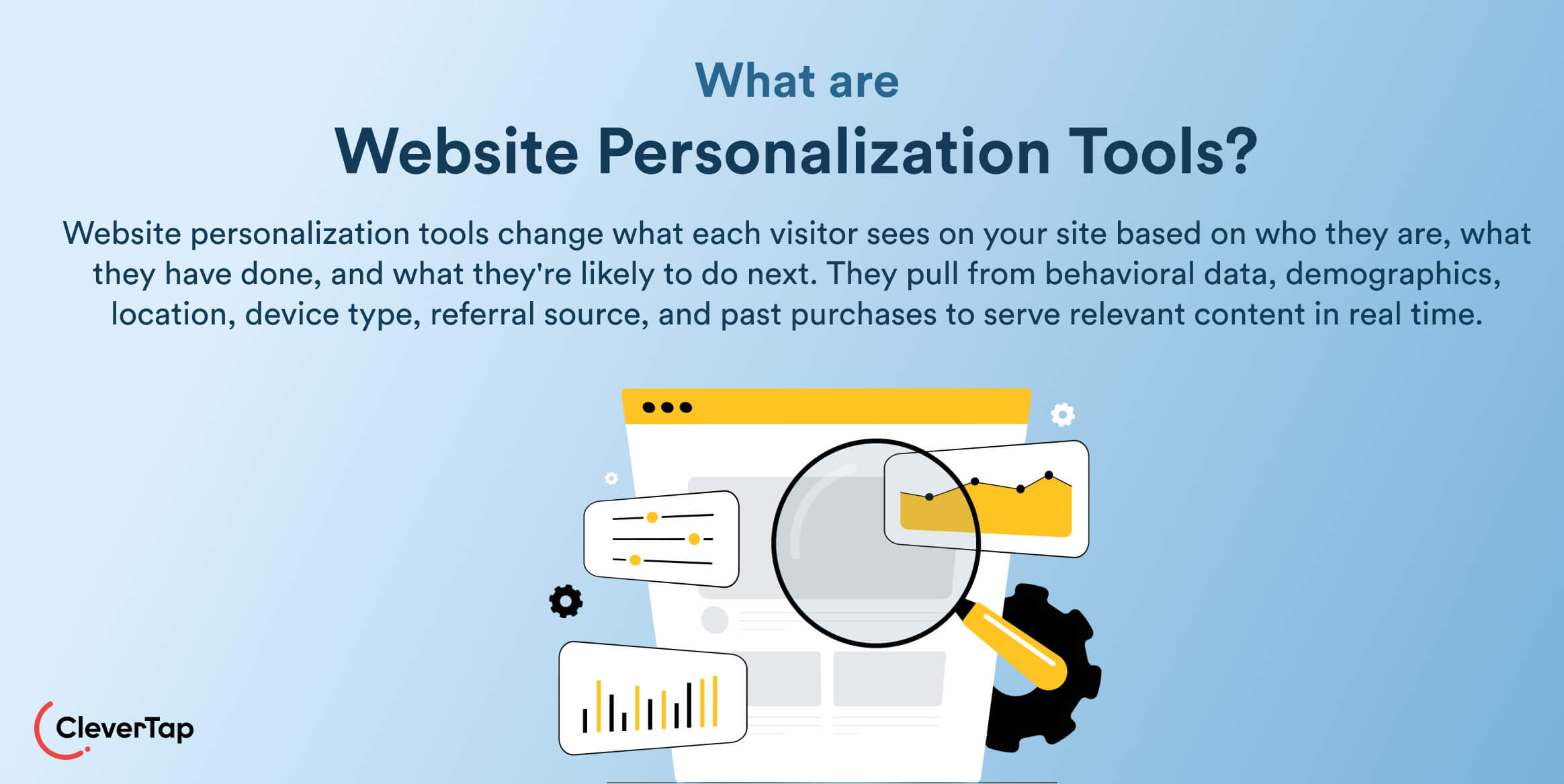
Website personalization tools change what each visitor sees on your site based on who they are, what they have done, and what they’re likely to do next. They pull from behavioral data, demographics, location, device type, referral source, and past purchases to serve relevant content in real time.
These tools go beyond basic segmentation. The best web personalization platforms deliver real-time targeting, adjusting page content the moment a visitor takes an action. They power product and content recommendations with AI and build automated journeys that guide each visitor through a tailored path to conversion.
What they are not: A simple A/B testing tool, a CMS theme switcher, or a pop-up builder with a timer. True personalization solutions connect data from multiple sources, apply machine learning to predict intent, and adapt the experience across channels.
If your tool only changes a headline for two audience segments, that’s targeting. A real website personalization solution adapts every visitor’s experience based on their unique context.
Why do Brands Need Website Personalization Tools?
The personalization software market hit an estimated $10.09 billion in 2024 and is projected to reach $31.62 billion by 2030, growing at a CAGR of 20.95%. Brands are shifting from batch-and-blast campaigns to real-time, behavior-driven web experiences, and the market is following.
Yet many teams still rely on static pages and generic content. The result is high bounce rates, low conversion, and wasted ad spend on traffic that never converts. Website personalization tools close that gap by adapting content, offers, and navigation to each visitor’s context, turning passive browsers into buyers.
The tools that work best don’t just personalize one page. They connect web behavior with app activity, email engagement, and purchase history to build a full picture of each visitor. The omnichannel view separates a real personalization platform from a pop-up builder. Understanding the category starts with knowing what these tools actually do.
Why Website Personalization Tools Matter More Than Ever
Below are a few reasons why website personalization has become indispensable.
Rising Customer Expectations for Tailored Experiences
Consumer expectations have shifted dramatically. 80% of customers say the experience a company provides is just as important as the products or services it sells.
The urgency reflects a generational shift as well. Digital-native audiences expect brands to recognize their preferences and adapt experiences in real time.
Visitors compare your website to every other experience they have had online. If Netflix and Amazon shape their entire interface around individual preferences, your static product grid feels outdated by comparison.
Meeting those expectations isn’t just about satisfaction. It directly affects revenue.
Personalization Impact on Revenue and Engagement
McKinsey’s research makes the revenue case clear.It reports that personalization can cut customer acquisition costs by up to 50%. It can lift revenues by 5–15% and increase marketing ROI by 10–30%. From a revenue standpoint, personalization pays for itself.
But there’s a catch. A Gartner survey of 1,464 buyers found that personalization creates negative experiences for 53% of customers when done poorly. Those customers were 3.2x more likely to regret buying and 44% less likely to buy again.
Takeaway: Bad personalization is worse than no personalization. Getting it right depends on what data you use and how your tools process it.
First-Party Data and AI Reshaping Personalization
With third-party cookies fading, first-party data is becoming the foundation of effective website personalization. Research from Accenture shows that 91% of consumers are more likely to shop with brands that recognize them and deliver relevant recommendations, highlighting how critical customer data has become for modern digital experiences.
To meet those expectations, companies are investing in tools that unify and activate first-party data across channels. Customer data platforms and AI-powered analytics help brands combine behavioral, transactional, and demographic signals to build richer customer profiles.
Modern personalization solutions use machine learning to predict what each visitor wants before they ask for it. The best tools don’t just react to clicks. They anticipate intent, score likelihood to convert or churn, and pick the right content and channel for each person. The tools that win are the ones that do all three: collect first-party data, apply AI to predict intent, and act across channels.
Knowing what those features look like in practice helps you separate real platforms from surface-level tools.
Key Features to Look for in Website Personalization Tools
Before comparing vendors, know which capabilities matter most for your goals.

Audience Segmentation and Behavioral Targeting
A personalization solution should be able to segment visitors based on real behavior, not just demographics. See if the platform lets you create segments from page views, scroll depth, time on site, cart activity, and other custom events.
The best website personalization tools combine rule-based segments with AI-powered segment suggestions, so you can target known patterns and discover new ones your team hasn’t thought of yet. But segments only matter if the tool can act on them fast enough.
Real-Time Personalization Engine
Personalization only works if it’s fast. A visitor who browses running shoes needs to see running shoe recommendations within that same session, not on their next visit. Real-time site personalization tools process behavioral data as it happens and adjust content, banners, product grids, and CTAs in milliseconds.
If a tool requires overnight data syncs to update segments, it can’t deliver the experiences modern buyers seek.
AI Recommendations and Predictive Analytics
AI-powered recommendations make personalization measurable. Look for collaborative filtering (people who bought X also bought Y) and content-based recommendations (products similar to what this visitor browsed).
Predictive models that score each visitor’s likelihood to buy, churn, or upgrade add another layer. These models should improve as the platform learns from more interactions.
Omnichannel Personalization
A visitor who browses your website, opens your app, and reads your emails is one person. Not three data points.
The best website personalization platforms connect behavior across channels into a single profile. It lets you send a push notification about an item someone browsed on the web, or show a banner referencing an email offer they clicked yesterday.
Without omnichannel personalization, experiences stay disconnected. A unified view of the customer makes testing far more effective.
Fashion e-commerce brand AJIO used dynamically personalized push, email, and in-app messaging through CleverTap to achieve 4x higher conversions and a 41% bump in month-to-month retention.
Testing, Experimentation, and Optimization
Personalization without testing is guesswork. Strong web personalization platforms include A/B testing, multivariate testing, and automated traffic allocation that shift visitors to the best experience in real time.
Look for statistical rigor: confidence intervals, significance thresholds, and clear revenue attribution. None of that works if the platform can’t talk to the rest of your stack.
Integrations
No website personalization tools work alone. Check for native integrations with your CRM (Salesforce, HubSpot), analytics tools (Google Analytics or Mixpanel), and e-commerce platforms (Shopify or Magento).
Deeper integrations give you richer visitor profiles and more precise personalization. But richer profiles also mean more responsibility around data handling.
Privacy and Compliance
Personalization depends on data, and data requires trust.
Look for built-in consent management, GDPR and CCPA compliance, and transparent data handling policies. If a tool doesn’t handle compliance natively, it creates risk.
Knowing which features matter is the first step. The next step is seeing how the top tools stack up against each other.
What Are the Best Web Personalization Tools?
Here are the top 13 tools that are the most popular in the web personalization category:
1. CleverTap
CleverTap is an all-in-one customer engagement platform that unifies analytics, segmentation, messaging, and personalization across web, mobile apps, email, SMS, WhatsApp, and push notifications.
Unlike website personalization tools that layer personalization on top of messaging, CleverTap’s personalization capabilities are built on a unified data foundation powered by TesseractDB, its proprietary customer data engine. This architecture processes billions of behavioral data points in real time to maintain a single, continuously updated customer profile that powers segmentation, recommendations, and automated journeys.
Four Levels of Personalization
CleverTap’s personalization framework operates across four levels that progressively increase relevance and contextual accuracy:
- L1 – Demographic Personalization: Tailors messaging based on attributes like age, gender, location, and language preferences.
- L2 – Behavioral Personalization: Uses past actions such as app events, purchases, or browsing history to recommend products and trigger targeted campaigns.
- L3 – Psychographic Personalization: Predicts preferences and intent using interest patterns and predictive insights to deliver more context-aware recommendations.
- L4 – Real-Time Personalization: Responds to live customer behavior, triggering messages or experiences instantly when users perform high-intent actions.
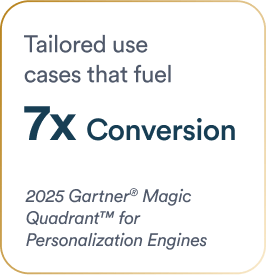
CleverTap’s research shows that brands using a balanced mix of all four personalization levels significantly outperform those relying on basic segmentation alone. In e-commerce, businesses implementing advanced, use-case-based personalization achieved 6X more purchases than the industry average and 7X more than brands using generic campaigns.
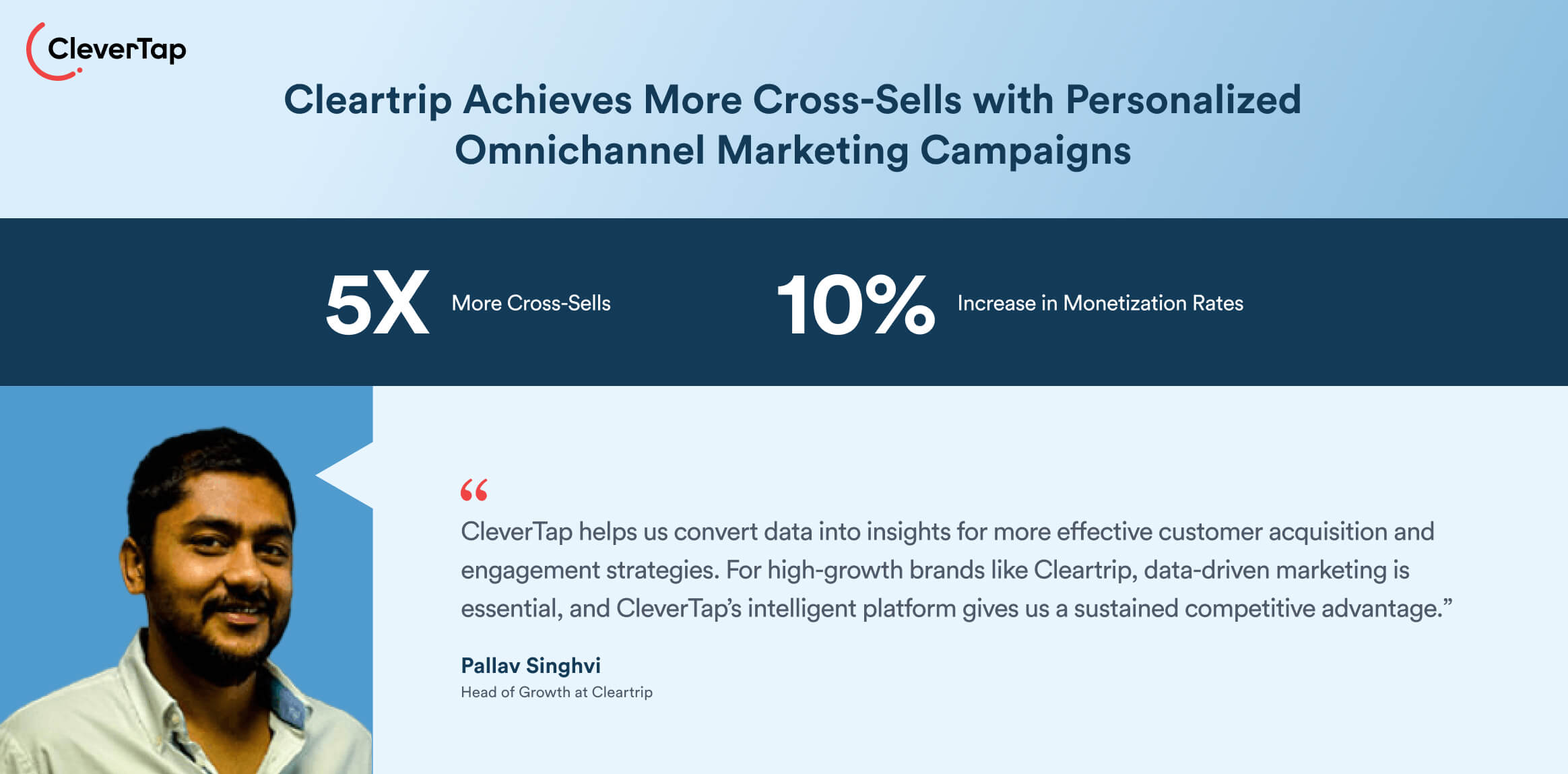
Moving from L1-only to the right mix of all four levels helps brands increase conversions. Cleartrip’s travel app achieves 5x more cross-sells with personalized omnichannel marketing campaigns.
CleverTap also supports website personalization through its Visual Editor, which allows marketers to dynamically modify webpage elements such as text, images, banners, product blocks, and CTAs without requiring code changes. The editor enables teams to personalize content based on user attributes, behavioral data, and real-time events, helping deliver relevant on-site experiences with minimal developer involvement.
Combined with CleverTap’s segmentation engine, customer profiles, and journey orchestration tools, marketers can move from insights to execution within a single platform.
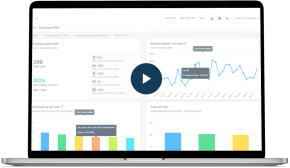
Watch the Web Visual Editor demo: See how marketers personalize web content without code.
CleverAI: Agentic Personalization
CleverTap’s AI layer, CleverAI, introduces agentic personalization — where AI agents help automate decision-making across the customer lifecycle.
These AI agents operate across several functions:
- Decision Agents: Analyze customer intent and determine the optimal message, channel, and timing.
- Creative Agents (Scribe, IntelliNODE): Generate campaign copy, optimize variants, and support automated experimentation.
- Action Agents: Execute campaigns and adapt journeys in response to changing customer behavior.
- Strategy Agents: Surface insights and campaign recommendations through a conversational interface like AskAI.
Instead of manually building segments or workflows, marketers can describe a campaign goal in natural language and let CleverAI automatically generate segments, campaigns, and optimized journeys.
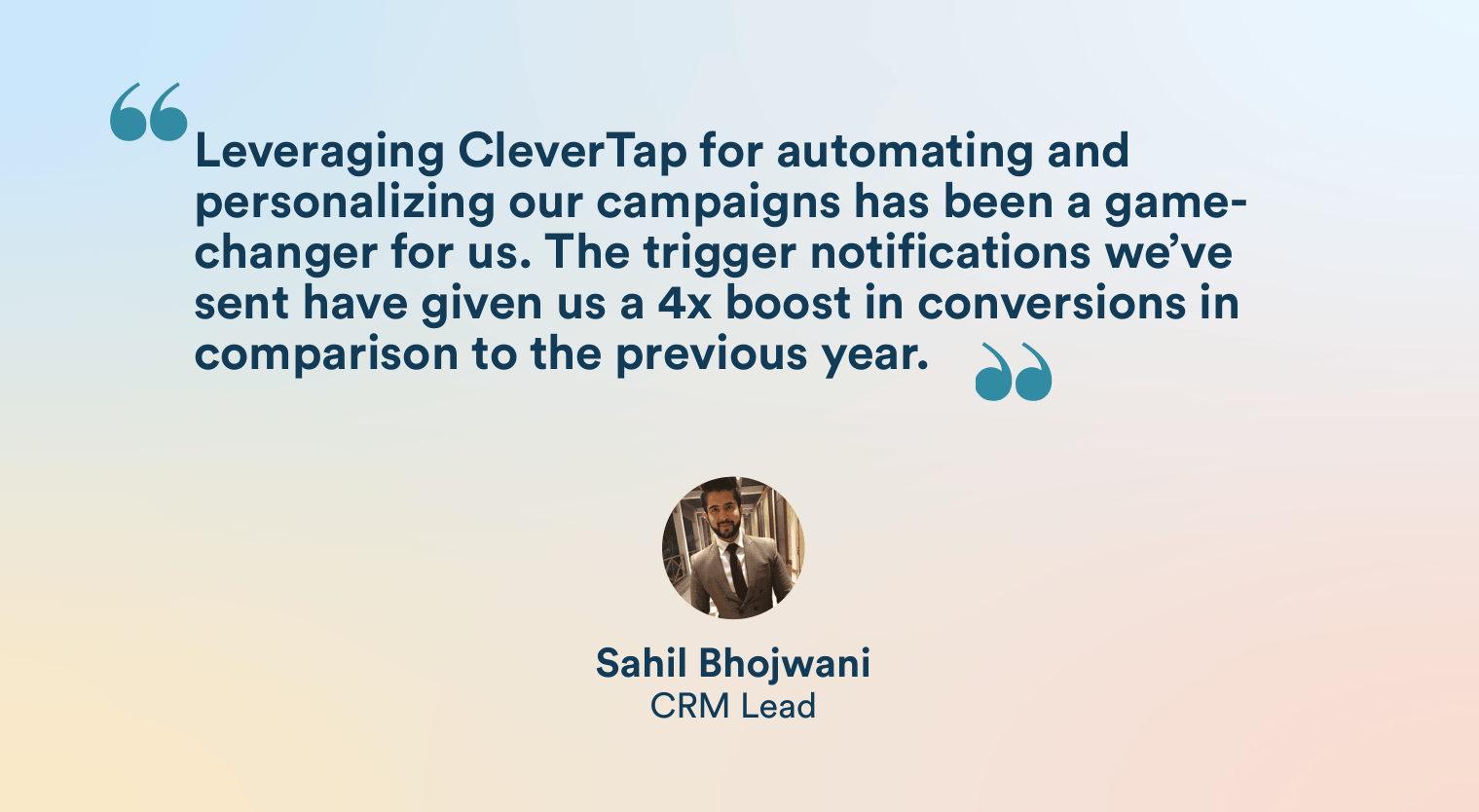
A leading UAE fashion e-commerce brand moved from generic blasts to hyper-personalized triggered messages. When a user added an Estée Lauder lipstick to the cart and abandoned it, they received a notification with the exact product at its discounted price.
Results: 4x boost in conversions, 300% year-over-year revenue growth, and 68% increase in in-app traffic.
Discover why CleverTap is a Leader in the 2026 Gartner® Magic Quadrant™ for Personalization Engines. Get the full report.
2. Optimizely
Optimizely combines content management, experimentation, and personalization into Optimizely One.
Key strengths include:
- Contextual Bandits use ML to allocate traffic to the best experience per visitor, replacing manual A/B test management.
- Edge delivery renders personalized content before it hits the browser, eliminating flicker.
- The Opal AI agent (launched May 2025) automates personalization workflows and helps marketers create experiments without code.
3. Dynamic Yield
Dynamic Yield by Mastercard calls itself an “Experience OS” for personalization, recommendations, and testing across web, mobile apps, email, and ads.
Key strengths include:
- Deep recommendation engine with Algorithm Studio for custom models.
- Affinity Allocation routes traffic in real time based on user preferences.
- Server-side personalization supports full website re-brands by segment.
- Strong visual editor plus ecommerce-specific features like sorting optimizer, social proof triggers, and cart abandonment recovery.
4. Adobe Target
Adobe Target is the personalization engine within Adobe Experience Cloud. It uses ML for automated personalization, auto-targeting, and recommendations, and connects deeply with Adobe Analytics, Real-Time CDP, and Journey Optimizer.
Key strengths include:
- Auto-Target delivers the best experience per visitor using ML models that improve over time.
- Automated Personalization combines content elements into unique combinations per visitor.
- Edge segmentation with Real-Time CDP activates both known and anonymous profiles instantly.
- Strong multi-page personalization across web and mobile.
5. VWO Personalize
VWO Personalize helps marketers create targeted web experiences based on visitor behavior, location, device, and third-party data. It’s part of VWO’s broader testing and optimization suite.
Key strengths include:
- Intuitive visual editor and widget library for code-free personalized experiences.
- Tight integration with VWO’s A/B testing and heatmap tools for measuring personalization impact.
- Rule-based audience segments with layered experience support.
6. Insider One
Insider One (formerly Insider) is an AI-native omnichannel platform combining a CDP, personalization engine, and journey orchestration across 12+ channels including web, app, email, SMS, WhatsApp, and site search.
Key strengths include:
- Sirius AI powers predictive segments for intent modeling and churn prediction.
- Eureka, Insider’s search and merchandising solution, personalizes search results based on predicted behavior.
- Cross-channel journey orchestration with pre-built templates.
7. Bloomreach
Bloomreach Engagement combines a CDP, marketing automation, and AI-powered personalization, with a specific focus on e-commerce and retail.
Key strengths include:
- Native CDP with a unified profile that processes data in 5 milliseconds for real-time personalization.
- Loomi AI powers product recommendations, search personalization, and content generation.
- Weblayers allow dynamic on-site content changes by visitor profile. Strong analytics for revenue attribution and campaign tracking.
8. MoEngage
MoEngage is a customer engagement platform with strong mobile and omnichannel capabilities, particularly popular in APAC markets.
Key strengths include:
- Sherpa AI for send-time optimization, content recommendations, and predictive segmentation.
- Push Amplification increases Android notification delivery.
- Website personalization through dynamic overlays and embedded content.
- Native WhatsApp support for APAC, Southeast Asia, and Middle East markets.
9. Personyze
Personyze is an all-in-one personalization platform for small and mid-sized businesses, covering web personalization, recommendations, behavioral targeting, popups, email personalization, and A/B testing.
Key strengths include:
- Tracks 70+ visitor attributes out of the box: session data, traffic source, geo/weather, firmographics, and device type.
- AI-powered recommendations with multiple algorithm options.
- Visual editor and guided wizards for non-technical teams.
10. ConvertFlow
ConvertFlow is a no-code funnel builder focused on website personalization for lead generation and conversion optimization.
Key strengths include:
- No-code builder for personalized landing pages, popups, sticky bars, embedded sections, and CTAs.
- Segments visitors by page URLs, site activity, geolocation, form submissions, and connected sources (HubSpot, Shopify, Klaviyo, Segment).
- Split testing with revenue attribution.
11. HubSpot
HubSpot’s Marketing Hub includes Smart Content features that let you personalize website pages and emails based on CRM data, lifecycle stage, list membership, and device type.
Key strengths include:
- Deep CRM integration lets every web experience reference a contact’s full history: deals, support tickets, forms, and engagement data.
- Smart CTAs and smart content modules show different content to different segments without developer help.
12. Customer.io
Customer.io is a messaging automation platform built for event-driven, behavior-based lifecycle campaigns across email, push, SMS, and in-app messages.
Key strengths include:
- Powerful event-driven segmentation based on real-time user actions.
- Visual workflow builder for complex lifecycle journeys.
- Strong API and webhook support.
13. Braze
Braze is a customer engagement platform for real-time, mobile-first messaging at scale, covering push, in-app, email, SMS, and web messaging through its Canvas Flow journey builder.
Key strengths include:
- Real-time event processing and behavior-triggered campaigns.
- Canvas Flow offers flexible cross-channel journey orchestration.
- Intelligence Suite uses ML for predictive churn, send-time optimization, and content recommendations.
How to Choose the Best Website Personalization Tools
Feature comparisons help, but the right website personalization tools depends on your situation, not the longest feature list. Use this four-step framework to narrow your decision.
1. Define Your Personalization Goals
Name the problem you’re solving. Are you:
- Reducing cart abandonment?
- Increasing signups from a specific segment?
- Improving product discovery for returning visitors?
Each goal points to different capabilities. A cart abandonment problem needs real-time triggers and cross-channel messaging. A product discovery problem needs AI recommendations and behavioral segmentation. Starting with the wrong tool type wastes months of setup.
If you need to connect web with app, email, and messaging, you need an omnichannel platform like CleverTap. Once you know your goal, match the tool type to your business model.
2. Match Tool Type to Business Model
| Business Type | Best Tool Type |
| E-commerce/DTC | Recommendation engine + omnichannel |
| SaaS | CRM-integrated web personalization |
| Mobile-first apps | Omnichannel with strong push/in-app |
| Content/media | AI recommendations + behavioral targeting |
| Enterprise (multi-brand) | Full-stack DXP with CDP |
A mobile-first app company choosing a web-only tool will hit a ceiling within months. Match the tool’s core strength to where your users actually are.
3. Evaluate Ease of Implementation
Powerful website personalization tools that takes six months to set up delivers no value during those months. Ask each vendor about time to first personalized experience, developer dependency, and onboarding support.
Look for visual editors, pre-built templates, and native integrations with your existing stack. If every new campaign needs an engineering sprint, it will stall your personalization program. Easy setup matters at the start. Scalability matters for the long run.
4. Consider Scalability and ROI
Your needs will grow. Check data processing limits, pricing tiers by traffic volume, and multi-site support.
For ROI, look beyond single-page conversion lift. Calculate total cost of ownership: platform fees, integration work, team time, and the opportunity cost of data locked inside a closed system.
Frequently Asked Questions (FAQs) About Website Personalization Tools
Q1. What are website personalization tools?
Website personalization tools modify website content for each visitor based on data like behavior, location, device, and past interactions. They help deliver more relevant experiences that increase engagement and conversions.
Q2. How do website personalization tools increase conversions?
They show visitors content, offers, and recommendations that match their interests or intent in real time. This relevance helps guide users toward actions like sign-ups or purchases.
Q3. What features should a website personalization platform have?
Look for behavioral segmentation, real-time personalization, AI-powered recommendations, A/B testing, and integrations with CRM, analytics, and ecommerce platforms.
Q4. How is website personalization different from A/B testing?
A/B testing compares two page versions for a broad audience, while website personalization adapts the experience for each visitor using real-time data.
Q5. Do small businesses need website personalization tools?
Yes. Many tools offer no-code features and scalable pricing, making it easy for small businesses to personalize experiences and improve conversions.
Web-only or omnichannel?
Personalization that lives on one channel breaks the moment a user moves to another. That experience feels disjointed because it is.
The cost of fragmented personalization is measurable. Teams waste budget reaching users with irrelevant messages. Conversion drops when the journey resets every time someone switches channels. And the data that could improve every touchpoint stays locked in silos, no one connects.
For teams that need personalization across web, app, email, SMS, and WhatsApp, CleverTap’s unified platform and CleverAI agentic engine bring everything into one system. Every interaction feeds a single profile, so each message builds on the last. Engagement keeps improving without adding headcount or complexity.
Learn how CleverTap can help you achieve 1:1 personalization.

Agnishwar Banerjee 
Leads content and digital marketing.Expert in SaaS sales, marketing and GTM strategies.
Free Customer Engagement Guides
Join our newsletter for actionable tips and proven strategies to grow your business and engage your customers.